Cat litter is one of those purchases you notice only when it goes wrong. A good litter keeps the house smelling fresh, scoops cleanly in seconds, and stays where it belongs, inside the tray. A bad litter turns to grey sludge at the bottom, sends dust into the air every time your cat digs, tracks granules across the kitchen floor, and leaves a smell that no amount of cleaning seems to shift. The difference between the two is not luck. It is the material in the bag, and most of the worst litters fail in exactly the same handful of ways.
The best cat litters of 2026 clump firmly, lock away ammonia, produce very little dust, and stay pleasant for days between full changes. The worst fall apart when they get wet, smell worse after a day than the problem they were meant to solve, or feel so rough under your cat’s paws that the cat simply stops using the tray. This comparison puts both sides head to head, judged on the same things, so you can tell a good litter from a bad one before you carry a heavy bag home. If you want a guide that focuses only on the winning side, our guide to the cat litters that actually control odour in 2026 ranks the main types in more detail.
Key Takeaways
- A good litter clumps firmly within minutes, so you can lift the waste out and leave clean litter behind.
- Odour control comes from trapping ammonia, not from perfume: unscented litters that absorb well beat heavily scented ones.
- Low dust matters for your cat’s lungs and yours, especially in a small flat or a tray kept near a bedroom.
- Tracking is a real daily cost: large, heavy granules stay in the tray far better than fine, light ones.
- Your cat gets a vote too. A litter your cat refuses to use is the worst litter, whatever the bag promises.
How We Judge a Cat Litter
We judged every litter on the same six things, because a litter that scores well on one and fails on another is still a bad buy. Odour control comes first. Clumping comes second. Firm clumps mean you remove only the waste, the rest of the litter stays clean, and a bag lasts far longer. A litter that crumbles when you lift the scoop wastes clean litter with every cleaning.
Dust is third, and it is the one most people underestimate until they pour a new bag. A dusty litter puffs a cloud into the air every time your cat digs, and that dust settles on floors, on your cat’s coat, and in the air you both breathe. Tracking is fourth: granules stuck to paws and carried around the house are a daily sweeping job nobody wants. Ease of scooping and disposal is fifth, because a litter that is awkward to clean will be cleaned less often. Value is last, worked out as cost per week rather than cost per bag, since a cheap litter that needs a full change twice as often is no bargain at all.
The Best Cat Litters of 2026
Clumping clay litter is the best all-rounder in 2026, and it wins for the most ordinary reason: it does the main job better than anything else. Good clumping clay forms a firm ball within minutes of getting wet, and that ball lifts out cleanly on the scoop without breaking apart. The tray stays dry underneath, the smell stays locked inside the clump, and the remaining litter stays fresh for days. The best clumping clays are made from bentonite, a natural clay that swells as it absorbs liquid.
Silica crystal litter is the best choice if odour control over a full week matters most to you. The small clear crystals absorb moisture and trap smell inside tiny pores, and a tray of silica can stay fresh for a week or more with daily scooping of solids, where a clay tray would need a full change sooner. The trade-off is the feel: some cats dislike the hard, crunchy texture under their paws, and silica does not clump, so you stir it rather than scoop it.
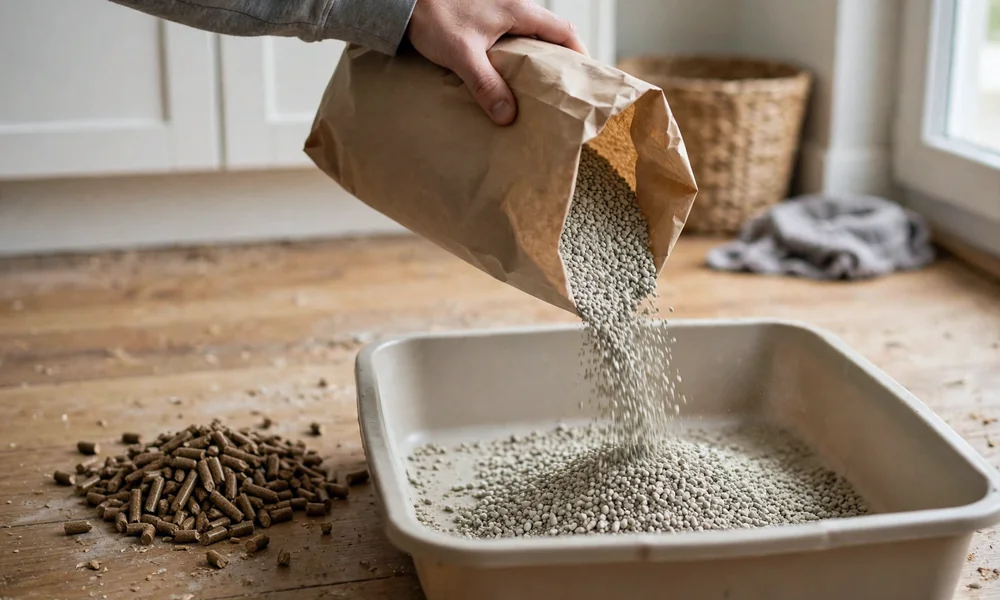
Wood pellet litter is the best low-dust option, and it suits households where dust is a real worry. The pellets are pressed sawdust, they smell faintly of fresh pine, and they break down into sawdust as they absorb liquid, which you scoop away. There is almost no dust when you pour them, almost no tracking, because the pellets are large and heavy, and the natural pine scent covers smells without perfume. Tofu litter is the closest rival, made from soybean fibre, clumping well and breaking down naturally. Both are good choices for kittens and for cats with breathing problems.
The Worst Cat Litters of 2026
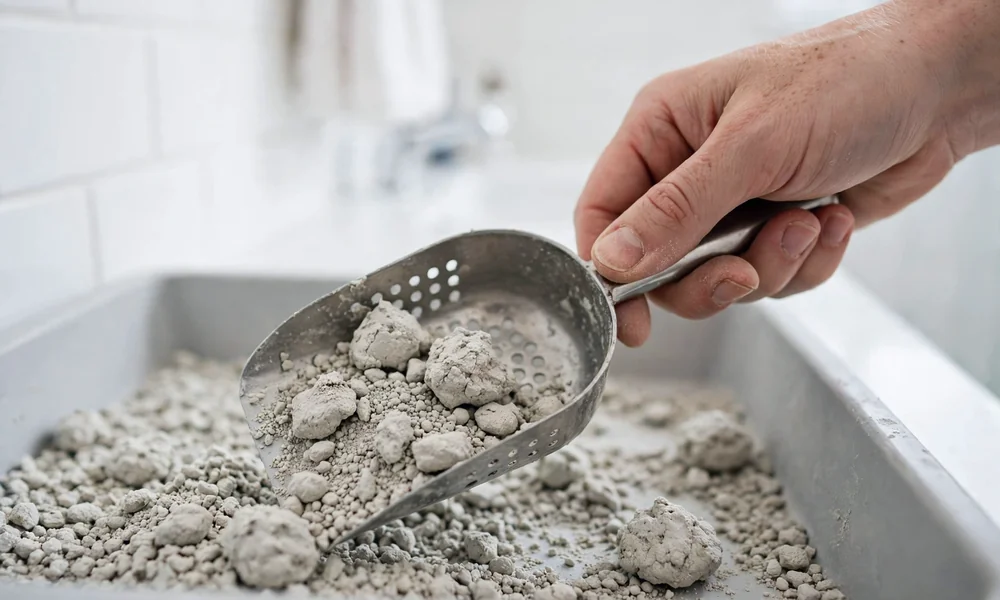
The worst cat litters share a pattern, and once you know it you can spot them on the shelf. The most common failure is a cheap non-clumping clay that turns to sludge. It looks like a bargain, often sold in a huge bag for very little money, but the first time your cat uses it the granules dissolve into a wet grey paste at the bottom of the tray. You cannot scoop it, you can only tip the whole tray out, and the smell escapes within hours.
Heavily scented litters are the second worst group. The perfume covers smells for an hour or two, and then the tray smells of cheap scent layered over ammonia, which is worse than either smell on its own. Cats have a far stronger sense of smell than we do, and many cats simply refuse to use a tray that smells of strong perfume, which leads to accidents on carpets and in corners. A litter that your cat will not use has failed completely. Unscented litter that absorbs well always beats scented litter that only masks.
The third worst group is dusty, lightweight litter sold in thin, flimsy bags. It pours like flour, coats your hands and the floor in fine grey dust, and tracks through the house on your cat’s paws. Some of these litters are recycled paper or cheap crystal imitations, and they absorb poorly, so the tray stays damp and the smell builds up fast. A bag that feels suspiciously light for its size is a warning sign: good litter is dense, because the material that absorbs liquid has weight to it.
Dust, Tracking and Your Cat’s Paws
Dust and tracking are the two problems that follow you out of the tray and into the rest of the house. Dust shows up the moment you pour a new bag, and again every time your cat digs. In a small home, or a home where the tray sits near a bedroom or a kitchen, dusty litter is a daily irritation and a genuine worry for cats with asthma or sensitive lungs.
Tracking is about granule size and weight. Fine, light granules stick between a cat’s toes and get carried across floors, while large, heavy pellets and coarse clay granules drop off at the tray’s edge. A litter mat helps, and so does a tray with high sides, but no mat fixes a litter that is fundamentally too light. If you find yourself sweeping litter out of the hallway every morning, the litter is the problem, not your cat. Wood pellets and coarse clumping clay track the least, fine silica and cheap lightweight clays track the most.
Your cat’s paws are the final judge, and they vote in a way no label can argue with. Cats prefer a fine, soft texture underfoot, which is one reason clumping clay is so widely accepted, and they dislike hard, sharp, or very large granules. A cat that stands at the edge of the tray, digs briefly, and leaves quickly may be telling you the litter hurts its paws. When you switch litters, mix the new one with the old for a week, half and half, so your cat can adjust gradually instead of facing a tray full of something strange overnight.
Cost, Routine and Getting the Tray Right
The cheapest litter on the shelf is rarely the cheapest litter in use. Work out the cost per week, not the cost per bag. A good clumping clay that you scoop daily and top up can make a bag last a month for one cat, because you only throw away what the cat has used. A non-clumping litter that needs a full change every three or four days burns through bags, and the price gap disappears within a fortnight.
Routine matters as much as the litter itself. Scoop solids and clumps at least once a day, twice if you have more than one cat, and top the tray up to a depth of five to seven centimetres so your cat can dig properly. Keep one tray per cat, plus one spare, which is the rule most vets recommend, and put the trays in quiet, low-traffic spots where your cat will not be startled.
Smell in the house is not always the litter’s fault. A tray that is scooped rarely, a tray kept in a warm room with no ventilation, or a tray that is too small for a large cat will smell whatever litter you use. Ventilation helps more than any scented product: a window cracked open, or a tray kept in a room with airflow, does more than a perfumed litter ever will. If the whole house smells despite a good litter and a clean tray, our guide to the best and worst air fresheners of 2026 explains which fresheners actually remove smells and which ones only cover them for an hour.

Buying Checklist: How to Spot a Good Litter
Before you buy, read the bag the way you would read a food label. The first ingredient should be named plainly, bentonite clay, silica, wood, or soybean fibre, rather than a vague phrase like mineral blend. The bag should say clumping or non-clumping clearly, and it should state whether it is scented or unscented. Check the weight: a bag that feels dense and heavy for its size usually contains more of the material that does the work.
Buy a small bag first when you are trying a new type, and watch your cat for a week before committing to a large one. Scoop daily for that week and note how firm the clumps are, how much dust rises when you pour, and how far the granules travel from the tray. If the clumps break apart, the dust is visible, or your cat hesitates at the tray, try another type rather than finishing the bag out of stubbornness. Keeping the house clean around the tray matters too, and our guide to the best and worst vacuum cleaners of 2026 covers the machines that pick up tracked litter and pet hair without spreading dust back into the air.
The Verdict
The best cat litters of 2026 are the ones that clump firmly, trap ammonia without perfume, stay low in dust, and feel good under your cat’s paws. Clumping clay wins overall, silica wins for long-lasting freshness, wood pellets win for low dust, and tofu wins for easy disposal. The worst are the cheap non-clumping clays that turn to sludge, the heavily scented litters your cat refuses to use, and the dusty lightweight bags that track through the whole house. Buy a small bag, scoop it daily, watch your cat, and let the tray tell you the truth: a good litter is one you barely notice, and a bad one is one you notice every single day.