
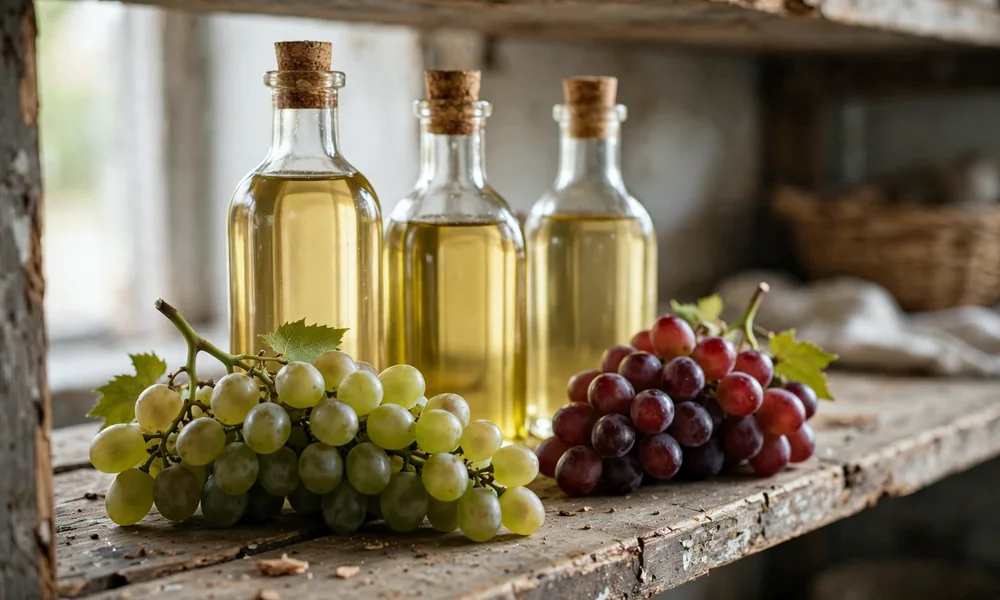
Grapeseed oil is the quietest bottle in the kitchen, and that is exactly why the one you pick matters so much. At its best, it is just grape seeds pressed until they give up their oil, with nothing else added at all. When those seeds are handled well, the result is a pale gold oil that smells clean and faintly fruity, pours smoothly over a salad, and holds its nerve in a hot pan where other oils smoke and turn bitter. When they are handled badly, the same bottle gives you a flat oil that tastes of nothing, or a stale oil that smells of an old cupboard, or a bottle so heavily blended that the grapeseed has disappeared entirely.
The gap between the best grapeseed oils of 2026 and the worst is wide, and it usually shows up in four places: the seeds themselves, the flavour, the freshness, and the way the bottle behaves over time. A great grapeseed oil tastes clean and light when you pour it, keeps its pale gold colour from the first drizzle to the last, and stays steady at high heat. A bad one is so mild it could be any oil at all, or so far past its best that it smells rancid before it ever reaches the pan. This comparison puts them head to head the way you would actually use them: drizzled over salads, whisked into dressings, brushed over roast vegetables, and poured into a hot pan for searing. We look at flavour, colour, freshness, what is actually in the bottle, and whether it earns its place in the cupboard or only its place on the shelf.
Key Takeaways
- A good grapeseed oil is pale gold and smells clean and faintly fruity the moment you open the bottle, with no stale or flat note.
- Check the label: the best bottles list grapeseed oil as the only ingredient, with no blends, no added flavourings, and nothing else.
- Cold-pressed grapeseed oil is the best choice for dressings and light cooking, while expeller-pressed oil suits high-heat searing.
- The worst grapeseed oils are stale and flat, smell of rancid fat, or are so mild that the grapeseed has disappeared entirely.
- The same honest approach sits behind our comparison of the best and worst olive oils of 2026, because grapeseed oil is judged by many of the same rules as its better-known cousin in the oil aisle.
How We Judged the Grapeseed Oils
We judged every grapeseed oil on five things that matter at the stove rather than on the bottle. First, flavour: whether the oil tastes clean and lightly fruity, with a fresh finish, or of stale fat and flatness that takes over the dish. Second, colour: whether the oil is a clear, pale gold that shows it was pressed from good seeds, or cloudy and dull, which usually means poor handling or blending. Third, freshness: whether the oil tastes bright and clean, or tired and heavy, because grapeseed oil turns faster than most oils once the bottle is open. Fourth, behaviour in cooking: whether it stays steady in a hot pan, or smokes early, or leaves a greasy coating on the food. Fifth, the label itself: how much grapeseed oil is actually in the bottle, what has been blended in to stretch it, and whether the price matches what is inside.

The Best Grapeseed Oils of 2026
The best grapeseed oils start with more grapeseed and less noise. A good bottle lists grapeseed oil as the only ingredient, because grapeseed is the whole point, and uses a short list of additions, ideally none at all. The best cold-pressed versions are the quiet heroes of the shelf. They pour with a pale gold colour, they do not go stale quickly in the bottle, and they finish a salad in one easy drizzle, because their makers have pressed good seeds carefully enough for the natural flavour to do the work instead of adding flavourings to fake a fresh taste. They are light enough to use by the spoonful, yet they still taste like something real, which is more than most bottles manage.
The Best Grapeseed Oil Styles at a Glance
| Grapeseed oil style | Grapeseed content | Flavour | Best for |
|---|---|---|---|
| Cold-pressed | Nearly all grapeseed | Clean and lightly fruity | Salads, dressings, finishing |
| Expeller-pressed | Nearly all grapeseed | Neutral and light | Searing, roasting, frying |
| Refined grapeseed oil | Nearly all grapeseed | Very neutral | High-heat cooking, baking |
| Organic grapeseed oil | Nearly all grapeseed | Fresh and clean | Everyday dressings, light dishes |
| Blended grapeseed oil | Lower | Faint | A cheap everyday oil, bulk cooking |
Reading the Bottle: What the Label Really Tells You
The label is the most honest part of a grapeseed oil bottle, and it is worth reading before you buy. Most good grapeseed oil contains nearly one hundred per cent grapeseed oil, and the rest is nothing at all, so a bottle that lists grapeseed oil first and stops there is already a step ahead. Look at what else is in there: a single ingredient is normal, but a long list of soybean oil, sunflower oil, and added flavourings means the grapeseed is doing less of the work than the bottle suggests. Blending is the usual giveaway, put in to stretch the grapeseed oil and cut the price, and while it keeps the bottle looking like a bargain, it dulls the flavour and leaves a flat, greasy taste that pure grapeseed oil never does.
Cold-pressed on the label should mean the oil was pressed from fresh seeds without high heat or chemicals, and expeller-pressed should mean it was pressed mechanically, without solvents, for a clean, neutral oil. Refined should mean the oil was cleaned up for a neutral taste and a higher smoke point, which is a fair trade when you want it, but not when you wanted grapeseed flavour. Check whether the bottle is dark glass, because light speeds up staleness, and a maker who protects the oil from light is usually a maker who cares about the seeds. The same care applies to the dish itself, and our comparison of the best and worst avocado oils of 2026 shows how a very different cooking oil is judged, because a roast made with poor oil can never taste better than the oil that went into it.

The Worst Grapeseed Oils of 2026
The worst grapeseed oils fail in predictable ways, and the bottle usually gives them away before you open it. The first warning sign is an oil that looks cloudy or dull instead of clear pale gold, or a bottle that smells of nothing at all when you hold it to your nose. The second is a bottle with a wide opening and no pourer, so you pour out far more than you need and the rest sits exposed to warm air. The third is a price so low it cannot possibly be pure grapeseed oil, because real grape seeds are not cheap to press. Here are the types to leave on the shelf.
Stale and rancid bottles are the most common failure. Grapeseed oil kept too long, or kept in a clear bottle on a sunny shelf, turns tired and heavy, and the flavour follows: a flat, bitter edge that no amount of lemon juice can hide. The oil may still look gold, but the smell gives it away the moment the cap comes off. Then there are the blended oils, built mostly on soybean or sunflower oil with a little grapeseed oil added for the label. They pour pale, they taste of nothing, and they make salads feel greasy instead of fresh, and the bottle empties slowly because nobody reaches for it twice.
Best vs Worst Head to Head
How to Choose a Grapeseed Oil Without Regret
The single most useful thing you can do is to read the label before you buy, and to buy the bottle with the shortest list. Grapeseed oil first, nothing else after it, is the gold standard, and any bottle that meets it is already ahead of most of the shelf. While you read, check whether the oil is cold-pressed or expeller-pressed, because a bottle that hides its style behind a plain label is usually hiding quite a lot of it. Then pick your style and stick with it: cold-pressed if you dress salads and finish dishes, expeller-pressed if you sear at high heat, and blended only if you are buying a cheap everyday oil and you know it.
Once the bottle is home, keep it in a cool, dark cupboard, not beside the stove, and close the cap properly every time, because air and light speed up staleness. A good bottle needs no special care beyond that; a bad bottle will turn stale no matter what you do, and that is the bottle telling you not to buy it again. Taste it on its own before you judge it in a salad, because an oil that tastes flat or bitter by the spoonful will taste flat or bitter everywhere else too. And if you are still deciding between single oils, our guide to the best and worst walnut oils of 2026 covers another fragrant finishing oil in detail, while the comparison above will help you choose between the grapeseed oils themselves.
Grapeseed Oil Buying Checklist
- Check the colour first: a clear pale gold is a good sign, and cloudy or dull oil is a warning.
- Smell the bottle when you can: a clean, faintly fruity scent is right, and no scent at all is a warning.
- Choose cold-pressed for flavour and dressings, and expeller-pressed for high-heat searing and roasting.
- Read the ingredient list: grapeseed oil alone beats a long list led by soybean or sunflower oil.
- Start with a small bottle, because a good oil lasts for months and a bad one is hard to finish.
- Store the bottle away from heat and sunlight, and use it within a few months of opening.
Frequently Asked Questions
Is grapeseed oil good for high-heat cooking?
Yes, if you pick the right kind. Expeller-pressed and refined grapeseed oil have a high smoke point and suit searing, roasting, and frying. Cold-pressed grapeseed oil is better at medium heat, for dressings, finishing, and gentle roasting, where its flavour is a pleasure rather than a risk.
Why is some grapeseed oil cloudy?
Cloudiness is a useful clue. Fresh, well-filtered grapeseed oil is clear and pale gold, while cloudy oil may have been poorly filtered, badly stored, or blended with cheaper oils. A cloudy bottle is not always bad, but a clear bottle is usually the fresher, cleaner choice.
The Verdict
The verdict is clear: buy a cold-pressed grapeseed oil made from good seeds, with grapeseed oil as the only ingredient, and use it in salads, in dressings, or brushed over roast vegetables. Choose expeller-pressed when you want a neutral oil for high-heat searing, and leave blended oils on the shelf unless you know exactly what you are buying. Do not buy grapeseed oil that lists added oil near the top of the label, a bottle that smells stale, or an oil so mild that the grapeseed is an afterthought. Buy a short label, keep it cool and dark, and let the grapeseed do the talking, because those three things are what you actually taste.


