A lip liner is the smallest pencil in a makeup bag and the one that does the most quiet work. It draws the edge of the lips, stops colour from bleeding into the fine lines around the mouth, makes lips look fuller without filler, and keeps lipstick in place for hours. When it works, nobody notices it at all: the lips simply look finished, the colour stays where it belongs, and the shape holds from morning coffee to the end of the day. When it fails, everyone notices, because a bad liner announces itself as a dark ring, a dry crust, or a smudged edge that makes the whole face look tired.
This comparison puts the best lip liners of 2026 head to head against the worst, judging each one the way you would actually wear it: drawing the line on bare lips in the morning, filling in before lipstick, wearing it alone on a no-makeup day, and checking it after eating, drinking and talking for hours. We look at how smoothly the pencil glides, whether the line stays sharp or feathers into the skin around the lips, how long the colour lasts, whether it dries the lips out, and whether the finished look is natural or obviously drawn on. A great lip liner disappears into the makeup. A bad one sits on top of it and gives itself away.
Key Takeaways
- A lip liner works by drawing a border that colour cannot cross, which is why the best ones stop feathering even on mature lips with fine lines around the mouth.
- The best lip liners of 2026 glide on in one smooth stroke, match the natural lip colour or the lipstick exactly, and stay put for hours without drying the lips.
- Choose a shade close to your natural lip colour for everyday wear, and a shade that matches your lipstick for a bold or dark colour that needs a firm edge.
- Short, light, feathery strokes beat one hard line every time, and blending the inner edge with a fingertip is what makes the liner invisible.
- A liner only frames the colour, so our comparison of the best and worst lipsticks of 2026 is where to look when the colour itself is what needs choosing.
How We Judged the Lip Liners
We judged every lip liner on five things that matter when you actually live with it rather than when you read the pencil. First, the glide: whether the tip moves across the lips in one smooth stroke or drags, skips and needs pressing hard to leave colour. Second, the edge: whether the line stays sharp and clean for hours, or softens, feathers and creeps into the lines around the mouth. Third, wear time: whether the liner is still doing its job after lunch and a cup of coffee, or whether it has faded in the middle and left a ring around the outside. Fourth, comfort: whether the lips feel normal underneath, or dry, tight and flaky by the afternoon. Fifth, the finish: whether the lips look naturally defined, or obviously outlined, as though the liner were drawn on with a pen.
What the Best Lip Liners Do Differently
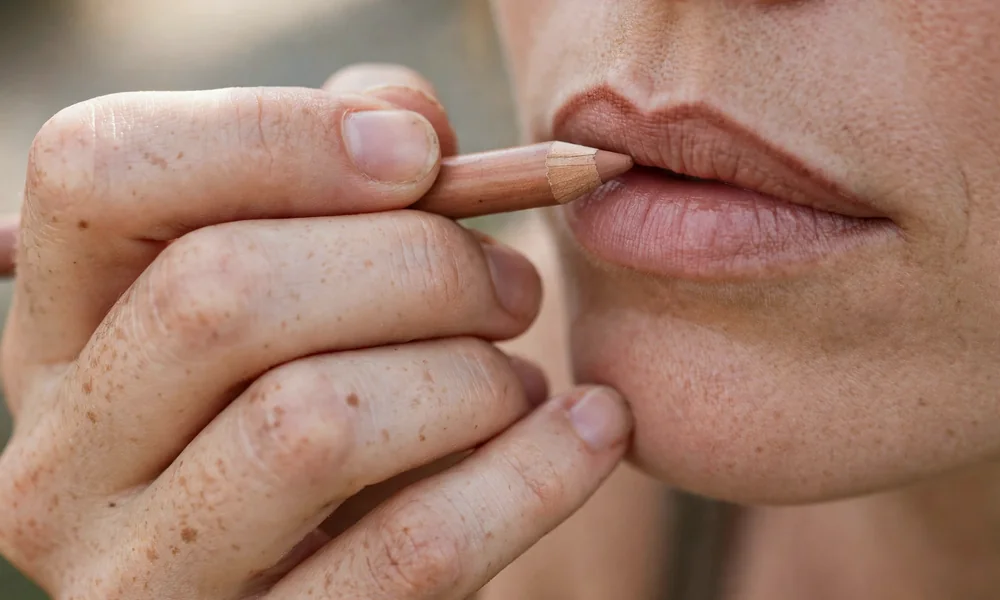
The best lip liners feel almost creamy. The tip deposits colour with barely any pressure, so the line comes out even on the first pass and the lips are never pulled or tugged. That matters more than it sounds, because the skin on the lips is thin and moves easily, and a pencil that drags will always leave a wobbly line no matter how steady your hand is. A creamy formula also means the colour can be built up slowly, a soft wash for daytime or a firmer line for evening, instead of arriving all at once in a harsh stripe.
The second thing the best liners do is stay where they are put. Once the line is drawn, it sets gently and holds its edge through talking, drinking and eating, fading evenly rather than disappearing in patches. This is the whole point of a liner, and it is where the gap between good and bad is widest. A good liner acts like a fence around the lipstick, and by the end of the day the fence is still standing. The lips may have lost some colour in the middle, but the shape is intact, and nothing has bled outside the line.
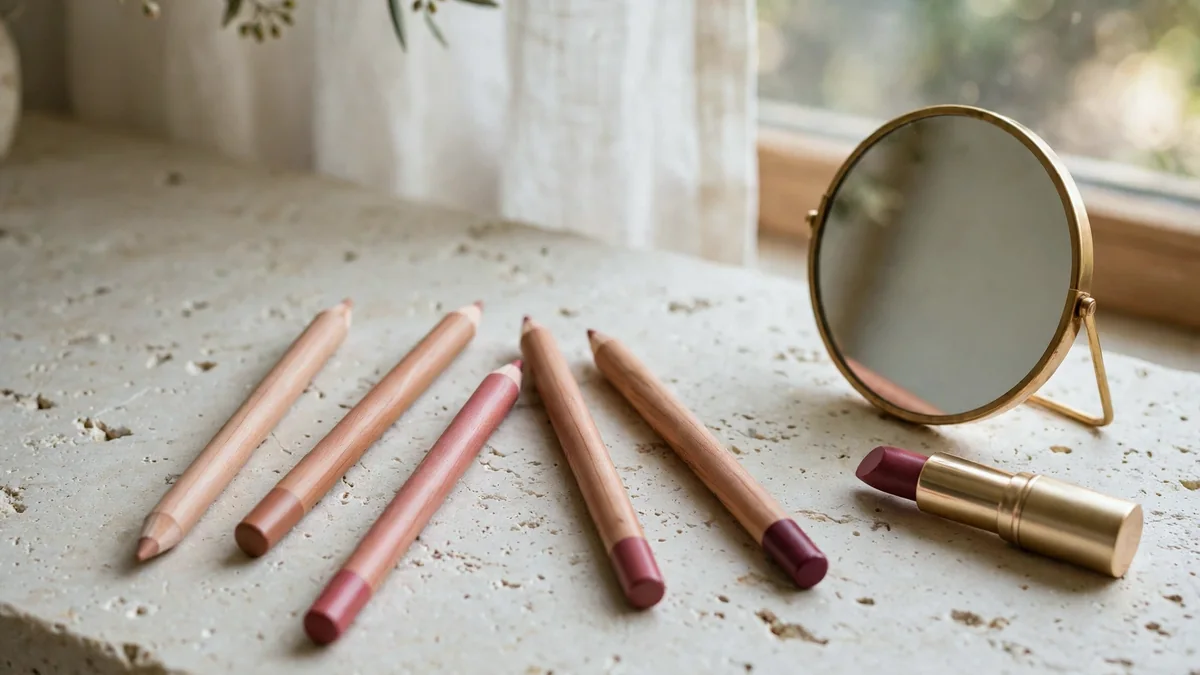
The third difference is the shade range. The best brands offer the colours people actually need: several nudes that match real lip tones rather than one pinky beige, a true rose, a deep berry, a red that matches classic red lipstick, and a clear or transparent liner for days when no colour is wanted at all. A liner that is one shade off does not just look slightly wrong, it changes the whole face, making the lips look smaller, darker or more severe than they are. The best liners also layer well, sitting under lipstick without balling up or changing the lipstick colour, and working on their own when the lips are filled in with the pencil alone.
The Worst Lip Liners: How They Fail
The worst lip liners fail in the same few ways, and once you know them you can spot a bad pencil in the shop before you buy it. The first failure is the drag. A dry, waxy pencil needs real pressure to leave any colour, and that pressure pulls the lip, skips over dry patches and leaves a broken, scratchy line. The result looks patchy from the start and only gets worse as the day goes on. The second failure is feathering. Some liners look fine for ten minutes and then the colour starts to creep into the fine lines around the mouth, which is exactly the problem the liner was supposed to solve. By lunchtime the lips look blurred and older, not younger.
Shade Matching: The One Decision That Matters Most
More lip liner looks are ruined by the wrong shade than by the wrong formula. The rule that works for almost everyone is simple: for everyday wear, choose a liner one shade deeper than your natural lip colour, no more. That shade defines the lips without announcing itself, and if the lipstick wears off during the day, what is left still looks like your own lips, only tidier. For a bold lipstick, match the liner to the lipstick, not to the lips. A red lipstick needs a red liner, a berry lipstick needs a berry liner, and a liner that is darker than the lipstick will show at the edges all day.
Why Wooden Pencils Still Win
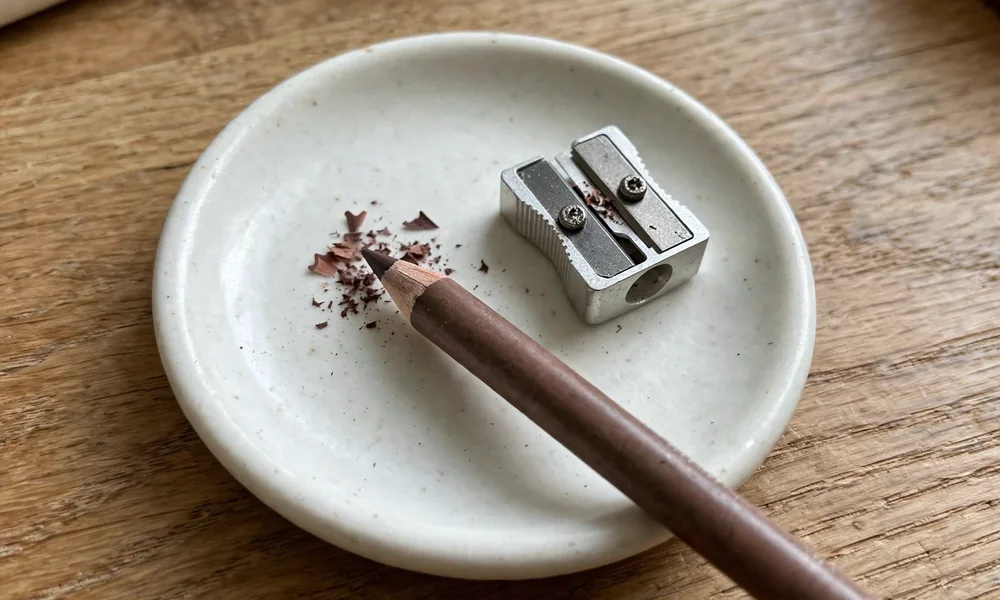
Most lip liners still come as wooden pencils, and for most people they remain the best choice. A wooden pencil can be sharpened to a fine point whenever it is needed, which is what a clean edge depends on, and the formula tends to be firmer and longer wearing than the alternatives. The price is the sharpening itself: a little product is lost each time, and a cheap sharpener can snap the tip or chew the wood. Keep a good sharpener, sharpen little and often, and a wooden pencil will outlast most of its rivals.
How to Apply Lip Liner So It Disappears
Good application starts before the pencil touches the lips. The lips should be smooth and lightly moisturised, with any balm blotted off, because liner slides on balm and will not grip. Start at the cupid’s bow, drawing two short strokes down from the centre, then work outwards along the top lip in short, light strokes, and do the same along the bottom lip from the centre out. Never draw one continuous line around the whole mouth: it is almost impossible to keep even, and a wobble in the middle ruins the whole edge.
Once the outline is drawn, fill the lips in lightly with the same pencil, especially at the corners and along the edge, which is what stops the lipstick from fading into a ring. Then soften the inner edge with a fingertip or a small brush so there is no hard line between the liner and the bare lip, and only then apply the lipstick. The test is simple: step back from the mirror and look at the whole face. If you can see the liner as a separate line, it needs more blending. If the lips simply look neater, fuller and more finished, the liner has done its job and disappeared, which is exactly what it should do.
The Five Mistakes That Ruin a Lip Line
The first mistake is lining outside the natural lip line. A tiny amount of over-lining at the cupid’s bow can look full and pretty, but drawing a whole new lip shape outside the real one looks drawn on in daylight and worse in photographs. The second mistake is choosing a liner darker than the lipstick, which guarantees the ring effect by the afternoon. The third mistake is skipping the fill-in step, which leaves the edge clinging while the middle fades. The fourth mistake is applying liner over a thick layer of balm, which makes it slip, feather and vanish within the hour. And the fifth mistake is pressing too hard with a dry pencil, which leaves a harsh, uneven line and pulls the lip out of shape while you draw it.
There is also a quieter mistake, which is never replacing the pencil. A lip liner that has been open for a year or more dries out, and a dried-out liner drags, skips and flakes no matter how good it was when it was new. If a pencil that used to glide now needs pressure, it is not your technique that has changed, it is the pencil, and it is time to replace it. The same goes for a twist-up that has gone soft in a warm bag: once the formula has changed, no amount of careful application will bring back the line it used to draw. For the days when the lips themselves need care before any colour goes on, our comparison of the best and worst lip balms of 2026 is the right place to start, and for a softer, shinier finish over a lined lip, our comparison of the best and worst lip glosses of 2026 shows what to layer on top.

The Verdict
The best lip liners of 2026 are the ones you forget you are wearing. They glide on without dragging, hold a clean edge for hours, fade evenly instead of leaving a ring, and leave the lips feeling normal underneath. They are quiet products, and their quietness is the point: a liner should frame the lips, not star in the look. The worst ones fail the same tests in the same order: a dry pencil that drags, an edge that feathers into the lines around the mouth, a ring left behind when the lipstick fades, and lips that feel tight and flaky by the afternoon.
Buy for the glide and the shade, not for the brand. Choose a creamy pencil that deposits colour with light pressure, a nude that matches your own lips for everyday wear, and a sharpener you will actually use. Apply it in short, light strokes, fill the lips in, blend the inner edge, and let the lipstick do the talking. Get those right and a good liner earns its place in your makeup bag every single day, quietly making everything else look better.