
A mechanical keyboard can be the best thing on your desk or the most annoying. The difference is not the price tag or the brand on the box. It is the switch under each key, the weight of the case, the way the stabilisers are tuned, and the care that went into the details you only notice after a week of typing. In 2026 the gap between the best and the worst mechanical keyboards is wider than ever. Good boards have never been this good, with smooth factory-lubed switches, deep satisfying sound, and hot-swappable sockets even at modest prices. Bad boards have never been this easy to buy, dressed up with bright lighting and gaming styling that hides wobbly keys, hollow cases, and switches that feel like typing on wet sponge.
How We Judged the Best and the Worst
A keyboard earns its place on the best side by doing the basic job brilliantly: letting you type accurately and comfortably for hours, day after day. A keyboard lands on the worst side when it fails at that job, however good it looks in a product photo. We judged every board on the same seven things. Typing feel comes first, because it is what your fingers notice within seconds. Sound comes next, because a rattly or pinging board will annoy you and everyone near you. Build quality covers the case, the plate, the keycaps, and whether the board flexes or creaks when you pick it up. Layout covers the size, the spacing, and whether the keys you need most are where your fingers expect them. Connectivity covers wired reliability, wireless stability, and battery life. Durability covers how the board holds up after months of daily use, not just the first afternoon. Value covers what you get for the price, because a cheap board that types well is a better buy than an expensive board that does not.
The Best Side: What Great Mechanical Keyboards Do Right
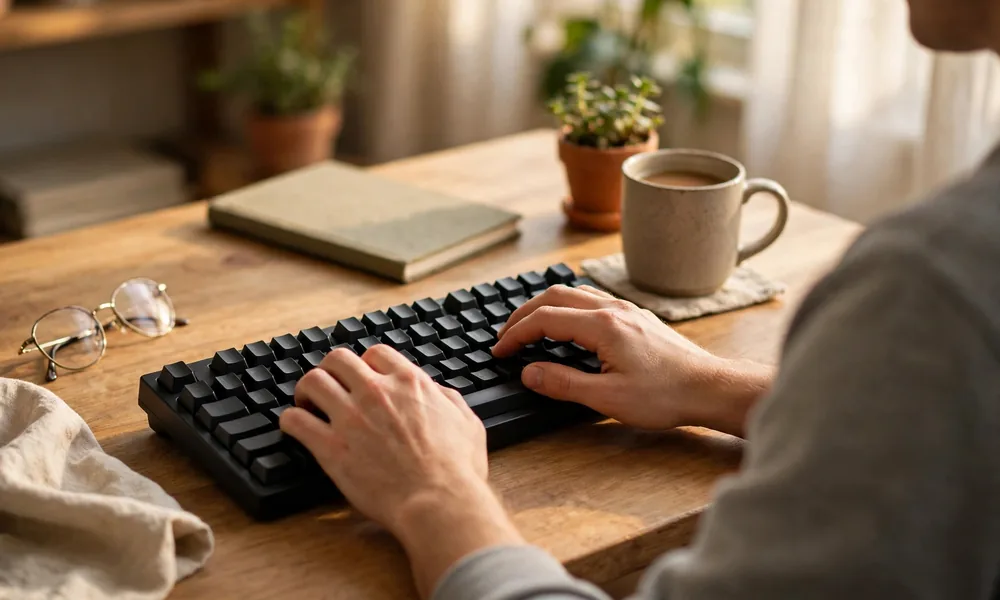
The best mechanical keyboards share a set of qualities that show up the moment you start typing. The keys move smoothly, with no scratchiness or wobble. Each press feels consistent, from the space bar to the smallest key in the corner. The sound is deep and muted rather than hollow and rattly, the result of dampening foam, a heavier case, and stabilisers that have been lubricated properly. Nothing about the board feels flimsy. Pick it up and it has a reassuring weight. Put it down and it stays put, thanks to a solid case and decent rubber feet.
Switches That Feel Finished
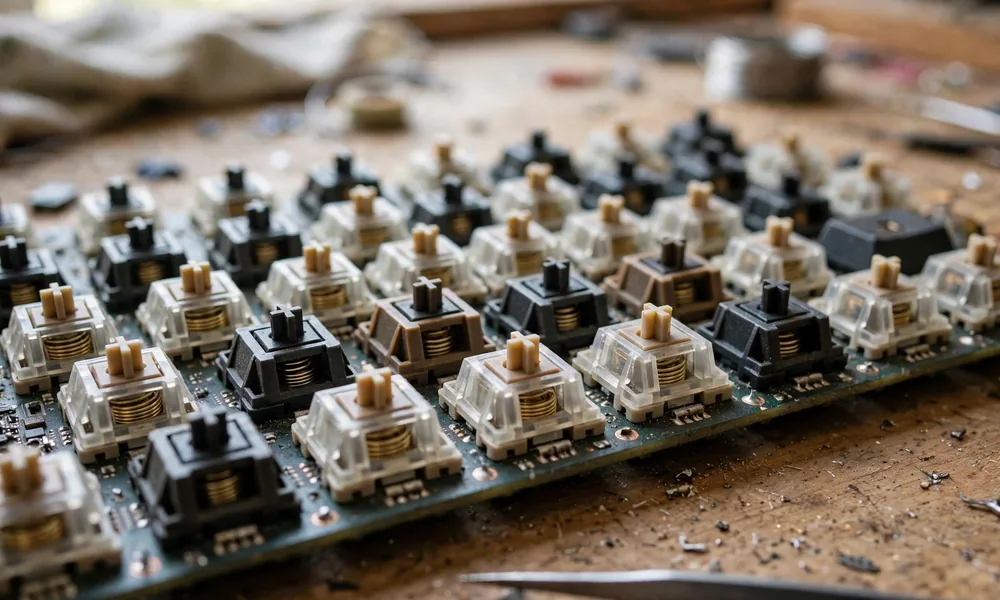
Switches are the heart of a mechanical keyboard, and the best boards treat them that way. Linear switches glide straight down with no bump and no click, making them the safest all-round choice for typing and gaming alike. Tactile switches add a small bump halfway through the press, giving your fingers a quiet confirmation of each keystroke. Clicky switches add a bump and an audible click, which some people love and most colleagues do not. The best boards offer a choice, and the switches they ship with feel smooth from the first press, with no scratchiness and no spring ping. Factory lubrication has become standard on good boards in 2026, and the difference is easy to hear: a lubed switch sounds deep and clean, while a dry switch sounds thin and rattly.
Sound You Actually Enjoy
Sound is the most underrated part of a keyboard, and it is where the best boards pull furthest ahead. A great board sounds deep, soft, and slightly muted, like a gentle thock rather than a clack. That sound comes from a combination of things: a gasket-mounted plate that lets the board flex slightly, layers of foam that absorb echoes inside the case, and stabilisers that are lubed and fitted so the space bar does not rattle. The worst boards skip all of this. Their cases are empty and hollow, so every keystroke echoes, and their stabilisers rattle so loudly that the space bar sounds broken. If you work in a shared room or an open office, sound matters even more. A quiet board with linear switches and dampening foam is a kindness to everyone around you, and it is one of the clearest signs that a board was designed by people who actually type on it.
The Worst Side: Where Bad Boards Go Wrong
The worst mechanical keyboards fail in ways that are easy to miss in a shop and impossible to ignore at home. The most common failure is the switch. Cheap boards ship with switches that are scratchy, inconsistent, or mushy, with some keys feeling heavier than others and a few that stick or double-type. The second failure is the stabiliser. A bad stabiliser makes the space bar, Enter, and Shift keys rattle and wobble, and it is the single most annoying sound a keyboard can make. The third failure is the case. Thin plastic cases with no foam inside sound hollow and cheap, and they flex when you type hard, which makes the whole board feel flimsy.
The Mushy Switch Problem
The single most common sign of a bad mechanical keyboard is a mushy switch. It feels like pressing a key through a layer of sponge: slow, vague, and tiring. Your fingers never get a clean signal that the key has registered, so you press harder than you need to, and by the end of the day your hands ache. Mushy switches usually come from cheap switch designs or from switches that were never lubricated, and they get worse with time as the cheap plastic wears. If you test a keyboard in a shop and the keys feel vague or inconsistent, walk away. No amount of lighting or styling will fix a switch that feels wrong.
Rattle, Ping, and Hollow Sound
Bad sound is the second giveaway. Pick up a cheap board and tap a few keys: if the space bar rattles, if you can hear a metallic ping after each press, or if the whole case sounds like an empty box, the board was built without dampening and without care. Stabiliser rattle is the worst of these, because you press the space bar more than any other key. A rattly space bar will annoy you within a day and drive everyone near you to distraction within a week. Ping comes from unlubed springs, and it is the high metallic ring you hear after a keystroke. Hollow sound comes from an empty case with no foam. All three are fixable in a good board, and all three are ignored in a bad one.
Best vs Worst Mechanical Keyboards at a Glance
The table below sums up the comparison. It is the quickest way to see why the best boards cost what they do, and why the worst boards cost you more in frustration than you save in money.
| Feature | The Best | The Worst |
|---|---|---|
| Switches | Smooth, consistent, factory-lubed | Scratchy, mushy, inconsistent |
| Sound | Deep, muted, satisfying | Hollow, rattly, pinging |
| Stabilisers | Lubed, quiet, stable | Rattly, wobbly space bar |
| Case | Solid, weighted, foam-dampened | Thin plastic, hollow, flexing |
| Keycaps | Thick PBT, durable legends | Thin ABS, legends wear off |
| Layout | Sensible, full-size arrows | Cramped, missing keys |
| Repairability | Hot-swappable switches | Soldered, sealed shut |
| Wireless | Stable, long battery life | Drops out, dies quickly |
If a board ticks the boxes on the left, it is probably a good buy at almost any price. If it ticks the boxes on the right, no discount makes it worth owning.
The Best Mechanical Keyboards by Use
There is no single best mechanical keyboard for everyone, because the right board depends on what you do with it. Writers should look for a comfortable tactile or linear switch, a full-size or 75 percent layout, and a quiet sound profile that will not tire the ears over a long day. Gamers should look for fast linear switches, a high polling rate, and a layout that keeps the keys they need within easy reach, with hot-swappable sockets so they can tune the feel later. Office workers should prioritise quiet switches, dampening foam, and a wireless connection that does not drop during a call. And if you are buying your first mechanical keyboard, a hot-swappable 75 percent board with linear switches is the safest starting point: it gives you the function keys and arrows most people need, in a compact frame that suits most desks, and it lets you change switches later without buying a whole new board.
For a deeper look at the top picks in each category, see our guide to the best mechanical keyboards of 2026, which rounds up the strongest boards for typing, gaming, and quiet offices, and our companion guide to the best mechanical keyboards for gaming if speed and responsiveness are your priority.

The Worst Traps to Avoid
The worst mechanical keyboards are not always the cheapest ones. Some of the most disappointing boards cost real money and still fail on the basics. The traps to avoid are the same ones that show up again and again. Do not buy a board because of its lighting: rainbow LEDs say nothing about how the switches feel. Do not buy a board because it is labelled for gaming if the switches are mushy and the stabilisers rattle. Do not buy a board with a layout you have not checked against your own habits. And do not buy a board from a seller with no returns policy, because the only honest test of a keyboard is typing on it for a few days.
Our guide to the worst keyboards of 2026 names the bad types in detail, from mushy rubber-dome boards to cramped wireless keyboards, and explains the warning signs to spot before you pay. Read it before you buy, and you will save yourself the cost and the frustration of replacing a board you never liked.
There are two more habits that protect you. First, test the feel, the noise, and the layout before you commit, even if that means ordering from a shop with a fair returns policy and sending it back. Second, ignore the marketing claims about silence and speed, and check the things that actually matter: are the switches smooth, are the stabilisers quiet, does the case sound solid, and do the keys sit where your fingers expect them. If the answer to all four is yes, you have found a good board.
Verdict: The Best Wins on Feel, Not Flash
The verdict is clear. The best mechanical keyboards of 2026 win because they get the fundamentals right: smooth switches, quiet stabilisers, a solid case, and a sensible layout. The worst lose because they spend their budget on the things you see in a photo and ignore the things your fingers feel every day. The gap between the two is not subtle. Put a good board and a bad board side by side, type a paragraph on each, and you will know within a minute which one you want to live with.
Who Each Side Is For
The best mechanical keyboards are for anyone who types for a living, plays games seriously, or simply spends hours a day at a keyboard and wants those hours to feel good. Writers, programmers, students, and office workers all benefit from a board that is smooth, quiet, and comfortable, and the difference over a year of daily use is enormous. The worst mechanical keyboards are for no one, really, but they do have one honest use: they are a warning. If you are on a very tight budget and the choice is between a bad mechanical board and a decent membrane keyboard, the membrane board is often the better buy. A keyboard that feels mushy and rattles is not better than a simple keyboard just because it has mechanical switches. Buy the best board you can afford, test it properly, and keep it for years. That is the whole secret.


