
A microwave is the hardest-working box in most kitchens, and also the one we think about least. It reheats last night’s dinner in two minutes, defrosts the mince you forgot to take out, warms the baby’s bottle, and rescues a cold cup of tea. The best microwaves of 2026 do all of that quietly and evenly, without fuss and without drama. The worst ones leave you with a plate that is scalding at the edges and stone cold in the middle, a door that rattles, and a smell that never quite goes away.
This comparison puts the best microwaves of 2026 head to head against the worst, judging them the way you would actually use them: reheating a plate of leftovers after work, cooking a jacket potato on a busy evening, defrosting chicken for tonight’s dinner, and warming milk at midnight. We look at evenness of heating, power and capacity, ease of use, build quality, noise, and how long the machine is likely to last. The same honest approach sits behind our comparison of the best and worst blenders of 2026, because a microwave is only one part of a kitchen that has to work together.
Key Takeaways
- Judge a microwave by how evenly it heats a plate of food, not by the wattage printed on the box.
- A turntable that actually turns, and a cavity that is easy to wipe clean, matter more than a dozen preset buttons.
- Flatbed models heat more evenly than turntable models, but only if the cavity is wide enough for your plates.
- Cheap microwaves often cost more in the long run, because they cook unevenly and break sooner.
- Buy the size that fits your plates and your kitchen, not the biggest machine you can afford.
What Makes a Microwave Good or Bad
The first thing that separates a good microwave from a bad one is even heating. A good microwave spreads its energy evenly across the food, so a bowl of soup is hot all the way through and a plate of pasta has no cold patches hiding in the middle. The best models of 2026 do this with a well-designed cavity, a reliable turntable or a flatbed system, and a magnetron that delivers steady power rather than blasting in short bursts. The worst models leave cold spots that are not just annoying but genuinely unsafe, because food that looks hot on the outside can still be lukewarm where bacteria survive.
The second test is power, and it is not as simple as the number on the box. A microwave rated at 800 watts should cook noticeably faster than one rated at 700 watts, but only if it delivers that power consistently. Cheap models often claim a high wattage and then cycle on and off so aggressively that cooking times stretch out anyway. The best microwaves are honest about their output: a mug of water boils when you expect it to, and a jacket potato cooks through in the time the instructions suggest.
Ease of use is the third test, and it matters more than most buyers expect. A good microwave has a clear display, buttons you can find without your glasses, and a door that opens and closes with one hand when the other is holding a hot plate. The worst microwaves hide simple functions behind menus, beep loudly at two in the morning, and have a start button that needs three presses. If a machine is awkward to use on the first day, it will still be awkward in three years.
The Best Microwaves of 2026
The best microwaves of 2026 are the ones that disappear into your routine. They are the countertop models with a generous cavity, a turntable that spins smoothly, and controls that a child or a grandparent can use without a manual. They heat evenly, they are quiet enough to run while someone is on the phone in the next room, and their interiors wipe clean with a single pass of a cloth.

What the best models share is a feeling of solidity. The door closes with a reassuring click rather than a rattle, the cavity light is bright enough to see the food properly, and the turntable does not wobble or stick. Many of the best microwaves now use inverter technology, which delivers steady low power for defrosting and gentle warming instead of switching the magnetron on and off. That means chocolate melts without seizing, butter softens without turning to oil, and fish defrosts without starting to cook at the edges.
The Worst Microwaves of 2026
The worst microwaves of 2026 are not always the cheapest, and that is what makes them so frustrating. Some look smart on the shelf, with a mirrored door and a long list of auto-cook programmes, but within a few months the problems start: the turntable stops turning, the door latch loosens, and the heating becomes patchy. Owners find themselves stopping the machine halfway through to stir the food, then stopping it again, because the middle never gets hot.
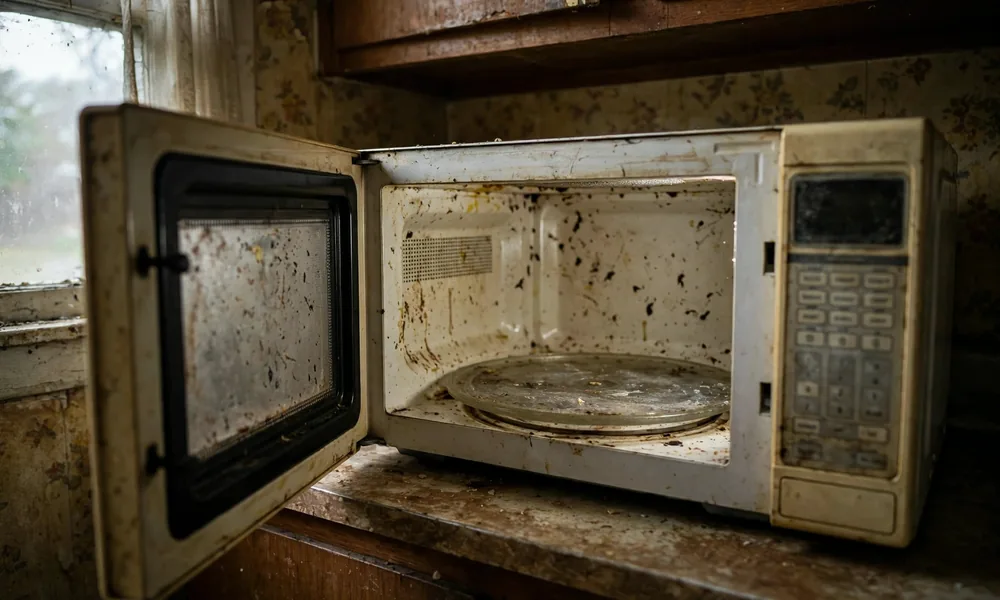
Noise is where many of the worst microwaves fall down hardest. A cheap magnetron and a rattling fan can make a small kitchen unbearable, and the beep that announces the end of cooking is often loud enough to wake a sleeping baby. Some of the worst models also hum and buzz while they are supposedly on standby, and their cooling fans keep running long after the food is out.
Then there is cleaning. The worst microwaves have cavities with awkward seams, a turntable ring that traps food underneath, and a door window that clouds up and never clears. Spills bake on, smells linger, and after a year the inside looks tired no matter how often you wipe it. A microwave that is hard to clean is a microwave that gets used less, and that defeats the whole point of owning one.
Countertop, Built-In, or Combination: Which Type Wins
Countertop microwaves win for most kitchens, and it is not close. They are easy to install, easy to replace, and easy to move if you rearrange the kitchen. The best countertop models of 2026 offer a generous cavity, honest power, and simple controls, and they cost far less than a built-in model. Their weakness is worktop space: in a small kitchen, a big microwave can eat up the surface you need for chopping and preparing food.
Built-in microwaves are the neat solution for a fitted kitchen. They sit at eye level or in a tall unit, they free up the worktop, and they look tidy. But they cost more, they are harder to replace when they fail, and their cavities are often smaller than a countertop model of the same price. If your kitchen is being designed from scratch, a built-in microwave is worth considering; if you are replacing a broken machine, a countertop model is usually the smarter buy.
Power, Capacity, and the Numbers That Actually Matter
Wattage is the number everyone quotes, and it does matter, but only up to a point. A microwave rated at 700 watts will reheat a plate in about three minutes; one rated at 1000 watts will do it in about two. The difference is real, but a 1000-watt machine that heats unevenly is still worse than an 800-watt machine that heats evenly. Look for inverter or steady-power technology, and read owner reviews about cold spots rather than trusting the wattage alone.
Capacity is measured in litres, and it is the number that decides whether your plates fit. A 17-litre microwave is fine for a single person reheating mugs and small plates, but it will not take a large dinner plate. A 23-litre model suits most families, and a 25-litre or larger model handles big plates and casserole dishes. Measure your largest plate before you buy, and remember that a turntable needs clearance all round.
Defrosting deserves the same attention as cooking power. A good microwave defrosts by weight, delivering gentle, even energy so that mince thaws without cooking at the edges. A bad one blasts the outside and leaves the centre frozen, so you end up finishing the job in a bowl of cold water. The same care applies to the rest of the kitchen, and our comparison of the best and worst toasters of 2026 shows how much difference a good breakfast appliance makes.
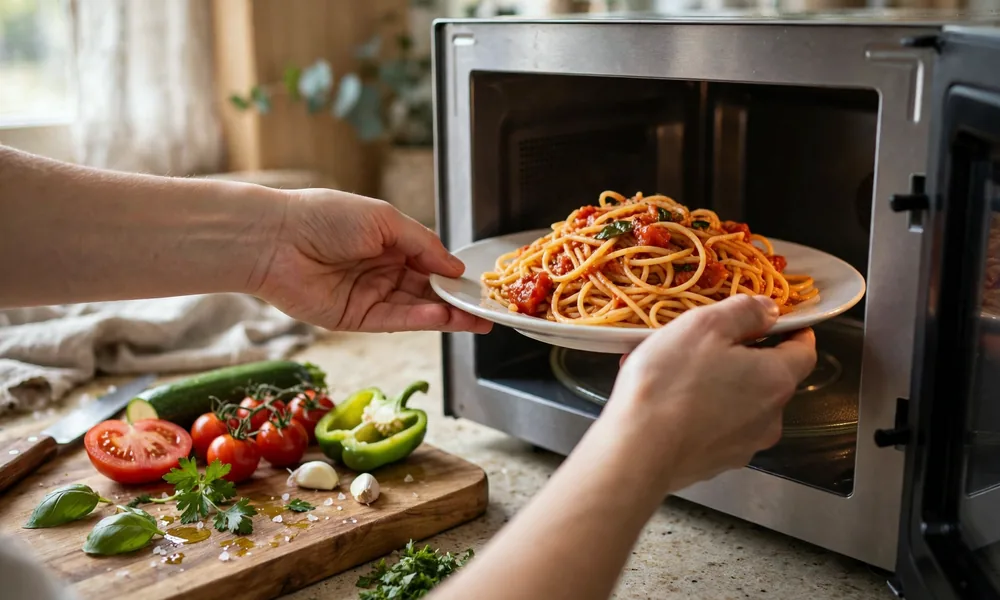
How to Buy a Microwave Without Regret
The single most useful thing you can do before buying a microwave is to measure. Measure the space on your worktop or in your unit, measure your largest plate, and measure the height of your tallest mug. A microwave that does not fit is a microwave you will regret, however good its reviews are. Take a tape measure to the shop, or check the dimensions carefully online, and leave a few centimetres of ventilation space around the machine.
Test the door and the controls with your own hands if you can. Open and close the door, press the buttons, and see whether the display is readable in normal light. A door that needs a firm yank will annoy you every day, and a touch panel that only responds to a precise fingertip is a poor choice for a busy kitchen. Simple dials and a handful of clear buttons beat a long list of presets you will never use.
Finally, read owner reviews for the exact model you are considering, and pay attention to what people say after six months rather than six days. A microwave that heats evenly when new and still heats evenly a year later is the one to buy. Check the warranty too: a two-year or three-year guarantee is a sign that the maker expects the machine to last, and a one-year guarantee on a cheap model is often a warning. Our comparison of the best and worst air fryers of 2026 follows the same rule, because a kitchen appliance earns its keep over years, not weeks.
Best vs Worst Microwaves: The Comparison
| Feature | Best Microwaves | Worst Microwaves |
|---|---|---|
| Heating | Even, no cold spots | Patchy, cold centre |
| Power | Steady, honest output | Cycles harshly, slow |
| Defrosting | Gentle, by weight | Cooks edges, frozen middle |
| Build | Solid door, smooth turntable | Rattles, loose latch |
| Cleaning | Smooth cavity, wipes clean | Seams trap food and smells |
| Noise | Quiet fan, muteable beep | Loud hum and harsh beep |
| Value | Lasts years, cheap to run | Breaks early, false economy |
The Verdict
The best microwaves of 2026 are the ones that make life easier without asking for much in return. They heat evenly, they defrost gently, they are quiet and easy to clean, and they keep working year after year. They do not need a dozen programmes or a mirrored door: they simply do the job they were bought for, every single day, without a cold spot or a rattle.
The worst microwaves of 2026 are the ones that demand too much and give too little back: too much stirring, too much noise, too much cleaning, and too much of your money spent on a machine that fails early. A microwave is a tool you rely on several times a day, and when it heats unevenly, everything you cook with it suffers.
So buy with your head as well as your eyes. Choose the size that fits your plates and your kitchen, pick steady power over a big wattage number, and walk away from anything with a wobbling turntable or a door that does not close cleanly. Measure first, test the controls, and read what owners say after a year, not a week.


