
A sleep mask is the cheapest way to buy darkness. It costs less than a takeaway, it needs no installation, and it works on the first night. Yet the gap between a good sleep mask and a bad one is enormous. The best sleep masks of 2026 block light completely, feel like almost nothing on your face, and stay in place until morning. The worst slip up your forehead by midnight, press on your eyelids, leak light around the nose, and leave you more tired than you were without one.
This comparison looks at both sides honestly. It covers the designs that genuinely help you sleep, the ones that look convincing in a product photo but fail in a dark bedroom, and the small details that separate the two. If you are building a quieter bedroom as well as a darker one, our guide to the best sleep earplugs of 2026 covers the other half of the problem, because blocking sound and light together works better than either one alone.
Key Takeaways
- A contoured 3D mask is the best choice for most people, because moulded eye cups keep fabric off your eyelids and seal out light.
- A silk mask is the best choice for sensitive skin, because it is cool, smooth, and gentle around the eyes, even though it blocks slightly less light.
- A flat, thin mask with a narrow strap is the worst choice for most people, because it leaks light, presses on the eyes, and slides out of place.
- A wide, adjustable strap matters more than the brand name: most discomfort comes from a strap that is too tight or too thin.
- Side sleepers need a low-profile mask with a flat strap, so the mask does not shift against the pillow during the night.
What Makes a Sleep Mask Good or Bad
Light blocking is the first test, and it depends more on shape than on thickness. A mask can be made from thick fabric and still fail, because light does not come through the front of the mask. It sneaks in around the edges, especially at the bridge of the nose, where the face curves away from a flat piece of cloth. The simple test is to put the mask on in a lit room and open your eyes. If you can see a glow at the edges, the mask will not give you true darkness at night, however dark the fabric looks in the packet.
Comfort is the second test, and it is the one most masks fail over a full night. A mask you notice is a mask you will pull off at three in the morning, half asleep, without remembering that you did it. Pressure on the eyelids is the most common complaint. Flat masks rest directly on the lashes, and every blink reminds you that something is sitting on your eyes. Contoured masks solve this by holding the fabric away from the face, so you can blink freely and even open your eyes in the dark without touching cloth. A mask that traps warmth becomes unbearable by midnight, especially in summer, so breathable fabric and a design that lets a little air move around the edges matter more than most buyers expect.
Fit is the third test, and head size varies far more than most brands admit. An adjustable strap is essential, and a wide elastic band spreads pressure evenly instead of digging a thin line across the back of your head. Velcro adjusts easily but can catch hair and scratch the scalp, while a smooth buckle strap stays put and feels better against the skin. The mask should sit flat against your forehead and cheeks without gaps, and it should not slide when you turn over. Getting the fit right takes a few minutes of adjustment on the first night, and it is worth doing properly rather than tightening the strap until the mask hurts.
The Best Sleep Masks of 2026
The contoured 3D mask is the best sleep mask of 2026 for most people, and it is the design most sleep specialists recommend first. Its moulded eye cups sit away from your eyelids, so you can blink without feeling fabric press against your lashes, and the shaped nose bridge seals out the light that flat masks always let through. The wide strap adjusts smoothly without catching hair, and the foam-lined fabric stays cool and washes well. For eight hours of sleep at home, though, nothing else comes close, and it is the mask to buy if you only buy one.

The silk mask is the best sleep mask for sensitive skin, and the most luxurious feeling of the designs in this comparison. Good mulberry silk is cool, smooth, and kind to the delicate skin around the eyes, and it leaves no marks or creases in the morning. Light blocking is very good rather than perfect, because silk masks are usually flat, so they press lightly on the eyes and can leave a small gap at the nose. Silk also needs gentle hand washing, and it costs more than cotton. For the right sleeper, though, especially someone whose skin reacts to rough fabric, it is worth every penny, and it pairs well with a dark room rather than replacing one.
The flat packable mask is the best sleep mask for travel, and the one to keep in your hand luggage. It folds completely flat, weighs almost nothing, and usually comes with a slim pouch that keeps it clean in your bag. The wide elastic strap adjusts easily, and a contoured nose piece blocks more light than most flat masks manage. As a travel companion, though, for flights, trains, and hotel rooms with thin curtains, it is hard to beat, and at its budget price you will not worry about losing it on the way home.
The Worst Sleep Masks of 2026
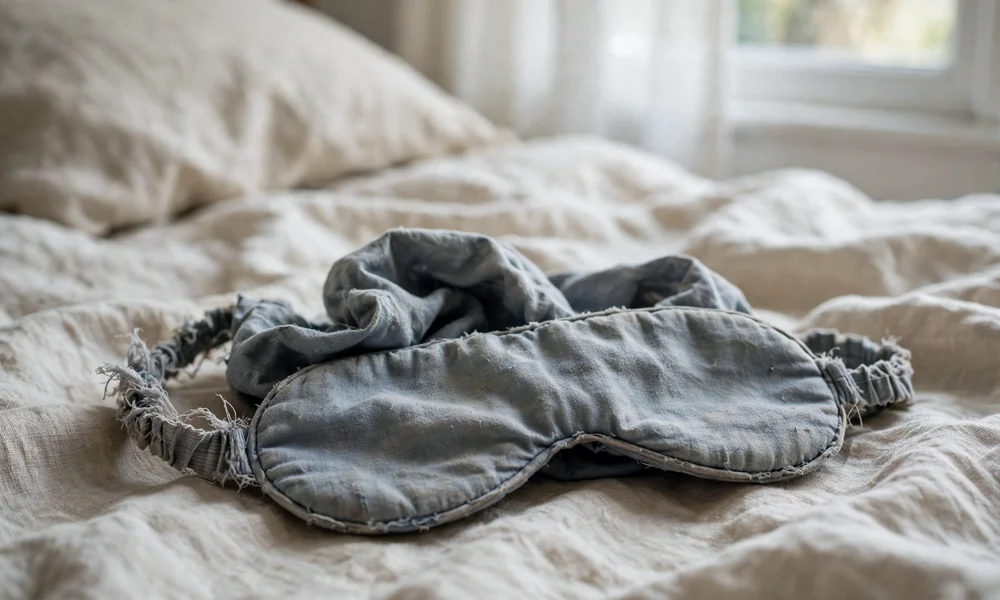
The thin flat mask with a narrow strap is the worst sleep mask you can buy, and it is also the most common one in cheap online listings and hotel gift shops. It looks fine in a product photo, which is exactly the problem. In use, the thin fabric lets a surprising amount of light through, the flat shape presses on your eyelids, and the narrow strap digs into the back of your head and slides up as you turn over. If a listing shows a mask that looks like a thin strip of cloth with a cord for a strap, keep scrolling.

The shiny polyester mask is the worst sleep mask for hot sleepers, and the most deceptive design on the market. It is sold as silk, it looks like silk in a photo, and it feels slippery in the hand, but the fabric is cheap polyester that traps heat and makes your face sweat within an hour. Real silk breathes and stays cool; polyester does neither. Check the label before you buy, and if the material is not named, assume it is polyester and move on to a mask that says what it is made from.
The one-size mask with no adjustment is the worst sleep mask for anyone whose head is not exactly average, which is most people. These masks come with a fixed elastic band, no buckle, and no way to loosen or tighten them, so they are either too tight and leave a headache by morning, or too loose and slide up your forehead before midnight. Heads vary enormously in size and shape, and a mask that cannot be adjusted cannot fit them all. A mask without an adjustable strap is not a bargain; it is a mask that was designed for nobody in particular.
How to Choose the Right Mask for How You Sleep
Side sleepers should choose a low-profile mask with a flat strap and shallow eye cups. A bulky contoured mask can press against the pillow and shift every time you turn over, which wakes you up just as surely as light does. A thinner contoured design, or a soft silk mask with a wide strap, usually works better on your side, because there is less for the pillow to push against. Test the mask on your side before the first full night, and lie on both sides to check that it stays put.
Back sleepers have the easiest choice, because almost any well-made mask will work. A full contoured mask is ideal, since there is nothing pressing against it, and a weighted mask is worth trying if you find it hard to settle. Stomach sleepers should look for the thinnest mask that still blocks light, because anything bulky will be pushed into your face by the pillow. If you sleep hot, choose cotton or silk over foam, and avoid weighted and heavily padded designs in summer. If you work nights and sleep through daylight, light blocking matters more than anything else, so choose a contoured mask with a shaped nose bridge and test it in a bright room first.
Who Should Buy Which Type
Light sleepers in bright flats should buy a contoured 3D mask first, because total blackout is what they need most. Pair it with thick curtains or a dark room, and test it in daylight before the first night. A mask that fits well should feel secure without pressure.
People with sensitive skin should buy a silk mask, and wash it gently by hand with a mild soap. If you sleep hot, choose a cotton mask instead, and keep a second mask in the drawer so you always have a clean one while the other is drying. Good sleep hygiene also means a cool, quiet room, and our guide to the best white noise machine for deep sleep in 2026 covers the sound side of a bedroom that helps you stay asleep once the light is gone.
Restless sleepers should try a weighted mask, but buy from a seller with a good returns policy, because weight is personal and some people dislike it immediately. Start with a lighter weighted mask rather than the heaviest one, and give it three or four nights before deciding, since the first night with any new mask feels strange. Travellers should buy a flat packable mask and keep it in their bag permanently, so it is always there when a bright hotel room or an early flight demands it. Our comparison of the best and worst travel pillows of 2026 covers the other half of sleeping well away from home.
The Verdict
The best sleep masks of 2026 are the contoured 3D masks, the silk masks for sensitive skin, and the flat packable masks for travel. They are comfortable, honest, and designed around the simple fact that a mask has to block light and stay put for eight hours. The worst are the thin flat masks, the shiny polyester imitations, and the one-size masks with no adjustment. The price gap between the best and the worst is often less than the cost of a takeaway coffee, which makes the bad choices all the more pointless.
Buy a mask that fits your face and your sleep position, test it in a lit room before the first night, and give it a few nights to feel natural. Do that, and a small piece of fabric will do more for your sleep than any expensive gadget. Choose well, keep it clean, and replace it when the strap stretches or the fabric thins, because a mask that no longer blocks light is no longer doing its job.


