
Tahini looks like the quietest jar in the pantry, and that is exactly why the one you pick matters so much. It is, at its best, just sesame seeds ground until they turn into a smooth, pourable paste, with nothing else added at all. When those few seeds are handled well, the result is a pale, silky paste that tastes gently nutty and faintly bitter, and turns a bowl of hummus, a drizzle over roast vegetables, or a spoonful whisked into a dressing into something worth sitting down for. When they are handled badly, the same jar gives you a stiff, grey paste that tastes of nothing, or a jar of oil floating on top of a bitter brick, or a paste so harsh and gritty that it ruins whatever you stir it into.
The gap between the best tahini of 2026 and the worst is wide, and it usually shows up in four places: the sesame seeds themselves, the texture, the bitterness, and the way the jar behaves over time. A great tahini tastes of sesame first, not of burnt oil or stale nuts, and it pours in a slow, even ribbon from the first spoonful to the last. A bad one is bitter enough to make you wince, or so thick it will not pour at all, or so full of grit that it feels like sand in the mouth. This comparison puts them head to head the way you would actually use them: whisked into hummus, thinned into a sauce for falafel and roast aubergine, drizzled over grain bowls, and stirred into dressings. We look at flavour, texture, bitterness, what is actually in the jar, and whether it earns its place in the cupboard or only its place on the shelf.
Key Takeaways
- A good tahini tastes of toasted sesame first, with a gentle nutty flavour and only a whisper of bitterness, never a harsh or burnt note.
- Check the label: the best jars list sesame seeds as the only ingredient, with salt as the only acceptable addition, and nothing else.
- Hulled tahini is the safest all-rounder for hummus and dressings, while unhulled suits cooks who want a stronger, earthier flavour.
- The worst tahini is bitter and gritty, separates into oil and paste, or is so thick and stiff that it will not pour from the jar.
- The same honest approach sits behind our comparison of the best and worst peanut butters of 2026, because tahini is judged by many of the same rules as its better-known cousin in the spread aisle.
How We Judged the Tahini
We judged every tahini on five things that matter at the kitchen counter rather than on the jar. First, flavour: whether the paste tastes gently of real toasted sesame, with a fresh, nutty finish, or of burnt oil, stale seeds, and bitterness that takes over the dish. Second, texture: whether it pours in a slow, silky ribbon and whiskers smoothly into sauces, or whether it is stiff, dry, gritty, or so runny it will not coat a spoon. Third, bitterness: whether the bitterness is balanced and honest, the natural edge of sesame, or so heavy that it turns hummus into a chore and a dressing into a punishment. Fourth, behaviour in the jar: whether it stays mixed and pourable, or separates into a pool of oil on top of a hard, dry base that needs a wrestling match to stir. Fifth, the label itself: how much sesame is actually in the jar, what has been added to sweeten or stabilise it, and whether the price matches what is inside.

The Best Tahini of 2026
The best tahini starts with more sesame and less noise. A good jar lists sesame seeds near the top of the ingredients, because sesame is the whole point, and uses a short list of additions, ideally none at all. The best hulled versions are the quiet heroes of the shelf. They pour with a pale, even colour, they do not separate in the jar, and they whisk into hummus in one easy pass, because their makers have ground the seeds long enough for the natural oils to do the work instead of adding cheap oil to fake a silky texture. They are rich enough to eat by the spoonful, yet they still taste like something real, which is more than most jars manage.
The Best Tahini Styles at a Glance
| Tahini style | Sesame content | Bitterness | Best for |
|---|---|---|---|
| Hulled, smooth | Nearly all sesame | Gentle | Hummus, dressings, everyday cooking |
| Unhulled, smooth | Nearly all sesame | Stronger | Earthy sauces, grain bowls, baking |
| Roasted sesame tahini | Nearly all sesame | Medium | Deep flavour, noodles, roast vegetables |
| Raw tahini | Nearly all sesame | Mild | Delicate dressings, raw cooking |
| Sweetened tahini spread | Lower | Masked by sugar | A sweet spread, desserts, toast |
Reading the Jar: What the Label Really Tells You
The label is the most honest part of a tahini jar, and it is worth reading before you buy. Most good tahini contains nearly one hundred per cent sesame seeds, and the rest is a pinch of salt, so a jar that lists sesame first and stops there is already a step ahead. Look at what else is in there: a short list of sesame and salt is normal, but a long list of palm oil, sunflower oil, sugar, and emulsifiers means the sesame is doing less of the work than the jar suggests. Added oil is the usual giveaway, put in to stop the paste separating, and while it keeps the jar looking tidy, it dulls the flavour and leaves a greasy coating on the tongue that pure tahini never does.
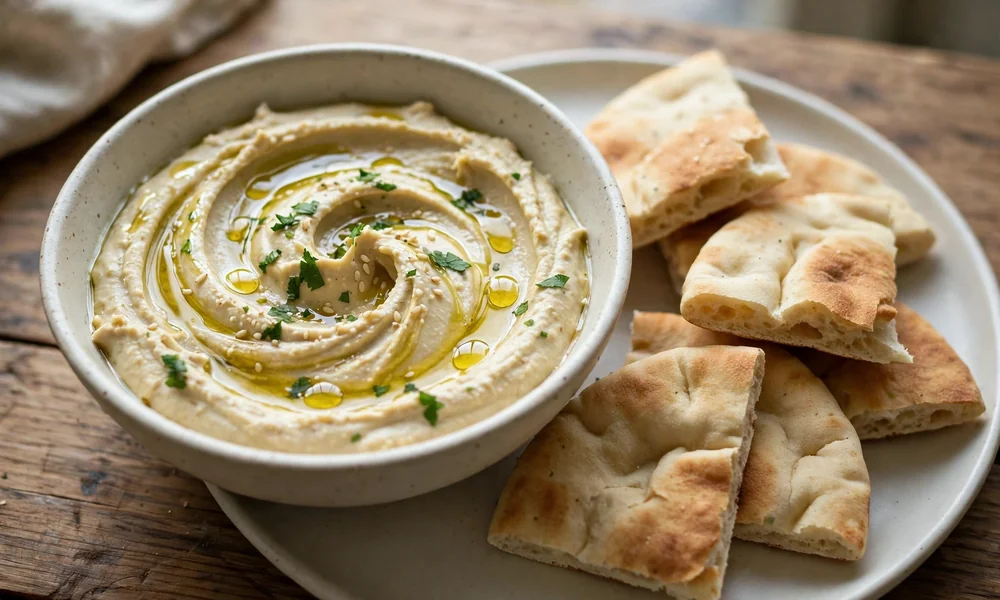
Bitterness is the other thing to watch, because tahini is often made from seeds roasted too hard, which leaves a burnt, harsh edge that no amount of lemon juice can fix. A little bitterness is natural, and a good tahini balances it with a nutty sweetness, but a jar that tastes bitter before you add anything else will only get worse in the dish. Check whether the seeds are hulled or unhulled, because unhulled tahini is naturally more bitter and earthy, and that is fine if you want it, but not if you expected a gentle paste for hummus. The same care applies to the dish itself, and our guide to the best hummus of 2026 shows which hummus is worth buying, because a hummus made from bitter or poor tahini can never taste better than the paste that went into it.
The Worst Tahini of 2026
Separation is where the worst jars really give themselves away. Some arrive with a thick pool of oil on top and a hard, dry brick underneath, and stirring them is a job that takes ten minutes and a strong wrist, only for the jar to separate again within days. Others are the opposite problem, so gritty that they feel like sand between the teeth, usually because the maker ground the seeds too briefly or used poor, stale seed. Then there are the bitter jars that taste of burnt sesame first and everything else second, if at all, with a flavour closer to a scorched pan than to a nutty paste. A good tahini is smooth enough to pour and honest enough to taste of its seeds; a bad one is either a chore to stir or a spoonful of bitterness with a sesame rumour in it.

Best vs Worst Head to Head
Put the two side by side and the differences are plain. The best tahini smells warm and nutty when you open the jar; the worst smells of little, or of stale oil that has been sitting too long. The best tahini tastes of more than one thing, moving from nutty to gently bitter to faintly sweet as you eat it; the worst tastes of one flat note, usually bitterness or grit, and gets worse with every spoonful. The best tahini pours cleanly and leaves you wanting another bowl; the worst clumps in the jar, grits between the teeth, or leaves a bitter, oily feeling and a jar you are glad to see the back of.
How to Choose a Tahini Without Regret
The single most useful thing you can do is to read the label before you buy, and to buy the jar with the shortest list. Sesame first, salt if you like it, and nothing else is the gold standard, and any jar that meets it is already ahead of most of the shelf. While you read, check whether the seeds are hulled or unhulled, because a jar that hides its bitterness behind a plain label is usually hiding quite a lot of it. Then pick your style and stick with it: hulled and smooth if you make hummus and dressings, unhulled if you want a stronger, earthier paste, roasted if you want the deepest flavour, and sweetened only if you are buying a treat rather than a staple.
Once the jar is home, stir it properly the first time and then store it upside down, which keeps the oil mixed through the paste instead of pooling on top. A good jar needs one proper stir and then behaves itself; a bad jar will separate again no matter what you do, and that is the jar telling you not to buy it again. Taste it on its own before you judge it in hummus, because a paste that tastes bitter by the spoonful will taste bitter everywhere else too. And if you are still deciding between sesame pastes, our guide to the best tahini of 2026 covers the single-jar winners in detail, while the comparison above will help you choose between the pastes themselves.
The Verdict
The verdict is clear: buy a smooth hulled tahini made from nearly all sesame seeds, with salt as the only addition, and use it in hummus, in dressings, or drizzled over roast vegetables. Choose unhulled when you want a stronger, earthier flavour, and roasted when you want the deepest sesame note. Do not buy tahini that lists added oil or sugar near the top of the label, a jar that separates into oil and brick within days, or a paste so bitter that the sesame is an afterthought. Buy a short label, stir it once, and let the sesame do the talking, because those three things are what you actually taste.
Who Each Is For
The best tahini is for anyone who cooks slowly and wants the flavour to be worth the pause: the hummus that starts the meal properly, the dressing that should be a pleasure rather than a chore, and the spoonful whisked into a sauce that costs little and tastes like care. The worst tahini, if it suits anyone at all, suits only a pantry in a hurry, someone who wants the idea of tahini and does not mind what it tastes like, and even then a good jar costs little more and gives a great deal more. Buy a short label, stir it once, and enjoy the difference every time you lift the spoon.


