
A toothbrush holder is the smallest thing on the bathroom sink, and the one that quietly decides how clean your toothbrushes stay. A good one holds each brush upright, keeps the heads apart, and lets air reach them so they dry properly. A bad one lets the brushes lean together, traps water at the bottom, and turns into a damp cup that you would rather not look inside. The difference between the best and the worst toothbrush holders in 2026 is the difference between a sink that feels fresh and hygienic and one that always looks slightly grubby, no matter how often you clean it.
Toothbrush holders have quietly become more varied in recent years. The best ones are made from ceramic, bamboo, or solid metal, with separate slots or compartments and a base that drains or comes apart for cleaning. The worst ones look neat in a photograph and fail within weeks: a cup that is too narrow, a base that never dries, and brushes that fall over or touch each other every time you reach for one.
This head-to-head comparison puts the two sides against each other properly. On one side, the holders that keep brushes upright, separated, and dry, and that are easy to clean. On the other, the ones that trap water, let brush heads touch, and turn into a home for toothpaste smears and damp. By the end, you will know which kind belongs on your sink and which kind should never have been bought in the first place.
Key Takeaways
- A good toothbrush holder keeps each brush upright and separated, so the heads never touch.
- Ceramic, bamboo, and solid metal holders last longer and clean more easily than thin plastic cups.
- A holder that drains, or comes apart for cleaning, stays fresh far longer than a sealed cup.
- Cheap cups trap water at the bottom, let brushes lean together, and stain quickly.
- The right holder depends on how many brushes you have, and on who will be using it every day.
What Makes a Great Toothbrush Holder
A great toothbrush holder is judged by three things: how it holds the brushes, how dry it stays, and how easy it is to clean. The holder should keep each brush upright and apart, with enough space between the heads that they do not touch when you put a brush back or take one out. Brushes that touch each other defeat the point of a holder, especially in a family bathroom where several people share the same sink.
Cleanliness comes down to shape and materials. A holder with a smooth inside, a removable base, or separate compartments is far easier to keep fresh than a narrow cup with a fixed bottom you cannot reach. A heavy base stops the holder tipping over when you pull a brush out one-handed. Ceramic and bamboo wipe clean and do not hold smells, while cheap plastic can stain and keep a faint smell even after washing.
The Best Side: Holders That Keep Brushes Clean and Dry
The best toothbrush holders share one quality: you stop thinking about them. The brushes stand upright, the holder stays dry, and the sink stays tidy. Three kinds stand out in 2026, each suited to a different bathroom.
Ceramic Holders With Separate Compartments
A good ceramic holder is the classic choice, and for good reason. It is heavy enough to stay put, it wipes clean in seconds, and it suits almost any bathroom, from a plain family bathroom to a carefully styled guest bathroom. The best ones have separate compartments or slots, so each brush has its own space and the heads never touch, and a glazed finish that resists toothpaste stains.

Wall-Mounted Holders With Individual Slots
A wall-mounted holder is the pick for a busy household, a small bathroom, or anyone who wants the counter kept clear. Each brush hangs in its own slot, head up and handle down, with air all around it. There is no cup to fill with water, no base to go damp, and nothing for toothpaste to collect in. The brushes dry faster, and the sink stays clear for everything else.
The best wall-mounted holders are the ones that hold each brush firmly without gripping it so tightly that it is hard to pull out. Look for slots that suit both slim manual brushes and thicker handles, and for a fixing that holds on a tiled wall without drilling if you rent, or with proper screws if you own the home. The brushes themselves matter too: the right holder is only half the story, and the best electric toothbrushes still need a holder that keeps them upright and dry between uses.
Bamboo and Wooden Holders
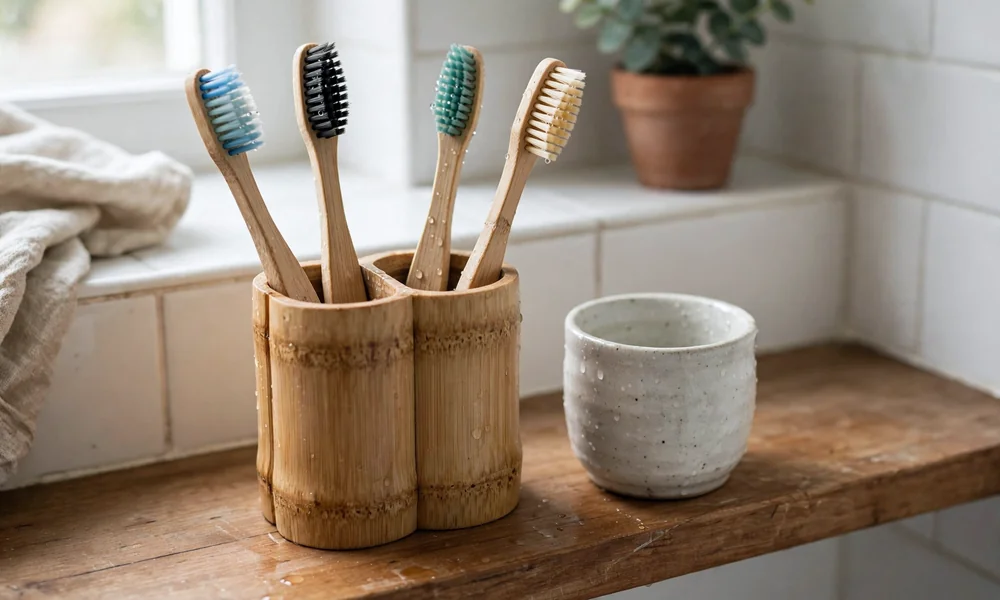
A bamboo holder is the best choice if you want something warm and natural on the sink, and if you prefer materials that feel good to touch. The best ones have thick bamboo, separate compartments for each brush, and a finish that resists water. They are light enough to move easily, heavy enough to stay put, and they look at home in a bathroom with wood, linen, and plants.
The Worst Side: Holders That Trap Water and Let Brushes Touch
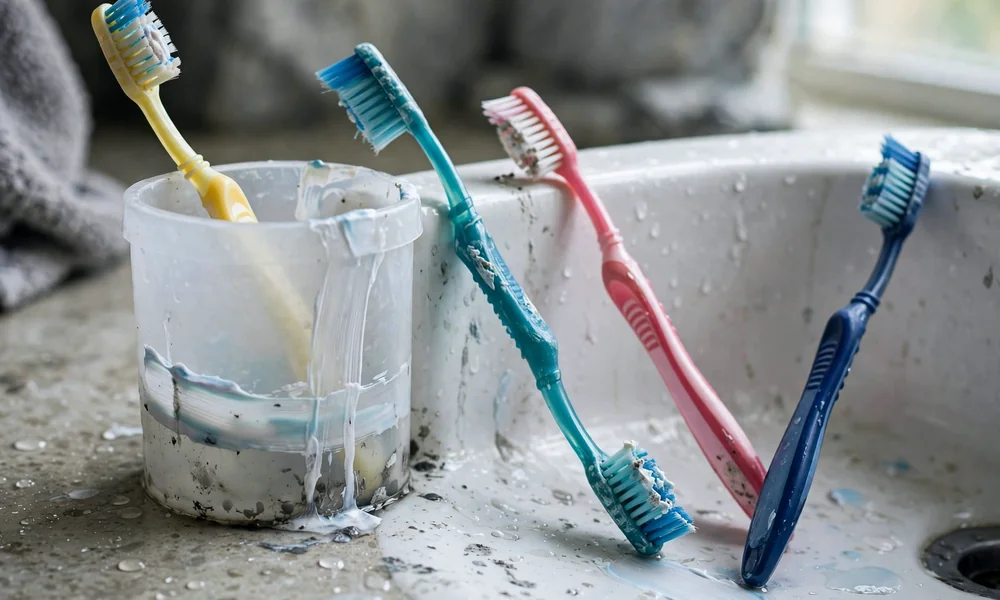
The worst toothbrush holders share a different quality: they make a simple job harder. They trap water, they let brush heads touch, they tip over, and they turn the sink into something you have to clean more often, not less. Three kinds cause most of the trouble in 2026.
Thin Plastic Cups That Never Dry
The most common bad holder is the thin plastic cup, often a tumbler pressed into service as a toothbrush holder. At first it works well enough. Then water collects at the bottom, toothpaste dries on the sides, and the cup starts to look cloudy and stained. The brushes lean together in the middle, their heads touching, and the handles sit in a shallow pool of water every morning.
Overcrowded Holders With No Separation
An overcrowded holder is worse than a damp one, because the problem is hygiene, not just looks. Four or five brushes are crammed into a cup made for two, and the heads touch every time a brush is put back or taken out. In a family bathroom, that means one person’s brush is always resting against another’s, and nobody can tell whose is whose without looking closely.
Over-Designed Holders That Are Hard to Clean
Some of the worst holders are the most ambitious. A holder with a fancy shape, a hidden compartment, or a lid that closes over the brushes may look striking, but every extra corner is another place for water and toothpaste to collect. A lid that traps damp air is worse than no lid at all, because the brushes never dry. A holder shaped like an ornament is hard to clean and harder to empty.
Best vs Worst: Head to Head
Put the two sides together and the difference is not about price or style; it is about how the holder behaves after a month of daily use. The best holders keep the brushes upright and apart, stay dry on the inside, and sit firmly on the counter. The worst ones start well and get worse: water collects at the bottom, the brushes lean together, and the cup needs scrubbing after every few days.
The brushes you use matter too. Slim manual brushes fit almost any holder, while thick electric brush heads need wider slots and a heavier base, because they are top-heavy and will tip a light holder over. A good holder is matched to the brushes you actually own, not to the brushes in the photograph. That is also why the brushes themselves deserve a thought: the old question of manual versus electric toothbrushes is really about what cleans best for you, and the holder you choose should suit the brushes you have settled on, not the other way round.
Size matters as well. A large holder suits a family bathroom, where it will hold four or five brushes and be used many times a day. A small holder suits a guest bathroom or a cloakroom, where it will hold one or two brushes and where a neat, compact cup looks better. A holder that is too tall for the shelf above the sink, or too wide for the space beside the tap, will be knocked over sooner or later, however good its compartments are.
The Verdict
The verdict is clear: buy the holder for how it holds and dries the brushes, not for how it looks. A heavy ceramic holder with separate compartments, or a wall-mounted holder with individual slots, will serve a bathroom well for years, and it will cost less over time than a string of cheap plastic cups that stain and go damp. If you want a natural look, choose a bamboo holder with a water-resistant finish, and keep it on a dry spot.
Avoid thin plastic cups that never dry, holders that cram the brushes together, and over-designed shapes that are hard to clean. If a holder needs emptying every day, a tray underneath it, or two hands to use it, it has failed. The best toothbrush holder is the one you forget about, because the brushes stand upright, the holder stays dry, and the sink stays clean. That is a modest ambition, and it is exactly the right one for something you will touch several times a day.
Who Each Holder Is For
Ceramic holders with separate compartments suit most homes, especially a main bathroom where looks and reliability both matter. They are a good choice if you want something that feels solid, wipes clean, and lasts. Wall-mounted holders suit busy family bathrooms, small bathrooms, and homes where counter space is short, because they keep the brushes apart and leave the sink clear. Bamboo holders suit anyone who wants a warm, natural look and is willing to keep the holder dry.
Cheap plastic cups suit only one situation: a short-term need, such as a holiday let or a temporary sink, where you do not mind replacing the holder soon. Overcrowded holders suit nobody, and over-designed holders suit only a bathroom where looks matter more than daily use, which is a rare bathroom indeed. The same judgement applies across the bathroom: a fixture that works quietly every day beats one that impresses once, as the best electric toothbrushes prove in their own way, and a toothbrush holder is no different.
How to Choose and Care for Your Holder
Before you buy, check four things. First, put your own brushes into it and feel whether each one stands upright and apart, without the heads touching. Second, check the base: can water drain away, or can you take the holder apart to clean it? Third, check the weight: is it heavy and stable, or light enough to tip over? Fourth, check the fit: does it sit comfortably beside the tap without crowding the sink?
Once it is home, a little care goes a long way. Rinse the holder under warm water every week, and wipe the base and the counter underneath it. If toothpaste starts to build up, soak the holder in warm soapy water and scrub the inside with a small brush; dried toothpaste is often the whole problem. A holder that is looked after will last for years, and a sink that stays clean is a small daily pleasure that is easy to underestimate until it is gone.


