
A waffle maker is a simple machine with a surprisingly wide gap between the best and the worst. The best waffle makers of 2026 cook evenly, release the waffle without a fight, and clean up in minutes, turning a Saturday breakfast into a small weekly pleasure. The worst cook unevenly, glue batter to the plates, and leave you scrubbing burnt crumbs out of a grid you cannot remove. They all look similar in a product photo, which is exactly why so many people buy the wrong one. This guide puts the best and the worst head to head, so you can see what separates a waffle maker worth buying from one that will gather dust, and choose the right machine for your kitchen.
The difference shows up in the first waffle. A good machine preheats in under five minutes, cooks a batch in three to four, and produces a waffle that is crisp outside, fluffy inside, and evenly golden from edge to centre. A bad machine has hot spots, so one corner burns while the opposite corner stays pale and soft. It sticks, so half the waffle tears away when you lift the lid. None of these faults is obvious in the shop, which is why it pays to know what to look for before you buy.
Key Takeaways
- Even heating matters more than wattage: a 1,000-watt maker with good plate design beats a 1,400-watt maker with hot spots.
- Belgian makers produce thick, fluffy waffles with deep pockets, while classic makers produce thinner, crispier waffles that cook faster.
- Removable plates and a quality nonstick coating make cleaning dramatically easier and are worth paying extra for.
- Double makers are the best choice for households of four or more, because they cook two waffles at once.
- A good waffle maker should preheat in under five minutes and cook a batch in three to four minutes.
Belgian vs Classic: The First Decision
The first decision is the style of waffle you actually want to eat, because the machine you buy locks you into one of them. Belgian waffles are thick, airy, and full of deep square pockets that hold syrup, berries, and whipped cream. Classic waffles are thinner, denser, and crispier, with a golden surface that stays crunchy even under toppings. Neither is better in the abstract. They are different breakfasts, and the right choice is the one your household actually prefers.
Belgian Waffle Makers: Thick, Fluffy, and Generous
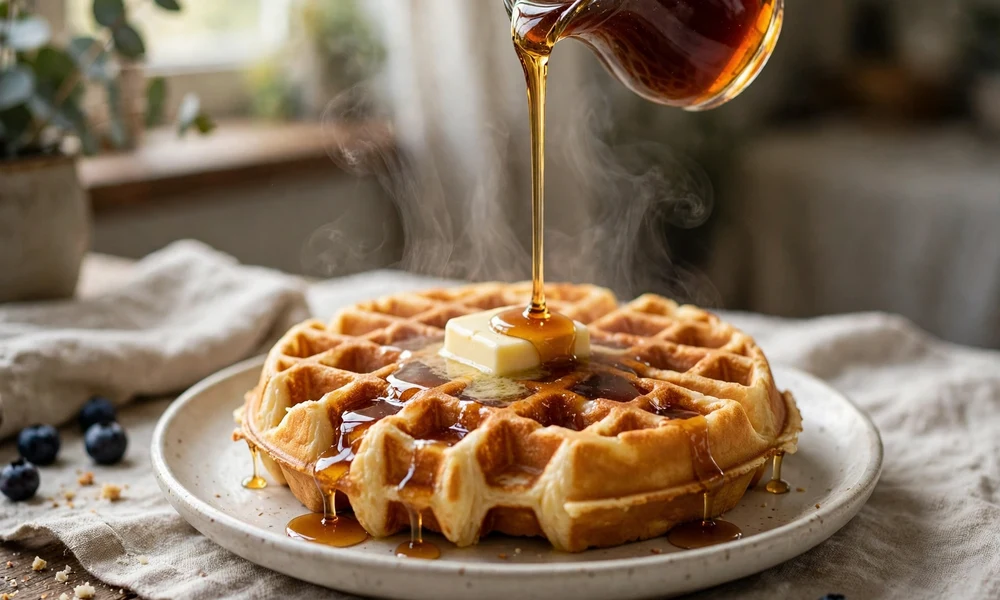
The best Belgian makers use deep plates and a thicker batter, which produces a waffle that is soft inside and crisp outside, with pockets deep enough to hold a serious amount of syrup. They take slightly longer to cook, usually four to five minutes per batch. The best models have a flip mechanism that distributes the batter evenly, a browning dial that actually changes the result, and an audible signal when the waffle is ready. The worst Belgian makers have deep plates but uneven heat, so the centre stays doughy while the edges overcook, and their nonstick coating is thin, so batter grips the grid.
Classic Waffle Makers: Thin, Crisp, and Fast
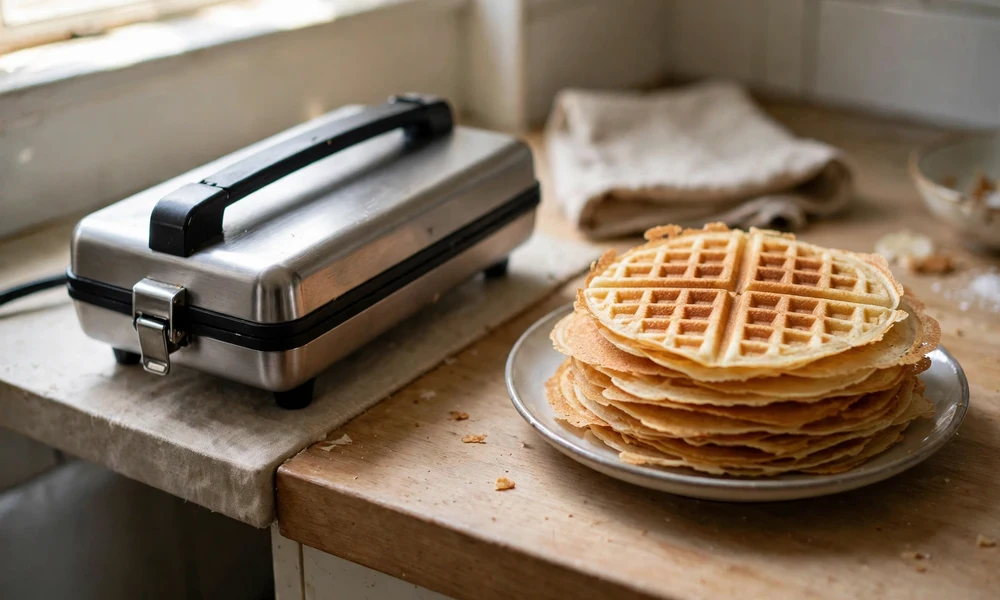
The best classic makers produce thinner waffles with a finer grid, and they cook fast, often in two to three minutes. They are slimmer, cheaper, and easier to store, which makes them the right choice for smaller kitchens and weekday breakfasts. A good classic maker has even heat across the whole plate, a reliable nonstick surface, and a lid that closes firmly without squeezing batter out of the sides. The worst classic makers are the flimsiest machines on the market. They are light, they slide around the counter, and their thin plates heat unevenly, so every waffle comes out half golden and half pale. Their coatings wear out within months, and once the nonstick fails, the machine is finished.
The Best Waffle Makers of 2026
The best waffle makers share a short list of qualities. Even heating comes first, and it is the hardest to judge from a photo, which is why reviews matter. Look for reports of waffles that are the same colour across the whole plate, batch after batch. A quality nonstick coating comes second. The best coatings release a waffle cleanly with a light brush of oil, and they survive years of use without flaking. Removable plates come third, because they turn cleaning from a chore into a thirty-second job: lift the plates out, wash them, and put them back. Browning control comes fourth. A dial with five or six settings that genuinely changes the colour is a sign of a well-made machine. A single on-off switch is a sign of a cheap one.
What the best waffle makers do particularly well is make breakfast feel effortless. They preheat quickly, they signal clearly when they are ready, and they cook a batch while you pour the coffee. They are easy to store, with a lock that holds the lid shut and a cord that wraps away. A good waffle maker bought in 2026 should still be making breakfast in 2031, and that longevity changes the value completely. Spread over hundreds of breakfasts, even a hundred-dollar machine costs pennies per waffle, while a thirty-dollar machine that sticks, burns, and dies in a year costs far more per use.
The Worst Waffle Makers of 2026
The worst waffle makers fail in predictable ways, and the warning signs are usually visible before you buy. The first is uneven heating. If reviews mention waffles that are burnt on one side and raw on the other, the plates are badly designed, and no amount of technique will fix it. The second is a weak nonstick coating. If owners report waffles tearing and batter sticking in the corners, the coating is thin and will only get worse. The third is a flimsy build: a light machine that slides around the counter, a lid that does not sit flat, and a hinge that loosens within months.
The Sticking Problem
Sticking is the fault that ruins a waffle maker fastest. A waffle that tears in half when you lift the lid is not just a ruined breakfast, it is a cleaning job, because the torn half bakes itself into the grid. The worst machines stick from the first use, and the usual advice, more oil, more butter, does not help for long, because the problem is the coating, not the recipe. Once a coating starts to fail, it fails quickly, and the machine becomes unusable. The best machines, by contrast, release a waffle with a gentle lift, and they keep doing so for years. Before you buy, check long-term reviews specifically for the word sticking. It is the single most common complaint about bad waffle makers, and it is the one that matters most.
The Cleaning Nightmare
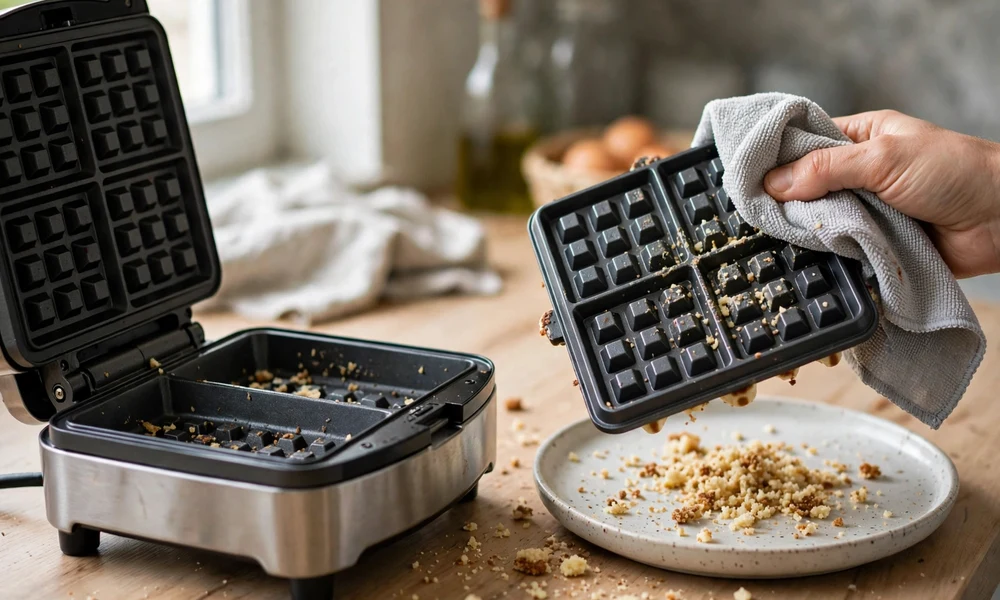
Cleaning is where bad waffle makers truly earn their reputation. A machine with fixed plates and a deep grid is hard to clean even when it works well, and nearly impossible once batter has baked into the corners. Owners end up picking crumbs out with a toothpick, or running the machine with a damp cloth and hoping for the best. The best waffle makers solve this with removable plates that go straight into the sink or the dishwasher, and with a drip tray that catches overflow instead of letting it bake onto the counter. If a machine has fixed plates, it needs an excellent nonstick coating to be worth buying. If it has fixed plates and a cheap coating, it is a machine you will dread using.
Head to Head: Best vs Worst Waffle Makers
Put the two sides side by side and the pattern is clear. On even heating, the best produce a waffle that is the same golden colour from edge to centre, while the worst produce one corner burnt and one corner pale. On release, the best lift the waffle cleanly, while the worst tear it in half. On cleaning, the best take a minute with removable plates, while the worst take fifteen minutes with a toothpick. On control, the best offer a browning dial that genuinely changes the result, while the worst offer a single temperature and hope. On build, the best feel solid and stay put on the counter, while the worst slide around and loosen at the hinge.
Price is the one area where the worst waffle makers appear to win, and it is a trap. A twenty-five-dollar maker that sticks, burns, and dies in a year costs more per waffle than a ninety-dollar machine used twice a week for five years. By that measure, the best waffle makers are the cheap option, paid for once, while the worst are the expensive option, paid for again and again in ruined breakfasts and replacement machines.
The Verdict
The verdict is simple: buy the best waffle maker you can afford, and buy it for the waffles you actually eat. If you want thick Belgian waffles for a slow weekend breakfast, a good Belgian maker with deep plates, even heat, and a browning dial is the best choice. If you want quick, crisp classic waffles for weekday mornings or a small kitchen, a good classic maker with reliable nonstick and removable plates is the best choice. What you should not buy is the cheapest machine on the shelf. The worst waffle makers are not bargains. They are the reason so many kitchens have a waffle maker gathering dust, and the reason so many people conclude, wrongly, that homemade waffles are not worth the effort.
Who Each Waffle Maker Is For
A good Belgian maker is for the household that treats breakfast as an occasion: weekend mornings, family gatherings, and stacks of waffles with berries and syrup. A good classic maker is for the smaller household, the weekday cook, and the kitchen with limited storage. It is faster, slimmer, and cheaper, and it makes a crisp waffle that holds up under toppings. A double maker is for the large family, because cooking two waffles at once halves the time everyone waits. The worst waffle makers, meanwhile, are for nobody. They suit the bargain hunter in the shop and disappoint everyone at home.
How to Choose Before You Buy
Before you spend anything, run through a short checklist. First, decide Belgian or classic, based on the waffle you actually want to eat. Second, check reviews for even heating and sticking, the two faults that matter most. Third, look for removable plates and a browning dial. If a machine has neither, it needs an outstanding coating to be worth buying. Fourth, check the weight. A heavier machine stays put on the counter and usually has better plates. Finally, read reviews from people who have owned the machine for six months, not six days. A coating that fails after three months will not show up in a first-week review, and long-term owners are the ones who will tell you the truth.
Final Thoughts
Waffle makers divide opinions because the gap between the best and the worst is so wide. A good waffle maker makes breakfast a small daily pleasure: quick, even, easy to clean, and generous with the results. A bad one makes it a chore: uneven, sticky, messy, and quickly abandoned. Get the five things that matter right, even heating, release, cleaning, control, and build, and you will make waffles for years. Get two of them wrong and the machine will be in the cupboard by spring. Choose the best maker that fits the waffles you eat and the kitchen you have, and skip the cheapest machine on the shelf.
For a closer look at the strongest options, our guide to the best waffle makers of 2026 covers the top performers in detail. If you cook for a crowd, the best waffle makers for families guide focuses on larger machines, and the best maple syrup guide covers what to pour on top once the waffles are ready.


