
The best walnut milk in 2026 is an unsweetened, calcium-fortified carton with a short ingredient list, a genuinely nutty flavour, and enough plant-based omega-3 to make it stand out in a crowded plant-milk aisle. Walnut milk has quietly moved from a niche health-food curiosity to a serious option for anyone who wants a creamy, earthy alternative to dairy, and the best cartons in 2026 are far better than the thin, bitter versions that used to put shoppers off. It pours thickly, it tastes like real walnuts rather than a flavouring, and it brings something no other nut milk can match: a meaningful amount of alpha-linolenic acid, the plant form of omega-3.
That omega-3 advantage is the reason walnut milk deserves its own guide rather than a passing mention in a roundup. Almond milk is lighter and lower in calories, oat milk is sweeter and foamier, and soy milk has more protein, but none of them is built around brain-friendly fats the way walnut milk is. A single glass of a good walnut milk can deliver a useful share of your daily plant omega-3, alongside vitamin E, magnesium and a small amount of fibre, all in a drink that works in coffee, over cereal, in baking and straight from a cold glass.
This guide compares the best walnut milk options in 2026 on taste, nutrition, ingredient quality, coffee, baking and value, plus what to look for on the label and which cartons to avoid.
Key Takeaways
- The best walnut milk in 2026 is unsweetened and calcium-fortified, with walnuts, water, calcium and vitamins D and B12 on the label and little else.
- Walnut milk is the only nut milk with a meaningful omega-3 content, typically around 1 to 1.5 grams of ALA per cup, which is its biggest nutritional advantage.
- Expect a rich, earthy, slightly tannic flavour that is stronger than almond milk; it suits coffee, porridge and baking better than drinking plain for some people.
- It is naturally low in protein, with about 2 to 3 grams per cup, so pair it with protein-rich food at breakfast rather than relying on it alone.
- Choose a barista-style carton for hot coffee, warm it first, and pour the coffee into the milk to reduce the chance of splitting.
What Walnut Milk Actually Is
Walnut milk is made by soaking raw walnuts in water, blending them until smooth, and straining out the solids. What is left is a pale, creamy liquid with a warm beige colour and a flavour that is unmistakably walnut: rich, earthy and faintly bitter at the edges, much like the nut itself. Good producers use a high proportion of walnuts, usually around 4 to 7 percent of the carton, which is what gives the milk its body and its omega-3 content. Cheaper cartons use far less, and you can taste the difference immediately: they are thin, watery and closer to flavoured water than to milk.
The soaking step matters more than most shoppers realise. Walnuts contain tannins in their skins, and those tannins are responsible for the slightly bitter, astringent note that puts some people off. Soaking softens the nuts, eases blending, and mellows that bitterness, while a short rinse before blending removes some of the compounds that make raw walnuts taste harsh. Homemade walnut milk often tastes harsher than shop-bought for exactly this reason, because home blenders rarely strain as finely and the soaking time is often too short.

Walnut Milk Nutrition: How It Compares
On paper, walnut milk sits in a useful middle ground. It is richer than almond milk, lighter than dairy milk, and far more interesting nutritionally than most of the sweetened plant milks that dominate supermarket shelves. A typical unsweetened, fortified cup contains around 45 to 60 calories, 4 to 5 grams of fat, 2 to 3 grams of protein, 1 gram of carbohydrate and no added sugar, plus about 30 percent of your daily calcium when fortified. The fat is the headline: most of it is polyunsaturated, and a good share of it is ALA omega-3, the same fatty acid that makes whole walnuts famous.
| Milk (1 cup, unsweetened) | Calories | Protein | Fat | Omega-3 (ALA) | Best for |
|---|---|---|---|---|---|
| Walnut milk | 45–60 | 2–3 g | 4–5 g | 1.0–1.5 g | Omega-3, coffee, baking |
| Almond milk | 30–40 | 1 g | 2.5 g | 0 g | Low calories, iced coffee |
| Oat milk | 90–120 | 2–3 g | 5 g | 0 g | Foam, lattes, cereal |
| Soy milk | 80–100 | 7–8 g | 4 g | 0.3 g | Protein, cooking |
| Cashew milk | 25–40 | 1 g | 2 g | 0 g | Light, creamy texture |
| Whole dairy milk | 150 | 8 g | 8 g | 0 g | Protein, calcium |
The table also shows walnut milk’s main weakness, and it is worth being honest about it. Two to three grams of protein per cup is not enough to carry a meal on its own, and anyone who switches from dairy milk to walnut milk without adjusting the rest of breakfast will notice the difference by mid-morning. The fix is simple rather than complicated: pour walnut milk over porridge with nuts and seeds, blend it into a smoothie with yoghurt or protein powder, or eat it alongside eggs or nut butter on toast. The milk does the flavour and healthy-fat work; the rest of the plate does the protein work. The best almond milk has the same low-protein problem, only more so, so this is a nut-milk issue rather than a walnut-specific flaw.
The Best Walnut Milk in 2026
Best Overall: Unsweetened, Fortified Walnut Milk
The best walnut milk overall in 2026 is a plain unsweetened carton that is fortified with calcium, vitamin D and vitamin B12 and lists walnuts as the first ingredient after water. It tastes clean and nutty without being bitter, it pours with a satisfying weight, and it does not bring added sugar into a meal that does not need it. This is the carton to buy first, because it is the most versatile: it works in coffee, on cereal, in porridge, in smoothies and in baking, and it lets you control sweetness yourself rather than having a manufacturer decide it for you.
Best for Coffee: Barista-Style Walnut Milk
Walnut milk can be a genuinely good coffee milk, but only if you buy the right version. Standard walnut milk is thinner and more prone to splitting in very hot, acidic coffee, especially dark roasts, because its fat and protein structure is not built to hold together at near-boiling temperatures. Barista-style cartons solve this with a slightly higher fat content and a more robust stabiliser system, and the difference in the cup is obvious: the milk blends smoothly, it steams into a soft, workable foam, and it adds a toasted, nutty note that suits espresso far better than the flat sweetness of oat milk.
The technique matters as much as the carton. Warm the walnut milk gently before it meets the coffee, never pour boiling coffee straight into cold milk, and pour the coffee into the milk rather than the other way round. That order reduces the thermal shock that causes curdling, and it gives the milk a chance to warm gradually. In a flat white or a latte, barista walnut milk produces a smaller, denser foam than oat milk, but the flavour payoff is real: the earthy walnut note sits underneath the coffee rather than on top of it. For a fuller comparison of how plant milks behave in hot drinks, the best plant-based milks for coffee guide tests foam, curdling and flavour side by side.

Best for Baking: Full-Flavoured Walnut Milk
Walnut milk earns its keep in baking, where its strong flavour becomes an asset. In banana bread, muffins, pancakes and spice cakes, the earthy walnut note deepens the flavour in a way almond or oat milk cannot, and it pairs naturally with cinnamon, maple and chocolate. Use it one-to-one for dairy milk and expect a slightly denser, moister crumb.
Walnut Milk and Brain Health
The brain-health claim is the reason walnut milk gets talked about, so it deserves a careful look rather than a slogan. Whole walnuts are one of the few plant foods rich in ALA omega-3, and a large body of research links diets rich in walnuts and other omega-3 sources with better heart and brain health over the long term. Walnut milk carries a meaningful share of that ALA into the glass, and that is a real nutritional advantage over other nut milks, which contain almost no omega-3 at all.
How to Read a Walnut Milk Label
The label tells you almost everything in under a minute. Walnuts should appear early in a short ingredient list, with no added sugar in an unsweetened carton. Check for at least 1 gram of ALA omega-3 per cup, calcium of around 30 percent of your daily value when fortified, and 2 grams or more of protein; 1 gram or less usually means a very low walnut content.
Walnut Milk in Everyday Cooking
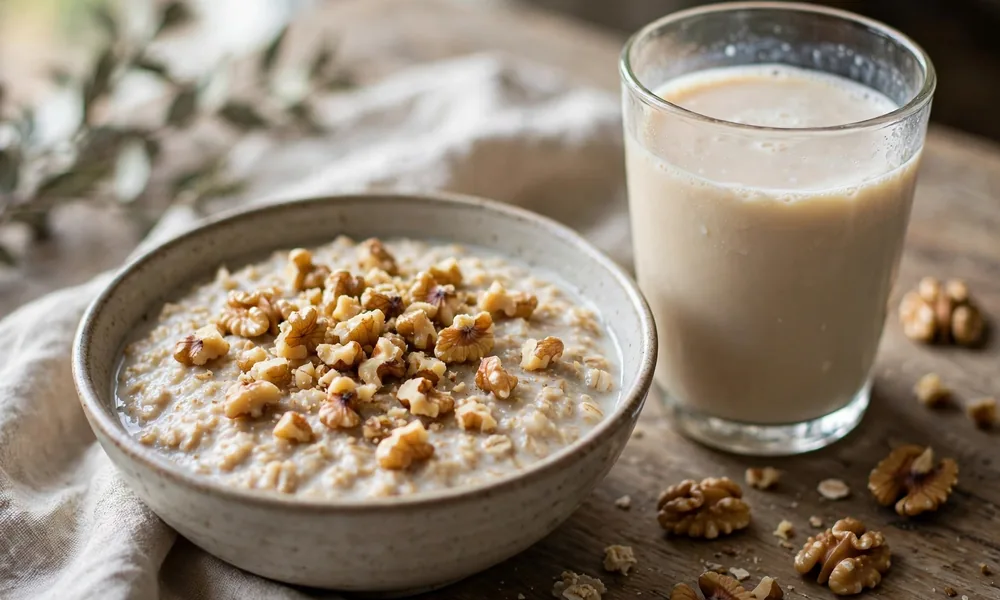
Beyond coffee and baking, walnut milk makes a richer porridge than almond milk, works well in overnight oats and fruit smoothies, and adds depth to a mushroom sauce, creamy soup or nut-based dressing. It is less suited to dishes needing a neutral milk, such as a delicate white sauce, where its colour and flavour will show through.
Storage, Shelf Life and Price
Most walnut milk is sold in shelf-stable cartons that keep for months unopened, and for seven to ten days in the fridge once opened. Shake before pouring, because the nut solids settle, store it in the main body of the fridge rather than the door, and throw it out if it smells sour, tastes sharp or looks lumpy, even if it is within date.
Checklist: Buying the Best Walnut Milk
- Choose unsweetened and calcium-fortified, with vitamin D and B12 on the label.
- Check for at least 1 gram of ALA omega-3 and 2 grams of protein per cup.
- Keep the ingredient list short: walnuts, water, calcium, vitamins, salt and a stabiliser.
- Pick a barista-style carton for hot coffee, and warm it before pouring.
- Avoid cartons with 10 grams or more of added sugar per cup.
- Shake before pouring, refrigerate after opening, and finish within seven to ten days.
Frequently Asked Questions
Is walnut milk healthy?
Yes. Unsweetened, fortified walnut milk is low in calories and sugar, rich in polyunsaturated fats and plant omega-3, and fortified with calcium, vitamin D and B12. Its main limitation is low protein, so pair it with protein-rich food.
Does walnut milk taste bitter?
It can taste slightly bitter from tannins in the walnut skins, but a good carton tastes rich and earthy rather than harsh. The flavour softens in coffee, porridge and baking, so try another brand before deciding you dislike it.
Is walnut milk good in coffee?
Yes, especially the barista-style version, which adds a toasted, nutty flavour and steams into a soft foam. Warm it first and pour the coffee into the milk; standard cartons are more likely to split in dark roasts.
Can I use walnut milk for baking?
Yes, it is one of the best plant milks for baking. Use it one-to-one for dairy milk in muffins, pancakes, banana bread and spice cakes, choosing unsweetened so you do not upset the recipe’s sugar balance.
How long does walnut milk last once opened?
Seven to ten days in the fridge once opened. Shake before pouring, keep it in the main body of the fridge, and discard it if it smells sour, tastes sharp or looks lumpy.
Is walnut milk safe for people with nut allergies?
No. Walnut milk is made from tree nuts and is not safe for anyone with a walnut or tree-nut allergy. If you have another nut allergy, check for cross-contamination warnings or choose oat or soy milk instead.
The Bottom Line
The best walnut milk in 2026 is an unsweetened, calcium-fortified carton with a high walnut content, at least 1 gram of omega-3 per cup, and a short, honest ingredient list. It is not the cheapest, highest-protein or mildest milk. What it offers is something no other nut milk does: a creamy, earthy drink with a real omega-3 advantage and a flavour that elevates coffee, porridge and baking. Buy the unsweetened carton first, use it where its flavour shines, and let the rest of breakfast handle the protein.


