The best window sensors in 2026 are small, cheap, and almost invisible once they are fitted, yet they close one of the easiest gaps in home security. A locked door means very little if a ground-floor window can be slid open quietly while you are asleep upstairs or out for the evening. A window sensor watches that opening day and night and tells you the moment it moves.
A window sensor is a small device that sits on a window frame and reports whether the window is open, closed, or being forced. Most models are battery powered, cost less than a takeaway meal, and need no tools beyond a sticky pad or two small screws. The hard part is not fitting them. It is choosing the right type for each window, placing them where they actually catch an intruder, and making sure the alert reaches you when it matters. The best window sensors do all three without fuss.
Key Takeaways
- A contact sensor on the frame catches a window being opened; a glass-break or vibration sensor catches a window being smashed.
- Put sensors on every ground-floor window first, then on any window reachable from a flat roof, balcony, or drainpipe.
- A sensor that only chirps in the room helps nobody when the house is empty: phone alerts matter most.
- Check the battery type and life before you buy — a sensor with a dead battery is just a plastic box on the frame.
- Test every sensor once a month by opening the window, and check the alert arrives on your phone, not just on the hub.
How a Window Sensor Actually Works
Almost every home window sensor works on one simple idea: it knows whether two parts are together or apart, or whether the glass has been disturbed. When that state changes unexpectedly, it raises the alarm. The sensor never stops a break-in itself. It buys you time, and time turns a quiet entry into a failed one.
Contact Sensors: Open or Closed
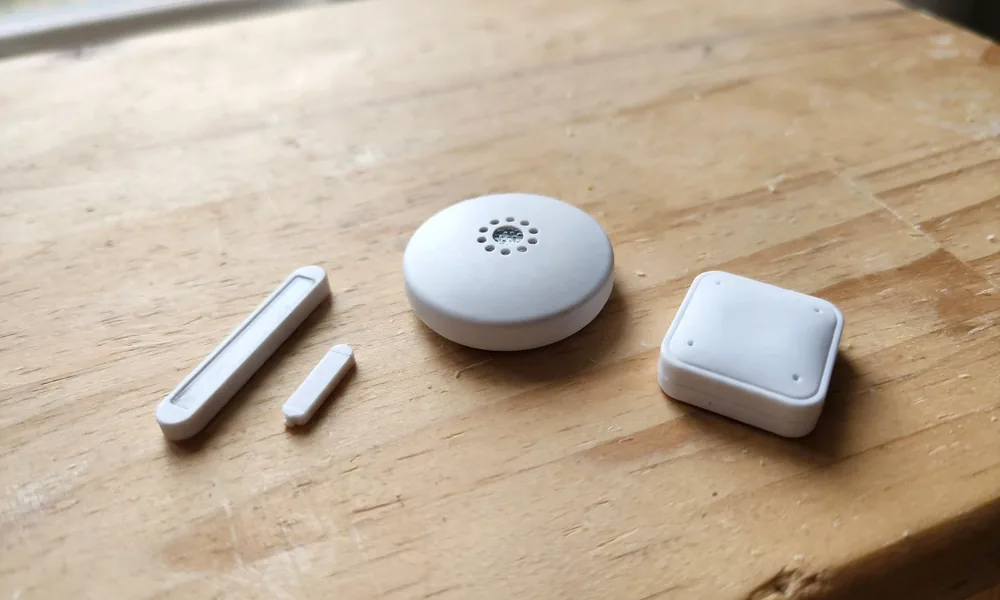
A contact sensor has two parts: a small sensor body on the frame and a magnet on the moving window. When the window is closed, the magnet sits close to the sensor and the circuit reads closed. Slide or swing the window open and the magnet moves away, the circuit breaks, and the sensor reports open. Contact sensors are the cheapest and most reliable type, they run for one to two years on a small battery, and they suit sliding, casement, and sash windows alike. Their weakness is the obvious one: they only notice a window being opened, not a pane being smashed while the frame stays shut.
Glass-Break Sensors: Listening for the Smash
A glass-break sensor listens for the sound pattern of breaking glass and alarms when it hears it. One sensor can cover several windows in the same room, which makes them good value for a living room with a run of panes. They need mains power or a larger battery, and they must sit within a few metres of the glass with a clear line of sound. They can false-alarm on a dropped plate or a slamming door, so check whether the model filters those sounds before you buy.
Vibration and Shock Sensors: Feeling the Force
A vibration sensor sticks to the glass or frame and feels for the shock of someone forcing, prying, or striking the window. It alarms on the attempt itself, before the glass breaks or the catch gives way. Vibration sensors suit windows that are rarely opened, such as basement windows and fixed panes, and they pair well with a contact sensor on the same window for two layers of warning. Set the sensitivity carefully: too high and every lorry passing the house sets it off; too low and a gentle pry goes unnoticed.
The Best Window Sensors of 2026 Compared
| Best for | Sensor type | Power | Alert | Standout strength |
|---|---|---|---|---|
| Best overall | Contact sensor | Battery, one to two years | Phone and hub | Cheap, reliable, fits any window |
| Best for smashed glass | Glass-break sensor | Battery or mains | Alarm and phone | One unit guards a whole room |
| Best for forced entry | Vibration sensor | Battery, one to two years | Phone and hub | Alarms on the pry, before entry |
| Best for renters | Stick-on contact sensor | Battery, years | Phone | No screws, no holes, moves with you |
| Best for smart homes | Smart contact sensor | Battery, one to two years | Phone, hub and voice | Triggers lights, scenes and the alarm |
| Best for basements | Contact plus vibration | Battery, one to two years | Phone and hub | Two layers on a rarely checked window |
Where to Put Them: The Room-by-Room Plan
Placement matters more than brand. A sensor on a third-floor window nobody can reach is wasted money, while an unguarded ground-floor window behind a hedge is an open invitation. Walk around your home outside, look at it the way a burglar would, and guard the windows that are hidden, low, or easy to reach.
Start with every ground-floor window, including the small ones in the bathroom and utility room. Then add any window above a flat roof, a porch, a garage, or a low wall, and any window reachable from a drainpipe or a balcony. In the basement, guard the small high windows that are easy to forget and hard to hear from upstairs. For sliding windows, fit the sensor so it alarms on the first few centimetres of movement, not only when the window is fully open.

Battery, Range and Reliability
Most contact sensors run on a small battery for one to two years, and the battery is the commonest reason a sensor fails when it is needed. A sensor with a dead battery is a plastic box on the frame, and a window will open past it in silence. Check the battery type before you buy: a sensor that takes a common coin cell or AA cell is cheaper to run than one with a sealed battery you cannot replace. A low-battery warning, a chirp or a phone alert, matters more than the headline battery life. Write the install date on the back of each sensor with a marker pen so you know when its time is up.
Smart Alerts and Home Automations
A sensor that only chirps in the room is enough if someone is always home, but break-ins do not wait for office hours. A smart window sensor sends the alert to your phone as well, so a window opened at midday reaches you at work, and a window opened at night wakes you before the intruder is inside. The best systems tell you exactly which window opened, so you are not checking every room in the dark.
The extra value of a smart sensor is what it can trigger. A window opening at night can switch on the lights in that room, sound the alarm, and start a camera recording, all without you touching anything. A sensor can also do quiet everyday jobs: remind you that a window is open when you arm the alarm, or switch off the heating when a window is left open in winter. Check whether the alerts need a hub, whether more than one phone can receive them, and whether the sensor works when the internet is down.

Window Sensors vs Other Home Sensors
Home sensors look alike and often sit on the same wall, but each one watches a different danger, and none of them covers the others. A door sensor watches the front and back doors, and it works on the same contact principle as a window sensor: magnet and sensor, together or apart. Our guide to the best door sensors of 2026 covers the models that guard the entrances, while window sensors guard the openings burglars use when the doors are locked.
A motion sensor watches the space inside a room rather than any single opening. It catches movement after someone is already in, which makes it a good second layer behind window sensors, not a replacement for them. Our guide to the best motion sensors of 2026 explains where to place them so pets and curtains do not set them off.
A security camera watches and records, which is useful evidence after an event, but a camera alone does not warn you in the moment the way a sensor does. The strongest setup pairs the two: the sensor raises the alarm the second a window moves, and the camera shows you what is happening. Our guide to the best security cameras of 2026 covers the cameras that pair well with a sensor system.
What to Avoid
Avoid sensors with no test button or no test mode: if you cannot make it alarm on demand, you cannot know it will alarm when it matters. Avoid fitting a contact sensor with a gap wider than the maker allows between the magnet and the sensor body, or the window can open a little without triggering it. Avoid the cheapest no-name sensors with no low-battery warning: a sensor that dies silently gives you confidence you have not earned. And avoid buying one sensor for a whole house: a single sensor on the living room window does nothing for the kitchen window behind the hedge.
Checklist: Before You Buy Window Sensors
- Count every ground-floor and reachable window first, then buy one sensor per window.
- Decide whether you need phone alerts: if the house is ever empty, a local-only chirp is not enough.
- Check the battery type, the battery life, and whether the sensor warns you when the battery is low.
- Confirm the wireless signal reaches each window, including the basement and the far bedrooms.
- Match the sensor type to the window: contact for opening, glass-break for smashing, vibration for forcing.
- Test every sensor on day one by opening the window, then put a monthly test on your calendar.
Frequently Asked Questions
Do window sensors work on sliding windows?
Yes. A contact sensor fits a sliding window as well as a hinged one: the sensor body goes on the frame and the magnet on the sliding panel, so any movement breaks the contact. Fit it so it alarms on the first few centimetres of slide.
Do window sensors need Wi-Fi?
Only the smart ones do. A basic sensor sounds a local alarm with no Wi-Fi at all, which is fine if someone is usually home. Smart sensors need Wi-Fi or a hub to send alerts to your phone.
How long do window sensor batteries last?
Most contact sensors last one to two years on a small battery, and smart sensors usually sit at the shorter end because the radio uses more power. A low-battery warning matters more than the headline life.
Can a window sensor tell if the glass is broken?
Only a glass-break or vibration sensor can. A contact sensor only knows whether the window is open or closed, so a smashed pane with the frame shut will not trigger it. Pair the two types on windows that worry you most.
Will pets set off window sensors?
No. Contact and vibration sensors on a window do not react to pets moving around the room. That is a motion sensor problem, not a window sensor one, which is one reason the two types work well together.
How many window sensors do I need?
One per window you want guarded: a typical house needs six to ten. Start with the ground floor and any window reachable from a roof, balcony, or drainpipe.
The Bottom Line
The best window sensors in 2026 are the ones that match your home: cheap contact sensors on every ground-floor window for a small flat, glass-break sensors covering the big living room panes, and vibration sensors on the basement windows nobody checks. Buy for the window you would miss, the one behind the hedge or above the flat roof. Fit each sensor properly, test it monthly, and make sure the alert reaches your phone.