Best Door Sensors That Tell You the Moment a Door Opens in 2026
A door sensor is the smallest, cheapest piece of home security you can buy, and it is the one that tells you the most. The best door sensors in 2026 notice the instant a door or window moves, send the news to your phone or your alarm, and then sit quietly for years on a single battery. They answer one simple question, over and over again: is this door open or closed?
That sounds too simple to need a buying guide, until you fit the wrong one. A sensor with a weak magnet misses a door that does not quite shut. A sensor with a short wireless range drops off the network the moment you close the front door. A sensor built for a flat wooden door will not sit straight on a metal-framed patio door, and a sensor with no tamper protection can be peeled off the frame without a word. This guide is about the door sensor itself: the small two-part contact sensor that guards an entry point, not the room behind it.
Key Takeaways
- A door sensor is a two-part magnetic contact switch: one half on the door, one half on the frame, and it only knows open or closed.
- The magnet gap is the number that matters most: most sensors need the two halves within about two centimetres, and a wide gap is the commonest cause of missed alerts.
- Battery sensors last one to three years on a cell and suit renters; wired sensors never need a battery change and suit a permanent alarm system.
- A door sensor guards the entry point, while a motion sensor guards the space behind it: the two do different jobs and work best together.
- Fit the sensor at the top of the door, on the opening side, with the magnet on the moving part and the sensor on the fixed frame.
Door Sensors 2026 at a Glance
| Best for | Sensor type | Power | Standout strength |
|---|---|---|---|
| Best overall | Stick-on battery sensor | Coin or AA cell | Peel-and-stick fitting, years of battery life |
| Best for front doors | Smart contact sensor | Battery | Phone alert the moment the door opens |
| Best for windows | Slim window sensor | Battery | Thin enough to hide on a window frame |
| Best for sliding doors | Wide-gap sensor | Battery | Tolerates the larger gap of a sliding door |
| Best for garages | Heavy-duty sensor | Battery or wired | Built for metal doors and cold garages |
| Best for alarms | Wired contact sensor | Wired | No batteries, no wireless dropouts |
How a Door Sensor Actually Works
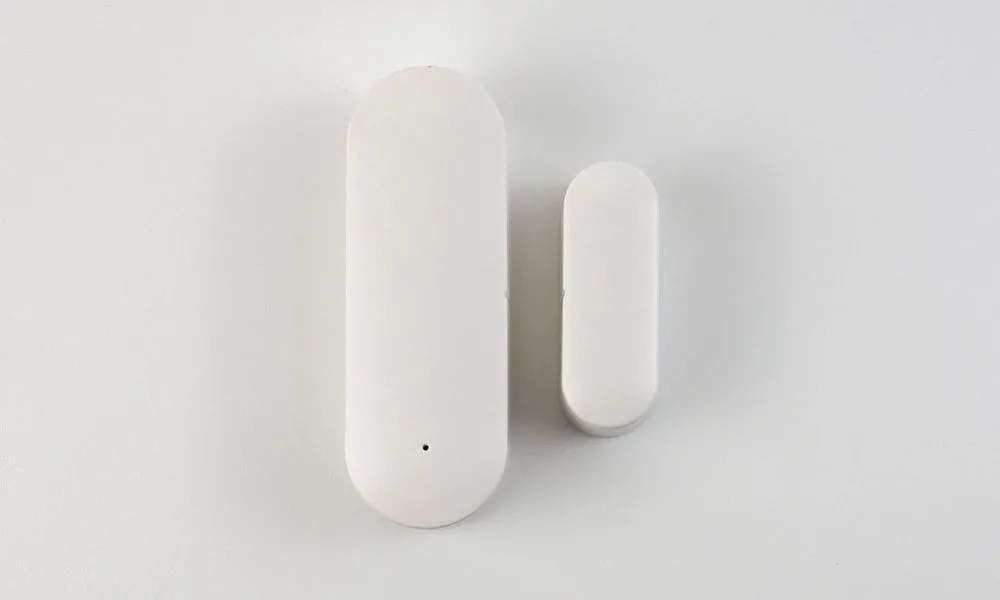
A door sensor is a reed switch and a magnet, and that is almost the whole device. The sensor half holds a small reed switch: two thin metal blades inside a glass tube that touch each other when a magnet sits close by. The magnet half holds a small permanent magnet. When the door is closed, the two halves sit side by side, the magnet holds the blades together, and the sensor reports closed. When the door opens, the magnet moves away, the blades spring apart, and the sensor reports open. There is no camera, no microphone, and no recording: the sensor only ever knows whether the two halves are together or apart.
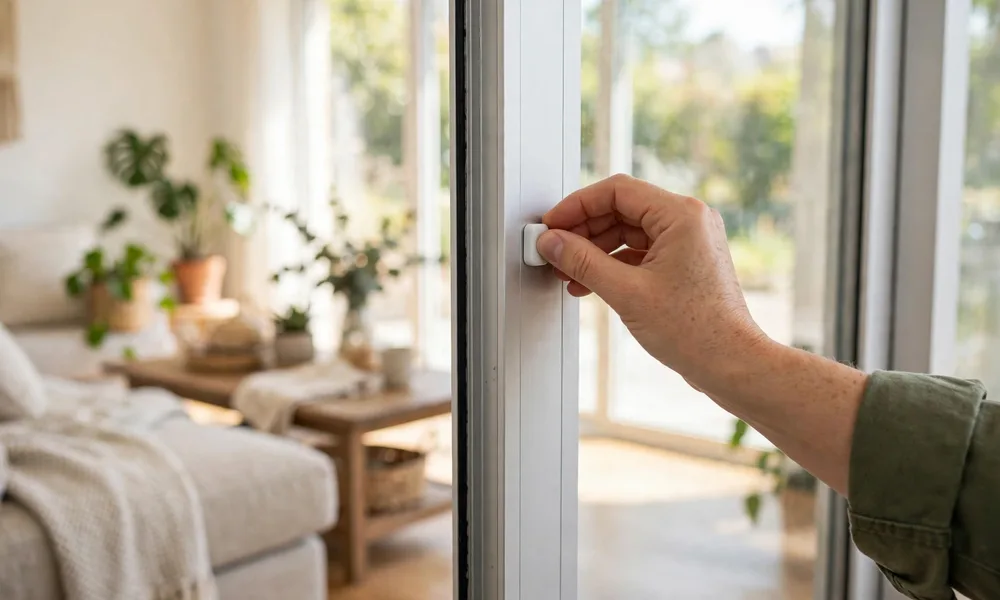
Stick-on battery sensors are the commonest kind, and the best starting point for most homes. They fix to the door and the frame with strong adhesive tape, need no tools, and run for one to three years on a single cell. They suit renters and finished rooms, because they leave no holes and peel off cleanly when you move. Check the battery type before you buy: a sensor that takes a common AA cell is cheaper to run than one that takes a coin cell, and a sensor with a low-battery warning saves you from a silent failure.
The Main Types of Door Sensor
Slim window sensors are the same device in a thinner body. A window frame leaves little room for a chunky sensor, and a slim sensor sits flat enough that the window still closes over it. The same sensor works on a door, but the slim shape earns its keep on windows, where a standard sensor would jam the frame or stick out into the room. If you are protecting windows as well as doors, buy slim sensors for the windows and standard ones for the doors.
Wide-gap sensors are built for doors that do not close tightly. A sliding patio door, a French door, or a garage door can leave a gap of several centimetres even when it is shut, and a standard sensor reads that as open all day. A wide-gap sensor tolerates a larger distance between its two halves, so it stays quiet until the door genuinely moves. Measure the gap on your door before you buy: if it is wider than two centimetres, you need a wide-gap model.
Three confusions cause most bad purchases, and the first is the sensor versus the motion sensor. A motion sensor watches a whole volume of space and fires when something moves inside it, whether or not a door opened. A door sensor watches one entry point and fires only when that door or window moves. A motion sensor guards the space behind the door; a door sensor guards the door itself. Our guide to motion sensors explains the other half of the pair, and most homes that take security seriously use both: the door sensor catches the opening, and the motion sensor catches anyone who gets past it.
Door Sensors vs the Things They Are Confused With
The second confusion is the sensor versus the camera. Security cameras record what happened, and the best ones do it without a monthly subscription. A door sensor records nothing: it has no lens, no memory card, and no footage to review. What a sensor does better is react instantly, in the dark, without needing to recognise a face or a shape. Many homes use both: the sensor does the instant job, and the camera keeps the record of who came through the door.
The third confusion is the sensor versus the lock. A smart door lock decides who may open the door. A door sensor only reports that the door has opened, whoever opened it. A lock keeps people out; a sensor tells you when someone has come in, or when a door has been left open. The two work well together, and a sensor on a door with a smart lock can tell you that the door is shut but not locked, which is the state most people actually worry about.
The front door comes first. It is the door everyone uses, and a sensor there tells you when the house opens and closes through the day. Put the sensor at the top of the door, on the opening side, where it is out of reach of small hands and away from the knocks of bags and shoes. The back door comes next, because it is the door most often left unlocked, and a sensor there catches the door that was opened for the dog and never quite shut again.
Windows come after the doors, and the ground-floor windows matter most. A slim sensor on a bedroom window tells you the window is open before you go to sleep, and a sensor on a kitchen window tells you it was left open when you go out. Sliding patio doors deserve a sensor of their own, because they are the easiest doors to leave ajar: a wide-gap sensor on a patio door is the one that stops the heating escaping all night.
Where Door Sensors Work Best
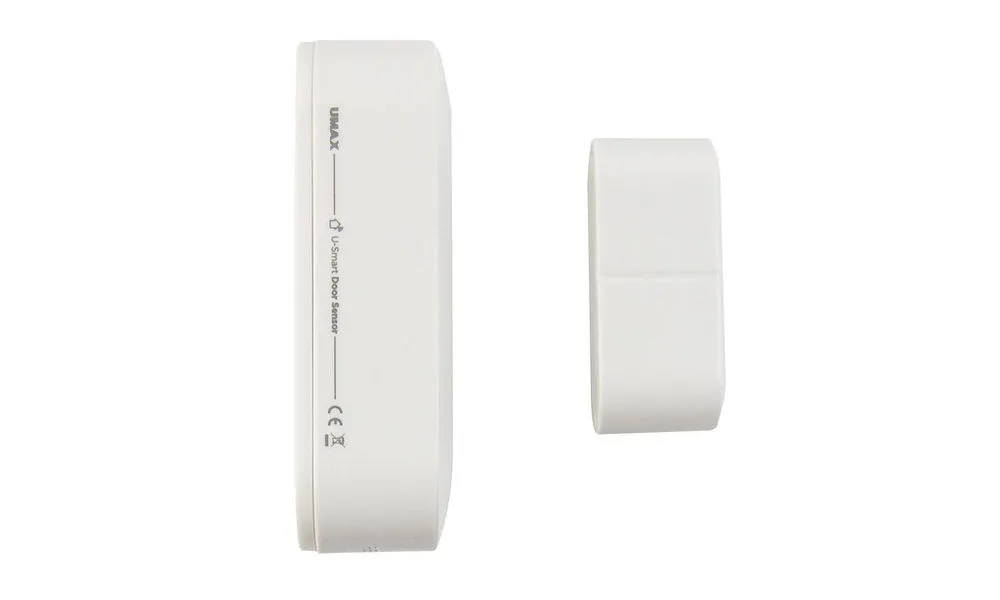
The magnet gap is the first number to check. Most sensors need the two halves within about two centimetres of each other, and a door that does not close squarely will defeat a sensor with a narrow gap. Measure the gap on every door you plan to protect, and buy a wide-gap sensor for any door that sits wider than that. A sensor that cries open all day is worse than no sensor, because you will learn to ignore it.
Wireless range is the second number, and it needs checking against your house, not the box. A sensor that claims a hundred metres of range in open air may manage ten metres through two brick walls and a floor. If the sensor sits at the far end of the house from your hub or alarm panel, check that the signal reaches, and look for a sensor that reports its signal strength so you can see a weak link before it fails.
Yes. A door sensor and a window sensor are the same two-part contact sensor, and the only difference is the fitting. A slim sensor suits a window frame best, because a standard sensor can jam the frame or stick out into the room.
How to Choose the Right One
Usually, yes, but metal can weaken the magnet and block a wireless signal. Test the sensor on the door before you fix it permanently, and look for a heavy-duty model if the signal is weak or the gap is wide.
Not always. A standalone sensor sounds a chime in the room on its own. A smart sensor needs a hub or a direct wireless connection to send alerts to your phone, so check what your sensor needs before you buy.
One to three years on a single cell in normal use, depending on how often the door opens and whether the sensor uses a hub or a direct wireless connection. A sensor that reports its battery level lets you replace the cell before it dies.
No. A door sensor only knows whether the door is open or closed, not whether it is locked. A smart lock tells you about locking; a sensor tells you about opening. The two together cover both questions.
Before You Buy: The Checklist
- Measure the gap between door and frame on every door you plan to protect, and buy wide-gap sensors where the gap is over two centimetres.
- Check the wireless range against the distance from the sensor to your hub or alarm panel, through the walls in between.
- Decide battery or wired before you buy, and check the battery type and expected life.
- Confirm the sensor works with your hub or alarm system, or choose a standalone chime sensor if you have neither.
- Fit the sensor at the top of the door on the opening side, magnet on the moving door, sensor on the fixed frame.
- Test every sensor after fitting, and check the low-battery warning works before you rely on it.
Frequently Asked Questions
Do door sensors work on windows too?
Often, yes, because they do different jobs. A motion sensor watches the room behind the door, and a door sensor watches the door itself. The door sensor catches the opening instantly, and the motion sensor catches anyone who gets past it.
Will a door sensor work on a metal door?
Do I need a hub for a door sensor?
The best door sensor is the one that fits your door, stays quiet when the door is shut, and tells you the instant it opens. For most homes that means a stick-on battery sensor on the front and back doors, slim sensors on the ground-floor windows, and a wide-gap sensor on any sliding door. Fit them at the top of the door on the opening side, check the gap and the wireless range before you buy, and pair them with a motion sensor for the room behind the door. A door sensor will never watch you, record you, or ask for a subscription, and that is exactly why it is worth fitting.