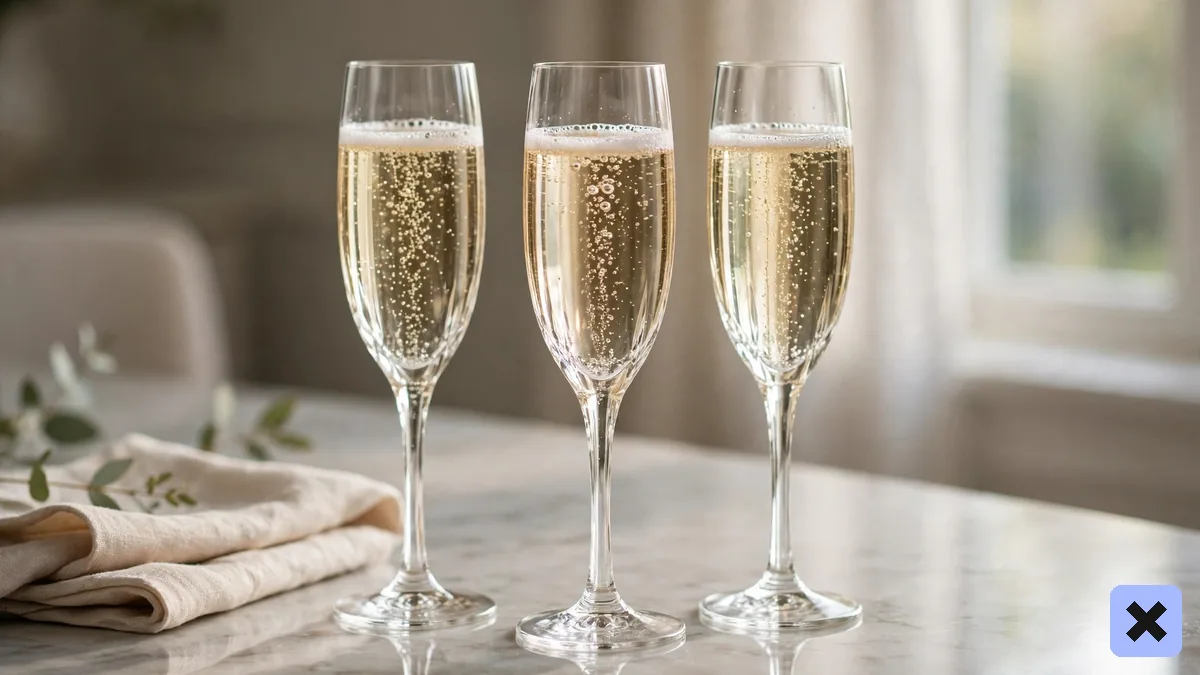
The best wine glasses for champagne do far more than hold a drink. The right glass keeps the bubbles fine and lively, gathers the aroma so you can actually smell the wine, and keeps the champagne cold. A tall, narrow flute looks festive, yet the shape that shows off a good vintage best is often the tulip, with its gently curved bowl and narrower rim.
Choosing between them matters because champagne is judged as much by its scent as by its sparkle. A wide coupe lets the bubbles escape in minutes and flattens the aroma, while a well-designed tulip concentrates the delicate notes of citrus, brioche, and apple that make champagne worth its price.
This guide compares the best wine glasses for champagne in 2026 across every budget, from dependable everyday flutes under fifty dollars to hand-blown crystal for special bottles. Every pick was chosen for how well it preserves bubbles, how clearly it shows aroma, and how comfortable it is to hold.
Key takeaways
- Tulip glasses show champagne aroma best; tall flutes preserve bubbles longest; coupes look elegant but lose fizz fastest.
- Look for a bowl of 200 to 300 ml with a narrow rim, a long stem, and a flat, stable base.
- Lead-free crystal is thinner, clearer, and lighter than standard glass, and it shows the bubble stream better.
- Champagne serves best at 7 to 9 degrees Celsius, poured slowly down the inside of the glass in two stages.
- Hand washing protects thin crystal, but dishwasher-safe Tritan crystal is the practical choice for everyday use.
What Makes a Great Champagne Glass
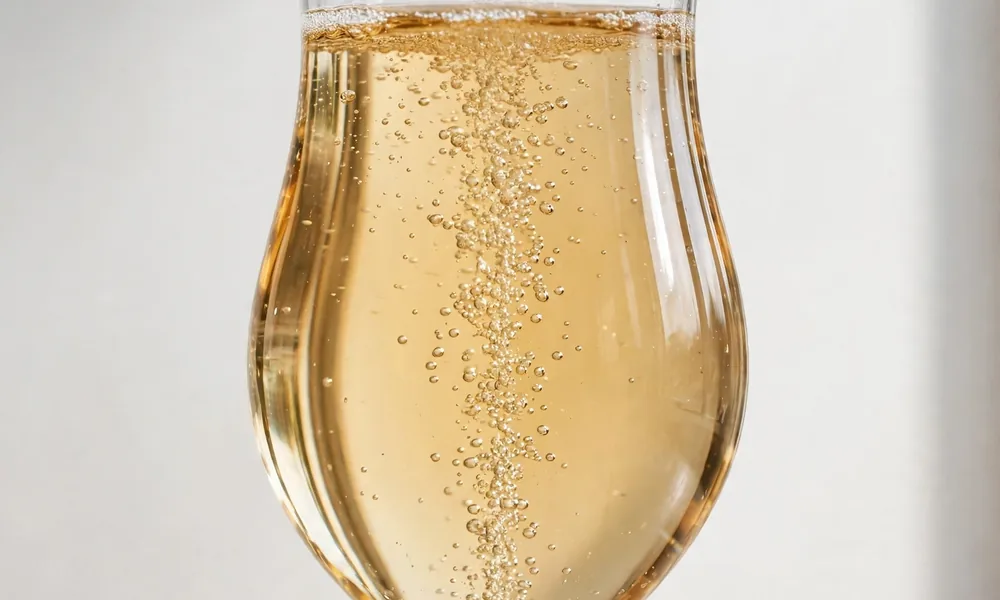
Four details separate a great champagne glass from a merely pretty one, starting with the bowl shape. A tulip bowl is wider at the middle and narrower at the rim, giving the wine room to release aromas while keeping them gathered. A straight flute is narrower throughout, slowing the loss of carbon dioxide and keeping bubbles going longer, but leaving less room for aroma.
The second is the rim: one that turns slightly inward concentrates scent, while a wide, flared rim lets it escape. The third is the stem, which keeps your hand away from the bowl so the champagne stays cold. The fourth is the base of the bowl: many good glasses have a small roughened point, called a nucleation point, etched into the bottom, which encourages a steady stream of fine bubbles.
The Best Wine Glasses for Champagne in 2026
The glasses below cover the full range, from a first set for parties to a hand-blown pair for vintage bottles.
| Glass | Shape | Capacity | Material | Best for | Price range |
|---|---|---|---|---|---|
| Riedel Veritas Champagne Wine Glass | Tulip | 445 ml | Lead-free crystal | Best overall | $60–$90 a pair |
| Zalto Denk’Art Champagne Glass | Tulip | 220 ml | Hand-blown crystal | Best premium pick | $60–$80 each |
| Gabriel-Glas StandArt | Tulip | 510 ml | Lead-free crystal | Best all-rounder | $25–$35 each |
| Schott Zwiesel Pure Champagne Flute | Flute | 300 ml | Tritan crystal | Best everyday flute | $50–$70 a set of 6 |
| Riedel Fatto a Mano Champagne Wine Glass | Tulip | 330 ml | Handmade crystal | Best for celebrations | $70–$100 a pair |
| Crate & Barrel Camille Champagne Coupe | Coupe | 240 ml | Glass | Best coupe | $15–$25 each |
Riedel Veritas Champagne Wine Glass: Best Overall
Riedel has studied how glass shape changes taste for decades, and the Veritas is the result. Its tulip bowl is wider in the middle than at the rim, so aroma gathers while bubbles rise in a fine stream. Made from machine-blown lead-free crystal, it is light, clear, and dishwasher safe.
Zalto Denk’Art Champagne Glass: Best Premium Pick
Zalto glassware is hand-blown in Austria, and its champagne glass is the most striking piece in the range. Astonishingly thin and light, its angled bowl concentrates the aroma of a vintage champagne better than any other glass here. This is the glass for collectors and special bottles, and the most delicate pick, so wash it by hand and keep a sturdier set for parties.
Gabriel-Glas StandArt: Best All-Rounder
The StandArt is the most versatile glass here. Its tulip shape works for champagne, white wine, and light reds, making it the best choice if you want one glass that does everything well. It is good value too: one StandArt costs about the same as one premium flute, yet replaces three glasses in a small cupboard.
Schott Zwiesel Pure Champagne Flute: Best Everyday Flute
Schott Zwiesel makes its Pure range from Tritan crystal, tougher than standard crystal and resistant to chips and scratches. The Pure flute is the practical everyday pick: tall and narrow, so it keeps bubbles lively, and dishwasher safe. Sold in sets of six, it is the best value per glass here. It shows aroma less fully than a tulip, so it suits parties and non-vintage champagne best.
Riedel Fatto a Mano Champagne Wine Glass: Best for Celebrations
The Fatto a Mano range is handmade, with a coloured stem that makes each glass easy to tell apart at a crowded table. Its tulip bowl shows aroma well, and the stem is comfortable to hold all evening. They cost more than machine-made flutes and need hand washing, but for weddings and New Year they are the most festive pick here.
Crate & Barrel Camille Champagne Coupe: Best Coupe
The coupe is the oldest champagne glass shape, and the Camille is the best modern version. Its wide, shallow bowl is elegant and easy to drink from, and it is the best glass here for champagne cocktails, where the wide surface makes garnishes easy to add. The trade-off is real: bubbles escape quickly, so champagne goes flat faster in a coupe than in any other shape. Use it for the first toast, or for cocktails, and keep tulips for champagne you want to savour slowly.
How to Choose the Right Champagne Glass
Start with how you drink champagne. If you open a bottle a few times a year for toasts, a set of six sturdy flutes is the sensible buy. If you collect vintage champagne, a pair of tulips will show you far more of what you paid for. For large parties, buy one shape in quantity rather than mixing styles.
Think about what you will pour. A non-vintage brut, the most common champagne, tastes bright and fresh in any good glass. A vintage champagne or a prestige cuvee, with its layers of brioche, citrus, and hazelnut, deserves a tulip that gathers those aromas. Pairing your glasses with the best sparkling wines makes the choice easier: lighter, fruitier bottles suit flutes, while richer, aged bottles suit tulips.
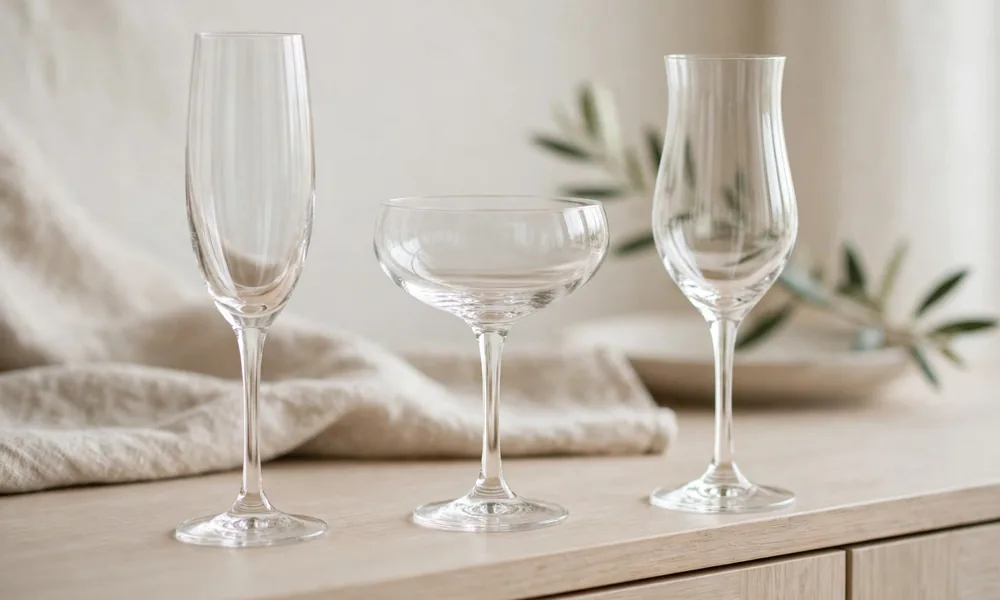
Flute vs Tulip vs Coupe
The flute is tall, narrow, and straight. It preserves bubbles longest and looks the most festive, which is why it dominates at parties. Its weakness is aroma: the narrow opening gives scent little room to gather. The tulip is wider in the middle and narrower at the rim, keeping most of the flute’s bubble-preserving quality while giving aroma far more room, which is why sommeliers increasingly prefer it. The coupe is wide and shallow: beautiful, but it loses bubbles fastest. If you buy only one shape, choose the tulip.
Size and Capacity
A champagne glass should hold 200 to 300 ml, with room above the wine for bubbles and aroma to gather. A standard pour is 120 to 150 ml, about a fifth of a bottle, so a 240 ml glass leaves a comfortable gap. A base of at least six centimetres across keeps the glass stable, and a stem of eight to ten centimetres keeps your hand away from the bowl.
Material: Crystal vs Glass
Lead-free crystal is thinner, clearer, and lighter than standard glass, and it shows the bubble stream without distortion, but it is more expensive and more fragile. Standard glass is tougher and cheaper, but thicker at the rim. Tritan crystal sits between the two: made with added titanium and zirconium oxides, it resists chips and is safe for the dishwasher, making it the most practical everyday material.
How to Serve Champagne Properly
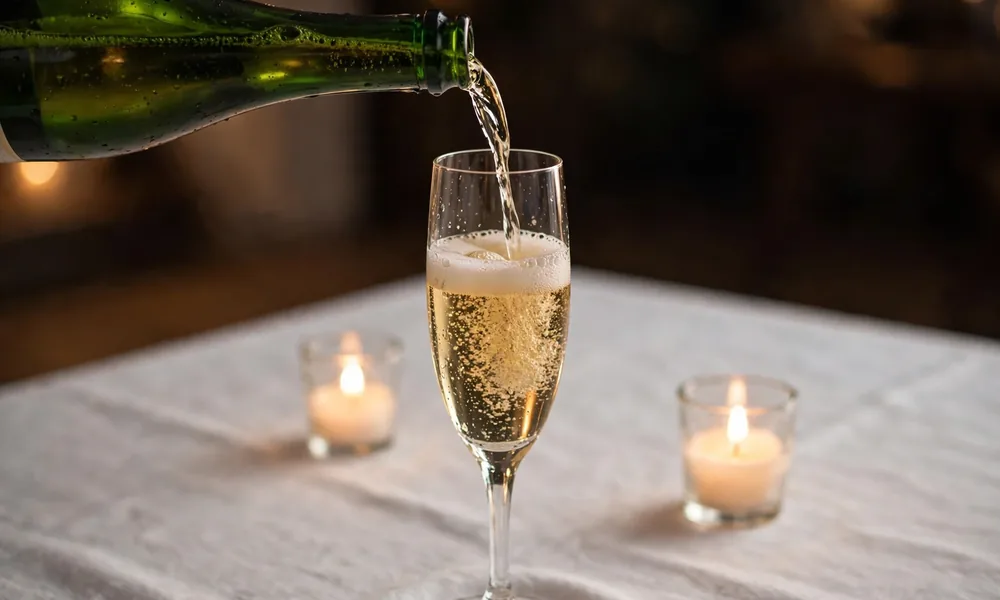
Chill the bottle to 7 to 9 degrees Celsius, about three hours in a fridge or twenty minutes in an ice bucket of ice and water. Chill the glasses too, for ten minutes in the fridge, so the champagne stays cold from the first pour. Pour slowly, tilting the glass slightly and letting the champagne run down the inside wall, in two stages: fill a third, wait for the foam to settle, then fill to two-thirds.
Serve champagne in the glass it deserves. A vintage bottle poured into a coupe loses its aroma before the first sip, while the same wine in a tulip keeps developing. Flutes suit toasts, tulips suit tasting. When the occasion is a choice between two sparkling wines, the comparison in Prosecco vs Champagne for celebrations is a useful guide to which bottle suits the moment, and therefore which glass suits the bottle.
Caring for Champagne Glasses
Hand washing is safest for thin crystal: rinse with warm water, add a drop of mild washing-up liquid, and wash with a soft sponge, avoiding scented detergents, which leave a film that dulls aroma. Dry with a lint-free cloth, holding the glass by the bowl rather than twisting the stem. Dishwasher-safe glasses can go in the top rack on a gentle cycle without heated drying. Store glasses upright, never stacked.
Checklist: Before You Buy Champagne Glasses
- Tulip shape for tasting and aroma, or tall flute for parties and long-lasting bubbles.
- Bowl capacity of 200 to 300 ml, with room above a 120 to 150 ml pour.
- Lead-free crystal or Tritan crystal, completely clear with a thin rim.
- Long stem of eight to ten centimetres and a flat base at least six centimetres across.
- Dishwasher safe if the glasses will be used often; hand wash only for hand-blown crystal.
- A set size that matches how you entertain: six for parties, two for tasting.
Frequently Asked Questions
What is the best glass shape for champagne?
The tulip is best for tasting, because its curved bowl gathers aroma while keeping bubbles lively. The flute is best for parties, because its tall, narrow bowl preserves fizz longest. The coupe is best for cocktails and toasts, not for slow tasting.
Can you drink champagne from a white wine glass?
Yes, and for a rich vintage champagne a white wine glass can work well, because its wider bowl shows aroma. It loses bubbles faster than a flute or tulip, though, so it suits a wine you will drink within twenty minutes. The best wine glasses for white wine share the thin crystal and narrow rim that make a good champagne tulip.
How full should you fill a champagne glass?
Fill to about two-thirds, around 120 to 150 ml. That leaves room for bubbles to rise and aroma to gather, and keeps the champagne cold longer than a full glass.
Do champagne glasses need a nucleation point?
Not necessarily, but it helps. A small etched point at the bottom of the bowl encourages a steady stream of fine bubbles, which looks beautiful and keeps the wine lively. Glasses without one still produce bubbles, just less evenly.
Should champagne glasses go in the dishwasher?
Machine-made crystal and Tritan crystal marked dishwasher safe can go in the top rack on a gentle cycle. Hand-blown crystal should always be washed by hand, since the thin stem can snap in a dishwasher.
How many champagne glasses do you need?
Six is the practical minimum for hosting, since a bottle serves five or six glasses and guests often break one. Two is enough for a couple at home, and a pair of premium tulips beats six cheap flutes if you mostly drink vintage bottles.
The Bottom Line
The best wine glasses for champagne match how you drink it. The Riedel Veritas is the best all-round tulip for tasting, the Zalto is the premium pick for vintage bottles, and the Schott Zwiesel Pure flute is the best everyday set for parties. Choose a tulip for aroma, a flute for fizz, and a coupe only for cocktails.