
The best wine glasses for white wine 2026 do far more than hold your drink. The right glass gathers the delicate aromas of a crisp Sauvignon Blanc, keeps a chilled Chardonnay cold for longer, and makes every pour taste like an occasion. Pour the same bottle into a thick tumbler and a fine crystal glass and you will swear you are drinking two different wines.
White wine is subtle. Its aromas are lighter than red wine, its serving temperature is colder, and its flavours fade fast once the wine warms up. That is why white wine glasses are shaped the way they are: a smaller, narrower bowl that concentrates fragrance and preserves the chill.
We compared the shapes, sizes, materials and price points that matter in 2026, from feather-light handmade crystal to sturdy everyday sets. This guide covers the six glasses we rate highest, how to match a glass to each white wine style, and the care mistakes that shorten a glass’s life.
Key Takeaways
- White wine glasses have smaller, narrower bowls than red wine glasses, concentrating aroma and keeping the wine cold.
- A universal white wine glass with a 12 to 14 ounce capacity suits most styles, from Sauvignon Blanc to oaked Chardonnay.
- Thin rims and light crystal make wine taste smoother, but thicker glass is tougher for everyday use.
- Flutes are best for sparkling wine, while wider bowls suit full-bodied whites like Chardonnay and Viognier.
- Hand washing protects delicate crystal, but many excellent everyday glasses are dishwasher safe.
Why the Right Glass Changes White Wine
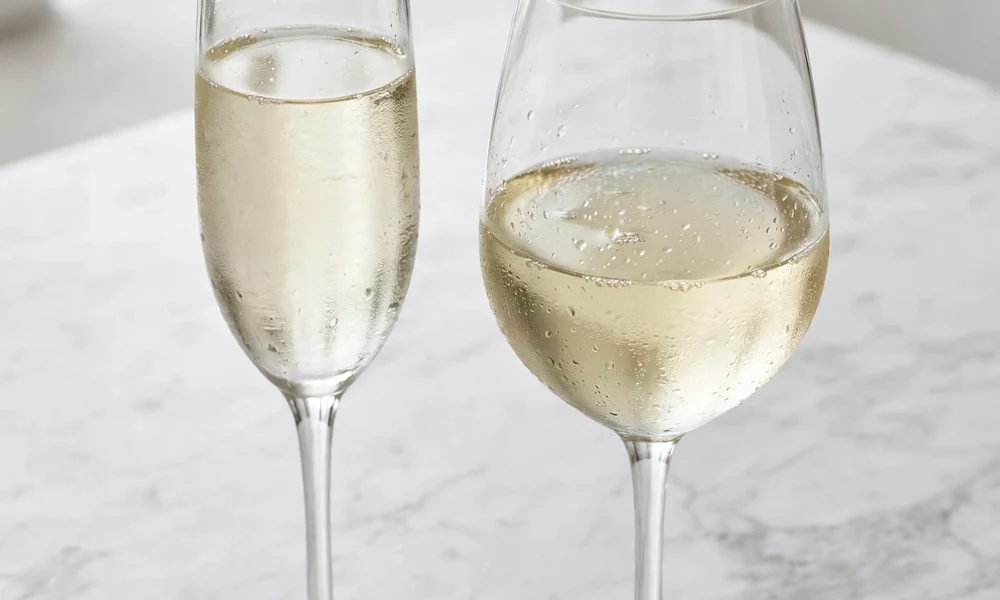
A wine glass is a tool, not a decoration. Its shape controls how much air reaches the wine, how fast the wine warms, and where it lands on your tongue. White wines are served cold, usually between 7 and 13 degrees Celsius, and lose their freshness quickly as they warm. A smaller bowl means a smaller pour, so the wine stays cold until the last sip.
The narrow opening also matters. It funnels aromas toward your nose instead of letting them drift away. Light, floral and citrus notes, the very things that make a good white wine exciting, are easy to lose in a wide, open bowl.
What Makes the Best Wine Glasses for White Wine
Not every glass labelled for white wine is worth buying. The best ones share a few clear qualities.
Bowl Shape and Size
The bowl is the most important feature. White wine glasses typically hold 12 to 14 ounces, smaller than the 20-plus ounce bowls common for red wine. The bowl should taper gently toward the rim, which gathers aromas and directs them upward. Very narrow bowls suit light, aromatic wines, while slightly wider bowls give fuller whites room to breathe. Our guide to the best wine glasses for red wine shows how much bigger and more open red wine bowls are by design.
Rim, Stem and Base
The rim is where the glass meets your lips, so it should be thin and smooth. A thick, rolled rim interrupts the flow of wine and feels crude, while the best glasses have a fine, laser-cut rim that almost disappears when you drink. The base should be wide enough to keep the glass stable.
Crystal vs Glass
Crystal contains minerals that let makers blow it thinner and stronger, so crystal glasses can be feather-light yet surprisingly durable, with a clearer sparkle and a finer rim. Ordinary glass is heavier and thicker, but it is cheaper and tougher, which makes it the sensible choice for parties and everyday drinking. Lead-free crystal is now the standard, and a mid-priced lead-free crystal set is the sweet spot for one set that does everything.
The 6 Best Wine Glasses for White Wine in 2026
These are the glasses we rate highest this year, covering every budget and every style of white wine.
1. Riedel Vinum Chardonnay
The Riedel Vinum Chardonnay is the benchmark white wine glass. Its wide bowl gives oaked Chardonnay and other full-bodied whites room to open up, while the tapered rim keeps aromas focused. It holds around 12 ounces and is machine-made crystal, lighter and finer than it looks, and dishwasher safe.
2. Zalto Universal
The Zalto Universal is the glass wine professionals reach for when they can only choose one. It is mouth-blown, astonishingly light, and so thin it feels almost fragile, yet it is tougher than it looks: narrow enough for aromatic whites, open enough for fuller styles. It works beautifully with Sauvignon Blanc, Riesling, Chablis and even light reds. It is the most expensive glass here and hand wash only, but for sheer tasting pleasure nothing else quite matches it.
3. Gabriel-Glas StandArt
The Gabriel-Glas StandArt was designed to be the one glass for every wine, and it comes remarkably close. Its bowl is a graceful middle ground that flatters white wines of almost every style, from crisp Pinot Grigio to aromatic Gewurztraminer. At around 16 ounces it is a little larger than a classic white wine glass, but the shape keeps aromas concentrated. It is mouth-blown, light in the hand, and dishwasher safe, making it the most versatile choice here.
4. Schott Zwiesel Pure Sauvignon Blanc
Schott Zwiesel makes some of the toughest crystal in the business. The bowl is tall and narrow, shaped to lift the herbal, grassy and citrus notes of Sauvignon Blanc straight to your nose. It is made from Tritan crystal, which is break-resistant and dishwasher safe, and it also handles Pinot Grigio, Vinho Verde and dry Riesling beautifully.
5. Riedel Ouverture White Wine
The Riedel Ouverture White Wine is the entry point into serious Riedel glassware, and it is a superb value. The bowl is a classic white wine shape, a little smaller and more upright than the Vinum, which suits lighter wines and everyday drinking. It is machine-made crystal, well balanced, and dishwasher safe. A set of four costs less than a single Zalto, making it our pick for the best value white wine glass of 2026.
6. Riedel Fatto a Mano Champagne Wine Glass
White wine lovers who drink a lot of sparkling wine need a flute, and the Riedel Fatto a Mano Champagne glass is one of the finest. Its tall, narrow bowl keeps bubbles lively and focuses the delicate aromas of Champagne and other sparkling wines. Our roundup of the best sparkling wines for 2026 pairs perfectly with a glass like this.

White Wine Glasses by Wine Style
Different white wines ask for different glasses. This table matches the most popular styles to the shape that flatters them most.
| White Wine Style | Best Glass Shape | Why It Works | Our Top Pick |
|---|---|---|---|
| Sauvignon Blanc | Tall, narrow bowl | Lifts herbal and citrus aromas | Schott Zwiesel Pure |
| Chardonnay (oaked) | Wider bowl | Room for buttery, oaky notes to open | Riedel Vinum Chardonnay |
| Chardonnay (unoaked) | Medium bowl | Balances freshness and aroma | Gabriel-Glas StandArt |
| Riesling | Narrow, slightly tall bowl | Focuses floral and stone-fruit notes | Zalto Universal |
| Pinot Grigio | Small, upright bowl | Keeps light wine cold and crisp | Riedel Ouverture |
| Sparkling wine | Flute or tulip | Preserves bubbles and aroma | Riedel Fatto a Mano |
| Viognier | Wider bowl | Opens up rich, floral character | Riedel Vinum Chardonnay |
| Albariño | Medium, tapered bowl | Highlights saline, citrus freshness | Gabriel-Glas StandArt |
If you only buy one shape, choose a medium universal white wine glass. It will not be perfect for every wine, but it will be good for all of them.
How to Choose the Right Glass for You
Start with the wine you drink most. If your fridge is full of Sauvignon Blanc and Pinot Grigio, a narrow, aromatic glass is the priority. If you love oaked Chardonnay, go wider. If you drink a bit of everything, a universal glass saves you from owning five different sets. Think about your household too: delicate handmade crystal is a poor match for a dishwasher-only routine, where a tough machine-made set gives you most of the pleasure with far less worry.
Budget is the third factor. The jump from a budget glass to a mid-range one is the biggest improvement you will feel; the jump from mid-range to premium is real, but subtler. Buy the best set you can afford, and buy at least four, so you can share a bottle properly.
How to Care for Your Wine Glasses
Good glasses last for years if you treat them well. Hand washing is the safest method for fine crystal: warm water, a drop of mild detergent, and a soft cloth. Rinse well, because soap residue dulls the glass and can affect the taste of the wine. Dry with a lint-free cloth, holding the bowl rather than twisting the stem. If your glasses are dishwasher safe, place them on the top rack, and never store them rim-down on a hard surface, which chips the rim.
Mistakes to Avoid When Buying White Wine Glasses
The most common mistake is buying glasses that are too big. A huge bowl looks impressive, but it lets white wine warm up and lose its aromas. The second mistake is choosing by looks alone: a beautifully shaped glass with a thick, rolled rim will always feel worse than a plainer glass with a fine rim. The third mistake is buying one glass. Wine is usually shared, and a single beautiful glass with three mismatched tumblers ruins the experience for everyone else. Finally, do not forget the food: if you serve white wine with seafood, our guide on red wine vs white wine for seafood explains why white usually wins.
White Wine Glass Buying Checklist
- Choose a 12 to 14 ounce bowl, smaller than a red wine glass, to keep white wine cold.
- Pick a shape for the white wine you drink most: narrow for aromatic styles, wider for oaked Chardonnay.
- Check the rim is thin and smooth, with no thick rolled edge.
- Decide between delicate handmade crystal and tough dishwasher-safe glass for your household.
- Buy a set of four or six, not a single glass, so everyone drinks from the same quality.
- Confirm the glasses are lead-free crystal or quality glass, and check if they are dishwasher safe.
Frequently Asked Questions
What is the best wine glass for white wine?
The best all-round choice is a medium, universal glass such as the Gabriel-Glas StandArt or the Riedel Vinum Chardonnay. Aromatic whites suit a narrower glass such as the Schott Zwiesel Pure, while oaked Chardonnay suits a wider bowl.
Are white wine glasses smaller than red wine glasses?
Yes. White wine glasses usually hold 12 to 14 ounces, while red wine glasses often hold 20 ounces or more. The smaller bowl keeps white wine cold and concentrates its aromas.
Can you drink white wine from a red wine glass?
You can, but the wine will warm faster and its aromas will spread out and fade. A proper white wine glass makes a clear difference.
Should white wine glasses be stemless?
Stemmed glasses are better because your hand stays away from the bowl and does not warm the wine. Stemless glasses look modern and are harder to knock over, but they suit casual drinking rather than savouring a bottle.
Is crystal better than glass for white wine?
Crystal can be made thinner and lighter, with a finer rim, which makes the wine feel smoother. Good machine-made glass is tougher, cheaper and often dishwasher safe. For everyday use, quality glass is excellent; for special bottles, crystal is worth it.
How many white wine glasses should I own?
A set of four is the minimum for sharing a bottle, and six is better if you entertain. If you drink both light and full-bodied whites, two sets in different shapes cover every situation.
The Bottom Line
The best wine glasses for white wine in 2026 are the ones that match the wine you love, fit the way you live, and feel good in your hand. For most people, a versatile universal glass such as the Gabriel-Glas StandArt or the Riedel Vinum Chardonnay is the smartest single purchase, with a narrower aromatic glass added for Sauvignon Blanc and Riesling lovers. Buy a proper set and keep the pours small so the wine stays cold.


