Top Yarn Winders for Tangle-Free Knitting in 2026
Top yarn winders for tangle-free knitting turn a loose, twisted skein into a neat centre-pull ball that feeds smoothly from the inside out, with no knots, no rolling across the floor, and no yarn barf. A good winder winds yarn under even tension into a ball that sits still while you knit, so the strand pulls free without snagging.
This guide covers winders for knitters and crocheters, from hand-cranked models to electric ones. A skein straight from the shop is a loop of yarn folded and twisted on itself, and knitting from it invites tangles. Winding it into a centre-pull ball first takes a few minutes and saves hours of untangling later.
Key takeaways
- A yarn winder turns a skein into a centre-pull ball feeding from the inside out, so the ball stays still and the strand never tangles.
- Wind under light, even tension: too tight stretches yarn and changes your gauge, too loose makes a ball that collapses.
- Hand-cranked winders suit most knitters; electric winders suit bulk winding or sore hands and wrists.
- A winder is not a yarn bowl: winding prepares the yarn, while a bowl holds the finished ball as you knit.
- Always wind from a swift or a chair back, never from a tangled pile, and let the ball rest before knitting.
What a yarn winder actually does
A yarn winder is a small machine, usually clamped to a table, that winds a skein onto a rotating spindle to form a centre-pull ball. You feed the loose end onto the spindle, turn the crank or switch on the motor, and guide the strand with your free hand. The result is a tidy cake with a hollow centre, its strand pulling smoothly from the inside. The ball sits flat, does not roll, and feeds at the speed you knit.
The difference is hard to believe until you try one. Knitting from a loose skein means the yarn twists, catches on itself, and rolls away every time you put it down. A centre-pull ball removes all three problems: the strand comes from the centre, so the ball never moves, and the winding puts yarn under light, even tension, so it feeds without snags. Our guide to yarn that feels soft and holds its shape explains how fibre and ply affect a ball.
A winder is not a yarn bowl
Winders and yarn bowls are often confused, because both promise tangle-free knitting. They solve different problems: a winder turns a skein into a centre-pull ball before you start, while a yarn bowl holds the finished ball while you knit, keeping it off the floor and feeding the strand through a slot. You can own both, and many knitters do. Our guide to the yarn bowls that keep your ball tangle-free covers the bowl half of the routine.
It matters when deciding what to buy first. If your problem is tangled skeins and yarn that knots before you have cast on, you need a winder. If your problem is a finished ball rolling across the floor and picking up dust and pet hair, you need a bowl. A bowl will not fix a tangled skein, and a winder will not stop a ball rolling. The two tools work as a pair, and the winder comes first: there is no point holding a ball that was never wound properly.
The types of yarn winder worth buying
Almost every winder falls into four designs, each suiting a different knitter and amount of yarn. The best choice depends on how much you wind and how your hands feel afterwards.
1. Hand-cranked table winders
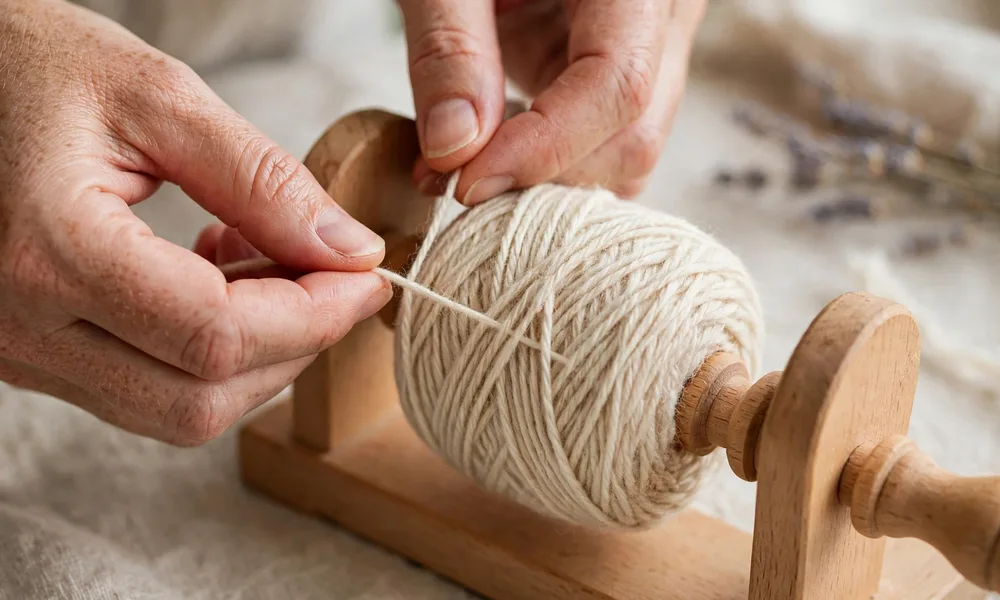
The hand-cranked table winder is the classic design and still the best for most knitters. It clamps to a table edge, and you turn a crank with one hand while guiding the yarn with the other. A good one winds a standard 100-gram skein into a neat cake in two or three minutes. Look for a solid clamp that grips without slipping, a smooth crank, and a spindle that spins freely. Plastic winders are light and cheap but wobble under a heavy skein; wood and metal cost more and stay put. The weakness is your wrist: cranking through five or six skeins in a row is tiring.
2. Electric winders
An electric winder does the turning for you. You feed yarn onto the spindle, press a button or foot pedal, and the motor winds the ball while both hands guide the strand. It is the best choice for anyone winding many skeins at once, dyeing or selling yarn, or with sore hands and wrists. Electric winders are faster and more consistent, because the motor holds a steady speed. The trade-offs are price, noise and size: a good one costs several times more than a hand-cranked model, hums while it works, and needs a power socket. Buy one if you wind weekly in bulk.
3. Nostepinnes and hand winders
A nostepinne is a carved wooden stick, tapered at one end, around which you wind yarn by hand to make a centre-pull ball. It is the oldest way to wind yarn, costs almost nothing, and fits in a project bag. Winding by hand is slow and takes practice to keep tension even, but it is quiet, portable and oddly satisfying. It suits knitters who wind one skein at a time or travel with their knitting, and delicate yarns, because your hands feel the tension in a way a machine cannot. The weakness is speed: a hand-wound ball is rarely as even as a machine-wound one.
4. Umbrella swifts and winder sets
A swift is not a winder, but it is the winder’s best partner. A swift is an expanding wooden frame that holds the skein open in a loop while you wind, so yarn feeds smoothly without tangling. Without one, the skein collapses into a knot halfway through, and you spend more time untangling than winding. An umbrella swift opens like an umbrella, adjusts to any skein size, and clamps to the same table as the winder. If you buy one thing alongside your winder, make it a swift.

Comparison table
| Winder type | Best for | Speed | Effort | Price |
|---|---|---|---|---|
| Hand-cranked table winder | Most knitters, weekly winding | Fast | Moderate | Low to mid |
| Electric winder | Bulk winding, sore hands | Fastest | Low | High |
| Nostepinne and hand winders | Travel, delicate yarns | Slow | High | Low |
| Umbrella swift and winder set | Tangle-free winding | Fast | Moderate | Mid |
How to choose the right winder
Start with how much yarn you wind. One skein a month for a scarf needs nothing more than a hand-cranked winder and a swift, or even a nostepinne. Five skeins a week for a sweater justifies an electric winder. Then think about your hands: cranking is gentle work, but an evening of it will tell you quickly whether your wrists are happy. If they are not, an electric winder or a nostepinne, which uses a different motion, may suit you better.
Capacity matters more than it looks. Most table winders handle a 100-gram skein comfortably, but a large 200-gram skein of chunky yarn may not fit the spindle, and you will end up winding it in two halves. Check the maximum ball size before you buy. Stability matters too: a winder that wobbles or walks across the table winds an uneven ball, so clamp it firmly, and if the table edge is thin or rounded, look for a wide, padded clamp. Pair the winder with the right tools, and read our guide to the knitting needles that make every stitch even.
Mistakes that stretch and snap yarn
The most common mistake is winding too tightly. A ball wound under heavy tension looks impressively neat, but the yarn inside is stretched, and stretched yarn knits up smaller than it should. Your gauge will be off and your sweater will come out tight. Wind with a light hand, and let the strand flow rather than pulling it taut. The second mistake is knitting from a ball immediately: freshly wound yarn holds tension and needs an hour or two to relax. Wind your balls the evening before you plan to knit.
The third mistake is winding without a swift. A skein left in a pile while you wind will collapse, tangle and fight you the whole way, leaving a lopsided ball and a knot in the middle. Always hold the skein open, whether on a swift, a chair back, or someone’s outstretched hands. The fourth mistake is winding yarn that is already tangled: if the skein has a knot, stop and untangle it first. Winding over a knot buries it inside the ball, where it will appear halfway through your knitting.

Checklist before you buy
- Count how many skeins you wind in a typical month, and buy a winder built for that volume.
- Check the maximum ball size against your thickest yarn.
- Clamp the winder to your table before buying if you can, and check that it grips firmly without wobbling.
- Turn the crank or run the motor: it should turn smoothly, without sticking, grinding or squeaking.
- Make sure a swift is included or budgeted for: winding without one is where most tangles begin.
- Match the winder to your hands: a crank for most, electric for bulk winding or sore wrists, a nostepinne for travel.
Frequently asked questions
Do I really need a yarn winder?
Not always, but most knitters who try one never go back. If you knit from balls that came wound from the shop, you may never need one. If you buy yarn in skeins, a winder saves time, prevents tangles, and gives you a centre-pull ball that stays put.
Will a winder stretch my yarn?
Only if you wind too tightly. A winder used with a light hand puts yarn under gentle, even tension, and fibres relax within an hour or two. Pulling the strand taut while you wind is what stretches it, so let the yarn flow rather than dragging it. If you are worried, leave the ball overnight before knitting.
What is the difference between a winder and a swift?
A winder winds the yarn into a ball; a swift holds the skein open while the winder works. They are partners, not alternatives: a swift without a winder leaves you winding by hand, and a winder without a swift leaves the skein collapsing into a knot. Most knitters buy them as a set.
Can I wind yarn without a winder?
Yes. A nostepinne winds a centre-pull ball by hand, and you can also wind a ball around your thumb or a small tube. Hand winding works well for one skein at a time, but it is slow and tension is hard to keep even. For regular winding, a table winder is faster, more consistent and easier on your hands.
How do I stop the ball collapsing in the middle?
Wind under light, even tension, and do not wind the ball too large for the spindle. A ball wound too tightly collapses when the centre is pulled, because the inner layers have nothing to support them. Let the ball rest before knitting, and pull the strand gently from the centre.
Is an electric winder worth the price?
For most knitters, no: a good hand-cranked winder does the same job for far less money. An electric winder is worth it if you wind in bulk, dye or sell yarn, or have hands and wrists that ache after cranking. Buy the hand-cranked model first, and upgrade only if you wind every week.
The bottom line
The top yarn winders of 2026 turn a skein into a centre-pull ball so smoothly you forget the winder is there. A hand-cranked table winder and an umbrella swift cover almost every knitter, an electric winder earns its keep for bulk winding or sore hands, and a nostepinne never needs a table. Wind under light tension, let the ball rest, and keep a swift in the routine.