Brush Holders That Keep Bristles in Shape in 2026
Brush holders that keep bristles in shape are the difference between a brush that lasts for years and one that ends up splayed, bent and fit only for the bin. A good holder keeps bristles upright, separated and free from pressure when not in use, so fibres dry straight and hold their edge.
This guide covers holders for paint brushes and makeup brushes, the two kinds that suffer most from bad storage. A watercolour brush left lying on its side dries with a kink, and a foundation brush tossed into a drawer comes out flat on one side. A holder fixes both problems for very little money.
Key takeaways
- Store brushes bristle-up or hanging free, never flat under other tools: pressure while drying bends bristles permanently.
- A holder must be heavy enough not to tip, and it must let air reach the bristles so damp fibres dry straight.
- Paint brushes want open slots and rinse-proof materials; makeup brushes want soft, separated compartments.
- Brush holders are not pen holders or toothbrush holders, and using one as the other usually damages bristles.
- Clean the holder as often as the brushes: dried paint, powder and oil transfer back onto clean bristles.
What a brush holder actually does
A brush holder is a stand, cup, rack or case that keeps brushes upright and apart when not in use. Storage damage is slow and invisible at first: one night flat under a palette knife will not ruin a brush, but a hundred nights will. Fibres take a set, and once a natural-hair brush has dried bent, it rarely comes back. Synthetic bristles are more forgiving, but they still splay when crushed.
The second job is airflow. A freshly washed brush is damp at the base of the bristles, where they meet the ferrule. In a sealed tube or a crowded cup with no air moving, that damp section stays wet for hours. Dampness loosens the glue holding the bristles, and in a warm room it invites mould. A good holder spaces brushes out and leaves bristles exposed to air, so they dry in an hour or two. The third job is protection: brushes stored properly last two or three times longer.
Brush holders are not pen holders or toothbrush holders
It is tempting to buy a pen holder and call it a brush holder: they look similar and cost about the same. But a pen holder is built for rigid cylinders, with hard walls and narrow compartments. A brush dragged in and out of one catches its bristles on the rim, and narrow compartments press soft tips together until they bend. Our guide to the best pen holders of 2026 covers desk storage properly, but those holders are for pens.
Toothbrush holders are a different mistake. They are made for a bathroom, for two or four brushes used twice a day and rinsed under a tap. Their compartments fit toothbrush handles, their bases collect water, and many have lids that seal in moisture. A paint or makeup brush stored in one will stay damp and lose its shape. The same goes for a plain jam jar: it holds brushes upright, but crowds them together, gives no airflow at the base, and tips over when bumped. A proper brush holder is built around the three risks that ruin bristles: pressure while damp, trapped moisture, and friction against hard edges.
The five types of brush holder worth buying
Almost every holder falls into five designs, each suiting a different kind of brush and way of working. The best choice depends on where you use your brushes.
1. Open-top cups and caddies
The open-top cup is the simplest holder and still the best for most people: a heavy ceramic, wood or weighted metal cup with an open top and a wide, stable base. Brushes stand bristle-up, spread out and easy to grab. Weight is the key feature: a light cup tips over when you pull a large brush from a full load. Ceramic cups are easy to clean and heavy enough for paint brushes; wooden caddies with dividers suit makeup brushes, because dividers stop soft tips rubbing together.

2. Slotted racks and stands
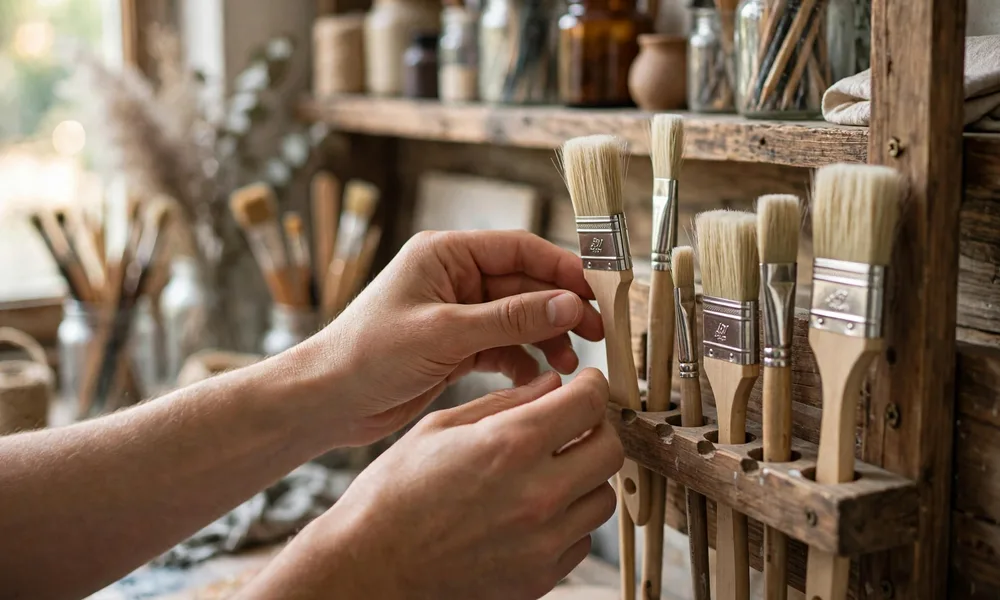
A slotted rack holds each brush in its own slot, usually by the handle, with bristles hanging down or standing up in open air. It is the best design for brushes washed often, because bristles hang free and dry from every side. Watercolour painters favour racks holding brushes bristle-down over a drip tray, since gravity pulls water away from the ferrule. The trade-off is space: a rack takes up more desk than a cup and is harder to move.
3. Roll-up cases and wraps
A roll-up case is a strip of fabric or leather with a pocket for each brush, which rolls into a bundle and ties shut. It is the best holder for travel and for anyone working in more than one place. Each brush has its own pocket, so bristles never touch, and the rolled bundle protects tips from knocks in a bag. The weakness is drying: a brush put away damp stays damp, so only ever roll up clean, dry brushes.
4. Wall-mounted racks
A wall-mounted rack screws or sticks to the wall above a desk or vanity, holding brushes in clips, hooks or shallow cups. It is the best choice when desk space is scarce, and it keeps brushes away from spills entirely. Painters like wall racks because brushes are visible and within reach, with bristles hanging in free air. The drawback is commitment: a screwed rack leaves holes, and a stuck rack may not hold on a textured wall. Check clips fit your handles before you buy.

5. Drying stands with bristle-down slots
A drying stand is a specialist holder built for the hour after washing. It holds brushes bristle-down, usually at an angle, so water runs out of the bristles instead of pooling in the ferrule. It is not for permanent storage — move brushes to a cup or case once dry — but it is the best purchase for anyone who washes brushes often and wonders why they keep losing shape. Wash makeup brushes weekly or paint brushes daily, and a drying stand pays for itself in brushes saved within months.
Comparison table
| Holder type | Best for | Drying | Travel | Desk space |
|---|---|---|---|---|
| Open-top cup or caddy | Everyday use, mixed brushes | Good | Poor | Small |
| Slotted rack or stand | Washed brushes, fixed workspace | Excellent | Poor | Large |
| Roll-up case or wrap | Travel, large collections | Poor if damp | Excellent | None when rolled |
| Wall-mounted rack | Small desks, visible storage | Good | Not portable | None on desk |
| Drying stand, bristle-down | After washing | Best | Fair if folding | Medium |
How to choose the right holder
Start by counting your brushes and measuring the longest one. A holder that is too short leaves long handles sticking out at an angle, and the whole thing tips. One that is too tall hides short brushes inside, and you will never reach for them. The cup or slot should hold about a third of the handle, no more. Then match it to its home: a studio desk, a shared vanity or a bag each need a different design.
Material matters more than it looks. Ceramic and glass are easy to clean and heavy enough to stay put, but break if they fall. Wood looks warm and suits a studio, but absorbs water and paint, so it needs sealing. Weighted metal and stone are the most stable and wipe clean, but can chip a ferrule if a brush is dropped in carelessly. Silicone is gentlest for makeup brushes, but light, so it needs a weighted base. Whatever you choose, check the inside: rough seams, sharp rims and unsealed wood catch bristles and pull them out. Cleaning is the part most people forget, so pair the holder with a routine from our guide to brush cleaners that keep brushes like new.
Mistakes that wreck bristles
The most common mistake is storing brushes bristle-down in a cup. It looks tidy, but the brush’s full weight presses on the bristles all day, and they take a permanent bend. Bristle-down only works on a proper drying stand, where the brush hangs free and nothing touches the tip. The second mistake is overcrowding: a cup stuffed with thirty brushes is no better than a drawer, with bristles pressing together, bending out of shape and trapping moisture. If the brushes are touching, you need a bigger holder or a second one.
The third mistake is putting brushes away wet. A brush that goes into a closed case or crowded cup while damp dries in whatever shape it was pressed into, and the damp ferrule loosens over time. Always let brushes dry in open air before storage. The fourth mistake is leaving the holder in direct sunlight or next to a radiator: heat dries natural hair until brittle, warps synthetic bristles and softens the glue in the ferrule.
Checklist before you buy
- Count your brushes and measure the longest handle, then buy a holder sized for that number and length.
- Check its weight: it should feel heavy enough not to tip when you pull a brush out.
- Run a finger around the rim and inside every slot, and reject any holder with sharp edges or rough seams.
- Check that the bristles of your largest brush will not touch its neighbour when the holder is full.
- Make sure you can clean it: smooth surfaces rinse, fabric washes, and fixed wooden dividers are hard to reach.
- Match the holder to the brush: open slots for paint brushes, soft compartments for makeup brushes.
Frequently asked questions
Should brushes be stored bristle-up or bristle-down?
Bristle-up in a cup or rack is right for everyday storage, because nothing presses on the tips. Bristle-down is only right on a proper drying stand, where the brush hangs free and water runs out of the ferrule.
Can I use a pen holder for my brushes?
You can, but it will cost you brushes. Pen holders have hard walls and narrow compartments built for rigid cylinders, and they catch and bend soft bristles. A proper brush holder has smooth edges, separated slots and room for bristles to sit free.
How many brushes should go in one holder?
As many as fit without bristles touching: eight to twelve in most cups, depending on size. If you have more, buy a second holder rather than cramming them in, because overcrowding bends bristles and traps dampness.
Do makeup brushes and paint brushes need different holders?
Yes, in most cases. Paint brushes are washed in water and solvents, so they need rinse-proof materials and open slots that dry fast. Makeup brushes have softer, more delicate tips, so they need gentle compartments that keep them separated. Our guide to the top paint brushes for clean edges explains which shapes are most easily damaged by bad storage.
How often should I clean the holder itself?
Wipe it out every time you wash your brushes, and give it a proper wash at least once a month. Dried paint, powder and oil build up inside compartments faster than you expect, and a dirty holder transfers that residue onto clean bristles. Smooth cups rinse in seconds; fabric cases can be machine washed.
Is an expensive brush holder worth it?
Usually, yes, if the money goes into weight, smooth finishes and good slots rather than decoration. A well-made holder lasts for years and protects brushes costing far more than the holder itself. But price is no guarantee: a heavy, smooth, well-sized cup at a modest price beats a pretty, light, rough-edged holder at any price.
The bottom line
The best brush holders of 2026 are the ones you stop noticing, because they work so quietly that the brushes simply stay in shape. A heavy open cup, a drying stand and a roll-up case cover almost every painter and makeup user. Choose for weight, airflow and smooth edges.