Brush Cleaners That Keep Brushes Like New in 2026
Brush cleaners that keep brushes like new are the small, unglamorous products that decide whether a good brush lasts for years or ends up stiff, splayed and fit only for the bin. A brush cleaner is the soap, solvent or tool that removes dried paint, powder and oil from the bristles so the brush can do its job again tomorrow. This guide covers cleaners for both paint brushes and makeup brushes: the two jobs share the same goal — clean fibres that keep their shape — but they need different products, and the wrong one can ruin a brush in a single wash.
Key Takeaways
- Match the cleaner to the brush: paint cleaners dissolve paint, makeup cleaners lift oils gently, and the two are not interchangeable.
- Clean paint brushes before the paint dries, because dried paint hardens inside the bristles and is far harder to remove than wet paint.
- Wash makeup brushes weekly, since old foundation and skin oils build up fast, blunt blending and can irritate skin.
- Never soak a brush up to the ferrule, because liquid trapped in the metal band loosens the glue and makes bristles fall out.
- Reshape wet bristles and dry brushes flat or bristle-down, so water never runs back into the handle.
What a Brush Cleaner Actually Does
A brush cleaner loosens whatever is stuck in the fibres and carries it away without damaging the fibres themselves. Paint leaves a film that binds bristles together; foundation and powder leave oils and pigment that coat each fibre; and in both cases the brush slowly loses its spring, its fine tip and its ability to hold and release product evenly. For water-based paint, a dedicated cleaner lifts pigment from deep inside the brush, where rinsing alone never reaches. For oil paint, a solvent dissolves the oily binder water cannot touch. For makeup, a gentle cleanser dissolves skin oils and foundation without stripping the fibres.
Be clear about what this guide is. It is a guide to cleaners — the liquids, soaps, mats and drying tools that maintain brushes. It is not a guide to the brushes themselves. If you are choosing the brushes, our guide to paint brushes for clean edges covers the shapes and bristle types for decorating and artwork, while our guide to makeup brushes worth adding to your kit covers the six shapes that handle almost every makeup job. The paints matter too: a cleaner that suits acrylic may be wrong for watercolour, so our guide to watercolour paints that blend beautifully is worth reading alongside this one. Here, the brush is the patient and the cleaner is the treatment.

The Main Types of Brush Cleaner Compared
Almost every brush cleaner falls into one of six families, and each suits a different kind of brush and a different kind of mess. The right choice depends on what is on the brush, how often you clean it, and whether the fibres are natural or synthetic.
| Cleaner type | Best for | How it works | Watch out for |
|---|---|---|---|
| Liquid brush soap | Daily cleaning of paint and makeup brushes | Surfactants lift pigment and oil from fibres | Cheap soaps can leave residue that stiffens bristles |
| Solid brush soap | Deep cleaning and travel | Rub the wet brush on the solid cake, then rinse | Can be slow on heavily dried paint |
| Solvent cleaner | Oil paint and dried acrylic | Dissolves oily binders water cannot shift | Strong fumes, dries natural bristles, needs safe disposal |
| Silicone cleaning mat | Makeup brushes and small art brushes | Ridged surface works cleanser deep into fibres | Does not clean on its own; needs soap too |
| Brush spinner dryer | Drying many brushes fast | Spins water out of the bristles in seconds | Can splay delicate heads if spun too hard |
| Quick-dry spray | Makeup brushes between uses | Alcohol-based spray dissolves surface makeup fast | Not a deep clean; dries fibres with frequent use |
Liquid Brush Soap
Liquid brush soap is the everyday workhorse. A few drops in water, or worked directly into wet bristles, lift water-based paint, powder and liquid foundation without drama. Good ones rinse clean; poor ones leave a film that makes bristles feel sticky when dry. For paint brushes, look for a soap that says it handles acrylic and watercolour. For makeup brushes, look for a gentle formula with no strong fragrance, since the brush touches your face.
Solvent Cleaner
Solvent cleaner is the heavy duty option. Oil paint does not dissolve in water, so a brush used with oils needs a solvent to break down the binder. Modern citrus solvents are gentler and smell far better than old-style white spirit, and they are the better choice for home use. Use solvent in a well-ventilated room, in a small jar, and never pour it down the sink: let the paint settle, pour off the clear solvent for reuse, and dispose of the sludge properly. Never use solvent on a makeup brush, and never use it on a brush you cannot afford to lose until you have tested it on a cheap one first.
Cleaning Paint Brushes Step by Step
Cleaning a paint brush properly takes five minutes, and it is the difference between a brush that lasts a season and one that lasts a decade. Start while the paint is still wet. Wipe the worst of the paint off on a rag, then rinse the brush in water for water-based paint, working the bristles gently with your fingers so the water reaches the base. Add a drop of liquid brush soap or swirl the brush on a solid soap cake, and work the lather through the bristles from ferrule to tip. Rinse until the water runs clear, then rinse once more — the last trace of pigment hides at the base of the bristles, and that is exactly where dried paint does its damage. For oil paint, wipe off the excess, swirl the brush in a small jar of solvent until the paint releases, then wash it with soap and warm water. Finally, reshape the bristles with your fingers and lay the brush flat or hang it bristle-down to dry. Never leave a brush soaking overnight: it bends the tip and rusts the ferrule.
Cleaning Makeup Brushes Step by Step
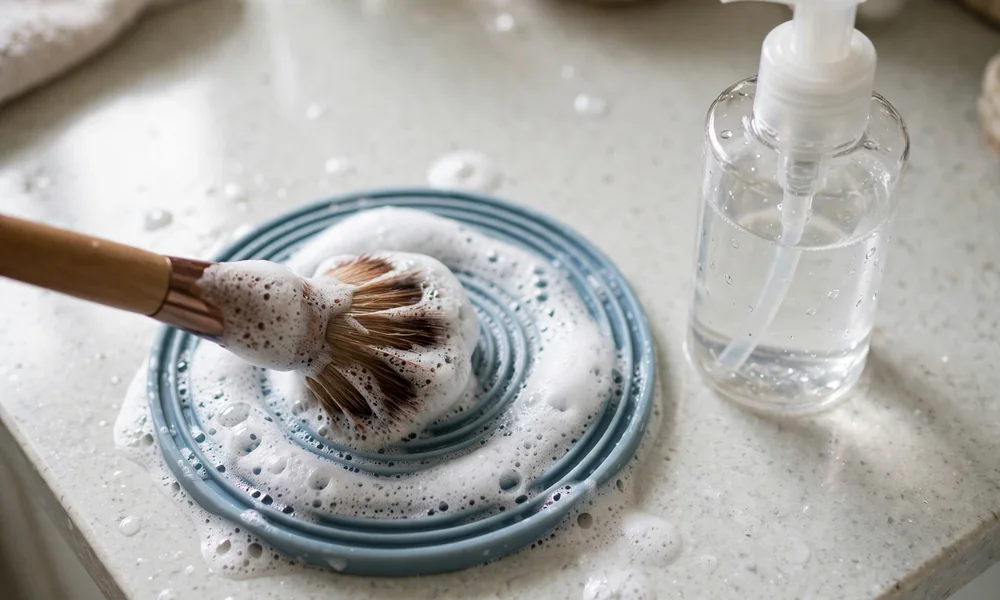
Makeup brushes need a gentler routine, because they touch skin and their fibres are finer. Wet only the bristles under lukewarm water, holding the brush with the bristles pointing down so water never runs into the ferrule. Add a drop of gentle brush cleanser or mild liquid soap, and swirl the bristles on your palm or on a silicone cleaning mat, working the lather through the fibres. The mat’s ridges reach the base of dense foundation brushes where fingers cannot, lifting out trapped product. Rinse until the water runs clear, squeeze the water out gently without twisting, and reshape the head. Lay the brush flat on a towel with the bristles hanging over the edge, or hang it bristle-down, so air can reach the whole head and water drains away from the handle.
How often you wash depends on the brush. Foundation and concealer brushes, which carry liquid product and skin oils, need washing at least once a week. Powder, blush and bronzer brushes can go a little longer, but a fortnightly wash keeps them blending properly. Eye brushes that carry dark pigment benefit from a quick clean between colours, even if it is only a wipe on a dry cloth. If a brush starts to smell, shed, or feel scratchy even after washing, the fibres are worn out.
What to Look for When You Buy
First, match the cleaner to the paint or product: water-based paint needs soap, oil paint needs solvent, and makeup needs a gentle cleanser. A cleaner that claims to do everything usually does none of them well. Second, check the rinse. A good cleaner rinses completely clean; if the bristles feel slick, sticky or coated after rinsing, the cleaner is leaving residue behind, and that residue will stiffen the brush as it dries. Third, think about the fibres. Natural bristles need a cleaner that conditions as it cleans, because harsh detergents strip their natural oils and leave them brittle. Synthetic fibres are tougher, but they still go stiff if residue builds up. Fourth, consider the format: a liquid soap by the sink suits daily cleaning, while a solid cake in a tin survives travel.

The Mistakes That Ruin Brushes
Most brushes are not worn out by use; they are ruined by cleaning mistakes. The first is leaving paint to dry in the brush. Acrylic dries in minutes, and once it sets at the base of the bristles it acts like glue, holding the fibres apart so the brush can never form a point again. The second is soaking the whole brush. Water or solvent that gets into the ferrule loosens the glue, rusts the metal from inside, and makes the handle swell and split. The third is scrubbing too hard. Bristles are not a scouring pad, and grinding a brush on a rough surface bends and breaks the tips. The fourth is drying the brush upright in a pot. Water runs down into the ferrule, the base stays damp for hours, and the brush dries with its head splayed. The fifth is using the wrong cleaner, such as solvent on a makeup brush.
Brush Cleaner Checklist
- Match the cleaner to the job: soap for water-based paint and makeup, solvent for oil paint, never solvent on makeup brushes.
- Clean paint brushes before the paint dries, and wash makeup brushes at least once a week.
- Keep water and solvent below the ferrule, and never soak a brush overnight.
- Rinse until the water runs clear, then rinse once more to clear the base of the bristles.
- Reshape wet bristles with your fingers and dry the brush flat or bristle-down.
- Store clean, dry brushes with their heads protected, away from dust and damp.
Frequently Asked Questions
Can I use the same cleaner for paint brushes and makeup brushes?
You can use a gentle liquid brush soap for both, but keep them separate: paint soap carries pigment that can transfer to a makeup brush, and solvent must never touch one.
How do I get dried acrylic paint out of a brush?
Soak only the bristles in a brush restorer or warm soapy water for an hour, then work the softened paint out gently. Paint set solid at the base for weeks may never fully come out.
Is it safe to use washing-up liquid as a brush cleaner?
It works in a pinch for synthetic brushes, but it is harsher than a dedicated brush soap and can dry out natural bristles. A proper soap is cheaper than a new brush.
How often should I wash my makeup brushes?
Foundation and concealer brushes need washing at least once a week. Powder and blush brushes can be washed every two weeks. A quick wipe between colours keeps eye brushes from muddying your next look.
Why do my brush bristles splay out after washing?
Usually because the brush was dried standing upright, or left soaking so water swelled the ferrule and loosened the bristles. Reshape wet bristles and dry the brush flat or bristle-down.
Do brush spinner dryers damage brushes?
Used gently, they are fine for sturdy synthetic brushes. Use the lowest speed for delicate natural-hair brushes, and never spin a brush still full of paint or soap.
The Bottom Line
The best brush cleaners in 2026 are the ones you will actually use every time: a gentle liquid or solid soap for water-based paint and makeup, a low-odour solvent for oil paint, a silicone mat to work the cleanser deep into the fibres, and a drying routine that keeps water out of the ferrule. Clean before paint dries, wash makeup brushes weekly, reshape and dry bristle-down, and even a modest brush will stay soft, springy and like new for years.