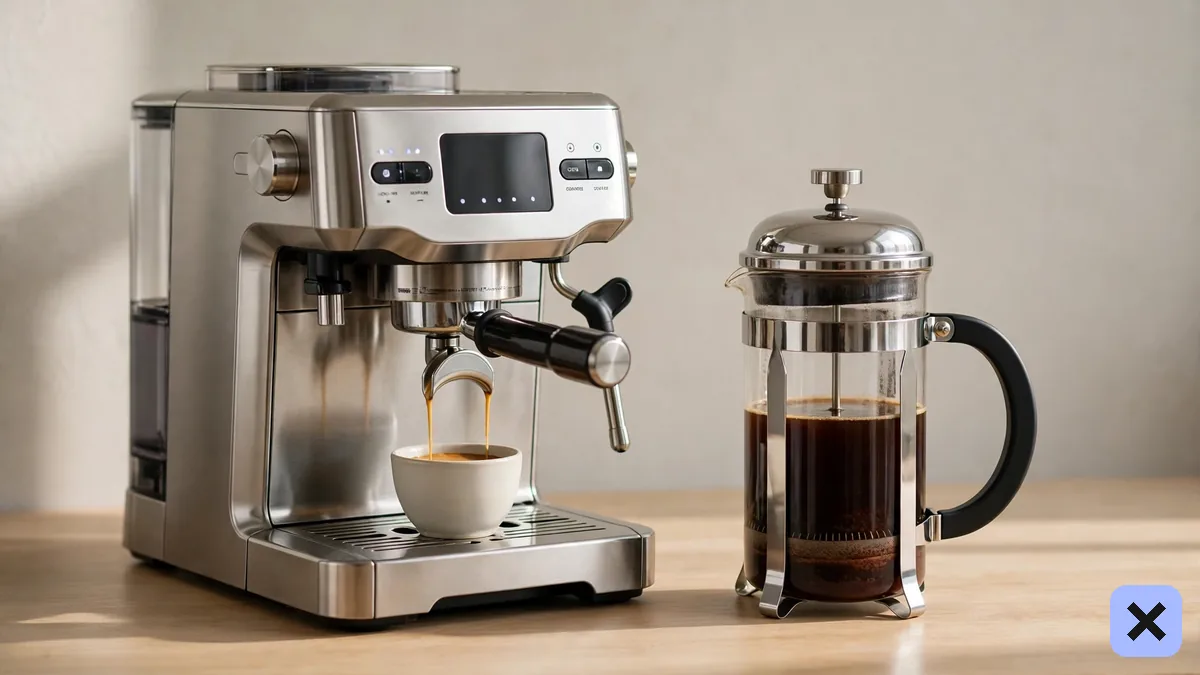
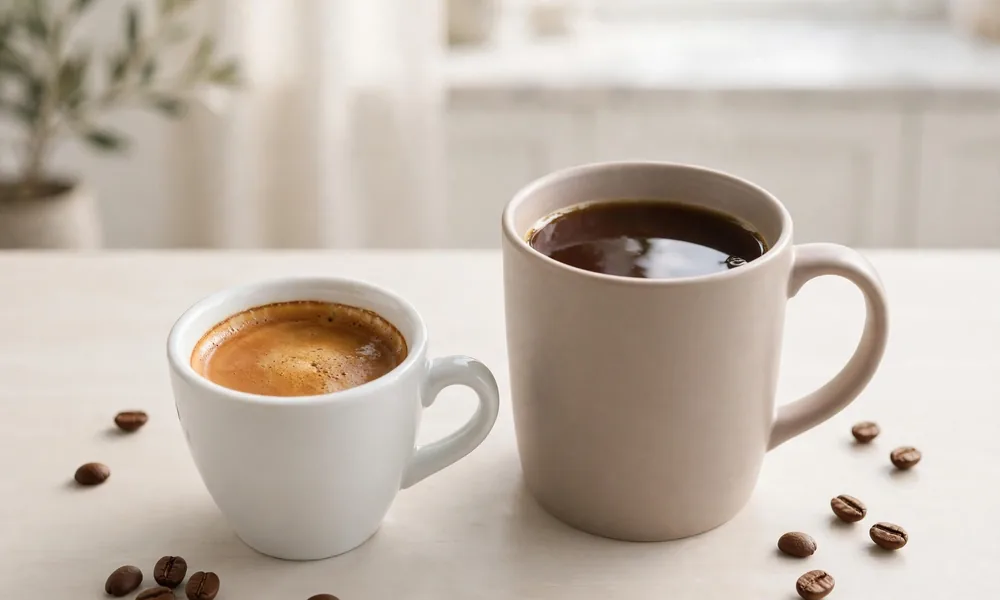
Espresso machine vs French press is one of the most useful comparisons in home coffee, because the two brewers could hardly be more different. One uses high pressure and fine grounds to make a small, intense shot in under a minute. The other uses time, coarse grounds and a mesh filter to make a full, heavy mug in four minutes. Both can make excellent coffee, yet they suit different mornings, budgets and tastes.
The choice matters because the brewer shapes almost everything about the cup: its strength, its body, the morning effort and the cost over a year. A brewer that fights your habits will sit unused on the counter, however good its coffee can be.
This guide compares the two side by side, from flavour and texture to cost, cleaning and beans, so you can tell which one fits your kitchen, your schedule and the coffee you actually enjoy.
Key takeaways
- Espresso is small, intense and topped with crema, while French press coffee is larger, fuller and heavier in the cup.
- An espresso machine costs more and needs more cleaning, but brews in under a minute once warm.
- A French press costs very little, has no moving parts and makes several mugs at once.
- Grind size matters for both: fine and even for espresso, coarse and even for the press.
- Choose espresso for milk drinks and speed, and French press for a slow, rich mug on a small budget.
How Each Brewer Works
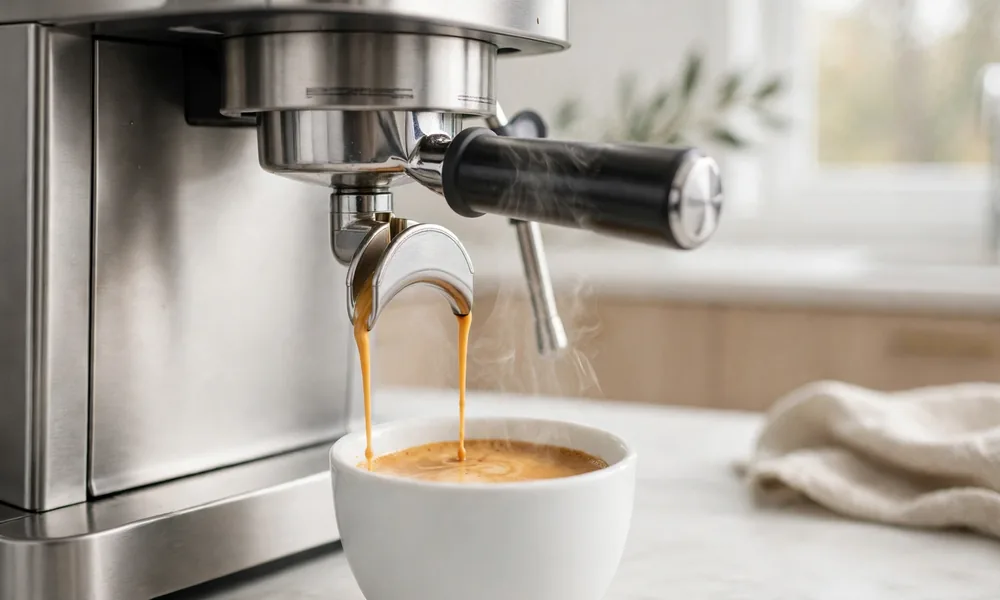
An espresso machine forces hot water through a tightly packed puck of finely ground coffee at around nine bars of pressure. In about twenty-five to thirty seconds it produces a concentrated shot of one to two ounces, crowned with reddish-gold crema.
A French press works by immersion. Coarse grounds sit in hot water for several minutes while the water slowly draws out flavour. A metal mesh plunger then pushes the grounds to the bottom, and the coffee is poured straight into the mug. There is no pressure, no pump and no paper filter.
The Espresso Machine
Inside an espresso machine, the key parts are the boiler, the pump and the portafilter. The boiler heats water to around 93 degrees, the pump builds pressure, and the portafilter holds the coffee in a small metal basket. You dose, tamp flat and lock it in place. One button starts the shot, and the machine does the rest in seconds.
That speed comes with a learning curve. Dose, grind and tamp all affect the shot, and a small change can turn a sweet espresso sour or bitter. Many home machines now include built-in grinders and pressurised baskets, which make the process far more forgiving. Even so, espresso rewards patience in the first weeks.
Espresso is also the base for lattes, cappuccinos, flat whites and mochas, so one machine opens up a whole cafe menu at home.
The French Press
The French press could hardly be simpler. Add coarse coffee, pour in hot water just off the boil, stir gently and put the lid on with the plunger raised. Wait four minutes, press down slowly and pour. It needs no electricity, no buttons and no technique beyond a timer and a steady hand.
That simplicity suits households. A standard press makes three or four mugs at once, so everyone gets coffee from a single brew. There is nothing to warm up or descale, and no pump to fail. The glass jug and mesh filter are the only parts, and both are cheap to replace.
The trade-off is control. You cannot change the pressure, and you cannot shorten the brew time without weakening the coffee. What you can control is the grind, the ratio and the steep time. Most people use about one gram of coffee for every fifteen grams of water.
Taste, Body and Strength
Taste is where the two brewers part ways most clearly. Espresso is intense and layered, with sweetness, acidity and bitterness in balance and flavours that shift as the cup cools. Light and medium roasts shine here, showing off fruity and floral notes that a longer brew can flatten.
French press coffee is fuller and rounder. With no paper filter stripping out the oils, the cup has a heavy body and a rich, almost syrupy feel. Darker roasts taste smooth and chocolatey through a press. The downside is a little sediment in the last sip, and a muddy cup if the grind is too fine.
Strength is often misunderstood. Espresso tastes stronger because it is concentrated, but a full mug of press coffee usually contains more caffeine. A double shot holds roughly 120 milligrams, while a large mug of press coffee can hold 200 milligrams or more. For a quick jolt, espresso wins. For a long cup over breakfast, the press wins.
Ease of Use and Your Morning Routine
On a busy weekday, the espresso machine is faster once it is ready. Heat-up takes a few minutes, but the shot takes under a minute, and a milk drink follows in another minute. The routine becomes automatic quickly: grind, tamp, brew, steam, done.
The French press is slower per cup but simpler overall. There is no heat-up time, just a kettle and four minutes of waiting. You can make breakfast while the coffee steeps, and brew enough for two or three people in one go.
The real difference is the mental load. Espresso asks for attention every time: the grind, the dose, the tamp, the timing. The press asks for almost none: measure, pour, wait, press.
A press serves a table, while an espresso machine serves one person at a time. If your mornings involve several coffee drinkers, the best coffee makers for home include options that handle a full household pot with far less fuss than a single-serve machine.
Cost: What You Pay Now and Later
Cost is the clearest win for the French press. A good press costs about the same as a bag of decent beans, and it has no running costs beyond coffee and hot water. There are no filters to buy and no parts that wear out quickly.
An espresso machine is a different kind of purchase. A decent home machine costs several hundred, and a good grinder adds to that if it is not built in. The best espresso machines for home range widely in price, and the cheapest models often frustrate their owners within a year. Budget for the machine, the grinder, a tamper and a milk jug.
Running costs differ too. Espresso machines need descaling, cleaning tablets and occasional servicing. A press needs a rinse and the occasional replacement mesh.
| Factor | Espresso Machine | French Press |
|---|---|---|
| Starting price | High | Low |
| Brewing time | Under a minute per shot | Four minutes |
| Serves at once | One drink at a time | Three to four mugs |
| Best for | Milk drinks | Rich black coffee |
| Cleaning effort | Daily rinsing, descaling | Quick rinse |
| Skill needed | Moderate | Very little |
The value question is personal. If you buy a milk drink every day, a home espresso machine can pay for itself within a year. If you drink black coffee at home, the press gives you nearly all the pleasure for a fraction of the cost.

Cleaning and Maintenance
Cleaning surprises many new espresso owners. The portafilter and basket need rinsing after every shot, the drip tray needs emptying, and the milk wand must be wiped and purged right after steaming, or milk bakes onto it. It also needs descaling every few months. None of this is hard, but it is constant.
The French press asks far less. After pouring, tap the grounds into the bin, rinse the jug and mesh under hot water, and leave it to dry. Once a week, take the mesh apart and wash it properly.
Over the years, the pattern holds. Espresso machines have pumps, boilers, seals and electronics that can fail. A French press has no parts that can fail beyond the glass, and a broken jug is cheap to replace.
Beans, Grind and Water
Both brewers are fussy about grind, but in opposite directions. Espresso needs a fine, even grind, close to table salt or finer. Too coarse and the water rushes through, giving a sour, weak shot. Too fine and it struggles, giving a bitter, slow shot. A good burr grinder matters more than the machine itself, and the best coffee grinders for home make the biggest difference of any single upgrade.
The French press needs the opposite: a coarse, even grind, like rough sea salt. Fine grounds slip through the mesh, leaving sediment and a gritty cup. A burr grinder helps here too, since uneven grounds over-extract the fine pieces and under-extract the coarse ones.
Roast can shift with the brewer. Espresso suits medium roasts, with enough sweetness to balance the intensity. Dark roasts work well in a press, where the long steep brings out chocolate and caramel notes.
Which One Fits Your Kitchen
Counter space is a practical tiebreaker. An espresso machine needs a permanent spot near a socket, with room for the grinder, the tamper and the milk jug. A French press needs a cupboard shelf and a kettle. Small kitchens often suit the press simply because there is nowhere sensible to keep a machine.
Household size matters too. A single person or a couple who drink at different times will get more from an espresso machine, since each drink is made fresh to order. A family at breakfast together will get more from a press, which fills several mugs from one brew.
Checklist: Choosing Between Espresso and French Press
- Pick espresso if you drink lattes or cappuccinos most days.
- Pick a French press if you drink black coffee and want a full, rich mug.
- Count how many people drink coffee at the same time.
- Measure your counter space and check for a spare socket.
- Budget for a good burr grinder, whichever brewer you choose.
- Be honest about cleaning: a press forgives neglect far better than a machine.
Frequently Asked Questions
Is espresso stronger than French press coffee?
Espresso tastes stronger because it is concentrated, but a full mug of French press coffee usually contains more caffeine in total. A double shot holds roughly 120 milligrams, while a large mug of press coffee can hold 200 milligrams or more.
Can a French press make espresso?
No, a French press cannot make true espresso. Espresso needs about nine bars of pressure to force water through fine grounds, and a press uses only gravity and steeping. It makes strong, full coffee, but never with the crema of a real shot.
Which brewer is better for beginners?
The French press is far easier. It needs no technique beyond measuring coffee, pouring water and waiting four minutes. Espresso takes practice with grind, dose and tamping.
Does an espresso machine use more coffee?
Per drink, espresso uses less coffee by weight, about 18 grams for a double shot, while a press pot uses 30 grams or more. Per day, the total depends on how much you drink.
How long does a French press last?
A French press can last for years with almost no maintenance. The glass jug is the only fragile part, and replacements are cheap. The mesh may need replacing every year or two.
Can I use the same beans for both brewers?
Yes, but grind them differently. Espresso needs a fine grind and the press needs a coarse grind. The same medium roast works well in both.
The Bottom Line
Espresso machine vs French press comes down to how you drink coffee. Choose the espresso machine if you love milk drinks and want a fast single cup. Choose the French press if you love a big, rich mug of black coffee, brew for several people at once and want great coffee for very little money and effort. Either way, fresh beans, a good grind and clean equipment matter more than the brewer alone.