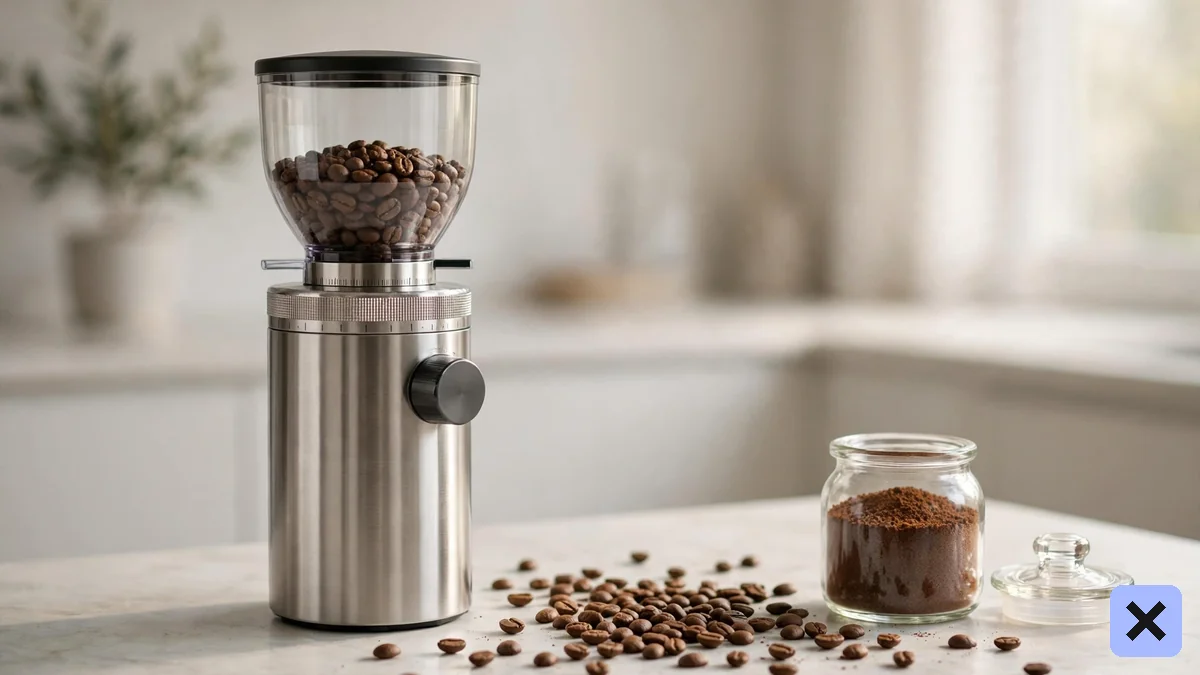
The best coffee grinders for home use in 2026 do one thing better than every other piece of coffee gear on your counter: they turn fresh beans into even, flavourful grounds. A good grinder is the single upgrade that makes the biggest difference to your cup.
Most home coffee drinkers spend their money in the wrong order. They buy a beautiful brewer first, then wonder why the coffee tastes flat or dull. Pre-ground coffee loses its aroma within minutes, and uneven grounds extract at different rates, so one cup can taste sour and bitter at the same time. A burr grinder fixes both.
This guide compares the best coffee grinders for home brewing across every budget and brew method, from quiet hand grinders to powerful electric burr grinders. Every pick was chosen for grind consistency, build quality, and value.
Key takeaways
- A burr grinder beats a blade grinder every time, because even particle size means even extraction and a cleaner cup.
- Match the grinder to your brewer: espresso needs fine, stepless adjustment, while pour over and French press need a wide coarse range.
- Grind only what you need, right before brewing, and store whole beans in a cool, dark place.
- Spend more on the grinder than on the brewer if you have to choose, because the grinder shapes every cup.
- Clean your grinder every two to four weeks, since stale grounds and coffee oils turn rancid.
Why the Grinder Matters More Than the Brewer
Coffee flavour is decided in the seconds after hot water meets ground coffee. Fine particles extract quickly, coarse particles extract slowly, and a mix of both gives you a cup that is over-extracted and under-extracted at once. That is the sour-bitter confusion many home brewers know well.
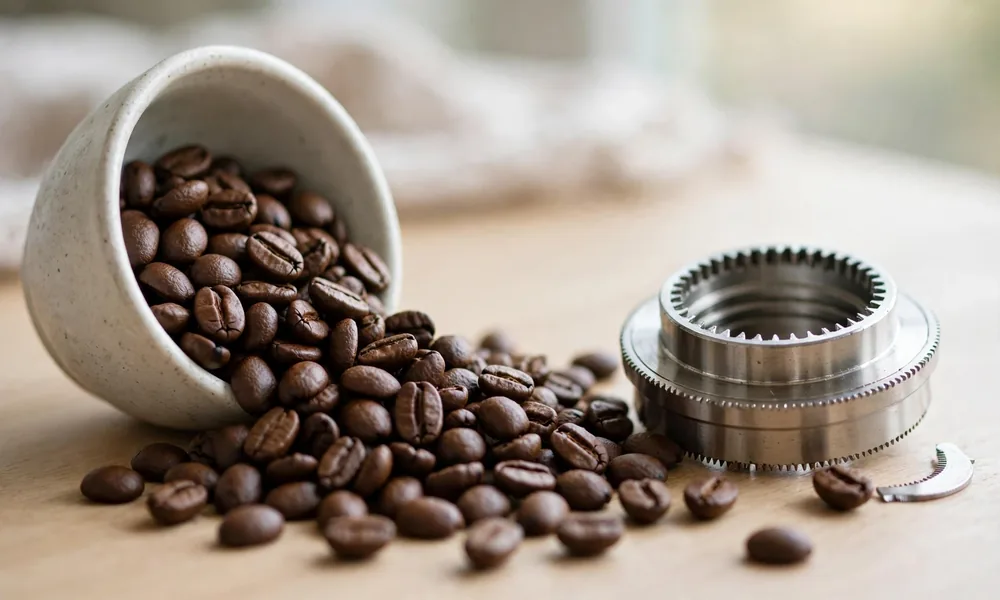
A burr grinder crushes beans between two ridged surfaces set a fixed distance apart, so nearly every particle comes out the same size. A blade grinder chops beans at random, producing dust and boulders in the same batch. No brewer can rescue grounds like that.
Freshness is the second half of the story. Whole beans keep their aromatic oils locked inside for weeks, but once ground, those oils meet oxygen and fade fast. Grinding moments before brewing keeps the aroma in the cup. If you already own a decent set of best coffee makers for home, a better grinder will change what you taste.
How We Picked the Best Coffee Grinders for Home
We judged every grinder on the things that matter in daily use rather than on marketing claims. Grind consistency came first, because even particles are the whole point. We also weighed grind range, build quality, noise, static, ease of cleaning, and how simple it is to adjust when you switch beans or brew methods.
Value was judged honestly. A grinder that costs twice as much has to grind noticeably better, last longer, or make mornings easier. The picks below cover the full range, and each one earns its place for a different kind of home brewer.
| Grinder | Best For | Burrs | Range |
|---|---|---|---|
| Baratza Encore ESP | Best overall | Conical | Espresso to French press |
| OXO Brew Conical Burr | Best budget | Conical | Drip to French press |
| Eureka Mignon Silenzio | Espresso | Flat | Espresso |
| 1Zpresso J-Ultra | Best manual | Conical | Espresso to pour over |
| Fellow Ode Gen 2 | Pour over | Flat | Filter brewing |
The Best Coffee Grinders for Home in 2026
These five grinders cover every home setup, from a first burr grinder to a dedicated espresso companion.
Best Overall: Baratza Encore ESP
The Baratza Encore ESP is the safest recommendation in home coffee. Its finer adjustment range handles espresso as well as pour over, drip, and French press. The grind is even across the range, and the machine is famously repairable.
It is not the quietest or fastest grinder here, but it is the one we would hand to a friend who wants great coffee without a learning curve. The hopper holds enough beans for several days, and the stepped adjustment makes it simple to return to a setting you liked.
Best Budget: OXO Brew Conical Burr Grinder
The OXO Brew is the best way to leave blade grinders behind without spending a fortune. Its stainless steel conical burrs produce a far more even grind than anything in its price range, and fifteen settings plus micro-adjustments cover drip, pour over, and French press. A simple one-touch timer makes repeatable mornings easy.
The design is tidy and counter-friendly, the hopper seals well, and the grounds container has a static-reducing finish. Espresso drinkers should look elsewhere, since the fine end of the range is not precise enough, but for filter coffee this is a remarkable value.
Best for Espresso: Eureka Mignon Silenzio
The Eureka Mignon Silenzio is a compact, near-silent flat burr grinder built for espresso lovers. Its stepless adjustment dials in shots with tiny, precise changes, and the 50 mm flat burrs produce the fluffy, even grounds good espresso demands. Its low-retention design means little old coffee stays behind to stale your next shot.
It is small enough to fit under kitchen cabinets and quiet enough for early mornings. The touch display and timed dosing keep shots consistent, and the build feels a class above its price. Pair it with one of the best espresso machines for home and you have a café-level setup on your counter.
Best Manual: 1Zpresso J-Ultra
The 1Zpresso J-Ultra proves that a hand grinder can rival electric grinders costing twice as much. Its steel burrs and precise external adjustment ring cover espresso through pour over, and the grind quality is excellent. It grinds a single dose in under a minute and travels anywhere.
Manual grinding takes real effort for larger batches, but for one or two cups a day it is quiet, satisfying, and beautifully made. The aluminium body feels solid, the handle folds away, and there is almost nothing to break.
Best for Pour Over: Fellow Ode Gen 2
The Fellow Ode Gen 2 is the prettiest grinder on this list and one of the best for filter coffee. Its 64 mm flat burrs produce a remarkably even grind for pour over, drip, and French press, and the single-dose hopper encourages fresh grinding. Auto-stop shuts the motor off when the beans are done.
The Ode is not an espresso grinder, so do not buy it for fine grinding. For everything else, it is a joy to use, easy to clean, and looks wonderful on the counter. It is the pick for the brewer who has settled on filter coffee and wants the best of it.
Burr vs Blade: The Difference You Can Taste
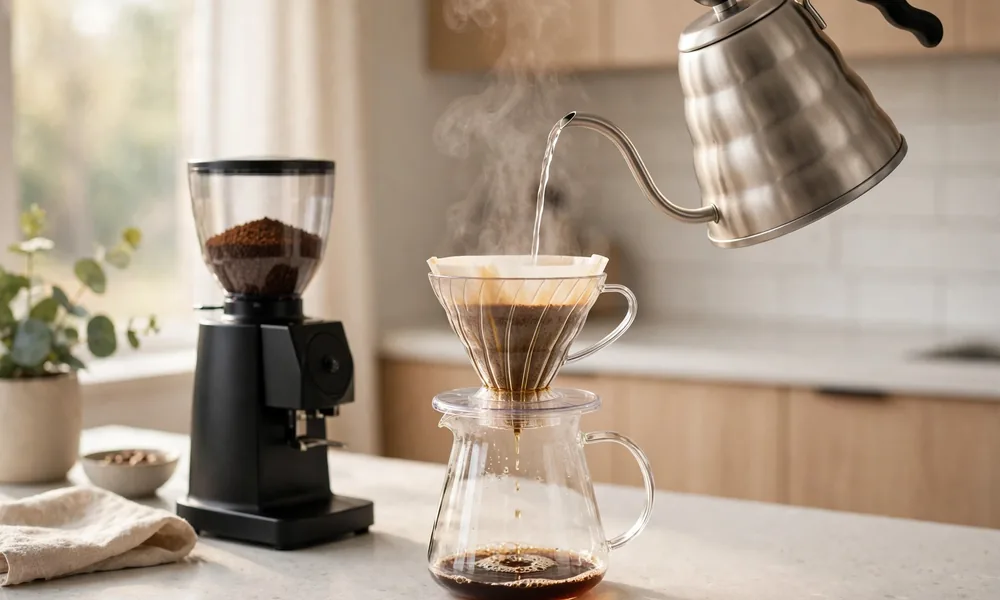
Blade grinders spin a propeller-like blade that smashes beans unevenly, so every batch contains powder and chunks. The powder over-extracts and tastes bitter, the chunks under-extract and taste sour, and shaking the grinder only makes the mess slightly more even. A burr grinder is the single most effective fix.
Within burr grinders, conical and flat burrs both work well. Conical burrs are common, quiet, and forgiving, and they suit most home brewers. Flat burrs produce a slightly more uniform particle size and a cleaner flavour, which many espresso lovers prefer. Either type is a huge step up from a blade.
How to Match Grind Size to Your Brewer
Grind size is really about contact time. Espresso forces water through coffee in about thirty seconds, so the grounds must be fine. Pour over takes two to four minutes, so a medium grind works best. French press steeps for four minutes, so coarse grounds keep the cup clean and sweet.
A good rule is to change one thing at a time. If your coffee tastes sour and weak, grind finer. If it tastes bitter and dry, grind coarser. Keep your dose and water the same while you adjust, and write down the setting that works. The difference between espresso and filter brewing goes beyond grind size, and it is worth understanding before you buy. Our guide to espresso vs filter coffee for daily drinking explains which style suits your routine and your mornings.

What to Look For Before You Buy
Before you spend anything, think about how you actually brew. An espresso drinker needs fine, stepless adjustment and low retention above all else. A filter brewer needs a wide, even range and a grinder that is easy to clean. A household that brews for four every morning needs speed and a decent hopper, while a solo drinker may prefer a single-dose grinder.
Noise matters more than the specifications suggest. A loud grinder at six in the morning is a real quality-of-life issue, and quieter models are worth paying for. Static is the other daily annoyance: grounds that cling to the bin and scatter get old fast, so look for anti-static features.
Use this checklist before you buy:
- Choose a burr grinder, never a blade grinder, for even grounds.
- Check that the grind range covers your brewer, from fine espresso to coarse French press.
- Look for low retention, so stale grounds do not end up in today’s cup.
- Pick a hopper size that matches your household, or choose a single-dose grinder.
- Make sure the burrs are easy to remove and clean without tools.
- Buy from a brand with spare parts and support.
Common Mistakes That Ruin Good Coffee
The most common mistake is grinding too much at once. Ground coffee goes stale in hours, not weeks, so grinding a whole bag on Sunday ruins it by Wednesday. Grind only what you need for each brew, and keep the rest as whole beans in an airtight container.
The second mistake is never cleaning the grinder. Oils build up on the burrs and inside the chute, turning rancid and adding a stale taste to every cup. A quick brush every week and a deeper clean every month keeps the flavour honest. The third mistake is changing everything at once when a cup tastes off.
Frequently Asked Questions
Do I need a burr grinder?
Yes, if you care about flavour. A burr grinder produces even grounds that extract evenly, which is the foundation of a balanced cup. A blade grinder produces a mix of dust and chunks that no brewer can fix.
How much should I spend?
Most home brewers should spend between 100 and 300 dollars. Below that range, grind quality and durability drop off quickly. Above it, you are paying for espresso precision, quieter motors, or premium design.
Can one grinder do espresso and pour over?
Some can, but most do best at one end of the range. The Baratza Encore ESP is a genuine all-rounder, while dedicated espresso grinders often struggle at coarse settings and filter grinders rarely go fine enough.
How long do coffee grinders last?
A well-built burr grinder lasts five to ten years of daily home use, and many last longer. Burrs can be replaced when they wear, and brands like Baratza and Eureka sell spare parts.
Should I grind beans the night before?
Grind in the morning, right before brewing. Ground coffee loses aroma within hours, and the difference between fresh and overnight grounds is easy to taste. If mornings are rushed, measure the beans the night before.
Is a manual grinder good for espresso?
Yes, a good manual grinder like the 1Zpresso J-Ultra can grind fine and evenly enough for espresso. It takes about a minute of effort per shot, so it suits one or two drinks a day. For larger households, an electric grinder is far more practical.
The Bottom Line
The best coffee grinder for most homes in 2026 is the Baratza Encore ESP: it covers every brew method well, it is built to last, and it is simple to use. Budget buyers should choose the OXO Brew, espresso lovers the Eureka Mignon Silenzio, and filter enthusiasts the Fellow Ode Gen 2. Whichever you pick, grinding fresh at home is the fastest way to a better cup.