Riding a bike is one of life’s great pleasures, and the best electric bikes for seniors in 2026 make it possible to keep enjoying it for years to come. A good e-bike flattens hills, softens headwinds and lets you ride further, while you still get gentle exercise and fresh air. For riders in their sixties, seventies and beyond, the motor is not a shortcut. It is the difference between riding and not riding at all.
Bikes built for older riders now come with low step-through frames, upright handlebars, wide saddles, simple controls and motors that start smoothly. You need to know which features genuinely matter and which ones are marketing noise.
This guide covers the features worth paying for, the five types of e-bike that suit senior riders best, and practical advice on range, safety and everyday riding.
Key Takeaways
- A step-through frame matters most for senior riders, because it makes mounting and dismounting easy and safe.
- Look for a 250-watt motor with smooth pedal assist, an upright position and hydraulic disc brakes.
- A real-world range of 40 to 60 miles covers almost every ride a senior rider will take in a day.
- Comfort beats speed: a wide saddle, suspension and puncture-resistant tyres.
- Always test ride before you buy, and budget for a good helmet, lights and a lock.

Why an Electric Bike Makes Sense After 60
Cycling is one of the kindest exercises for an ageing body: low impact, good for joints, strength and balance, and it gets you outdoors. The problem is that a conventional bike asks a lot of an older rider: hills become walls and headwinds become exhausting. That is where the electric motor changes everything.
An e-bike does not replace your pedalling. It multiplies it. You still turn the pedals and get your heart rate up, but the motor adds a quiet push exactly when you need it most. Most riders ride further, ride more often and enjoy it more once the motor takes the sting out of the hard parts.
The motor does the hard work, not you
Modern pedal-assist motors are smooth and predictable. You choose a level of help, usually from one to five, and the motor adds power in proportion to how hard you pedal. The lowest setting takes the edge off a breeze; the highest makes a steep hill feel like flat ground.
Riding again without the fear of hills
Many older riders stop cycling not because they dislike it, but because the route home includes a hill they dread. A 250-watt motor, the road-legal standard in the UK and Europe, is more than enough for a moderate hill. The result is freedom: you can plan rides around the places you want to see instead of the hills you want to avoid. For a broader view, our roundup of the best electric bikes of 2026 is a good place to start.
What to Look for in an Electric Bike for Seniors
Shopping for an e-bike can feel overwhelming, with hundreds of models and a forest of specifications. The good news is that senior riders only need to focus on a handful of features.
A step-through frame you can mount easily
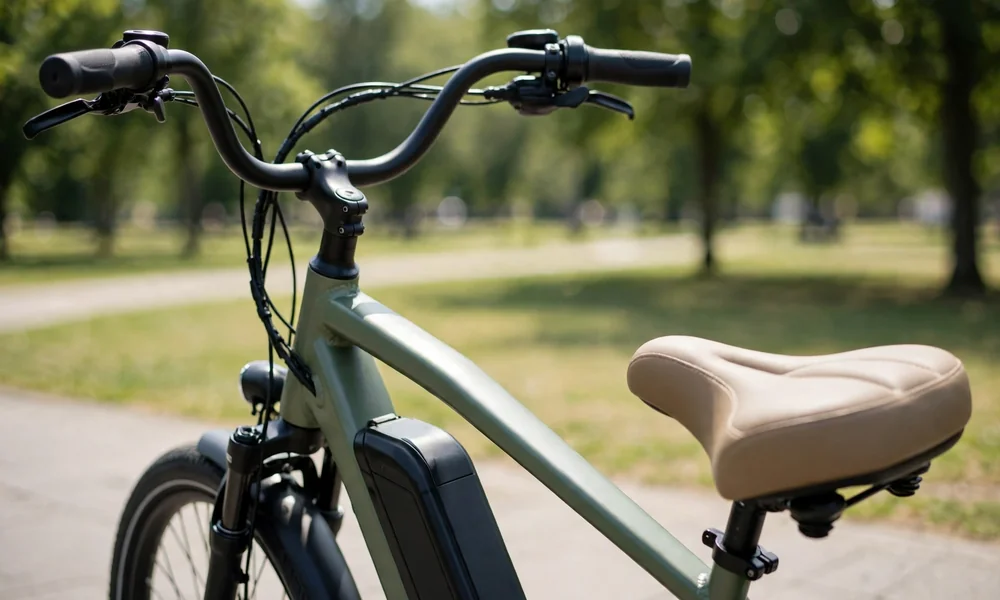
This is the feature that matters most. A step-through frame has little or no top tube, so you step through the frame rather than swinging a leg over a high bar. Look for a step height of 40 centimetres or less.
An upright riding position that protects your back
An upright position keeps your weight over the saddle rather than on your hands and wrists, which protects your back, neck and shoulders. Swept-back handlebars bring the grips closer to your body and let you sit tall.
A motor that starts gently
A torque-sensing motor that responds to your pedalling is smoother and safer than a basic cadence sensor that simply switches on and off. A rear hub motor is quieter and cheaper and works well on flat ground. A mid-drive motor is better on hills but costs more.
Brakes you can trust
Hydraulic disc brakes are the best choice for senior riders because they need very little hand strength to work well. A gentle squeeze brings the bike to a smooth, controlled stop, even in the rain. Mechanical discs need a firmer grip, and rim brakes are best avoided on a heavier e-bike.
The Best Electric Bikes for Seniors in 2026
Rather than naming one single winner, it helps to think in terms of types. The best bike for you depends on where you ride, how far you go and how much you want to spend.
| Bike type | Best for | Typical motor | Typical range | Typical weight | Typical price |
|---|---|---|---|---|---|
| Step-through cruiser | Everyday rides, parks and lanes | 250W rear hub | 40 to 60 miles | 22 to 26 kg | £1,500 to £2,500 |
| Compact folding e-bike | Small homes, cars and caravans | 250W rear hub | 30 to 45 miles | 18 to 22 kg | £1,200 to £2,000 |
| Touring e-bike | Longer rides and holidays | 250W mid-drive | 60 to 90 miles | 24 to 28 kg | £2,500 to £4,000 |
| Simple hub-motor bike | Flat routes on a budget | 250W front or rear hub | 30 to 50 miles | 20 to 24 kg | £900 to £1,500 |
| Electric trike | Maximum stability and confidence | 250W rear hub | 30 to 50 miles | 28 to 35 kg | £2,000 to £3,500 |
Best overall: a comfortable step-through cruiser
For most senior riders, a step-through cruiser is the right answer. It has the low frame, upright position and wide saddle that make riding comfortable from the first minute. Mudguards, lights and a rear rack come as standard.
Best for lighter riders: a compact folding e-bike
If you have limited storage or want to carry the bike in the car, a folding e-bike is worth considering. It folds down in under a minute and fits in a car boot, a hallway cupboard or a caravan locker. The trade-off is comfort on longer rides, since small wheels feel bumpier.
Best for longer rides: a touring-style e-bike
For riders who want to cover real distance, a touring e-bike with a mid-drive motor and a large battery is the best tool for the job. The mid-drive climbs hills efficiently, the bigger battery delivers 60 to 90 miles, and the frame is built for comfort over hours in the saddle.
Best for tight budgets: a simple hub-motor bike
You do not need to spend a fortune to enjoy an e-bike. Simple hub-motor bikes with a step-through frame start at around £900, and for flat routes they work very well. The motor is less refined and the range is shorter, but for gentle rides it is still a pleasure.
Best for stability: a three-wheel electric trike
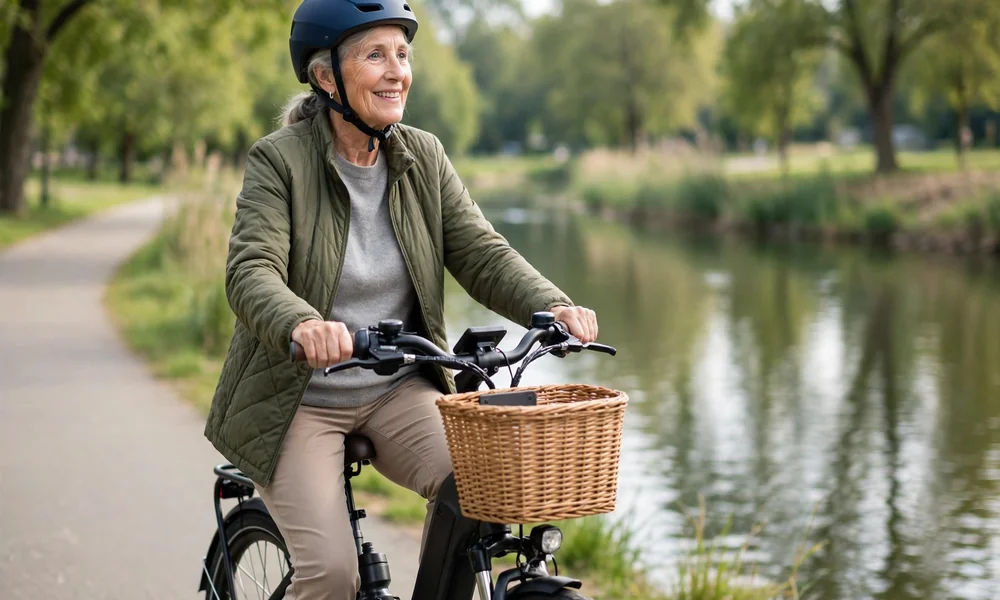
Some riders worry about balance, and for them an electric trike is a wonderful solution. With three wheels there is no balancing to do at all, and you can carry shopping in a large rear basket. For a rider whose confidence has been shaken by a fall, it can keep the joy of cycling alive for years.
Battery and Range: What Seniors Actually Need
Battery anxiety is the most common worry among first-time e-bike buyers, and it is usually unnecessary. Manufacturers quote range on flat ground with a light rider and the lowest assist level; in real life, expect about two thirds of that figure. Even so, a mid-size 400 to 500 watt-hour battery delivers 40 to 60 miles. Our guide to electric bikes built for daily commuting explains battery sizes and real-world range in detail.
How far will one charge take you
Range depends on how much assist you use, how hilly the route is, how heavy the rider and luggage are, and the weather. Use low assist on flat ground and save high assist for hills. Plan to come home with at least a quarter of the battery left.
Charging made simple
Charging an e-bike is as simple as charging a phone. Plug the charger into the battery and a wall socket, and a full charge takes three to five hours. Most batteries can be removed with a key, so you can charge indoors. A battery typically lasts four to six years before its capacity drops noticeably.
Staying Safe on an Electric Bike
An e-bike is heavier and faster than an ordinary bicycle. Start by keeping your speed comfortable. The motor cuts out at 15.5 miles per hour, but you do not need to ride at that speed. Many senior riders cruise at 10 to 12 miles per hour, which feels relaxed and leaves plenty of time to react.
Helmets, lights and mirrors
A helmet is the most important piece of safety equipment you will ever buy for cycling. Choose one that fits well, feels comfortable and meets a recognised safety standard, and replace it after any impact or after about five years. If you are unsure which helmet suits you, our roundup of a well-fitting cycling helmet explains what to look for in fit, ventilation and safety ratings. A small mirror lets you check behind without turning your head.
Riding at a comfortable speed
The most common accident for new e-bike riders is a slow-speed fall when turning, stopping or mounting the bike, often because the motor was still pushing as the rider slowed down. The fix is simple: stop pedalling before you brake, and practise somewhere quiet first. Twenty minutes practising in an empty car park builds real confidence.
Your Pre-Ride Checklist
A quick check before every ride takes less than a minute.
- Check the battery is charged and clicked firmly into place.
- Squeeze both brakes and make sure the bike stops cleanly.
- Check both tyres are firm and free of visible damage.
- Make sure the wheel nuts or quick-release levers are tight.
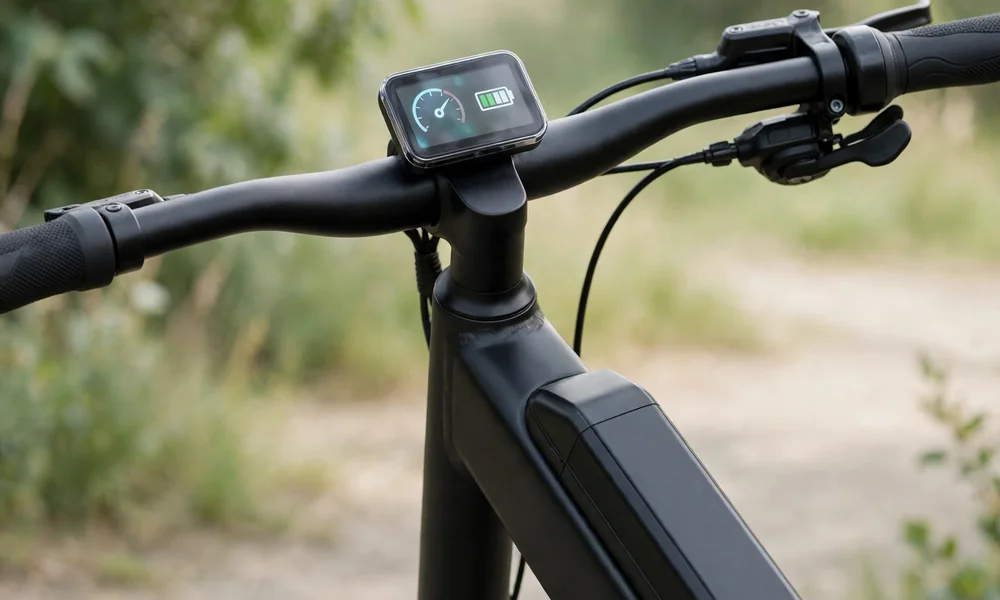
- Check the lights work and the display shows the battery level.
- Put on your helmet, fasten it and take your phone, water and a lock.
Frequently Asked Questions
Are electric bikes safe for seniors?
Yes, when the bike is chosen well and ridden sensibly. A step-through frame, a gentle torque-sensing motor, hydraulic disc brakes and a comfortable cruising speed make an e-bike a safe way for older riders to stay active.
How much should a senior pay for a good electric bike?
A good senior-friendly e-bike costs between £1,500 and £2,500. Cheaper bikes can work well on flat ground, and touring bikes suit long-distance riders. Below about £900, check brake quality, battery cells and after-sales support.
What is the best type of electric bike for a 70-year-old?
For most riders in their seventies, a step-through cruiser with a 250-watt rear hub motor, an upright position and hydraulic disc brakes is the best choice. If balance is a concern, an electric trike removes balancing entirely.
How far can a senior ride on an electric bike?
Most senior riders comfortably cover 20 to 40 miles in a day, and a mid-size battery supports 40 to 60 miles of real-world range. Distance is limited more by saddle comfort than by fitness.
Do you need a licence or insurance to ride an electric bike?
No licence, registration, tax or insurance is legally required for a road-legal e-bike in the UK, provided the motor is 250 watts or less and assist cuts out at 15.5 miles per hour.
Can you ride an electric bike in the rain?
Yes. Modern e-bikes are designed to be ridden in the rain, and the motor, battery and display are sealed against water. Avoid deep standing water and dry the bike afterwards.
The Bottom Line
The best electric bike for seniors in 2026 is not the fastest, the lightest or the most expensive. It is the one that makes you want to ride. A low step-through frame, an upright position, a gentle motor and trustworthy brakes matter far more than top speed or fancy features. Test ride before you buy, and spend what you save on a good helmet and a decent lock. Then get out and ride.