You check in after a long day of travel and look forward to one simple thing: a good night’s sleep. Then you sit on the bed and sink into a crater, or bounce off a slab that feels like a park bench, or find a pillow so flat it might as well be a folded towel. The worst hotel beds can ruin an otherwise decent stay, and they are far more common than booking photos suggest.
A bad hotel bed is not just an inconvenience. It is the difference between waking up ready for the day and waking up with a stiff neck and an aching back. Business travellers miss meetings, holidaymakers lose a day to exhaustion, and families find themselves awake at every hour. Sleep is the one thing every guest pays for, and the bed is where that promise is kept or broken.
This guide covers what makes the worst hotel beds so bad, how to spot one before you commit to a night on it, and what you can do when the mattress is working against you. From sagging springs to rock-hard foam and paper-thin pillows, here is how to protect your sleep.
Key takeaways
- The most common problems are sagging mattresses, rock-hard surfaces, flat pillows and scratchy bedding.
- Test the bed the moment you enter the room, before you unpack, so a room change is still easy.
- A mattress that dips in the middle or creaks under your weight has passed its useful life.
- Asking reception for a different room, a topper or extra pillows is reasonable, and hotels usually say yes.
- Reading recent reviews that mention sleep quality is the best way to avoid the worst hotel beds before you book.
Why Hotel Beds Go Wrong So Often
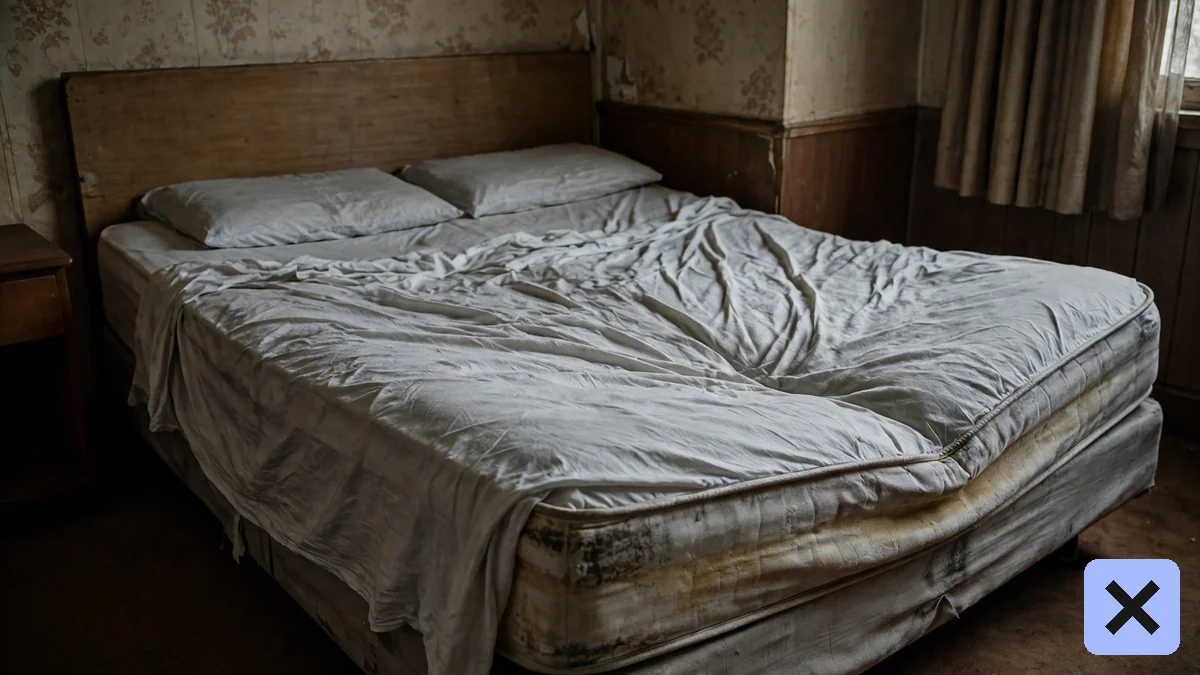
Hotels buy mattresses in bulk, and the economics of that decision shape your sleep. A mattress replaced every seven or eight years at home can stay in a hotel room for a decade or more, slept on by hundreds of guests. A room can be occupied nearly every night of the year, so a hotel mattress gets far more use in a single year than a home mattress gets in three. Flipping and rotating helps, but in a busy property that maintenance is often the first thing to slip. Budget properties, meanwhile, tend to buy the cheapest options available.
Mattresses That Have Seen Too Many Guests
The classic worn hotel mattress tells its story the moment you sit down. You sink into a hollow in the centre, the edges feel firmer than the middle, and rolling over requires real effort. Springs may poke through the padding, or the whole surface may feel lumpy and uneven. A mattress in this condition does not just feel bad; it disturbs your sleep, because your body spends the night fighting to stay level instead of resting. Noise is another giveaway: a healthy mattress is quiet, while a tired one creaks with every movement.
The Pillow Problem
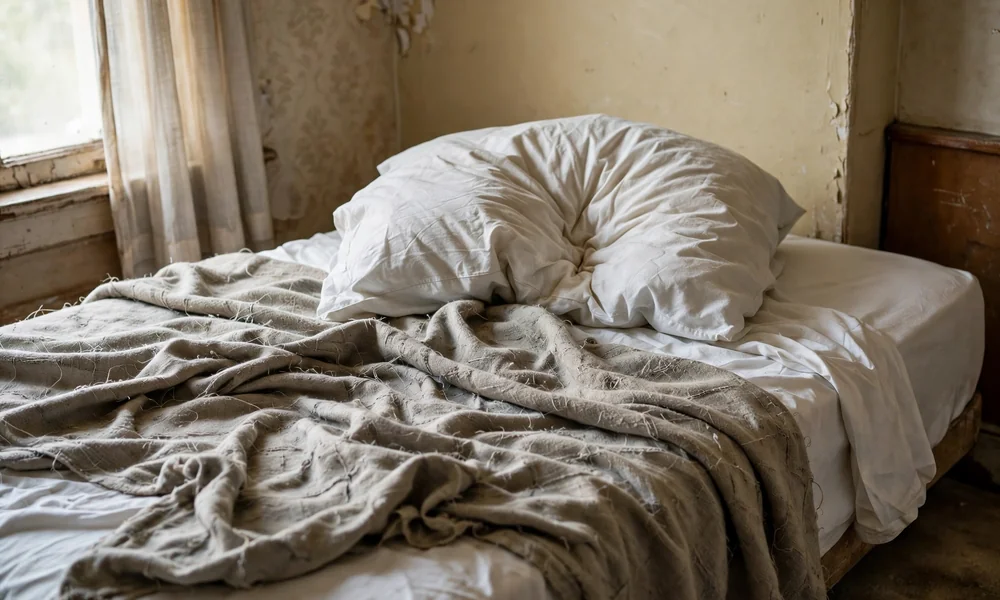
Pillows fail even faster than mattresses. A pillow that starts out plump can go flat within months of nightly use, yet it often stays on the bed for years, leaving your neck bent at an awkward angle all night. Travellers who wake with a stiff neck often blame the mattress, when the pillow is the real culprit. The worst pillows for neck pain are too flat, too soft or too lumpy to hold your head level with your spine, and hotel pillows tend to fail in all three ways at once. Asking for a replacement is always worth trying, though the spares in the cupboard are often just as tired.
The Worst Hotel Beds Travellers Report
Ask frequent travellers about their worst nights and the same complaints come up again and again, with very little to do with the star rating on the door. A five-star hotel can hide a dreadful bed just as easily as a roadside motel, and a modest guesthouse with a new mattress can out-sleep them both.
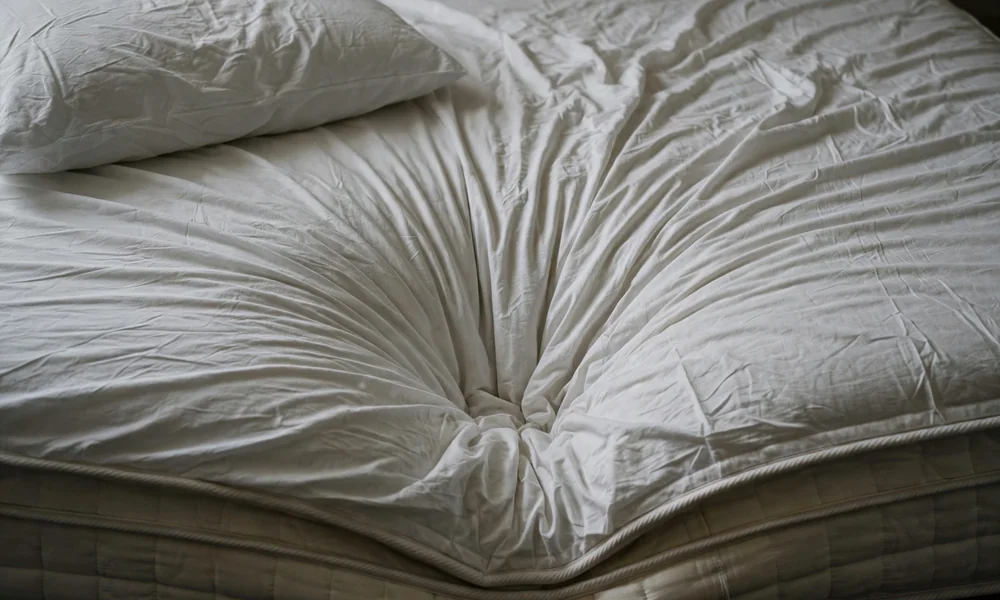
The sagging double is the most common offender: years of use carve a valley into the middle, so two people sharing the bed roll towards each other all night. At the other extreme sits the rock-hard bed, often a cheap foam slab or an old spring mattress with the padding compressed away. It feels like sleeping on the floor with a sheet over it, and it punishes shoulders and hips. Then there are beds that look fine and betray you later, when the springs dig in under your full weight or the bed slopes gently to one side. Worn bedding makes it worse, and the worst bedsheets for comfort feel scratchy, pill into rough patches or smell faintly of old laundry.
How Hotel Bed Types Compare
Not all hotel beds are built the same. The table below compares the bed types travellers encounter most often and where each tends to go wrong.
| Bed type | Common problem | Who suffers most | Comfort rating |
|---|---|---|---|
| Old spring mattress | Sagging middle, noisy springs, lumps | Everyone, especially couples | Poor |
| Cheap foam slab | Rock hard, no pressure relief, hot | Side sleepers | Poor |
| Thin budget mattress | You feel the base through it | Heavier guests | Very poor |
| Over-soft pillow-top | No support, you sink and overheat | Back sleepers | Fair |
| Quality pocket spring | Rarely a problem when new | Almost nobody | Good |
| Memory foam, well kept | Can sleep hot in warm rooms | Hot sleepers | Good |
The pattern is clear: the worst beds are almost always the oldest and cheapest. A well-kept pocket spring or memory foam mattress can deliver a good night, so the most recently refurbished room is the safest bet.
How to Spot a Bad Hotel Bed Before You Sleep in It
The best habit a traveller can build is testing the bed the moment they walk into the room. It takes two minutes and can save an entire night, so do it before you unpack, before you shower and before you settle in. Sit on the edge, then lie down in your normal sleeping position. Does your lower back feel supported, or does it sink? Do your hips press into something hard? Roll from side to side and notice whether you have to fight the mattress to move.
The Sit Test
Sit in the middle of the bed and see how far you sink. A little give is normal, but if you drop several inches into a hollow, the mattress has lost its structure. Press down in a few spots and compare the middle with the edges: if the centre feels noticeably softer and lower, the mattress is worn out. Listen while you move, too. Springs should be silent, and a bed that creaks when you sit down will be far louder at two in the morning.
What to Check in the First Five Minutes
Pull back the top sheet and look at the mattress itself: stains, sagging and a visible dip are all grounds for asking for another room. Check the pillows by folding one in half. A healthy pillow springs back, while a dead one stays folded. Look at the sheets for pilling, thin patches and roughness, and check there are enough blankets for the room temperature. A bed against a cold outside wall can feel damp, while one under a noisy air conditioning unit disturbs sleep in other ways.
What to Do When the Bed Is Awful
Finding a bad bed is frustrating, but you are not stuck with it. Hotels deal with this complaint constantly, and most can help if you ask promptly and politely. The worst thing you can do is suffer in silence until morning and complain at checkout, when nothing can fix your night. Call reception as soon as you have tested the bed and explain the problem clearly: the mattress sags, the springs are noisy, the pillows are flat. A room change is the most common solution, and it is often arranged within minutes. Skipping the review check before booking is one of the worst hotel booking mistakes travellers make.
Ask for a Room Change
When you ask for a different room, say what you need rather than just what is wrong. Ask for a newer mattress, a firmer bed or a different bed type if the hotel offers a choice. Couples can ask for a room with two singles, since separate mattresses often hold up better than one tired double. Be reasonable but firm: you paid for a bed you can sleep in, and a mattress with a visible dip is not that. Most front desk teams would rather move you than have you leave a review about a terrible night.
DIY Fixes That Actually Help
When a room change is not possible, a few improvised fixes can take the edge off a bad bed. Extra blankets folded under the fitted sheet can fill in a sag and support your back. A rolled towel under your knees can ease lower back pain on a bed that is too hard. For a bed that is too firm, ask housekeeping for a spare duvet or mattress topper; a thick duvet under the sheet can transform a hard slab into something tolerable. For flat pillows, fold one in half inside its case or stack two together.
Checklist: Avoiding the Worst Hotel Beds
- Read recent reviews for mentions of sleep, beds and mattresses before booking.
- Test the bed in the first five minutes, before you unpack your bags.
- Sit in the middle and check for a sag, then press the edges and compare firmness.
- Fold each pillow in half: it should spring back, not stay flat or lumpy.
- Pull back the top sheet and look for stains, dips and worn patches.
- Ask reception for a room change, topper or firmer pillows if anything feels wrong.

Frequently Asked Questions
What is the most common problem with hotel beds?
Sagging is the most common problem. Years of nightly use wear down the middle of the mattress, creating a dip that pulls your body out of alignment and leaves you with back pain.
Can I ask a hotel to change my room because of the bed?
Yes, and you should. A bad mattress is a legitimate reason to request another room. Ask as soon as you discover the problem and be specific about what you need.
Why are some hotel beds so hard?
Some hotels choose very firm mattresses because they last longer, while others buy the cheapest foam slabs available. A mattress that has lost its padding also feels much harder than designed.
Are expensive hotels guaranteed to have good beds?
No. Luxury hotels can hide worn mattresses behind beautiful bedding just like budget properties can. Recent guest reviews are more useful than the star rating.
What should I do if the pillows are terrible?
Ask reception for firmer or fresher pillows, or check whether the hotel offers a pillow menu. If none is available, fold a pillow in half inside its case or stack two together.
How can I tell if a hotel bed will be bad before I book?
Read recent reviews and search them for words like sleep, bed, mattress and pillow. Look for patterns across several reviews rather than a single complaint.
The worst hotel beds share a simple story: a mattress kept too long, pillows replaced too rarely, and bedding chosen for price rather than comfort. None of that is your fault, and none of it has to ruin your trip. Test the bed early, speak up quickly when something is wrong, and use reviews to steer clear of the worst offenders before you book. A good night’s sleep is the least a hotel owes you, and with a little attention on arrival, it is one you can usually protect.