The worst boat trips for seasickness are not always the longest crossings or the stormiest seas. They are the trips where the motion never settles, the air below deck turns stale, and there is nowhere to escape the rolling, pitching rhythm of the water.
Seasickness is a mismatch between what your eyes see and what your inner ear feels. Inside a cabin, your eyes tell your brain that you are still, while your balance system reports constant movement. That conflict triggers nausea, cold sweats, dizziness, and a headache that seems to arrive out of nowhere.
This guide looks at the boat trips most likely to make seasickness worse, explains why each one causes so much trouble, and shows how to reduce the risk. Some are still worth doing on a calm day, with the right seat and the right preparation.
Key takeaways
- Small, fast boats on open water cause the worst seasickness because they pitch and roll sharply with every wave.
- Enclosed lower decks are a trap: stale air and no horizon make nausea arrive faster and last longer.
- The middle of the boat, near the waterline, moves least, while the bow and the upper decks move most.
- Wind against tide, afternoon sea breezes, and exposed headlands turn ordinary routes into rough ones.
- Choosing a larger, slower vessel, sitting outside, and facing forward can turn a miserable trip into a manageable one.
Why Some Boat Trips Turn Into a Seasickness Nightmare
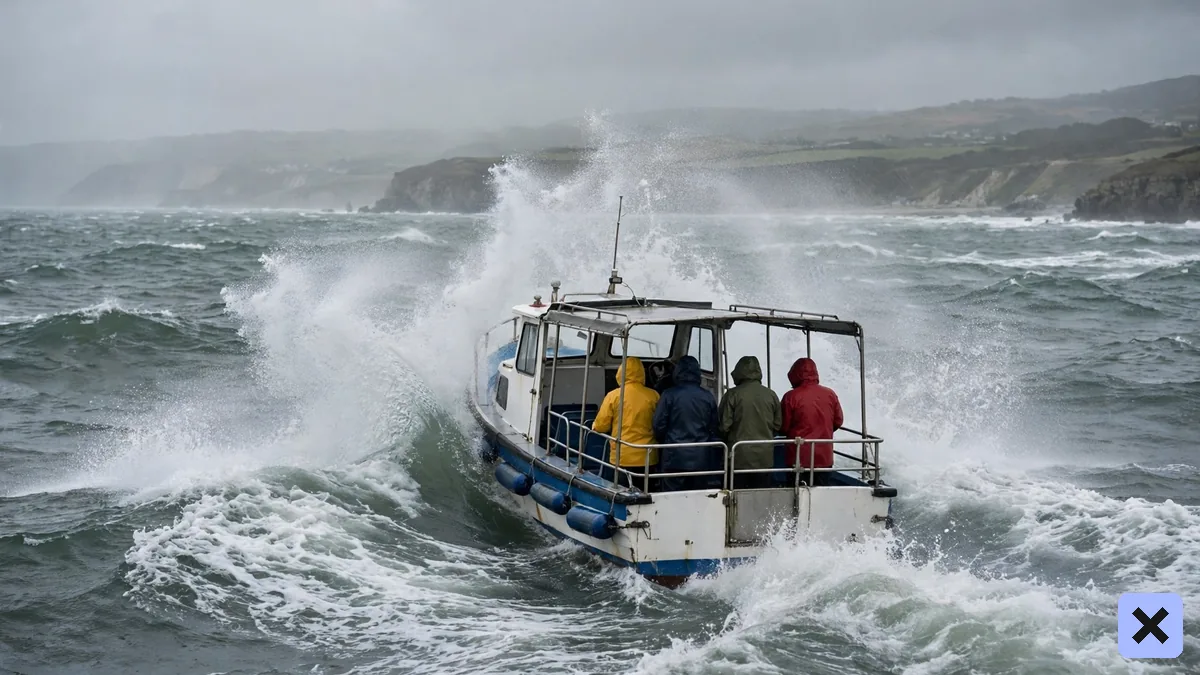
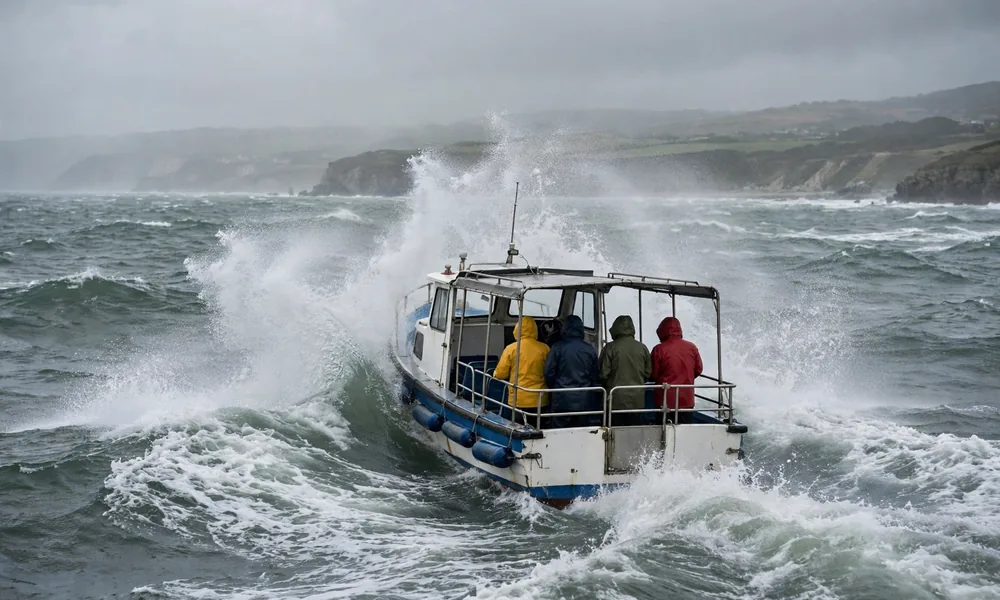
Not every boat moves the same way. A large ferry with a deep hull and stabilisers cuts through the swell in a slow, predictable rhythm. A small rigid inflatable boat, a whale-watching launch, or a harbour tour boat bounces over the top of each wave instead, rising, dropping, and twisting in quick succession.
Route matters just as much as vessel size. A sheltered river cruise barely moves at all, while a trip that rounds an exposed headland or crosses a tidal race can change character in minutes. Tidal races create steep, confused waves that throw a small boat around in every direction.
The Motion That Causes the Most Trouble
Vertical motion, the constant rising and falling of the boat, is the strongest trigger for seasickness. Side-to-side rolling comes second, and the twisting motion of a boat in confused seas combines both. A boat that surges forward, slows, and surges again adds another layer of discomfort, because the body never gets a chance to predict the next movement.
Why Enclosed Cabins Make Everything Worse
Sitting inside a cabin removes the one thing that helps most: a clear view of the horizon. When your eyes can see a stable line in the distance, your brain can make sense of the motion your body feels. Inside, the walls move with the boat, the windows show only sky and water sliding past, and the air quickly grows warm and stale. If you must sit inside, choose a seat near a window and face forward.
Open-Water Wildlife Tours
Whale-watching and dolphin-spotting tours are among the worst boat trips for seasickness, because the animals live where the water is deepest and roughest. These tours leave sheltered harbours, cross open water, and then spend a long time drifting, circling, and idling while the crew searches for wildlife. The boat rarely moves in a straight line at a steady speed, and it often sits beam-on to the swell while everyone stares through binoculars.
Fast Rigid Inflatable Boat Rides
Rigid inflatable boat rides, often sold as high-speed adventures or coastal thrill rides, are designed to be bumpy. The boats are light and fast, built to skim across the surface, which means every wave becomes a jolt. Passengers sit in rows, gripping handles, with no room to move and no chance to step outside for fresh air, because the whole boat is outside. The speed feels exciting at first, but the constant pounding quickly becomes exhausting.
Small Island Ferries in Rough Weather
Island ferries look reassuring because they run every day and follow a fixed timetable. On a calm day, they are perfectly comfortable. On a windy day, especially when the wind blows against the tide, the same crossing can become one of the worst boat trips for seasickness. Small ferries sit higher in the water than large ones, roll more easily, and often have open car decks that let the wind catch the vessel from the side.
Harbour Tours That Leave Sheltered Water
Harbour tours are marketed as gentle, relaxing trips, and many of them are. The problem comes when a tour that starts in calm, sheltered water leaves the harbour mouth and heads out to sea for a view of the coastline, a lighthouse, or a sea cave. Passengers who expected a flat, easy ride suddenly find themselves in open water, and the small tour boat begins to roll and pitch with every wave.
Overnight and Long-Distance Crossings
Long crossings sound safer than short ones, because the boat is bigger and the journey is slower, but they carry their own risks. An overnight ferry may look stable in the harbour, yet once it reaches open water, the rolling motion continues for hours, with no break and no chance to step ashore. Passengers who feel fine at dinner may wake in the middle of the night feeling ill, in a small cabin with no fresh air and no view of the horizon.
Cabin choice matters enormously. The worst cruise ship cabins sit high up, far forward, or at the very stern, where the motion is greatest. A midship cabin on a lower deck, close to the waterline, moves least. Eat lightly, drink water, and avoid alcohol.
Fishing Trips and Dive Boats
Fishing trips and dive boats spend most of their time stationary or moving very slowly, which is exactly the motion that causes the worst seasickness. A boat at anchor rolls from side to side with every wave, and there is no forward motion to give the body a steady rhythm. Passengers stand at the rail, looking down at the water, which means their eyes are fixed on a moving surface close to the boat, while their inner ears report a different motion entirely.
Party Boats and Sunset Cruises
Party boats and sunset cruises combine several seasickness triggers at once. The boats are often small, the music is loud, the drinks flow freely, and the vessel drifts slowly in circles while passengers dance, eat, and take photographs. Alcohol is the biggest problem: it dehydrates the body, disturbs the balance system, and makes nausea far more likely. Add a heavy meal and a boat that is rolling gently but constantly, and the result is predictable.
How to Tell If a Boat Trip Will Make You Seasick
| Trip type | Why it causes seasickness | Risk level |
|---|---|---|
| Wildlife tour on a small launch | Slow, circling motion in open water with no steady rhythm | Very high |
| Fast rigid inflatable boat ride | Hard, jolting impacts on every wave at high speed | Very high |
| Small island ferry in wind against tide | Steep, confused waves on an exposed crossing | High |
| Harbour tour that leaves sheltered water | Sudden change from calm water to open swell | High |
| Fishing or dive boat at anchor | Constant rolling with no forward motion | High |
| Overnight ferry in a bow cabin | Hours of motion with no horizon and no fresh air | High |
| Party boat or sunset cruise | Alcohol, heavy food, and slow drifting combined | Moderate to high |
| Large ferry on a sheltered route | Slow, steady motion with stabilisers and fresh air on deck | Low |
What to Do Before You Board
Preparation starts the night before, not at the harbour. Sleep well and avoid alcohol, because tiredness and dehydration both make seasickness worse. On the morning of the trip, eat a light breakfast with some plain carbohydrates, such as toast or crackers, and drink water. Avoid greasy food, strong coffee, and large meals, which can unsettle your stomach before the boat even leaves the dock.
A Simple Pre-Trip Checklist
- Check the wind, wave height, and forecast for the exact hours of your trip.
- Eat a light meal, drink water, and avoid alcohol the night before and on the day.
- Pack a waterproof jacket, layers, and flat, non-slip shoes for the deck.
- Arrive early and choose a seat near the centre of the boat, facing forward.
- Stay outside on deck when you can, and keep your eyes on the horizon.
- Have a plan for getting off the boat early if you start to feel seriously unwell.
What to Do If You Start to Feel Ill
The first signs of seasickness are often subtle: a yawn, a feeling of warmth, a loss of appetite, or a mild headache. Do not ignore them. Move to the centre of the boat, get into fresh air, and fix your eyes on the horizon. Breathe slowly and deeply, and avoid sudden head movements. Small changes made early can stop the symptoms from building into full nausea.
When to Skip the Trip Entirely
Some boat trips are simply not worth the risk. If the forecast shows a gale, large waves, or a small-craft warning, stay ashore, and believe the operator if they warn that the sea is rough. If you have been seriously seasick before, and the trip involves a small boat, open water, and a long time at sea, choose a different activity. A missed boat trip is disappointing, but a day spent feeling ill is worse.
Children and older travellers should be especially cautious. A worst beach holidays comparison shows how even a relaxing seaside day can go wrong when crowds, heat, and poor planning pile up, and the same is true at sea.
Frequently Asked Questions
What is the worst type of boat trip for seasickness?
Small, fast boats on open water are the worst, especially wildlife tours, rigid inflatable boat rides, and fishing trips that spend a long time drifting. They combine sharp, unpredictable motion with no steady rhythm.
Does sitting inside a cabin make seasickness worse?
Yes, in most cases. Inside a cabin, you lose your view of the horizon, the air becomes warm and stale, and your eyes tell your brain that you are still while your body feels constant motion. Staying outside on deck is almost always better.
Where is the best place to sit on a boat if you get seasick?
Sit near the centre of the boat, close to the waterline, facing forward. This is the calmest part of the vessel, because it sits nearest the pivot point. Avoid the bow, the stern, and the upper deck.
How long does seasickness last after a boat trip?
Most people feel better within an hour of reaching shore, although tiredness and a mild headache can last longer. Rest, drink water, and eat lightly until your stomach settles.
Can you prevent seasickness completely?
No method works for everyone, but the risk can be reduced a great deal. Choose a larger vessel, a calm day, and a short, sheltered route. Sit near the centre, stay outside, and keep your eyes on the horizon.
Is it worth taking a boat trip if you know you get seasick?
It can be, if you choose carefully. A short trip on a large, stable vessel on a calm day is very different from a long wildlife tour on a small boat in rough water. A worst travel insurance claims experience shows a ruined trip can cost more than the ticket price, so check what your booking covers first.
The Bottom Line
The worst boat trips for seasickness share the same pattern: a small boat, open water, unpredictable motion, and nowhere to escape the stale air and the rolling deck. Choose the vessel, the route, and the day with care, sit near the centre, stay outside, and keep your eyes on the horizon.