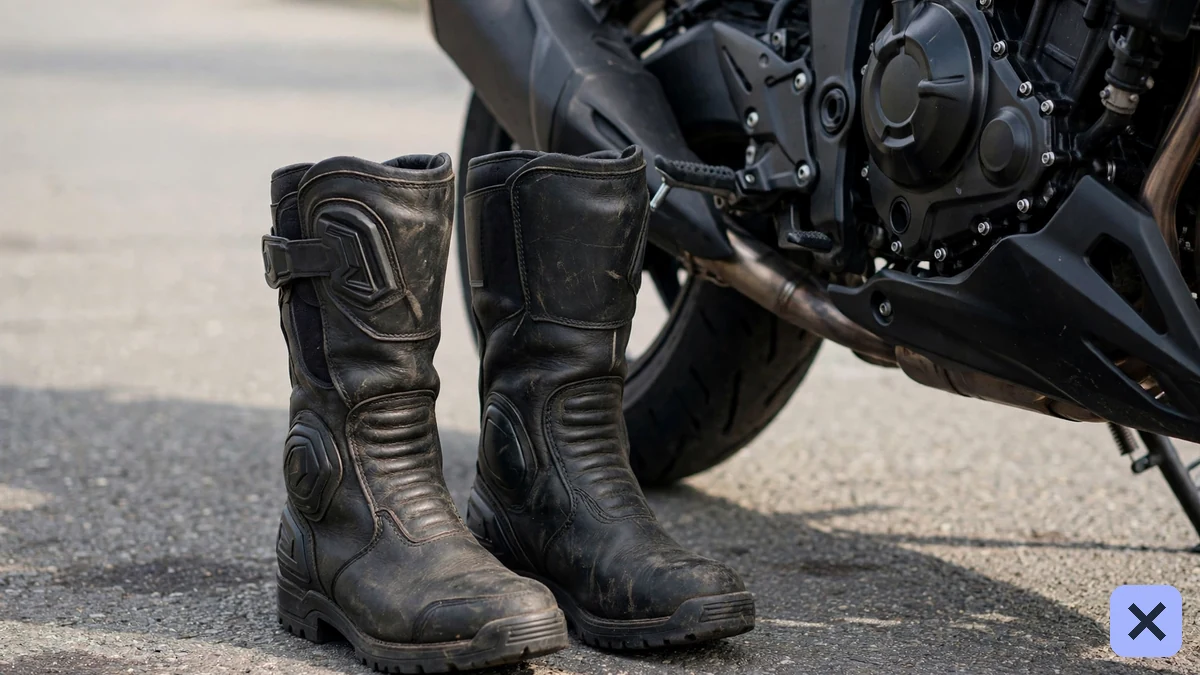
The worst motorcycle boots for safety are the ones that look tough enough for the road but fall apart the moment they are tested. They have thin leather, soft soles, no ankle support, and fastenings that come undone at speed.
A motorcycle boot is not fashion footwear. It is protective equipment. In a fall, your foot can be trapped under the bike or dragged along the road. A good boot spreads the force of that impact, resists abrasion, and keeps the ankle stable. A bad boot tears, collapses, or slips off.
This guide looks at the worst motorcycle boots for safety in plain terms. It covers the styles that offer the least protection, the materials that wear through too quickly, and what a genuinely protective boot looks like.
Key takeaways
- Fashion boots, work boots, and trainers offer far less protection than proper motorcycle boots, even when they look sturdy.
- Thin leather, soft soles, and weak stitching wear through quickly in a slide and leave the ankle and toes exposed.
- Boots without ankle armour, a reinforced toe, and a rigid sole cannot stabilise the foot in a fall or a crush.
- Loose laces, weak zips, and low-cut designs increase the chance that a boot comes off or twists in a crash.
- Check the height, the sole, the fastenings, and the armour before you buy, and replace boots that are worn, cracked, or soft.
Why Motorcycle Boots Fail When It Matters
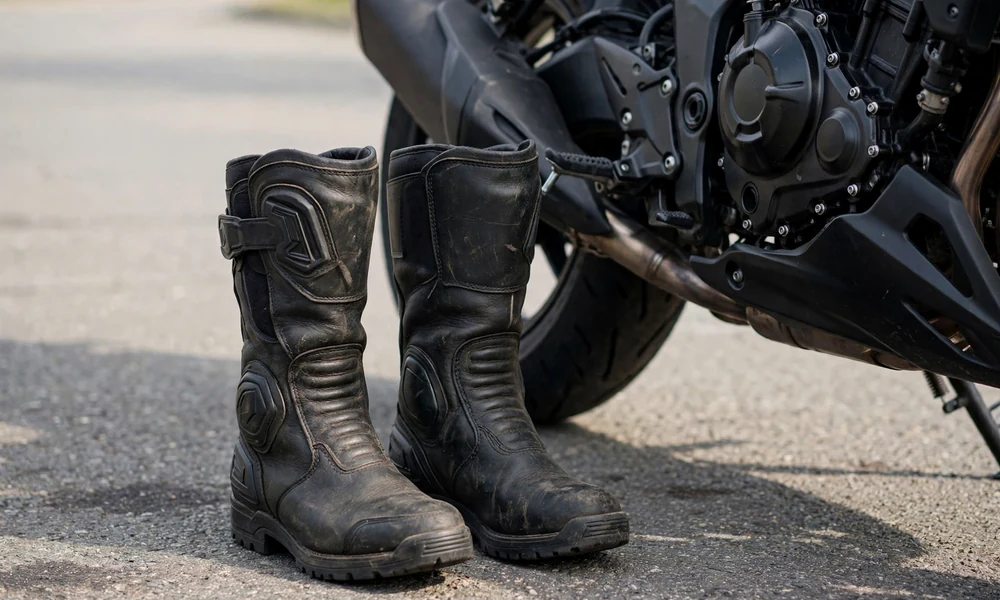
Most boots fail for the same reason: they were designed for walking, working, or looking good, not for sliding along a road at speed. A walking boot is built for comfort, a fashion boot for looks, and a trainer to be light and flexible. None of those priorities matches a crash, where the boot must resist abrasion, absorb impact, and hold its shape under twisting force.
Abrasion is the first problem. A boot that touches the ground in a slide is dragged across rough tarmac for metres. Thin leather, suede, canvas, and fashion synthetics wear through in seconds. A boot without armour does nothing to spread the force of a knock against the bike, the kerb, or the road. When a foot is trapped, the ankle can twist far beyond its normal range. A soft boot allows that twist. A rigid boot limits it.
The Worst Types of Motorcycle Boots for Safety
Not all bad boots are bad in the same way. Some are dangerous because they are too soft. Some are dangerous because they are too low. Some look protective but use cheap materials that fail under stress.
Fashion Boots and Chelsea Boots
Fashion boots are among the worst motorcycle boots for safety because they are designed to look good, not to protect. Chelsea boots and slim leather fashion boots are usually made from thin leather, they have a soft, flexible sole, and they offer no ankle armour. The elastic side panels on Chelsea boots make them easy to pull off in a crash, and many fashion boots barely cover the ankle bone.
Ordinary Work Boots and Hiking Boots
Work boots and hiking boots look like a sensible compromise, but they fall short for riding. A steel toe cap does nothing to protect the ankle, the most commonly injured part of the foot in a crash. Hiking boots are softer around the ankle than they appear, because they are designed to flex as you walk. Long laces can catch on footpegs and levers.
Trainers and Low-Cut Casual Shoes
Trainers are the worst choice of all, and they are still worn by many riders on short trips. Most crashes happen close to home, at low speed, and a trainer offers almost no protection in any of them. Trainers are made from soft fabric, foam, and thin rubber. In a slide, the fabric tears almost immediately. A low-cut trainer does not even cover the ankle, and a high-top one covers it without supporting it.
Cheap Imitation Riding Boots
Cheap imitation riding boots are the most misleading category. They look like proper motorcycle boots, with buckles, straps, and armour-shaped panels, and they use words like armoured and reinforced in the product description. But the protection is often cosmetic. The armour is often a thin piece of hard plastic with no padding and no certification. The leather is thin split leather or a synthetic that wears through quickly. The stitching is single-row and weak, and the sole is glued rather than stitched. These boots create a false sense of security. The worst motorcycle gear that fails when it matters follows the same pattern, with gear that looks protective until it is tested by a real fall.
Boots With Weak Soles and Poor Grip
The sole is the connection between the rider and the bike. A sole that is too soft flexes too much, so the foot can twist in a fall. A sole that is too smooth slips on wet footpegs, so the foot can slip off at the wrong moment. A sole that is too thick deadens the feel of the gear lever and the rear brake, so the rider is slower to react.
Low-Cut and Short Boots
Short boots are popular because they are easy to wear, easy to walk in, and cooler in summer. They are also a poor choice for safety, because they leave the ankle and lower shin exposed. The ankle is the joint most often injured in a motorcycle crash, and a boot that does not cover it cannot protect it. A short boot can also be pulled off more easily. If you ride regularly, in traffic, or at speed, a tall boot is the safer choice.
Materials That Wear Through Too Fast
The material decides how long a boot survives in a slide. Thick, full-grain leather resists abrasion well and holds its shape. Thin split leather, corrected-grain leather, and bonded leather are weaker, wear through more quickly, and crack with age. Suede is worse still, and canvas, mesh, and fashion synthetics are the weakest of all, offering almost no abrasion resistance. Single-row stitching will burst at the seams under stress.
Warning Signs Your Boots Are Unsafe
Many riders keep wearing boots long after they have stopped offering real protection. Comfort is not the same as safety, and a boot that has softened with age has often lost the stiffness that protected the ankle. Look for cracked leather around the ankle and toe, worn soles, loose fastenings, and zips that no longer close firmly. Check the inside too: worn lining and a softened heel counter reduce protection. Press the ankle area. If it collapses under your thumb, it will collapse far more easily in a crash.
What Good Motorcycle Boots Actually Do
A good motorcycle boot does four things well. First, it resists abrasion, using thick leather or certified textiles. Second, it absorbs impact, with moulded armour over the ankle, a reinforced toe box, and a heel counter that holds the foot in shape. Third, it resists twisting, with a stiff sole and a supportive shaft that limit how far the ankle can bend. Fourth, it stays on, because it is tall enough, snug enough, and fastened securely enough to stay in place in a crash. Certification is the clearest sign of a good boot: in Europe, motorcycle footwear is tested for abrasion, impact, and resistance to being crushed from the side. Fit is just as important. Try boots on with the socks you ride in, and operate the controls while sitting on the bike. The worst cheap motorcycle helmets show the same lesson in a different part of the kit, where a low price usually means the protection was never tested properly.
How to Choose Boots That Will Actually Protect You
Start with the height: choose a boot that covers the ankle fully and extends up the shin, with ventilation for hot weather rather than a short boot with no protection. Next, check the sole. It should be stiff enough that you cannot fold the boot in half easily, with a deep tread, and stitched as well as glued. Then check the fastenings. Laces, buckles, zips, and straps must close firmly and stay closed. Press the ankle, toe, and heel: you should feel a firm, moulded shape, not soft foam alone. Check the certification. A boot that cannot state its test level has not been tested. The worst motorcycle jackets for safety make the same point about the rest of the kit, where the wrong material and the wrong fit leave the rider exposed.
Boots Compared: Protection at a Glance
The table below compares the main types of boot.
| Boot type | Ankle protection | Abrasion resistance | Stays on in a crash | Verdict for riding |
|---|---|---|---|---|
| Certified motorcycle boots | High, moulded armour | High, tested materials | Yes, tall and secure | Best choice |
| Work boots | Medium, soft support | Medium, thick leather | Often, if laced tightly | Poor compromise |
| Hiking boots | Medium, flexible | Medium, tough fabric | Often, if laced tightly | Poor compromise |
| Fashion boots | Low, no armour | Low, thin leather | No, easy to pull off | Worst choice |
| Cheap imitation riding boots | Low, cosmetic armour | Low, thin materials | Sometimes, if tall | Worst choice |
| Trainers | None | Very low, soft fabric | No, slips off easily | Worst choice |
Checklist: Spot the Worst Boots Before You Buy
If a boot fails several of these checks, it is probably one of the worst.
- Check the height. The boot must cover the ankle bone fully, with material to spare above it.
- Press the ankle area. You should feel firm, moulded armour, not soft foam or empty leather.
- Bend the sole. It should resist folding in half and spring back to shape without creasing deeply.
- Inspect the stitching. Look for double or triple stitching, with no loose threads or single-row seams.
- Test the fastenings. Close every buckle, zip, and strap, and check that they stay closed under a firm tug.
- Look for certification. The boot should state a recognised motorcycle footwear test standard and the level achieved.
Frequently Asked Questions
Are work boots safe enough for riding a motorcycle?
Work boots are better than trainers, but they are not a substitute for proper motorcycle boots. They lack ankle armour and are often too flexible around the ankle.
Do I need tall boots, or are short riding boots enough?
Tall boots are safer because they cover more of the ankle and shin and are harder to pull off. If you ride regularly, choose a tall boot.
How do I know if a cheap riding boot is a fake?
Check for certification. A genuine boot states the test standard and the level achieved. If there is no standard or rating, treat it as an imitation.
Can I wear motorcycle boots every day off the bike?
You can, but most riders find them stiff and heavy for all-day walking. Many keep shoes at work and change on arrival, which is better than wearing soft boots on the bike.
How often should I replace my motorcycle boots?
Replace them when the leather cracks, the sole wears smooth, the stitching frays, or the ankle support softens. For a daily rider, that may be every two to three years.
Are waterproof motorcycle boots safer than non-waterproof boots?
Waterproofing does not make a boot safer in a crash, but it helps you ride safely in the rain. A cold, distracted rider is slower to react. Choose waterproofing for comfort, and armour, material, and fit for crash protection.
The Bottom Line
The worst motorcycle boots for safety are the ones never designed for a crash. Fashion boots, trainers, soft work boots, and cheap imitations all look acceptable until they are tested, and by then it is too late. A proper boot is tall, stiff, armoured, and securely fastened. It resists abrasion, absorbs impact, limits twisting, and stays on. Check the height, the sole, the fastenings, and the certification before you buy, replace boots that are worn or soft, and never let a short trip become an excuse to ride in footwear that cannot protect you.