The worst motorcycle jackets for safety look convincing on a shop rail and fail the moment they meet the road. The fabric tears in seconds, the armour slides away from the joint it is supposed to protect, or there is no armour at all.
A motorcycle jacket is the only layer between a rider and the tarmac. In a slide it must resist abrasion until the rider stops moving, and hold protectors over the shoulders, elbows and back. A jacket that cannot do both is a gap in a rider’s protection.
The worst motorcycle jackets for safety share the same warning signs: thin fabric, missing or fake armour, loose fit, weak stitching and vague safety claims, all visible before money changes hands. This guide covers the types that fail most often, the red flags, and what to buy instead.
Key takeaways
- The worst motorcycle jackets for safety use thin fashion fabric that tears in a slide.
- Missing, fake or badly placed armour leaves shoulders, elbows and the back unprotected when it matters most.
- A loose jacket lets armour slide away from the joint, so good protectors end up in the wrong place.
- Vague claims such as motorcycle style mean nothing without a real safety standard or label.
- Check fabric, armour, stitching and fit, and walk away from any jacket that fails one test.
What Makes a Motorcycle Jacket Safe
A safe motorcycle jacket is built around three things: abrasion resistance, impact protection and fit. Abrasion resistance is the fabric surviving a slide without wearing through. Impact protection is armour absorbing energy at the shoulders, elbows and back. Fit keeps both working, because they only protect the body they actually cover in a crash.
Real protective jackets use materials chosen for sliding: thick leather, usually at least 1.2 millimetres, or modern textiles with high-denier nylon, aramid fibres or reinforced panels. Certification is the simplest way to tell the difference: in Europe, motorcycle clothing is rated under EN 17092, from level C up to AAA, and armour under EN 1621.
Why Abrasion Resistance Comes First
Most crashes involve a slide, and a slide is where a weak jacket fails first. Tests show ordinary denim and fashion materials wearing through in less than a second. A jacket that survives the first second of a slide has done its most important job.
Why Armour Placement Matters as Much as Armour
Armour only works when it sits over the joint it is meant to protect. If a jacket is too loose, a sleeve can rotate so the elbow protector ends up on the forearm. Good armour in the wrong place protects nothing.
The Worst Types of Motorcycle Jackets for Safety
Bad motorcycle jackets come in several recognisable types: fashion jackets dressed up as riding gear, and real riding jackets built so cheaply that the protection was quietly removed.
Fashion Leather Jackets Sold as Riding Gear
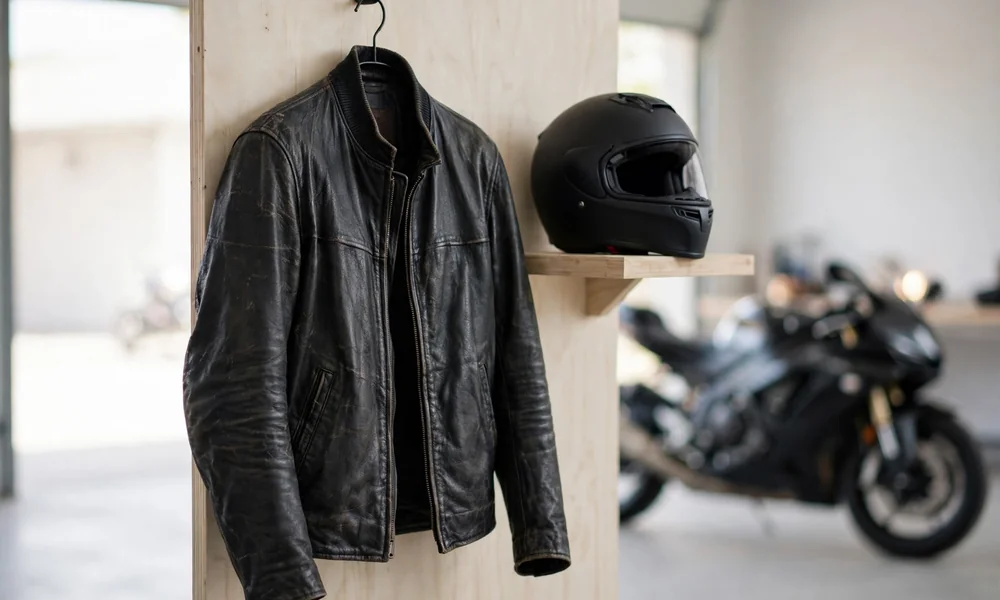
The most common trap is the fashion leather jacket. It has the classic biker look, but no thick leather, no reinforced seams and no armour. Fashion leather is often split hide or bonded leather, made from the weaker layers of the skin or from fibres glued together. It looks convincing and feels soft, but soft, thin leather tears quickly in a slide. They are also cut for standing in a street, not for sitting on a bike. If a leather jacket has no armour pockets, no safety label and no mention of thickness, it is a fashion jacket.
Thin Textile Jackets With No Reinforcement
Thin textile jackets are the warm-weather version of the same problem. A single layer of ordinary polyester or nylon, with no aramid lining and no reinforced panels, will wear through in a slide almost as fast as a cotton shirt. A waterproof membrane does not add abrasion resistance. The worst examples look technical, with mesh panels and reflective strips, while the fabric is no stronger than a windbreaker.
Mesh Jackets That Offer Airflow and Almost Nothing Else
Mesh jackets have a genuine purpose: in hot weather, airflow keeps a rider cool and alert, and a well-made mesh jacket with armour and reinforced panels can be a sensible choice. The worst mesh jackets, however, are mostly holes. A good mesh jacket uses heavy-duty mesh, solid fabric over the impact zones and armour underneath. Airflow is a comfort feature, not a substitute for fabric that can survive a slide, and the worst motorcycle gear that fails when it matters often fails in exactly this way.
Oversized Jackets That Let Armour Wander
Fit is where many otherwise decent jackets go wrong. A jacket that is too big feels comfortable in the shop, because nothing pinches. On the road, loose sleeves let elbow armour rotate away, and a loose body lets the jacket shift in a slide, exposing the shoulders or lower back. This is worst in jackets bought a size up for layering. A motorcycle jacket should fit snugly, with adjustment straps at the waist, cuffs and arms. If the armour moves when the rider twists, the jacket is too loose.
Jackets With Fake or Missing Armour
Some of the worst motorcycle jackets for safety do have something in the armour pockets, but that something is not armour. Thin foam pads and flat plastic sheets look like protectors on the rail, but under real impact they compress to almost nothing and pass the force straight through. Real armour is usually firm but flexible viscoelastic material, or hard shells over foam. It carries a marking, often EN 1621. If the protectors are flat, floppy or unmarked, they are probably not doing much.
Vintage and Retro Jackets With No Modern Protection
Vintage-style jackets are popular, and some are genuinely well made from thick leather. The problem is age and design: a jacket made decades ago was not built to modern safety standards, and a reproduction may copy the look without adding the protection. Old leather dries out and stitching weakens, and none of that is visible from the outside. Retro jackets also tend to skip modern features such as a back protector pocket and adjustment straps. A rider who loves the classic look should choose a modern jacket that copies the style while keeping the safety features.
How to Spot a Bad Jacket Before You Buy It
Spotting a bad motorcycle jacket takes about five minutes in a shop, and it starts with the label. A good jacket states what it is made from, what standard it meets and what armour it contains. A bad jacket says very little, or a lot about style and nothing about safety. Words such as motorcycle style and biker look describe appearance, not safety.
Next, check the fabric and the seams. Thin fabric that stretches easily is unlikely to survive a slide. Proper motorcycle jackets use double or triple stitching with heavy thread. Single stitching with fine thread or loose ends is a sign of a jacket built to a price, not a standard. A seam that fails in a crash opens the jacket like a bag. Then check the armour: take each protector out and press it firmly. Real armour resists pressure and springs back, while foam that stays dented is not armour. Cheap helmets have the same problem, which is why the worst cheap motorcycle helmets are such a useful warning: a low price usually means something important was left out.
Comparing the Worst Jacket Types
The table below sums up the main failure of each bad jacket type: something essential was left out, weakened or faked.
| Jacket type | Main weakness | What fails first | Biggest risk |
|---|---|---|---|
| Fashion leather | Thin split or bonded leather | Fabric tears in a slide | Skin exposed to the road |
| Thin textile | No reinforced panels | Shoulders and elbows wear through | Road rash on impact zones |
| Mesh only | Open weave everywhere | Mesh shreds on contact | Almost no abrasion protection |
| Oversized fit | Armour moves off the joint | Protectors rotate away | Unprotected joints in a crash |
| Fake armour | Foam pads instead of protectors | Pads compress on impact | Full force reaches the joint |
| Vintage, no updates | Aged leather, weak seams | Seams split under stress | Jacket opens during a slide |
In every case, the jacket fails at the moment the rider needs it most, and the failure is invisible until then.
Checklist: Test Any Jacket Before You Buy
A good jacket should pass all six tests.
- Read the label for a real safety standard, such as EN 17092, and a named fabric specification.
- Remove the armour and check it for a standard marking, real thickness and firmness that springs back.
- Try the jacket on in a riding position and confirm the armour stays centred over the joints.
- Inspect the seams at the shoulders, elbows and back for double stitching with heavy thread.
- Check the fit with straps tightened, making sure the back does not ride up and sleeves do not pull back.
- Confirm the jacket has a back protector pocket with a real protector included, not an empty pocket.
What to Buy Instead
The alternative to a bad motorcycle jacket is not necessarily an expensive one, just a jacket built for riding and tested to prove it. A certified textile jacket with armour included is often cheaper than a fashion leather jacket, and it protects far better.
Fit is part of the purchase, not an afterthought. Try jackets on while sitting on a motorcycle, or at least leaning forward with arms outstretched. Buying a motorcycle is the same kind of decision, which is why the worst motorcycles for beginners to buy are worth reading before choosing a first bike: the cheapest or coolest-looking option is rarely the safest one.
Frequently Asked Questions
Are fashion leather jackets safe for motorcycle riding?
No. Fashion leather jackets are made for appearance, not for crashing. They usually use thin split or bonded leather, have no armour and no safety rating, and tear quickly in a slide.
Is a textile jacket as safe as a leather jacket?
Yes, when it is a proper motorcycle textile jacket. Certified textile jackets use high-denier fabric, aramid reinforcement and armour, tested to the same standards as leather. A thin unreinforced textile jacket is not as safe, but that is a problem with that jacket, not with textile.
Do I need a back protector in my motorcycle jacket?
Yes. The spine is vulnerable in a crash, and a back protector spreads the impact force. Many jackets are sold with an empty back pocket or a thin foam pad, so check what is included and fit a proper EN 1621 back protector if needed.
How tight should a motorcycle jacket fit?
It should fit snugly over the layers the rider normally wears, with no loose fabric that lets the armour move. The rider should be able to reach forward without the sleeves pulling back or the back riding up.
Can I add armour to a jacket that has empty pockets?
Sometimes, but only if the pockets fit real protectors and the fabric is strong enough to be worth protecting. Adding good armour to a thin fashion jacket does not fix the fabric, which will still tear.
How do I know if a jacket’s safety rating is real?
Look for the rating on a label sewn into the jacket, not just on a hang tag. A genuine EN 17092 rating names the level, such as A, AA or AAA, and the armour should carry an EN 1621 marking.
The Bottom Line
The worst motorcycle jackets for safety trade protection for appearance: thin fashion leather, unreinforced textile, mesh with nothing behind it, oversized fits that let armour wander, fake armour and vintage jackets with no modern safety features. A good jacket is easy to recognise: a real safety rating, strong fabric, firm marked armour, solid stitching and a snug fit. Check those five things before buying.