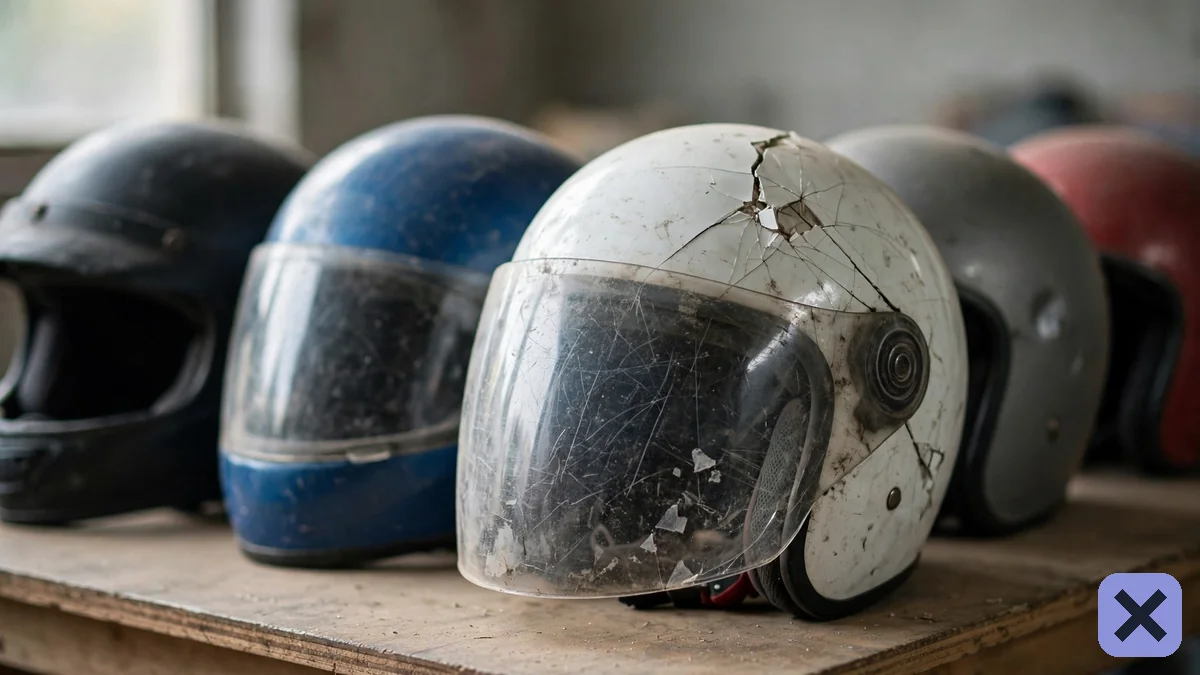
A cheap motorcycle helmet looks like a bargain until the moment it has to do its job. The worst cheap motorcycle helmets are built from thin shells, soft liners, and hardware never designed to survive a real impact, and they fail exactly when a rider needs protection most.
A helmet is the one piece of riding gear you cannot test by wearing it around the house. A poorly made jacket feels wrong straight away, but a helmet can feel comfortable, look finished, and still offer almost no real protection. That gap between appearance and performance is where the worst cheap helmets live.
This guide looks at what goes wrong with the worst cheap motorcycle helmets, from shells and liners to visors, straps, and certification stickers, and how to spot the warning signs before you pay.
Key takeaways
- The worst cheap motorcycle helmets use thin, brittle shells that crack instead of absorbing impact energy.
- Soft, thin liners feel comfortable in the shop but compress too quickly.
- Visors on cheap helmets scratch, fog, and distort vision, which creates danger long before any crash.
- Fake or meaningless certification stickers are common on the cheapest helmets, so always check the label properly.
- A helmet that fits badly, wobbles, or has a weak strap is unsafe at any price, however good it looks.
Why Cheap Helmets Fail First
A good helmet is a system, not a single piece of plastic. The shell spreads the force of an impact, the liner crushes in a controlled way and absorbs energy, the padding holds everything in place, the visor protects your eyes, and the strap keeps the helmet on your head. Every part has to work together, and every part costs money to make well.
The worst cheap motorcycle helmets cut costs at every stage. The shell flexes and cracks instead of spreading force, the liner bottoms out quickly, the padding flattens within weeks, and the visor scratches at the first wipe. None of this is obvious on a shelf, but together it turns safety equipment into decoration.
Affordable Is Not the Same as Unsafe
Not every low-priced helmet is a bad helmet. Some makers keep prices down with simple graphics, fewer colours, and basic ventilation rather than cutting into safety. The worst cheap helmets do the opposite: they spend money on loud graphics and a flashy shape, then save it on the materials you cannot see.
The first sign is a rushed finish: rough edges around the vents, a visor that does not sit flush, and padding that is glued rather than fitted. Small faults like these suggest the same lack of care went into the parts that matter.
The Warning Signs of an Unknown Maker
An affordable helmet from a known brand carries a recognised certification and a proper manual, and is sold through a dealer who can answer questions about sizing. An unsafe cheap helmet often arrives in a plain box with no manual, no spare parts, and no way to contact the maker.
The Shell Problem: Thin, Brittle, and Untested
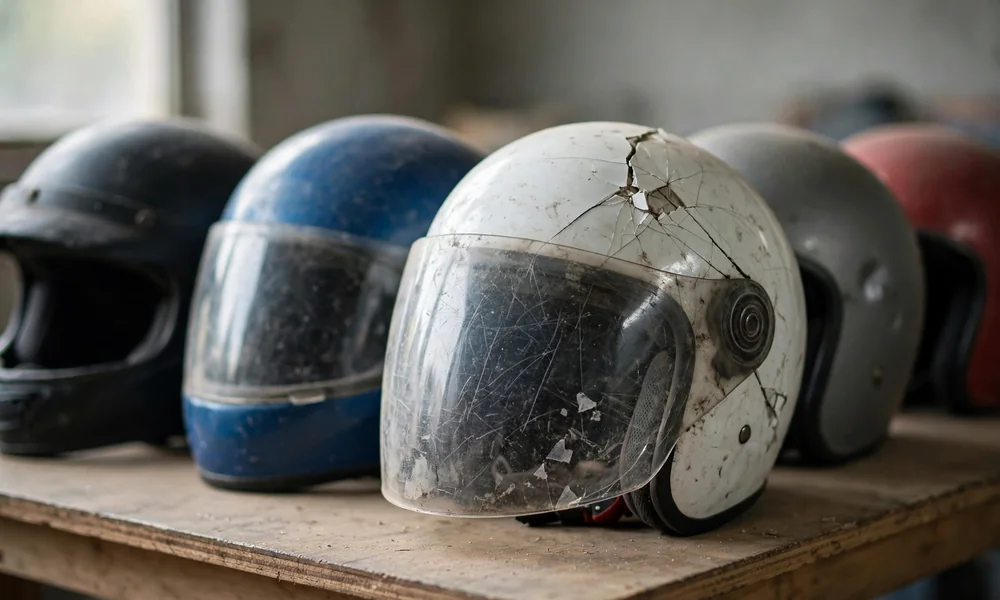
The shell is the first line of defence, and it is where the worst cheap helmets fail most clearly. A proper shell is made from polycarbonate, fibreglass, or a composite that spreads impact force and resists penetration, moulded to a consistent thickness. A cheap shell is often thin ABS plastic that looks glossy and solid but shatters under a sharp blow.
A brittle shell can look fine after a small knock and be badly weakened inside, and a stressed shell may fail completely in a second impact. A certified helmet has been through impact, penetration, and retention tests in a laboratory. The worst cheap helmets often skip that testing entirely, or they are tested once and then made in a different factory with different materials.
Liners, Padding, and the Comfort Lie
Comfort is the easiest thing for a cheap helmet to fake. Soft, thick-looking padding feels pleasant the first time you put a helmet on. But the padding is not what protects you: the impact liner underneath it does the real work, and on the worst cheap helmets that liner is thin, soft, and quick to compress.
A proper liner is firm to the touch: it resists your thumb and springs back slowly, because it is designed to crush progressively during an impact and absorb energy. A cheap liner feels like the foam from a parcel box: it compresses easily, stays compressed, and after a few months of use it can pack down so much that the helmet becomes loose.
Visors That Scratch, Fog, and Distort
A visor seems like a simple piece of clear plastic, but it is one of the most important parts of a helmet. It protects your eyes from wind, rain, insects, and road debris, and it has to stay clear in all conditions. The worst cheap helmets fit visors that fail at this job within weeks: cheap visors are soft plastic without a hard coating, so wiping off a speck of grit leaves a permanent mark, and the scratches soon scatter sunlight and headlights.
Fogging is the second problem: a good visor has an anti-fog coating or a pinlock insert, while cheap visors mist up the moment you stop at a junction on a cold morning. Distortion is the third problem: a poorly moulded visor bends light unevenly, so straight lines look curved and distances look wrong, which is dangerous at motorway speed.
Straps and Buckles That Give Up
The strap is the only thing that keeps a helmet on your head during a crash. If it slips, stretches, or comes undone, the helmet can come off entirely. Cheap straps are often thin webbing that frays and stretches under load, and the buckle may be a simple plastic clip that releases with a sharp tug. A helmet should sit level, with the strap snug under your chin and no more than two fingers of slack. If it rocks when you shake your head, it is too loose, and no tightening will fix a shell that is the wrong shape for your head.
The Certification Trap: Stickers That Mean Nothing
Certification stickers are meant to make buying a helmet simple: you look for the mark, trust the helmet has been tested, and ride with confidence. The worst cheap helmets exploit that trust with stickers that are fake, out of date, or applied to a model that was never tested. Some sellers print a mark on a helmet that has never been near a laboratory; others move a genuine certification from one model to a different, cheaper one.
Treat the sticker as a starting point, not a guarantee. Check that the standard named on the label is current and recognised in your country, and that the certification number can be traced. Buy from a dealer you can visit or contact, not a seller who disappears after the sale. A genuine certification costs the maker money, which is why the very cheapest helmets are the least likely to have one that is real. The same care applies to the rest of your kit, because the worst motorcycle gear that fails when it matters often shares the same pattern of bold claims and weak materials.
How to Spot a Bad Helmet Before You Pay
Spotting a bad helmet takes only a few minutes. Start with the maker and the certification: read the label inside the helmet, not just the sticker on the outside, and check that it is printed cleanly and matches the model name. If the seller cannot tell you which standard the helmet meets, do not buy it.
Then try the helmet on properly. It should feel snug all the way around, with no pressure points and no loose spots, and it should move with your head when you shake it rather than sliding around. Fasten the strap and try to roll the helmet off from the back; if it comes off or exposes your forehead, the fit is wrong. Finally, inspect the details: the visor, vents, padding, and strap stitching. Small faults there usually mean bigger faults in the parts you cannot see. This is the same lesson that applies when choosing a first bike, because the worst motorcycles beginners buy are often chosen for their looks while their real weaknesses stay hidden until the rider is already committed.
Cheap Helmets Compared With Decent Ones
The table below sums up the differences between the worst cheap helmets and a decent, properly certified helmet. The cheap helmet needs replacing sooner and offers far less protection while it lasts.
| Feature | Worst cheap helmet | Decent certified helmet |
|---|---|---|
| Shell | Thin, brittle plastic that cracks easily | Polycarbonate or composite, tested for impact |
| Impact liner | Thin, soft foam that compresses too fast | Firm, multi-density liner that absorbs energy |
| Visor | Scratches, fogs, and distorts vision | Hard-coated, anti-fog, optically clear |
| Strap and buckle | Thin webbing, weak clip, frays quickly | Strong webbing, secure buckle, tested retention |
| Certification | Often fake, vague, or untraceable | Recognised standard, traceable number |
| Lifespan | Often worn out within a single season | Several years with normal care |
Checklist: Before You Buy a Helmet
- Check the maker: a real brand, a real website, and a dealer you can contact.
- Check the certification: read the inside label and make sure the standard is current and traceable.
- Try the fit: snug all round, no pressure points, no sliding when you shake your head.
- Test the strap: fasten it properly and check that the helmet cannot be rolled off from the back.
- Test the visor: open and close it, check the seal, and look through it for distortion or scratches.
- Inspect the details: vents, padding, and stitching should all feel solid and well made.
Frequently Asked Questions
Are all cheap motorcycle helmets unsafe?
No. Some affordable helmets from established makers meet proper standards and protect well. The unsafe ones are the very cheapest helmets from unknown makers, with thin shells, soft liners, and stickers that cannot be traced.
How much should a decent motorcycle helmet cost?
There is no single figure, because prices vary by country, style, and features. A helmet that costs a small fraction of the normal price for a certified full-face helmet is a warning sign: a decent one costs enough to cover proper materials, testing, and a warranty.
Can I trust a certification sticker on a cheap helmet?
Not on its own. Fake stickers are common on the cheapest helmets, and some sellers apply a genuine mark to a model that was never tested. Always read the label inside the helmet and buy from a dealer you trust.
How do I know if my helmet fits properly?
A helmet should feel snug all the way around, with no pressure points and no loose spots. It should move with your head when you shake it gently, not slide around. Fasten the strap snugly and try to roll the helmet off from the back.
Should I replace a helmet after dropping it?
A helmet dropped from a height onto a hard surface may be damaged even if it looks fine, especially a cheap helmet with a brittle shell. When in doubt, replace it rather than risking it.
Is an expensive helmet always safer than a cheap one?
Not always. Once a helmet meets a recognised standard, extra money often buys comfort, ventilation, and lighter weight rather than extra safety. The biggest safety gap is between a certified helmet and an uncertified cheap one.
The Bottom Line
The worst cheap motorcycle helmets are a false economy. They look like a bargain, feel comfortable in the shop, and fail where it matters most: in the shell, the liner, the visor, and the strap. Buy a properly certified helmet from a maker you can trace, check the fit, and replace it when it is worn or damaged. The same thinking applies to the rest of your kit, because car accessories that waste money show how easily a low price can hide poor quality across all kinds of motoring gear.