Key takeaways
- Check the forecast twice and pack for weather colder and wetter than expected.
- Pitch your tent on high, flat, drained ground, never in a dip or a dry riverbed.
- Test every piece of gear at home first, especially the tent, stove and sleeping bag.
- Store all food in sealed containers or a locked car, away from where you sleep.
- Never leave a campfire unattended, and drown, stir and feel it before you walk away.
Camping promises fresh air, starry skies and a break from screens, yet the worst camping mistakes can turn a relaxing weekend into a cold, wet and miserable ordeal. Every year, thousands of campers make the same avoidable errors: a tent they have never pitched, a summer sleeping bag on a freezing night, or food stored where animals can smell it. None is hard to prevent, but each can end a trip early.
The difference between a great trip and a terrible one rarely comes down to money or experience. It comes down to preparation. Campers who plan their site, test their gear and respect the weather sleep warm and eat well, while campers who wing it spend the night shivering in a puddle.
This guide covers the worst camping mistakes of 2026, ranked by how much damage they do to a trip. Each section explains what goes wrong and the simple fix that prevents it. Read it before you pack.
1. Arriving Unprepared for the Weather
Weather is the single biggest trip-wrecker in camping, and also the most predictable. Forecasts are free, yet campers arrive in shorts for a weekend that drops to near freezing, or pitch a summer tent in a storm that was forecast all week. Check the forecast for your exact campsite, and check it again the morning you leave.
Ignoring the Forecast
Mountain weather changes fast, and valley forecasts can be ten degrees warmer than the ridge where you sleep. Pack layers even when the forecast looks kind, and always carry a waterproof jacket and a rainfly you trust.
Pitching in a Low Spot
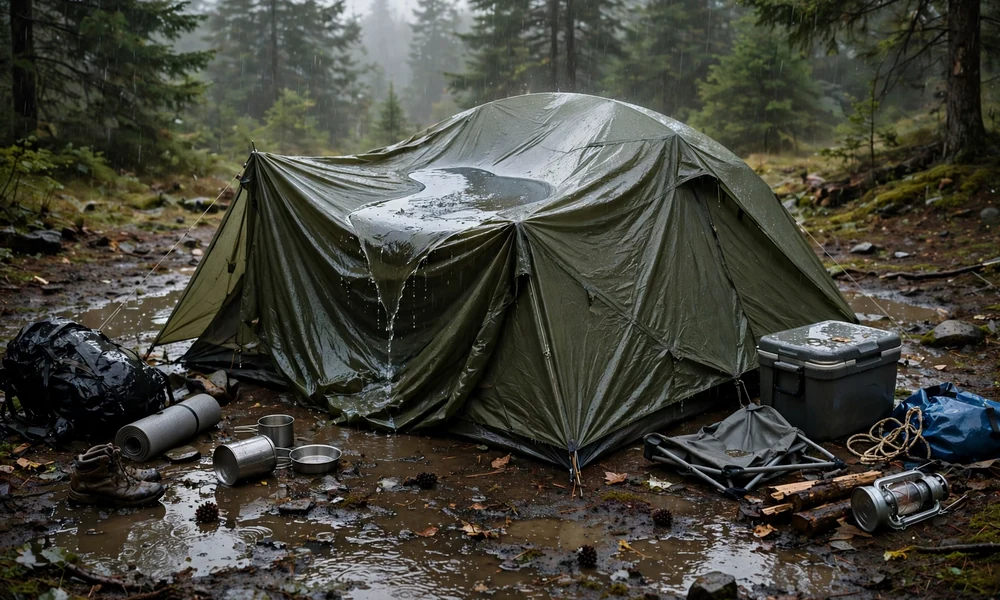
That flat, sheltered hollow looks perfect until the rain starts. Low ground collects water, and a dip that feels cosy at sunset becomes a pond by midnight. Pitch on slightly raised, flat ground with good drainage, and look for signs of past flooding such as flattened grass or damp soil.
2. Choosing the Wrong Campsite
A bad site choice causes problems all weekend, and the best sites are not always the most scenic ones. A pitch beside a stream sounds idyllic until the mosquitoes arrive and the ground turns to mud. Choose with your head, not just your eyes.
Pitching Too Close to Water
Water attracts insects, cold air and wildlife, and it floods first. Camp at least 60 metres from lakes and streams, on ground that stays dry after rain. You will sleep warmer, get bitten less and keep your gear dry.
Skipping the Ground Check
Before you unpack, clear the ground of stones and sticks, and lie down where your sleeping pad will go. A slope you barely notice while standing becomes a slide all night, and one sharp stone can ruin a sleeping pad. Face the tent door away from the wind, and avoid pitching under dead branches.
3. Bringing the Wrong Gear or Forgetting It Entirely
Gear mistakes fall into two groups: bringing the wrong thing, and forgetting the right thing. Both are fixed by testing everything at home. A tent with a broken pole or a stove that will not light are problems you want to find in your garden, not at a dark campsite.
The Wrong Sleeping Bag
Sleeping bag temperature ratings are survival ratings, not comfort ratings. A bag rated to zero degrees will keep you alive at zero degrees, not comfortable. Choose a bag rated at least five to ten degrees colder than the lowest temperature you expect, and pair it with an insulated sleeping pad, because the ground steals more heat than the air. Our guide to the best sleeping bags for camping in 2026 compares the warmest and most packable choices for every budget.
No Backup Light or Power
One headlamp is not enough. Batteries die, bulbs fail, and a torch left on in a bag drains itself by morning. Pack a spare headlamp and spare batteries, and keep a small power bank charged for your phone.
4. Cooking and Food Mistakes
Food mistakes range from annoying to genuinely dangerous. Storing food badly can attract animals into your camp, and cooking badly leaves you with cold meals and a mess. Plan your menu before you leave, prep what you can at home, and bring more fuel than you think you need, because stoves burn faster in wind and cold.
Storing Food Where Animals Can Reach It
Never keep food in your tent. Not snacks, not toothpaste, not the wrapper from your dinner. Animals follow their noses, and a raccoon tearing through your tent at 3 a.m. destroys your gear. Store food in sealed hard containers, a bear canister where required, or locked inside your car. Cook and eat at least 30 metres from your tent.
Underestimating Cooking Time
Camp cooking always takes longer than home cooking. Water boils slower at altitude and wind steals heat from your stove. Start dinner early, keep meals simple, and bring food that needs little cooking for the first night. If your group includes children, a reliable stove matters even more, so read our roundup of the best camping stoves for families in 2026 before you buy.

5. Fire Mistakes That Ruin the Trip
A campfire is the heart of a camping trip when it is done well, and a disaster when it is not. The most common fire mistakes are building one too big, building one in the wrong place, and walking away from one that is still alive.
Building a Fire You Cannot Control
Start small. A modest fire with dry kindling and a proper fire ring warms everyone and cooks dinner just fine. A roaring bonfire throws sparks into dry grass and burns through your firewood in an hour. Check local fire rules before you go, because many sites ban fires entirely in dry seasons. Never build a fire outside a designated ring, and keep tents and gear well back from the flames.
Leaving a Fire Smouldering
A fire is not out until it is cold to the touch. Embers buried under ash can stay hot for hours and reignite in the wind. When you are done, drown the fire with water, stir the ashes, drown it again, and hold your hand close to feel for heat. Repeat until it is genuinely cold.
6. Water, Hygiene and Health Oversights
Camping puts your body through more than a normal weekend. You walk further, sleep on hard ground, and spend all day in sun, wind and insects. The most common health oversights are dehydration, untreated water, sunburn and insect bites.
Trusting Untreated Water
Clear mountain water can still carry bacteria and parasites that will leave you ill for days. Never drink from a stream, lake or spring without treating it first. Carry a filter or purification tablets, and bring more water than you expect to need.
Skipping Sun and Bug Protection
Sunburn at altitude arrives fast, because the air is thinner and the sun is stronger. Apply sunscreen before you leave the tent, reapply through the day, and wear a hat. Insect repellent matters too, especially near water and at dusk. Pack a small first aid kit with plasters, antiseptic and pain relief.
7. Noise, Neighbours and Campsite Etiquette
Camping is a shared experience, and the worst campers forget other people exist. Loud music late at night, bright lights shining into neighbouring tents, and dogs running loose ruin a campground for everyone. Keep noise down after dark, keep your light pointed at the ground, and keep pets on a lead. Leave your site cleaner than you found it.
The Mistakes That Cost the Most
Not all camping mistakes are equal. Some cost you a little comfort, while others cost you the whole trip or put you in real danger. This table ranks them by impact, so you know which ones to fix first.
| Mistake | What happens | How bad is it? | The fix |
|---|---|---|---|
| Pitching in a low spot | Tent floods | Trip-ending | Pitch on high ground |
| Wrong sleeping bag | Freezing night | Trip-ending | Bag rated 10° colder |
| Food stored in the tent | Animals raid camp | Dangerous | Sealed containers |
| Fire left smouldering | Wildfire risk | Dangerous | Drown, stir, feel for heat |
| Drinking untreated water | Stomach illness | Serious | Filter or tablets |
| Untested gear | Broken tent or stove | Serious | Test gear at home |
| No rain plan | Wet gear | Uncomfortable | Rainfly and tarp |
| Loud late nights | Angry neighbours | Uncomfortable | Quiet after dark |
Pre-Trip Checklist: Avoid Every Mistake Above
Run through this checklist the night before you leave. It takes ten minutes and catches the mistakes that ruin most trips.
- Forecast checked twice: site forecast plus the morning update, with layers and waterproofs packed.
- Tent pitched at home: every pole, peg and guy line present, rainfly fitted, no damage.
- Sleep system ready: sleeping bag rated for the coldest expected night, insulated pad, spare blanket.
- Food sealed and planned: meals planned, food in sealed containers, nothing edible in the tent.
- Water and health kit packed: filter or tablets, enough water for day one, sunscreen, repellent, first aid kit.
- Fire and lights sorted: fire rules checked, matches and lighter in a dry bag, two headlamps, spare batteries, power bank.

Frequently Asked Questions
What is the single worst camping mistake beginners make?
Arriving with untested gear. Beginners often buy a tent, stove or sleeping bag and take it straight to a campsite without ever opening it. Pitch the tent at home, light the stove, and lie in the sleeping bag first.
How do I keep my tent dry in heavy rain?
Pitch on high, well-drained ground, fit the rainfly properly with all guy lines tensioned, and keep gear away from the tent walls, because anything touching the fabric wicks water inside. A groundsheet under the tent and a small tarp over the cooking area help enormously.
Is it safe to keep food in the car overnight?
Yes, in most campgrounds a locked car is the safest place for food, as long as it is sealed and out of sight. In bear country, follow local rules, which may require bear boxes or canisters instead. Never store food in your tent.
What should I do if my tent floods at night?
Move valuables and sleeping bags off the floor, and if the rain continues, move to the car until morning. Do not try to re-pitch in the dark and rain. In the morning, move the tent to higher ground and dry everything in the sun.
Can I have a campfire anywhere?
No. Many campsites restrict fires to designated rings, and fire bans are common in dry weather. Always check the rules for your site before you go. If fires are banned, a gas stove and a lantern give you the same warmth and light without the risk.
What is the best way to avoid camping mistakes on a road trip?
Plan the driving and the camping together. Tired drivers make bad site choices and forget gear, so keep driving days short and arrive with daylight to spare. Many of the same planning errors apply on the road, which is why it is worth reading our guide to the worst road trip mistakes of 2026 before a combined driving and camping trip.
The Bottom Line
The worst camping mistakes of 2026 are not exotic. They are ordinary oversights: a forecast ignored, a tent never tested, food left where animals can find it, a fire walked away from too soon. Every one has a simple fix. Check the weather, test your gear, pitch high and dry, store food properly, and leave every fire cold. Do those five things and your next trip will be remembered for the stars and the fresh air.


