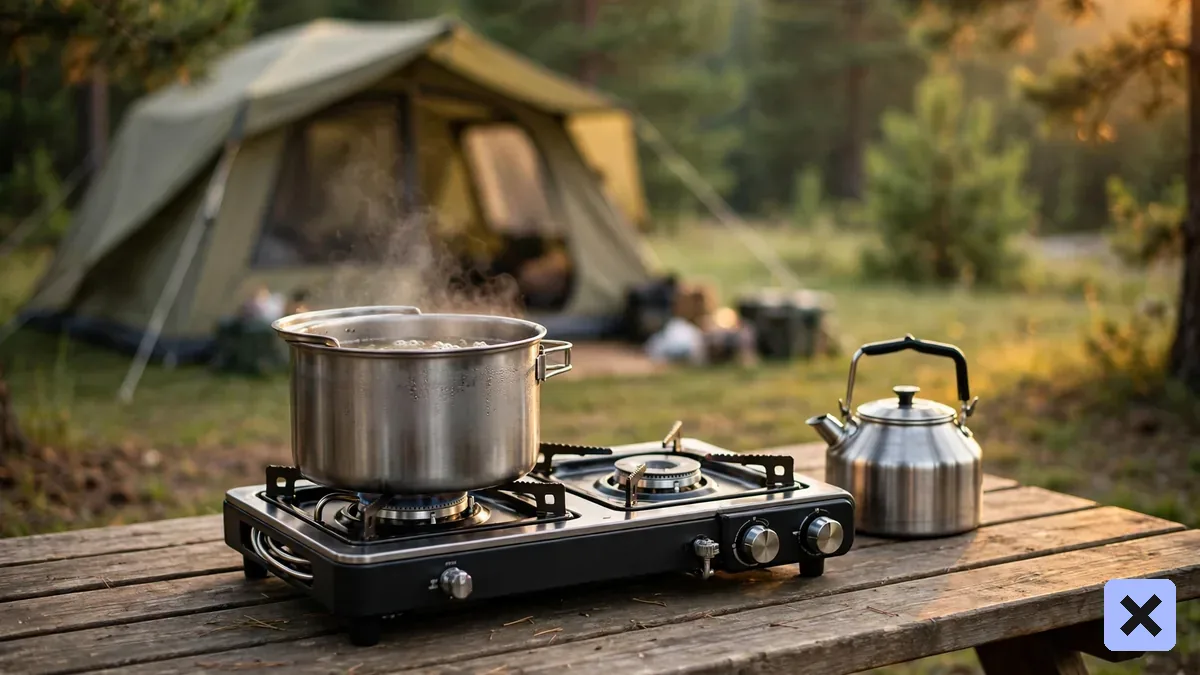
Nothing brings a family campsite together quite like the smell of breakfast cooking in the open air. The best camping stoves for families in 2026 make that moment easy, turning a patch of ground beside the tent into a working kitchen where pancakes, pasta, and hot chocolate all come together without a fuss. A good family stove is not the lightest or the flashiest model on the shelf; it is the one that feeds four or five hungry people quickly, safely, and without drama.
Choosing the wrong stove is one of the most common camping mistakes families make. A tiny single-burner unit that works beautifully for a solo hiker will leave a family of five waiting an hour for dinner, while a huge three-burner basecamp stove can eat up half the car boot. The sweet spot sits in between: enough power and cooking space for real family meals, with a size and weight that still fits a normal family car.
This guide compares the best camping stoves for families in 2026, from dependable two-burner propane classics to compact models for families who hike to their pitch. Every pick was judged on burner power, cooking space, stability, wind performance, ease of use, and value, so you can find the right stove for the way your family actually camps.
Key takeaways
- Two-burner propane stoves are the best all-round choice for most families, offering space for a pot and a pan at once.
- Look for at least 10,000 BTU per burner so water boils fast and family meals cook evenly.
- A wide, stable base and a built-in windscreen matter more than extra features when children are nearby.
- Propane is the easiest fuel for family camping, with canisters widely available and simple to swap.
- Match the stove to your trip style: car camping families can go bigger, while hiking families should prioritise weight.
What Makes a Great Family Camping Stove
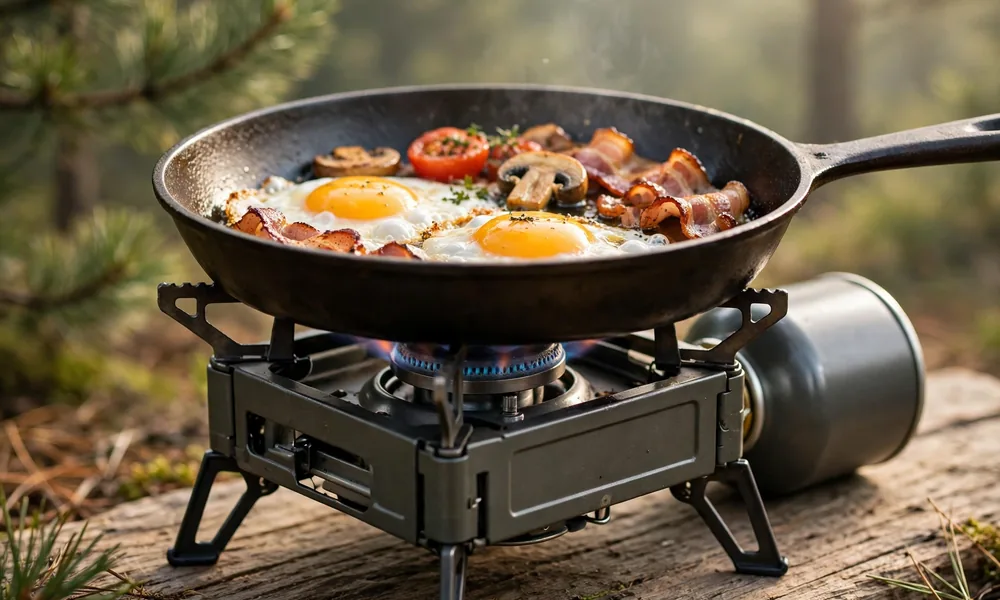
A family camping stove has a harder job than a solo hiker’s stove. It must cook larger quantities, cope with bigger pots, stay steady on uneven ground, and stay safe around curious children. The features that matter most are practical ones, and they are worth understanding before you compare models.
Burner Count and Cooking Space
Two burners are the minimum for most families. One burner can boil water for pasta while the other fries sausages or simmers a sauce, and that parallel cooking is what keeps dinner on schedule. Single-burner stoves are fine for boiling water and simple one-pot meals, but they slow everything down when you are feeding four or more people. Three-burner stoves suit very large groups, yet they are heavy and bulky, and usually unnecessary for a family of four or five.
Power Output and Boil Time
Power is measured in BTU, and for family cooking you should look for at least 10,000 BTU per burner. Stronger burners boil a litre of water in around three to four minutes, which makes a real difference when everyone is hungry after a long day outdoors. Weaker burners can take twice as long and struggle in a breeze.
Control matters too. A stove that only has full blast and off is hard to cook with, especially for sauces, eggs, and anything that needs a gentle simmer. The best family stoves offer fine flame control, so you can sear on one burner and keep soup warm on the other. Piezo ignition is a welcome bonus, removing the need for matches at every meal.
Fuel Type and Availability
Propane is the most practical fuel for family camping. Green propane canisters are sold at almost every outdoor shop, petrol station, and supermarket near popular campsites, they connect in seconds, and they burn cleanly. Butane canisters are lighter and cheaper but perform poorly in cold weather, while liquid fuel stoves are powerful and work in all conditions yet demand more skill and maintenance.
Weight, Size, and Portability
Family camping usually means car camping, so weight is less critical than it is for backpackers. Still, a stove that weighs over ten kilograms becomes a chore to carry from the car to the pitch. The best family stoves strike a balance: sturdy enough to feel stable, light enough for one adult to carry comfortably. Before you buy, measure your camping table too, because a stove that overhangs the edges is an accident waiting to happen. Pairing your stove with one of the best camping tables gives you a stable, correctly sized cooking surface at the right height.
The Best Camping Stoves for Families in 2026
The stoves below cover every style of family camping, from drive-up campsites with full kitchens to walk-in pitches where every kilogram counts. Each one earns its place through a combination of power, stability, ease of use, and value.
Best Overall: Classic Two-Burner Propane Stove
The classic two-burner propane stove remains the best choice for most families, and for good reason. With two 10,000 BTU burners, a built-in windscreen, and a folding lid that doubles as a splash guard, it handles everything from fried breakfasts to pasta dinners. The cooking area fits a large frying pan and a three-litre pot side by side, and the whole unit folds down to the size of a slim briefcase.
What makes it the best overall is reliability. It lights first time, simmers gently, and boils water fast. Spare parts and fuel are available everywhere, and the simple design means there is very little to go wrong. For a family that camps a few times a year and wants one stove that simply works, this is the one to buy.
Best Premium: High-Power Two-Burner Stove
Premium two-burner stoves step up the power to around 20,000 BTU per burner, with matchless ignition and a stainless steel drip tray that makes cleaning far easier. They boil water noticeably faster and hold a steady simmer even in a stiff breeze, thanks to better windscreens and more precise valves.
Best for Large Families: Three-Burner Stove
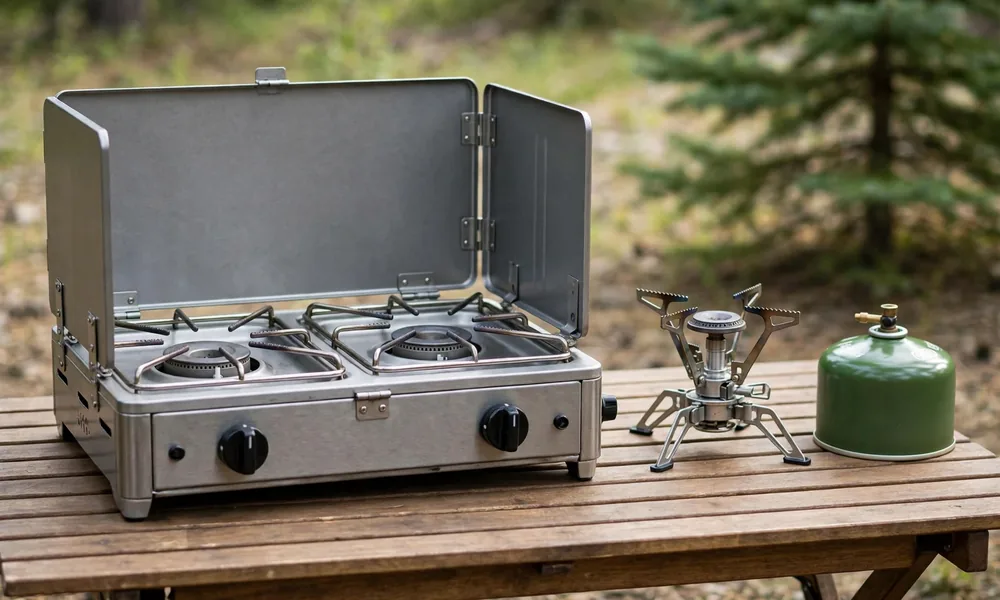
Families of six or more, or families who regularly camp with friends, will appreciate a three-burner stove. The extra burner means you can boil pasta, fry vegetables, and keep a sauce warm all at the same time, which turns group cooking from a juggling act into a relaxed process. Three-burner stoves are heavier and take up more table space, so they suit car camping at established sites, and they use more fuel, so pack a spare canister.
Best Compact: Freestanding Single-Burner Stove
Freestanding single-burner stoves that screw directly onto a gas canister are the lightest option here, weighing under half a kilogram. They pack down to the size of a mug and set up in seconds, making them ideal for families who hike to their campsite or travel light. The compromise is cooking capacity: one burner means one pot at a time, so meals take longer and need more planning. These stoves also work well as a second stove alongside a main two-burner unit for boiling the kettle.
Best Budget: Basic Two-Burner Stove
Budget two-burner stoves deliver the essentials at a fraction of the price of premium models. You get two burners, a simple windscreen, and enough power for everyday family meals. The finish may be simpler and the flame control less precise, but for occasional campers the cooking performance is more than good enough. Check the build quality before buying, particularly the stability of the pot supports and the sturdiness of the latches, because a well-made budget stove will last for years.
Comparison Table
| Stove Type | Burners | Power per Burner | Weight | Best For |
|---|---|---|---|---|
| Classic two-burner propane | 2 | 10,000 BTU | 4.5 kg | Most families, car camping |
| Premium two-burner | 2 | 20,000 BTU | 5.5 kg | Frequent campers, big meals |
| Three-burner stove | 3 | 10,000 BTU | 8 kg | Large families, group trips |
| Freestanding single-burner | 1 | 10,000 BTU | 0.4 kg | Light travel, second stove |
| Budget two-burner | 2 | 10,000 BTU | 4 kg | Occasional campers |
Two-Burner vs Single-Burner: Which Suits Your Family?
The choice comes down to how your family eats at camp. If your meals involve more than one pot, which is true for almost every family dinner, a two-burner stove will save you time and frustration every day of the trip. The ability to cook two things at once is the single biggest quality-of-life upgrade in camp cooking.
Propane vs Butane vs Liquid Fuel
Propane is the default for family camping because it is reliable in cool weather, widely available, and simple to use. The standard green canisters connect with a simple screw fitting, and a single canister lasts a family roughly a weekend of cooking. Always carry a spare, because running out mid-dinner is a miserable experience.
Safety Tips for Cooking with Kids at Camp
A camp stove is a real source of heat and flame, so safety deserves the same attention as choosing the stove itself. A few simple habits make the cooking area safe for the whole family.
Set Up a Kid-Free Cooking Zone
Stabilise the Stove and the Table
Store Fuel Safely
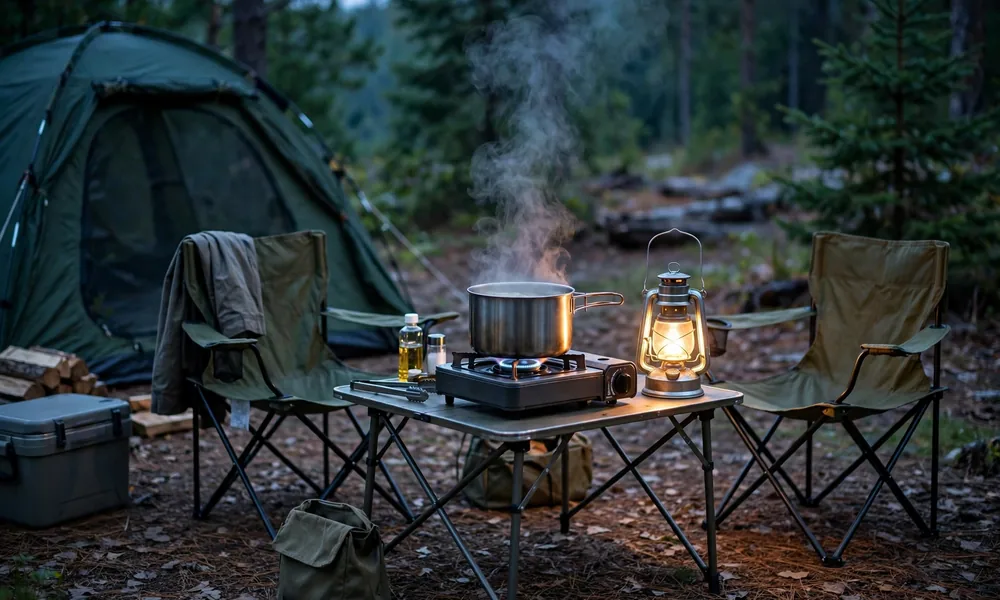
Family Camping Stove Checklist
Use this checklist when packing for your next trip, so nothing essential gets left behind.
- Stove, plus a spare fuel canister and a backup lighter or matches.
- A stable camping table or flat cooking surface at a comfortable height.
- Pots, a frying pan, and a kettle that fit the stove side by side.
- Windscreen or windbreak, especially for exposed or coastal sites.
- Heat-resistant gloves, a long-handled spatula, and tongs for safe handling.
- Cleaning kit: a small sponge, washing-up liquid, and a tea towel, plus a bag for rubbish.
Before your first trip with a new stove, test it at home. Cook a full family meal on it in the garden, time how long water takes to boil, and check that your pots fit comfortably. A practice run at home is far better than discovering a problem at a remote campsite. A comfortable camp setup matters beyond the kitchen too: once dinner is sorted, everyone will want somewhere to sit, which is why the best camping chairs for families are worth choosing with the same care as your stove.
Frequently Asked Questions
What size camping stove do I need for a family of four?
A two-burner stove with at least 10,000 BTU per burner is the right size for a family of four. It cooks two dishes at once and fits a large frying pan and a pot side by side, which keeps mealtimes short and stress-free.
How long does a propane canister last on a family camping trip?
Can I use a camping stove inside a tent?
No. Never use a gas camping stove inside a tent, awning, or any enclosed space. Stoves produce carbon monoxide, which is colourless and odourless, and they are a serious fire risk in fabric shelters. Always cook outside, in the open air.
Are camping stoves safe around children?
What is the best fuel for family camping stoves?
Do I need a windscreen for my camping stove?
A windscreen is one of the most useful accessories you can own. Wind can double boil times and waste fuel, and even a simple folding windscreen makes a big difference on breezy sites. Many good family stoves include one built in.
The Bottom Line
For most families, a classic two-burner propane stove is the best camping stove in 2026. It cooks two dishes at once, boils water fast, packs down neatly, and runs on fuel you can buy almost anywhere. Families who camp often should consider a premium high-power model, while large groups will get the most from a three-burner stove.
Whatever you choose, prioritise stability, wind protection, and enough power for real family meals. Get those three things right and your camp kitchen will feed everyone happily, trip after trip. And remember that the stove is only one part of the setup: a good family tent matters just as much, so take a look at the best camping tents for families to complete your campsite before your next adventure.