A car charger for an iPhone has one job: to fill the battery while you navigate, play music and take calls, so you arrive with more charge than you left with. The worst car chargers for iPhone in 2026 fail at it in ways that leave a driver with a phone that loses charge while it is plugged in. They trickle power so slowly the satnav drains the battery faster than the charger fills it, fall out at the first pothole, or overheat until the phone stops charging altogether. Drivers buy them hoping for a full battery on arrival. What they get is a charger that trickles, a charger that rattles loose, or a charger that cooks the phone it was meant to fill. A charger that is bought for an iPhone should be judged on a long journey with the satnav running, not on a short drive, because a short drive hides a slow charger.
Ports Too Slow for Navigation
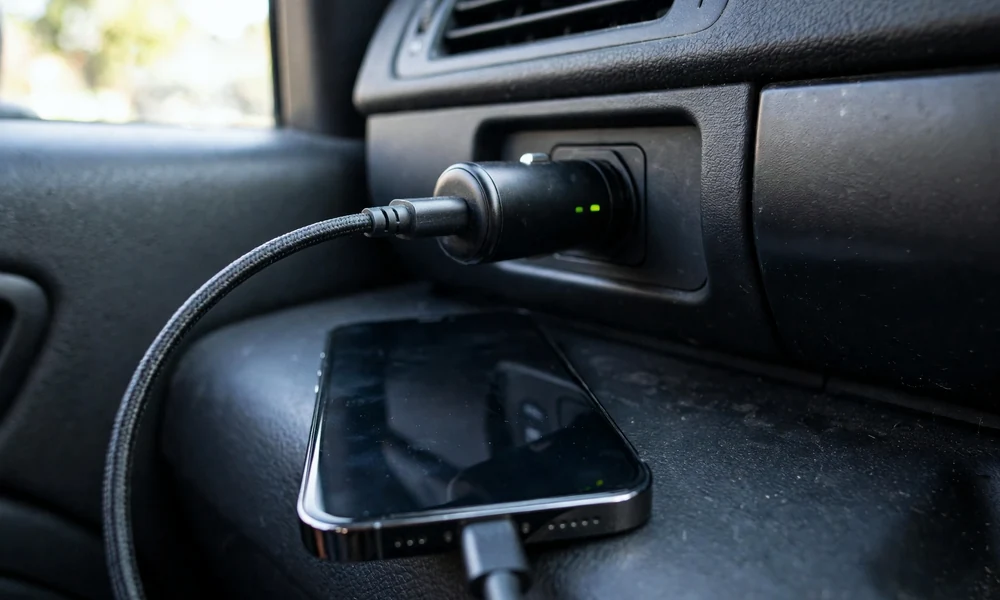
An iPhone asks for around twenty watts, and the worst car chargers cannot offer it. They deliver five or seven watts, which barely holds the battery steady while the satnav is running, so a phone that starts a journey at sixty percent arrives at forty. The problem is worst with old USB-A ports, which charge far more slowly than USB-C, and with chargers that split their wattage between two ports, so a charger labelled sixty watts gives thirty to one port and fifteen to the other, or sixty only when a single device is plugged in. A charger that cannot keep up with navigation is a charger that leaves the driver with a dead phone at the end of the journey.
The number that matters is the wattage per port, and the standard it uses. A thirty-watt USB-C Power Delivery port will charge almost any phone at full speed, and an iPhone gains nothing from more than thirty watts, so a forty-five-watt charger will not charge it faster than a thirty-watt one. Read the small print on the box, not the big number on the front, and check that the charger supports USB Power Delivery. A charger that delivers twenty watts or more per port will fill an iPhone properly, and a charger that delivers less is a charger that will leave it flat. A charger that splits its wattage between two ports will charge two phones slowly, while a charger that gives each port its full wattage will charge both properly.
Plugs That Work Loose on Rough Roads
A car charger plugs into the twelve-volt socket, and the worst ones will not stay there. They are too tall, so they catch a knee and work themselves loose, or too loose in the socket, so they rattle out at the first pothole and the charging stops without the driver noticing. A loose or worn socket makes it worse, because the charger cuts in and out as the car moves, and the phone connects and disconnects a dozen times on one journey. A charger that falls out is a charger that does not charge, and a driver who discovers the phone is flat at the destination has been let down by a plug, not by the phone.
Look for a charger that sits firmly in the socket with no wobble, and a low-profile design that stays put on rough roads. A compact charger sits almost flat in the socket, with barely a centimetre poking out, so it is much harder to knock, while a tall charger sticks out, catches knees and works itself loose. Test the fit in your own car before you commit, and check that the charger has a small light for finding the ports in the dark. A charger that sits tight is a charger that charges all the way, and a charger that wobbles is a charger that will fall out when it matters most. A charger that rattles in the socket will rattle out on a rough road, and a charger that has fallen out is a charger that is not charging.
Chargers That Overheat on the Dash
Heat is the enemy of fast charging, and the worst car chargers run hot enough to slow it down. A cheap charger without proper protection overheats in summer, the phone gets hot, and the phone throttles its charging speed to protect the battery, so a hot charger can charge more slowly than a cool one. Over months the same heat wears the battery down, so a phone that gets hot every day loses capacity faster than one that charges cool. A charger that feels too hot to hold is telling you something is wrong: poor ventilation, overload, or cheap construction that wastes energy as heat.
Buy from a brand you recognise, and look for over-current, over-voltage and over-temperature protection, which are essential in a car charger. Gallium nitride, or GaN, is the technology that keeps modern chargers cool, because it switches faster and wastes less energy as heat than the silicon in older bricks. Keep the phone out of direct sun while it charges, and take a thick case off if the phone feels warm. A charger that runs cool charges faster for longer, and a charger that overheats is a charger that damages the very battery it is meant to fill. Our guide to the best car chargers of 2026 explains the wattage, ports and cables that matter for fast charging.
Lightning and USB-C Confusion
Since 2023 new iPhones charge over USB-C, the same oval plug Android phones have used for years, but older iPhones use Apple’s Lightning plug, and the worst car chargers ignore the difference. They ship with the wrong cable, or with a cable that has no chip in it, so the phone shows a warning or stops charging after an update. Cheap Lightning cables without the proper chip often trigger a warning or stop working entirely, and a charger that comes with a cable rated for only fifteen watts will turn a fast charger into a slow one. A driver who buys a charger and discovers the cable does not fit their iPhone has bought a charger that cannot charge their phone at all.
Check your phone’s plug before you buy: USB-C on new phones, Lightning on older iPhones and accessories. If your household still has Lightning devices, buy a certified cable from a brand you recognise, and check that the cable is rated for the wattage you want. A thirty-watt charger needs a cable rated for thirty watts, and the rating is usually printed on the packaging. Braided cables cost a little more and last longer than smooth rubber ones, especially at the plug ends, where most cables fail. A charger with the right cable charges at full speed, and a charger with the wrong cable is a charger that does not work.
Cables That Fray and Fail
The cable matters as much as the charger, and the worst car chargers ship with cables that fail within weeks. Cheap, thin cables cannot carry thirty watts safely, and many older cables were only built for fifteen watts, so the cable becomes the bottleneck no matter how powerful the charger is. The strain relief near the plug cracks, the wires inside fray, and charging becomes intermittent long before the charger itself fails. If a charger only works when the cable is held at a certain angle, the cable is the problem, and a cable that only works at an angle is a cable that will fail completely on the next journey.

Buy a cable rated for your charger’s wattage, preferably braided, in the right length: a one-metre cable suits the front seats, while a two-metre cable suits the back. Keep a spare in the drawer, and replace a cable that buzzes or only works at certain angles, because a failing cable can damage the phone. A good cable lasts for years, and a cheap one lasts for weeks, so the money saved on a thin cable is lost in replacements. If you want cables that deliver the speed they promise, our guide to the best USB cables of 2026 covers the ones that are rated honestly and built to last.
Chargers With No Safety Protection
The cheapest car chargers skip the safety protection that matters most, and the worst of them can damage a battery. Chargers below ten dollars often skip over-current, over-voltage and over-temperature protection, so a fault in the car or the phone has nothing to stop it. A charger that feels hot, smells of burning plastic, or buzzes should be thrown away immediately, because it is a fire risk, not a bargain. A charger that damages a battery costs far more than a good charger would have, because a phone battery is worth more than any charger. Safety protection is not a luxury in a car charger, it is the difference between a charger and a hazard.
Spend a little more than the cheapest option, buy from a brand you recognise, and check the safety certifications and the warranty before you pay. A well-made charger should last five years or more, and the cable usually fails first, so check the spares and the warranty too. Unplug the charger if the car will sit unused for a long time, because a charger left plugged in with the engine off for days could drain a weak battery. A charger with real protection is a charger you can leave plugged in without worry, and a charger without it is a charger that should never have been bought.
What to Buy Instead
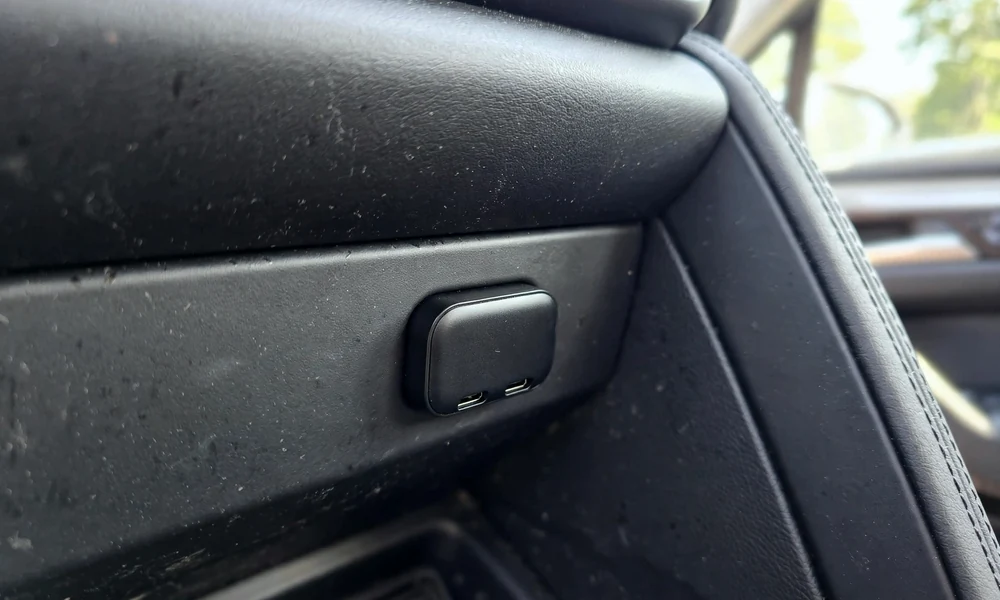
The car chargers for iPhone worth buying share a short list of features, and none of them is expensive on its own. A dual-port USB-C model that delivers thirty watts per port, supports Power Delivery, and fits tightly in the socket without wobbling. A proper sixty-watt braided cable, a low-profile design that stays put on rough roads, and over-current, over-voltage and over-temperature protection from a brand you recognise. Expect to pay eighteen to thirty dollars for a charger that lasts, because the cheapest ones usually skip the protection that matters most.
Fit matters as much as build, and the charger should suit the phone in front of you rather than the phone in the photograph. An iPhone tops out around twenty to twenty-seven watts, so a thirty-watt port is enough, and a forty-five-watt charger will not charge it faster. Check your plug, match the wattage, and pair the charger with a rated cable. If you want the wall chargers that use the same standards at home, our guide to the phone chargers that charge fast without the heat covers the bricks that charge cool and last for years.
The Bottom Line
The worst car chargers for iPhone in 2026 share a pattern: ports too slow for navigation, plugs that work loose on rough roads, chargers that overheat on the dash, Lightning and USB-C confusion, cables that fray and fail, and chargers with no safety protection. Avoid those six failures and you avoid almost every iPhone car-charger regret. Check the wattage per port, test the fit in your own car, and buy from a brand you recognise. Do that, and the charger you buy will be the one that fills the battery on every journey, not the one that leaves the phone flat at the destination.