Phone Chargers That Charge Fast Without the Heat in 2026
A good phone charger should fill your phone quickly, stay cool while it works, and last for years. This guide sorts out what actually matters: wattage, plug, fast-charging standard, and the habits that keep charger and battery cool.
Key Takeaways
- Most phones charge at full speed on 20 to 30 watts: 20W for iPhones, 25W or 30W for most Android phones.
- USB-C is standard on new phones; older iPhones still use Lightning, so check your phone first.
- USB Power Delivery is the fast-charging standard that matters; PPS makes it charge a little cooler.
- Heat is the real enemy: a hot charger charges slower, wears out faster, and shortens battery life.
- The cable matters as much as the brick: a thin or worn cable caps speed.
Phone Chargers at a Glance
| Charger type | Output | Best for | Typical price |
|---|---|---|---|
| Single-port 20W USB-C | 20W | iPhones and light Android use | $12–$20 |
| Single-port 25W or 30W USB-C | 25–30W | Most Android phones at full speed | $15–$25 |
| Dual-port 30W GaN | 30W total | Phone plus earbuds or watch | $20–$35 |
| Compact travel charger | 20–30W | Trips, with foldable prongs | $15–$30 |
| Multi-port 45W GaN | 45W total | Phone, tablet and earbuds together | $30–$45 |
How Much Wattage Does Your Phone Actually Need?
Wattage is the headline number on every charger, and for phones it is also the most misunderstood. A phone does not charge faster just because the brick promises more watts. Every phone has a maximum charging speed built in, and once the charger reaches it, extra watts sit unused. An iPhone topping out at 20 watts charges no faster on a 65-watt brick, and most Android phones peak between 25 and 45 watts. The phone always sets the limit.
Roughly, a modern iPhone peaks at about 20 watts, most Samsung and Pixel phones at 25 to 30 watts, and a few Android flagships at 45 watts or more. A 20-watt charger suits iPhone owners; a 25-watt or 30-watt charger covers nearly every Android phone at full speed. The exception is charging two things at once: a dual-port 30-watt charger can fast-charge a phone while topping up earbuds.
USB-C vs Lightning: Which Plug Does Your Phone Use?
The plug on the end of the cable is the first thing to check, because the wrong plug simply will not fit. Since 2023, new iPhones charge over USB-C, the same oval plug Android phones have used for years. Older iPhones use Apple’s Lightning plug, a flat connector with exposed pins. Both still matter in 2026: millions of Lightning phones are in daily use.
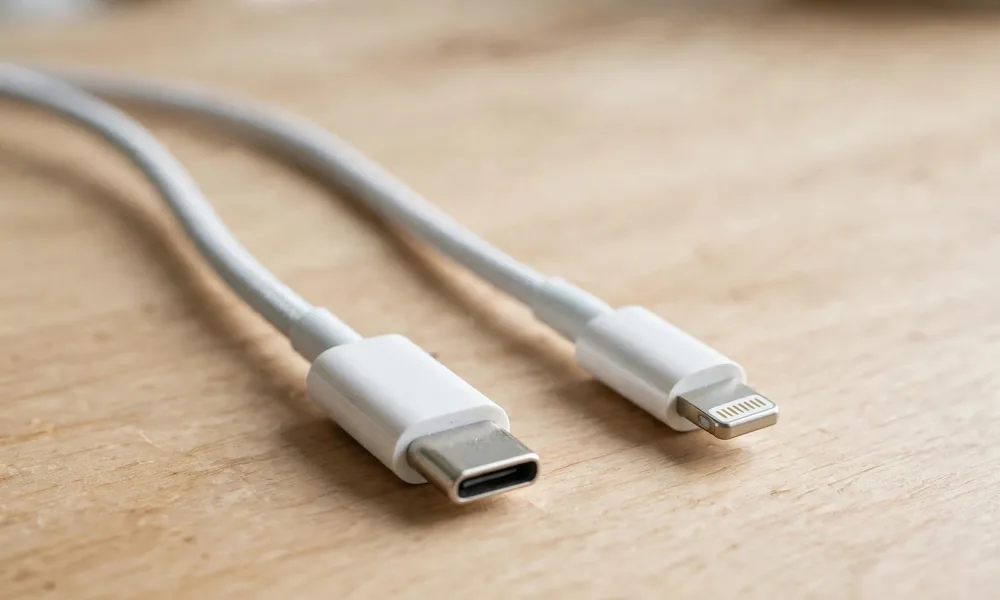
USB-C is the easy case: any USB-C charger with the right wattage charges any USB-C phone. Lightning needs more care: its cable has a chip that tells the phone it is genuine, and cheap cables without it often trigger a warning or stop working after an update. If your household still has Lightning devices, buy a certified cable from a brand you recognise.
Fast Charging, Explained: PD, PPS and the Rest
Fast charging is a negotiation between charger, cable and phone. The standard that makes it work is USB Power Delivery, usually shortened to PD. When you plug in, charger and phone agree on a voltage and current, and the charger delivers the fastest safe combination the phone asks for. A 20W or 30W PD charger takes a modern phone from empty to about half full in roughly half an hour.
PPS, short for Programmable Power Supply, is the refinement on top of PD, and the one to look for if you care about heat. Where PD steps between fixed voltages, PPS adjusts voltage in fine steps as the battery fills, wasting less energy as heat. Many Samsung phones charge best only with a PPS charger, and a good 25-watt or 30-watt charger in 2026 supports both. Our guide to the best USB-C chargers covers multi-port bricks and cable ratings.
Why Some Phone Chargers Run Hot
Every charger gets warm. Converting power from the wall into the low voltage a phone needs is never perfectly efficient, and the lost energy becomes heat. A charger too hot to hold comfortably is telling you something is wrong: poor ventilation, overload, or cheap construction.
Heat matters because it slows charging down and shortens the life of everything it touches. When a phone gets hot it throttles its charging speed to protect the battery, so a hot charger can charge more slowly than a cool one. Over months, the same heat wears the battery down: a phone that gets hot every night loses capacity faster than one that charges cool.
Gallium nitride, or GaN, is the technology that keeps modern chargers cool. GaN switches faster and wastes less energy as heat than the silicon in older bricks, so a 30-watt GaN charger can be half the size of an old brick while running cooler. By 2026, GaN is standard in almost every well-reviewed phone charger. Where you charge matters too: give the brick air, and remove a thick case while charging if the phone feels warm.
The Best Phone Chargers of 2026
Best Overall: Single-Port 25W or 30W GaN Charger
For most people, the best phone charger is a small single-port GaN charger at 25 or 30 watts over USB-C. It fast-charges nearly every Android phone at full speed, and an iPhone at its fastest wired rate too. It is barely larger than the plug, runs cool, and costs about 15 to 25 dollars. The best examples hold their rated wattage and carry safety certifications.
Best for iPhone: Single-Port 20W USB-C Charger
iPhone owners do not need more than 20 watts, and a dedicated 20-watt charger is the cheapest way to get Apple’s fastest wired charging speed, taking a modern iPhone from empty to about half full in around 30 minutes. Avoid bargain chargers that look identical but cost half as much: cheap chargers cut corners on safety.
Best for Two Devices: Dual-Port 30W GaN Charger
If you charge a phone and a pair of earbuds, or a phone and a watch, every night, a dual-port 30-watt charger is the better buy. The best designs deliver the full 30 watts to a lone phone, then split to about 20 plus 10 watts when a second device joins. Cheaper models sometimes split evenly, so check the split before you buy.
Best Travel Charger: Compact 20W or 30W Charger With Foldable Prongs
For trips, the best phone charger is the smallest one that still charges at full speed. A compact 20-watt or 30-watt GaN charger with foldable prongs slips into a pocket, charges a phone overnight in a hotel room, and tops it up fast before a flight.
Best Budget Charger: Single-Port 20W Charger From a Known Brand
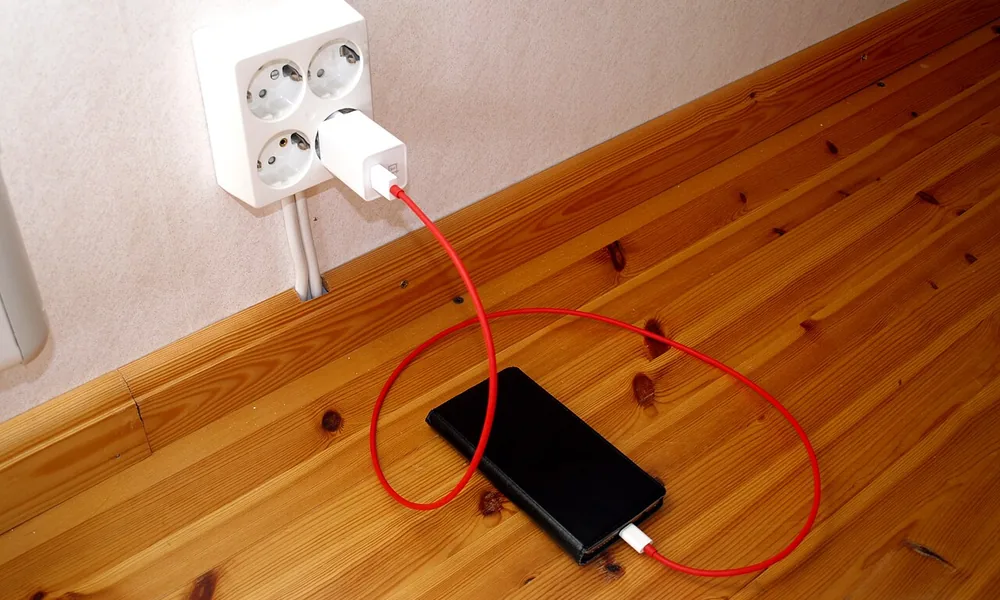
If every dollar counts, a single-port 20-watt charger from a brand you recognise is the best value in this guide, at around 12 to 20 dollars. It charges an iPhone at full speed and most Android phones nearly as fast as a 30-watt brick. Stick to brands with a track record and a real warranty, and a budget charger will last for years.
The Cable Is Half the Charger
A great charger paired with a poor cable is a slow charger. Cables look identical but vary enormously in what they can carry: a free cable from an old gadget may be rated for only 15 watts, which turns a fast charger into a slow one. The cable also wears out first. The strain relief near the plug cracks, the wires inside fray, and charging becomes intermittent long before the brick itself fails. If a charger only works when the cable is held at a certain angle, the cable is the problem.
Buy a cable rated for the wattage you want: a 30-watt charger needs a cable rated for 30 watts, and the rating is usually printed on the packaging. Braided cables cost a little more and last longer than smooth rubber ones, especially at the plug ends. Keep a spare in the drawer.
Wall Chargers vs Portable Chargers vs Wireless Pads
It helps to keep the three ways of charging a phone separate, because they solve different problems. A wall charger is for outlets: it is the fastest way to charge, it never runs out, and it is the right tool at home, at work and in a hotel room. A portable charger is a battery you carry, for charging away from any outlet, and the best portable chargers are built around capacity and weight rather than wattage alone. A wireless pad is for convenience: you set the phone down and it charges slowly, which is lovely on a bedside table and useless when you need power in twenty minutes. Our guide to the best wireless chargers covers pads, stands and multi-device stations for exactly that job.
The three complement each other, and the wall charger is the one you will reach for most often.
Charging Habits That Keep Your Battery Healthy
A good charger helps your battery last longer, but habits matter too. Keeping a phone plugged in at 100 percent all day wears the battery faster than charging it in the 20 to 80 percent range. Most phones now offer a battery-care setting that caps charging at 80 percent overnight: turn it on if yours has one.
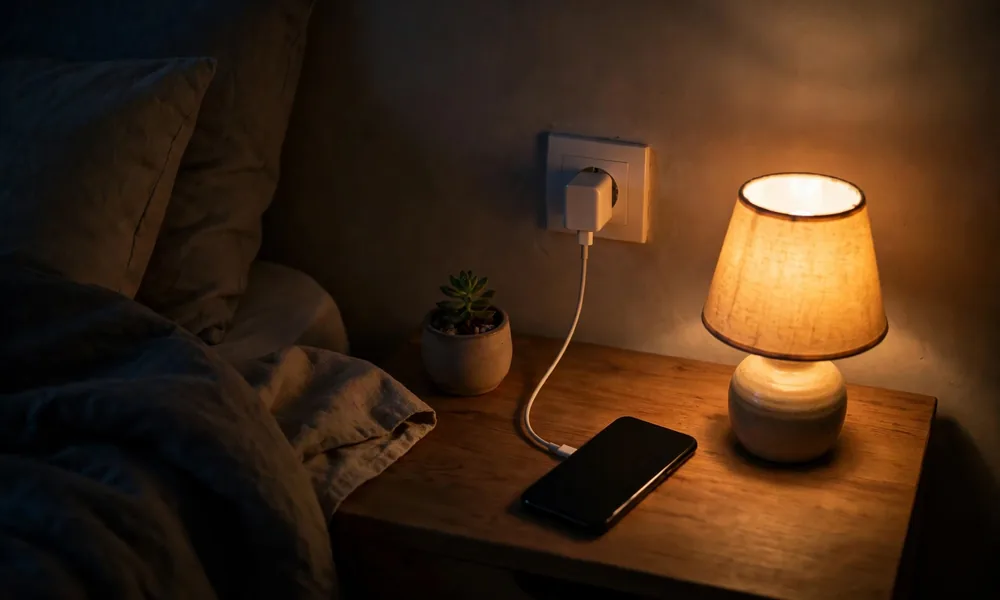
Heat is the other enemy, and it is mostly under your control. Do not charge a phone in direct sunlight, on a car dashboard in summer, or under a pillow, where the heat has nowhere to go. Take a thick case off if the phone feels warm while charging. A charger that buzzes or only works at certain angles belongs in the bin.
Checklist: Before You Buy a Phone Charger
- Check your phone’s plug: USB-C on new phones, Lightning on older iPhones and accessories.
- Match the wattage to your phone: 20W for iPhones, 25W or 30W for most Android phones.
- Look for USB Power Delivery, and PPS support if your phone uses it.
- Pick GaN construction for a smaller, cooler brick at the same price.
- Buy a cable rated for your charger’s wattage, preferably braided, in the right length.
- Verify safety certifications and a real warranty from a brand you recognise, and skip no-name bricks.
Frequently Asked Questions
Can I use a higher-wattage charger than my phone needs?
Yes. A phone only draws the power it asks for, so a 65-watt charger will not force 65 watts into a phone that tops out at 25.
Can I use a lower-wattage charger than my phone came with?
Yes, with limits. A lower-wattage charger charges more slowly, and heavy use while charging may mean the battery barely gains charge.
Can I charge my phone with a laptop charger?
Yes, if it charges over USB-C Power Delivery. It will deliver the 20 or 30 watts your phone asks for, but it is bulky for the job.
Why does my phone charge slowly with a new charger?
The usual causes are a cable rated below the charger’s wattage, a charger splitting power across ports, or a hot phone throttling its own speed.
Is it safe to leave my phone charging overnight?
Yes, with a good charger. Modern phones stop at full and trickle to stay topped up, and most offer a setting that holds the battery at 80 percent until morning.
How long should a phone charger last?
A well-made charger should last five years or more. The cable usually fails first, especially near the plug, so replace a charger that buzzes or only works at certain angles.
The Bottom Line
The best phone charger for most people in 2026 is a small single-port GaN charger at 20 watts for an iPhone or 25 to 30 watts for Android: fast enough to matter, cool enough to last, and cheap enough to buy twice. Match the plug to your phone, pair it with a rated cable, and buy from a brand with real safety certifications.