A car vacuum for pet hair has one job: to lift fur that has woven itself into seats, mats and boot carpet, and to do it before the battery dies or the bin fills. The worst car vacuums for pet hair in 2026 fail at it in ways that leave a dog owner’s car looking no cleaner than when they started. They push hair around instead of picking it up, choke on the first clump of fur, or fill up after a single seat. Drivers buy them hoping for a car that stops smelling of wet dog. What they get is a vacuum that rearranges the hair, a vacuum that clogs, or a vacuum that gives up halfway through the back seat.
Hair That Stays Woven Into Seats
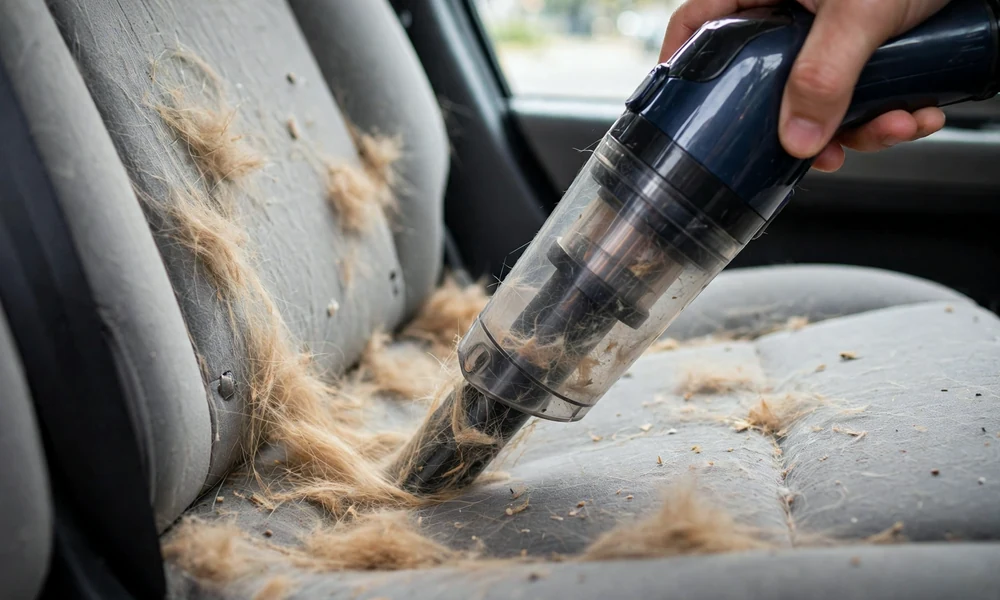
Pet hair does not sit on car seats the way dust does. It works its way into the weave of the fabric, wraps around the fibres, and stays there, and the worst car vacuums cannot shift it. A plain nozzle slides over the surface and picks up the loose hairs while the embedded ones stay exactly where they were, so the seat looks the same after vacuuming as it did before. The problem is worst on fabric seats and boot carpet, where short fur locks into the pile, and a vacuum that only handles crumbs will never touch it. A car that carries dogs needs a machine built for hair, not a machine built for dust.
The difference is the brush head. A motorised brush head lifts fur out of fabric instead of passing over it, and a stiff-bristled brush head is the next best thing. Suction alone will not do it, however high the number on the box, because suction pulls at the surface while the hair is anchored underneath. Look for a vacuum with a motorised pet tool, and test it on a hairy seat before you commit: one slow pass should lift visible fur. A vacuum that leaves the seat looking untouched after a pass has failed at the one job a pet owner bought it for.
Brush Rolls Choked With Fur
The brush roll is the part of a car vacuum that does the real work on pet hair, and on the worst machines it is also the first part to fail. Long hair wraps around the roller in thick bands, and within minutes the roller spins sluggishly or stops altogether. Some machines hide the problem behind a sealed head that cannot be opened, so the owner cannot even clear the tangle without tools. A vacuum whose brush stops turning is a vacuum that has become a noisy dust collector, and a pet owner who has to cut hair off a roller after every clean will soon stop cleaning at all.
A well-designed vacuum lets you remove the brush roll in seconds and clear it without tools, and the best pet models use a self-cleaning brush roll that resists the hair wrap that chokes lesser machines. Check the brush head before you buy: it should come apart easily, the bristles should be stiff enough to lift fur, and the head should be narrow enough to fit between seats. If the brush head is sealed shut, or the bristles are soft and sparse, the vacuum will choke on the first hairy car it meets. Our guide to the best car vacuums of 2026 shows which machines handle pet hair properly and which ones only claim to.
Bins That Fill After One Seat
A car vacuum’s dustbin is small by design, and on the worst pet-hair models it is far too small for the job. A bin of a few hundred millilitres fills with fur after a single back seat, and once it is full the suction collapses, so the rest of the car gets a weaker clean than the first seat did. Emptying it is usually messy as well: a fiddly latch, a lid that springs open, and a cloud of fur that goes everywhere except into the bin. A pet owner with two dogs will empty the bin three times for one car, and a vacuum that needs emptying that often is a vacuum that never finishes the job properly.
Look for a transparent bin of at least half a litre, so you can see when it is full, and a one-handed emptying action that drops the fur straight into a rubbish bin. A bin that opens with one hand over a bin is the difference between a quick clean and a chore, and a bin that needs two hands and a poke with a pen will be emptied less often than it should be. Empty the bin after every clean, because a full bin cuts suction sharply and shortens the motor’s life. A vacuum with a bin big enough for a hairy car is a vacuum that finishes the whole car in one go.
Filters Clogged With Dander
Pet hair is only half the problem in a dog owner’s car. The other half is dander, the fine skin flakes and dust that come with fur, and the worst car vacuums cannot handle it. Their filters are made of thin foam or paper that clogs after a single use and cannot be washed, so each clean gets weaker than the last until the owner is buying replacement filters that cost nearly as much as the vacuum. Worse still, a clogged filter lets fine dust blow straight back out of the exhaust, so the car smells worse after vacuuming than before. A vacuum that cannot filter dander is a vacuum that makes a pet car less healthy, not more.
Choose a vacuum with a washable filter and a sealed system, and wash the filter after every hairy clean. A filter that rinses clean under a tap costs nothing to maintain, while a disposable filter is an ongoing expense and a reason to stop using the machine once the spares run out. Never put a filter back while it is still damp, because a wet filter smells within days. If anyone in the family has allergies, look for a sealed system with a high-efficiency filter, which traps fine dust instead of blowing it back out. A vacuum that keeps its filter clean is a vacuum that keeps its suction, and a vacuum that clogs is a vacuum that gives up.
Suction That Fades on Carpet
The most common failure in a cheap car vacuum is suction that fades, and pet hair makes it worse. The machine starts acceptably for the first minute, then drops sharply as the battery voltage falls and the filter begins to clog with fur. Because the motor is small, it has no reserve: once the filter holds a little dust, the airflow collapses, and the vacuum is mostly making noise by the second seat. A good test is simple: sprinkle a little sand on a car mat and see how many passes it takes to clear, then do the same with a clump of dog hair. A good vacuum does both in one or two passes, and a bad one needs four and still leaves some behind.

Look for a vacuum that quotes air watts rather than just volts, and treat figures above fifteen thousand pascals from unknown brands with suspicion. Fifty air watts or more will pull embedded dust from carpet and lift pet hair from upholstery, while anything below twenty is really a dust collector. Two power settings help: a quieter standard mode for quick cleans and a stronger boost mode for the deep clean after a muddy walk. A vacuum that holds its suction until the battery is nearly empty is a vacuum worth owning, and one that fades in two minutes is a vacuum that should never have been bought.
Tools That Cannot Reach Seams
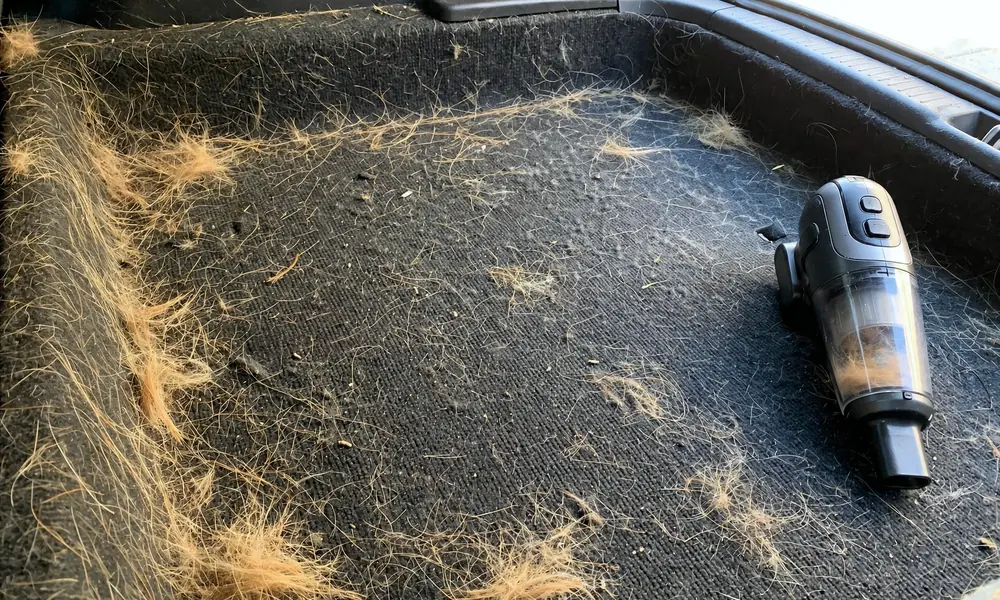
Pet hair hides where a vacuum cannot reach it: in the seams of the seats, along the seat rails, under the front seats, and in the gap beside the centre console. The worst car vacuums ship with short, wide nozzles that cannot get into any of these places, so the hair stays exactly where it is, however long the owner vacuums the flat surfaces. A crevice tool is the single most useful attachment for a pet owner’s car, because it slides between seats and along rails where fur collects, and a vacuum without one is a vacuum that leaves the dirtiest places dirty. A car that looks clean on the seats but is full of hair in the seams is a car that was cleaned with the wrong tools.
Check the attachments before you buy, and make sure the box includes a long, flat crevice tool and a brush head, ideally a motorised one. A short flexible hose helps you reach under the front seats, and a small brush head helps on fabric seats and mats. Most car vacuums ship with a small army of attachments, and most of them are rarely used, but the crevice tool and the brush head are the two that matter. A vacuum with the right tools reaches the hair wherever it hides, and a vacuum without them leaves it there. If you want a handheld that reaches into gaps properly, our guide to the best hand vacuums of 2026 covers the models that pick up the most.
What to Buy Instead
The car vacuums for pet hair worth buying share a short list of features, and none of them is expensive on its own. A motorised brush head that lifts fur from fabric, with a brush roll that comes out for cleaning. Suction of fifty air watts or more that holds until the battery is nearly empty. A transparent bin of at least half a litre that empties with one hand, a washable filter, and a long crevice tool. A battery that runs for twenty minutes or more, so the whole car gets cleaned in one go. If a vacuum fails any one of those checks, keep looking.
Fit matters as much as build, and the vacuum should suit the car in front of you rather than the car in the photograph. A small hatchback with one dog needs less than a three-row SUV with two, and a car with leather seats needs less brush work than a car with fabric. Test the vacuum on a hairy seat before you commit, and check the bin and the brush head first. If you want the full-size machines for the house as well, our guide to the best vacuum cleaners of 2026 covers the ones that handle carpet, filtration and pet hair properly.
The Bottom Line
The worst car vacuums for pet hair in 2026 share a pattern: hair that stays woven into seats, brush rolls choked with fur, bins that fill after one seat, filters clogged with dander, suction that fades on carpet, and tools that cannot reach seams. Avoid those six failures and you avoid almost every pet-hair vacuum regret. Test the brush head on a hairy seat, check the bin size, and make sure the filter washes clean. Do that, and the vacuum you buy will be the one that leaves the car genuinely clean, not the one that rearranges the hair and gives up halfway through the back seat.