
Worst Caravans to Avoid in 2026
The worst caravans of 2026 are not the oldest ones or the plainest ones. A small, honest tourer with a dry bed, a working hob and room to sit up can carry a wonderful holiday, and a shiny new van can still ruin one. The worst caravans fail more simply: the roof lets water in, the floor gives under your feet, the kitchen is a single ring and a hope, or the outfit sways across the motorway the moment a lorry passes. This guide ranks the worst types of caravan you will meet in 2026, so you can spot a bad one before you buy it.
Key takeaways
- Judge a caravan by living in it and towing it, not by its sales photograph.
- Damp is the fault that kills caravans: soft floors, stained walls and a musty smell mean rot, not wear.
- A bent chassis, worn tyres or the wrong noseweight will make even a good caravan tow badly.
- A kitchen with one ring, no running water and no fridge is a tent with walls, not a home on wheels.
- Check the floor, roof seams, tyres and weight plate before you pay.
How the worst caravans were chosen
Every type below was scored on five measures. Dryness comes first: does the shell keep water out, or do the roof seams, windows and skylights let it in? Structure is second, judged on the floor, the chassis and the walls, because a soft floor or a bent frame cannot be fixed cheaply. Towing behaviour is third, because a caravan that snakes or sways is dangerous as well as miserable. Liveability is fourth: the bed, the kitchen and the heating. Value is fifth: the real cost once repairs, new tyres and missing equipment are added.
Two notes before the list. First, a caravan is a towable trailer, not a motorhome or a campervan: it has no engine of its own, and everything about it depends on the car in front. The same logic applies to the self-propelled side of the hobby in our guides to the worst campervans and the worst motorhomes, where damp and tired fittings cause the same misery. Second, no single caravan is named as the worst: the same bad patterns appear in many places.
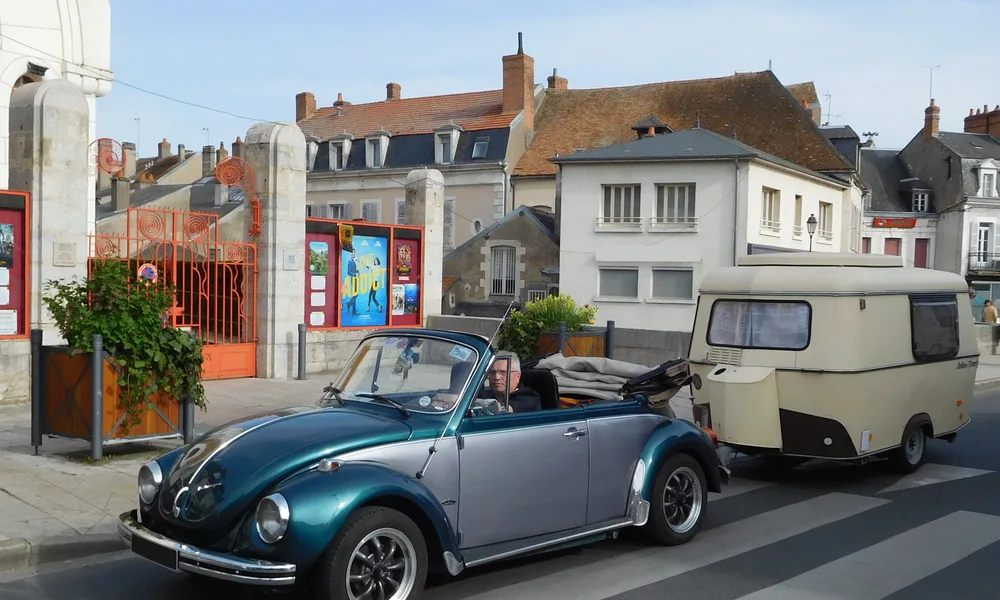
Comparison table: the worst caravans of 2026
| Rank | Caravan type | Main fault | Warning sign |
|---|---|---|---|
| 1 | The Damp Shell | Leaks, rot and soft floors | Musty smell, stained walls |
| 2 | The Sagging Chassis | Bent frame, bad towing | Sway at speed, uneven tyres |
| 3 | The Kitchen in Name Only | One ring, no water, no fridge | No worktop, no storage |
| 4 | The Bed That Is Not a Bed | Too short, too narrow, too hard | Feet over the end, thin cushions |
| 5 | The Freezing Box | No insulation, no heating | Condensation, cold walls |
| 6 | The Overloaded Tourer | Too heavy for its own axle | No payload left, sagging hitch |
| 7 | The Ancient Relic | Perished seals, no spares | Cracked windows, dead electrics |
The worst caravans of 2026
1. The Damp Shell: the worst caravan of all
Water is the enemy of every caravan, and the Damp Shell is the one that has already lost. The roof seams have dried out, the window rubbers have shrunk, or the skylight has been resealed with the wrong stuff, and rain has been getting in for years. Inside, the signs are plain: brown stains around the windows, wallpaper that bubbles or peels, a floor that feels soft under your heel, and a smell that no amount of airing will shift. Press the floor near the door and under the windows, and look behind the cushions. A damp caravan is not a bargain at any price: the rot spreads and the repair means stripping the whole side. If the floor moves under your foot, walk away.
2. The Sagging Chassis: a trailer that will not tow straight
A caravan lives or dies by its chassis, and the Sagging Chassis is the one that has been bent, overloaded or left standing in a wet field for a decade. The signs show up before you even hitch up: the body sits lower on one side, the tyres wear on one edge, the door sticks, and the jockey wheel strains. On the road it is worse: the outfit sways when a lorry passes and snakes on a downhill stretch. Check underneath with a torch: flaking rust, cracked welds and a bent drawbar are all reasons to stop. A caravan that will not tow straight is not a holiday, it is a hazard.
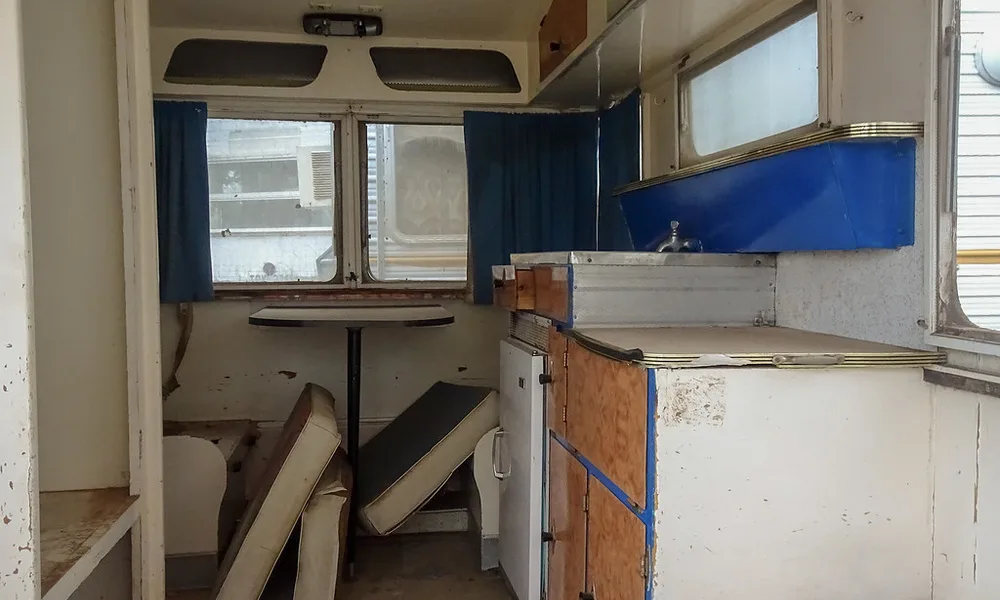
3. The Kitchen in Name Only: one ring, no water, no fridge
Every caravan brochure promises a kitchen, and the Kitchen in Name Only is the one where the promise ends at a single gas ring. There is no worktop worth the name, no sink with running water, no fridge that holds temperature, and nowhere to put a pan down hot. Cooking becomes a juggling act, and food that needs keeping cold goes in a cool bag that gives up by noon. A caravan kitchen does not need to be large, but it needs a hob with two rings, a sink that drains, cold storage that works, and a surface to chop on. If you cannot make a pot of tea and a plate of toast at the same time, it is not a kitchen.
4. The Bed That Is Not a Bed: too short, too narrow, too hard
Sleep is half of any caravan holiday, and the Bed That Is Not a Bed ruins it from the first night. The fixed bed is too short for anyone over average height, so feet hang over the end; the dinette conversion is too narrow, so two people sleep like sardines; the cushions are thin foam over hard board, so hips and shoulders ache by morning. Lie on it before you buy, in your sleeping position, for five minutes. If your feet reach the end, if the cushions gap, or if you can feel the board through the foam, the nights will be worse than the days.
5. The Freezing Box: no insulation, no heating, no chance
The Freezing Box looks fine on a warm afternoon and turns miserable the moment the sun goes down. The walls are single skin with no insulation, the windows are thin and draughty, and the heater is either missing, broken, or a small fan that warms one corner and leaves the rest cold. In spring and autumn this is not a minor discomfort, it is the difference between a holiday and an endurance test. Check for a working blown-air heater or a proper gas fire, and look for vents that actually move air. A caravan that cannot hold heat is usable for only a few weeks a year.

6. The Overloaded Tourer: too heavy for its own good
The Overloaded Tourer is the caravan that was full before anyone packed a bag. The maker fitted a heavy bathroom, a big fridge and a fixed bed, and left almost no payload for clothes, food, water and an awning. Owners then add a bike rack, a motor mover and a full water tank, and the axle runs at its limit every single trip. The signs are a weight plate that leaves almost nothing, tyres that bulge, and brakes that fade on a long hill. Overloading wears the running gear out, voids the insurance, and makes the outfit unstable in a crosswind. Read the plate before you fall in love with the layout, and leave a margin. If the numbers do not work on paper, they will not work on the road.
7. The Ancient Relic: thirty years old and held together by hope
Old caravans can be charming, and the Ancient Relic is the one where the charm ran out a decade ago. The window seals have perished, the roof has been patched so many times it looks like a map, the electrics trip at random, and the gas fittings are the kind no fitter will touch. Spare parts no longer exist, so every repair is a hunt through breakers yards and every fix is a bodge. Some relics can be saved by a skilled owner with time and money, but as a first caravan they are a project, not a purchase. If you want a project, buy a project and pay project money. If you want a holiday, buy a caravan that works.
What to avoid when buying or hiring a caravan
The most common caravan regret is not a bad model but a rushed purchase: a van bought in the rain, at dusk, from a seller who needs it gone by the weekend. Avoid the trap by checking four things before you pay: the floor for soft spots, the roof seams and windows for leaks, the tyres for age cracks and the correct load rating, and the weight plate for a payload that covers your real luggage. Ask for the service history and the tyre ages. The same checks work for the tow car too, and our guide to the towing vehicles to avoid makes the same point about matching the outfit, because a caravan is only as safe as the car in front of it.
Checklist: buying or hiring a caravan
- Press the floor by the door, under the windows and in the bathroom, and walk away if it gives or feels spongy.
- Check the roof seams and window rubbers for cracks and fresh sealant hiding old leaks.
- Read the tyre sidewalls for age and load rating, and budget for new tyres if they are over seven years old.
- Read the weight plate, add up your real luggage, and make sure the payload leaves a margin.
- Lie on the bed and stand at the hob before you buy, in the positions you will actually use.
- Test the heater, the fridge, the taps, the lights and the brakes, and ask for the service history.
Frequently asked questions
What makes a caravan bad?
Damp above all, then a weak chassis, bad towing, a useless kitchen and a bed you cannot sleep in.
How do I check a caravan for damp?
Press the floor near the door and under every window, look for brown stains and peeling wallpaper, and smell the air inside with the door shut. A damp meter helps, but your heel and your nose will find most of it.
Is an old caravan worth buying?
Only if it is dry, straight and complete, and only at a price that leaves money for tyres, a service and the things that will break. A cheap old caravan that needs a new floor is not cheap.
What noseweight should a caravan have?
Around five to seven percent of the loaded weight, within the tow car’s limit. Too little and the outfit sways, too much and the car sags.
Can a caravan with no heating still be used?
In high summer, yes, but in spring and autumn you will fight condensation and cold nights. A working heater is one of the cheapest comforts a caravan can have, and its absence should cut the price.
How old is too old for caravan tyres?
Seven years is the usual limit, whatever the tread looks like. Read the four-digit date code on the sidewall: the first two digits are the week, the last two are the year.
Bottom line
The worst caravans of 2026 are the ones that let water in, will not tow straight, or cannot feed and sleep the people inside them. Check the floor, the roof, the tyres and the weight plate before you pay, lie on the bed and stand at the hob, and buy the dry, straight, honest van instead of the shiny one with a freshener plugged in. A good caravan is boring in the best way: it tows straight, stays dry, and lets you wake up rested.


