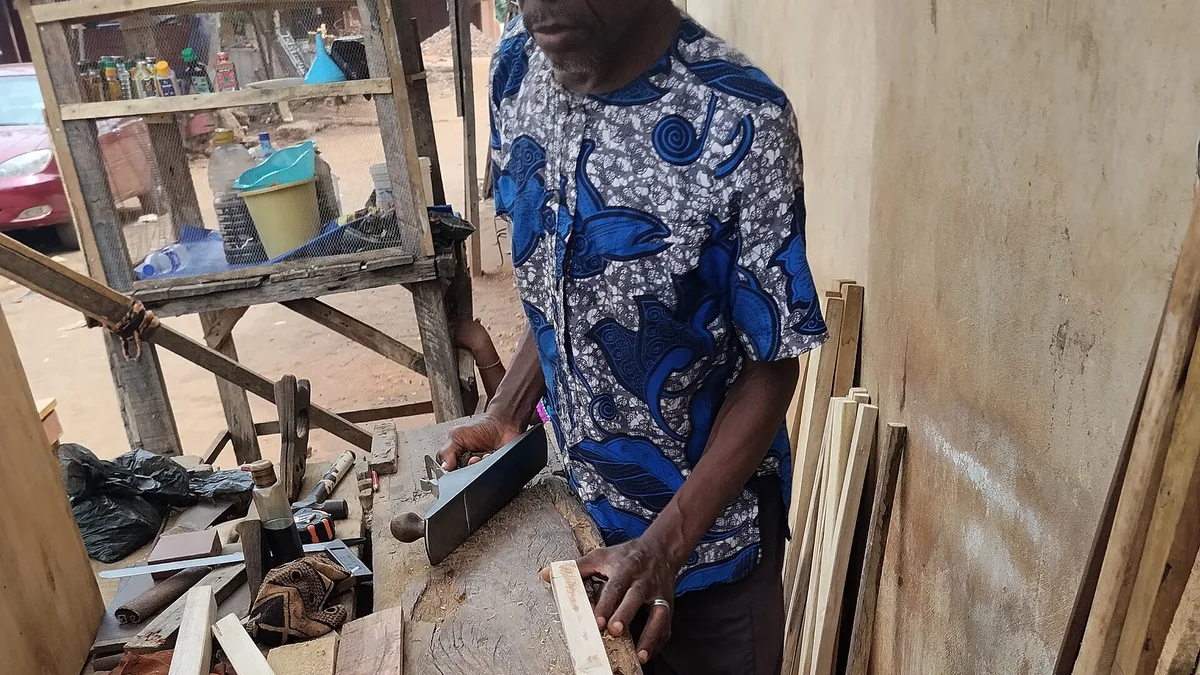
Steer Away From the Worst Carpenters of 2026: Seven Timber Workers Whose Joints, Doors and Stairs Let You Down
The worst carpenters of 2026 do not look like trouble when they first measure your doorway. They nod at the old door, name a price per door and promise the new one hung by the weekend. They carry a tape, a pencil and a confident manner, and none of those tells you whether the door will still shut properly in a month. The trouble shows up later: the door sticks every damp morning, the joints open up, the stairs creak on every tread.
Key takeaways
- A door that sticks, a joint that opens or a stair that creaks is not settling in; it is work that was never right.
- Good carpentry is measured, not guessed, so ask how the work will be marked out and checked before a single cut is made.
- Cheap timber warps and splits, so ask what wood is being used and get it in writing before you pay.
- Get the price in writing per door, per metre or per job, including the fixings and the finishing, and agree what counts as an extra.
- Walk away from any carpenter who will not show you finished work, will not put the price in writing, or wants most of the money up front.
How the worst carpenters of 2026 were chosen
Every type below was scored on five measures. Fit and finish comes first: do doors shut cleanly, joints stay tight and stairs feel solid underfoot? Measuring is second: does the carpenter measure twice and cut once, or does he cut first and fill the gaps later? Materials are third: is the timber straight, dry and right for the job, or warped, knotty and cheap? Honest pricing is fourth. Aftercare is fifth.
Two notes before the list. First, no single carpenter is named as the worst, because the same bad patterns appear in many places, and what matters is learning to recognise them wherever you book. Second, this guide is about carpentry on site: first fix work such as floor joists and stud walls, and second fix work such as doors, skirting, stairs and fitted furniture. Joiners make pieces in a workshop, and fence builders work outdoors. Whole-house building work is a different job, and our guide to the worst builders of 2026 covers that, while the trade that builds your boundary is covered in our guide to the worst fence builders of 2026.

Comparison table: the worst carpenters of 2026
| Rank | Carpenter type | Main fault | What it costs you |
|---|---|---|---|
| 1 | The wonky-door carpenter | Doors hung out of square, hinges wrong | Doors that stick, drag and will not latch |
| 2 | The gappy-joint carpenter | Mitres and joints cut loose, glued not fixed | Joints that open within months |
| 3 | The squeaky-stair carpenter | Treads loose, risers short, rails wobbly | Stairs that creak and bounce |
| 4 | The measure-once carpenter | Cuts wrong, fills the gaps with filler | Wasted timber and bodged finishes |
| 5 | The cheap-timber carpenter | Warped boards and knots where hardwood was promised | Furniture that twists and splits |
| 6 | The quote creeper | Low quote, then extras per door and metre | A bill far above the agreed price |
| 7 | The never-finishes carpenter | Snagging promised, never done, phone unanswered | You pay someone else to finish it |
The worst carpenters of 2026
1. The wonky-door carpenter: a door that fights you every morning
The wonky-door carpenter is the most expensive type on this list, because a bad door is something you touch every day. He hangs the door out of square, sets the hinges shallow or deep, and leaves a gap you can see daylight through on one side while the other side rubs the frame. The door sticks on damp mornings, the latch misses the strike plate.
A good carpenter checks the frame is square before the door goes anywhere near it, sets the hinges in cleanly and tests the door from both sides before he packs up. Ask him to open and shut every door with you before you pay, and check the gaps are even all round.
2. The gappy-joint carpenter: mitres that open like mouths
The gappy-joint carpenter cuts his mitres loose and hopes the glue and the paint will hold them. They will not. Skirting mitres open at the corners, architrave joints show a dark line within weeks, and fitted shelves pull away from the wall as the glue gives up.
Tight joints are cut, not filled. A good carpenter marks out carefully, cuts to the line and checks the fit dry before any glue goes near the timber. Look at the corners of the skirting and the architrave before you pay, and run your finger along the joint: a tight joint feels like one piece of wood, and a filled joint feels like a crack waiting to open.

3. The squeaky-stair carpenter: every tread tells on him
The squeaky-stair carpenter builds stairs that announce every trip up and down them. The treads are loose on their housings, the risers are short, the newel posts wobble, and the handrail flexes when you lean on it.
Stairs should be glued, screwed and wedged, not just nailed and hoped for. A good carpenter checks every tread for bounce before the carpet or the finish goes on, and fixes the balustrade so it does not move when you grip it. Walk up and down the stairs before you pay, and listen for creaks.
4. The measure-once carpenter: cut wrong, fill the gap
The measure-once carpenter measures in a hurry, cuts with confidence and fills the difference with filler. His shelves are a few millimetres short, his door frames need packing on one side, and his fitted cupboards leave gaps that no amount of caulk can hide.
Measuring is the job, not the part before the job. A careful carpenter measures twice, marks clearly and cuts to the line, and he checks his measurements against the room rather than trusting the first number he wrote down. Ask to see the measurements written down, and check a few yourself with a tape.
5. The cheap-timber carpenter: hardwood on the quote, softwood on the job
The cheap-timber carpenter wins the job on price and loses it on materials. The quote says hardwood, the delivery is softwood full of knots; the quote says dry timber, the boards arrive damp and warp as they dry in your home. Shelves sag, doors twist, and fitted furniture splits along the grain within a year.
Ask what timber is being used, how dry it is and where it is coming from, and get it in writing before any work starts. Good timber is straight, dry and free of large knots, and it costs what it costs.

6. The quote creeper: the price grows door by door
The quote creeper wins the job with a low price and then recovers the difference, and more, through extras. The first door costs what was agreed, the second needs new hinges, the skirting is charged by the metre, the architrave is extra, and the finishing appears on the bill as a line of its own. Each extra is small enough to argue about, and by the end the final bill bears no relation to the quote you accepted.
A proper quote lists every door, every metre of skirting and every piece of fitted furniture, and says what is included: the timber, the fixings, the fitting and the finishing. Ask for the price in writing, and agree that any extra must be quoted and approved by you before the work is done, never billed afterwards.
7. The never-finishes carpenter: snagging that never happens
The never-finishes carpenter starts well and then slowly disappears. The doors are hung, the shelves are up, and then the snagging list is never touched: the filler is not sanded, the last door is not adjusted, the shelf brackets are never painted. He is always about to return, always finishing another job first, always waiting on materials.
Good carpenters finish what they start, and they say so in writing. Agree a snagging list before the final payment, with a date for the return visit, and hold back a sum until the list is done. Pay in stages tied to finished work, never most of the money up front.
Before you book a carpenter: six checks
- Look at finished work: open and shut the doors, and feel the joints and the skirting.
- Ask what timber will be used, how dry it is, and get the species and the grade in writing.
- Get the price in writing per door or per job, including timber, fixings and finishing, with extras agreed in advance.
- Agree stage payments tied to finished work, with the final sum only when the snagging list is done.
- Check the stairs for bounce and creaks, and the handrail for movement, before the carpenter leaves.
- Ask who cleans up the sawdust and offcuts, and who takes the old doors and timber away when the job ends.
Frequently asked questions
What is the difference between a carpenter and a joiner?
A carpenter fits timber on site: doors, skirting, stairs, floor joists and fitted furniture in your home. A joiner makes timber pieces in a workshop, such as windows, doors and staircases, which are then fitted on site.
Why does my new door stick?
Usually because the door was hung out of square, the hinges were set unevenly, or the timber was damp when it was fitted and has moved since. A door should have an even gap all round the frame.
Why do skirting mitres open up?
Because the mitre was cut loose and filled instead of cut tight, and the timber has moved as the heating dried it out. A tight mitre stays shut; a filled one opens.
How do I stop my stairs creaking?
Find out what is moving before you do anything else. Most creaks come from a tread that is loose on its housing or a riser that has shrunk. Screwing and gluing from underneath usually fixes it, if you can get underneath.
What should a carpentry quote include?
Every door, every metre of skirting and every piece of fitted furniture, the timber, the fixings, the fitting and the finishing, with the price for each part written down. Extras should be named in advance, not discovered on the bill.
Should I supply the timber myself?
Usually not. A carpenter who supplies the timber is responsible for its quality, and he knows which yard sells straight, dry boards. Agree the timber in writing instead, and let the carpenter stand behind it.
Bottom line
The worst carpenters of 2026 share one habit: they measure in a hurry, cut in a hurry and leave you paying for the gaps. Check finished work with your own hands, get the price and the timber in writing, pay in stages, and remember that a carpenter who measures twice and cuts once is worth waiting for. and walk away from any carpenter who rushes you, guesses his measurements or wants most of the money before a single board is cut. Our guide to the worst handymen of 2026 shows the same warning signs in the trade that picks up the small jobs afterwards.