Why the Best Wrist Wraps in 2026 Are Worth Wearing for Heavy Lifts
The best wrist wraps in 2026 are worth wearing because they do one simple job very well: they hold your wrist straight and steady when the bar gets heavy, so the weight goes through your forearm instead of bending your wrist backwards. A wrist wrap is a strip of stiff fabric that winds around your wrist and fastens with velcro, and it turns a joint that was never built to hold a heavy bar overhead into a joint that can. This guide explains which type suits which lift, how to wrap them, and when to leave them in your bag.
Key Takeaways
- Wrist wraps support the wrist joint; they do not replace grip strength, good technique, or a strong forearm.
- Stiff wraps suit heavy pressing and Olympic lifts, while flexible wraps suit general training and higher-rep work.
- Wrap snugly across the wrist joint and fasten the velcro so it cannot slip.
- Measure your wrist and check the length: 30 to 45 centimetres suits most lifters, longer wraps suit bigger wrists and heavier lifts.
- Wear wraps only for your heaviest sets, and train without them the rest of the time so your wrists keep getting stronger.
What a Wrist Wrap Actually Does
Your wrist is a small joint made of eight little bones, and when you press a heavy bar overhead, the weight pushes your hand backwards and bends the wrist into extension. A little bend is normal and harmless, but under a heavy bar the bend grows, the wrist starts to hurt, and the force that should be driving the bar upward leaks away through a joint that is giving way. A wrist wrap stops that bend. Wound tightly around the wrist, the stiff fabric acts like a splint: it resists the backward bend, keeps the wrist close to straight, and lets the forearm bones carry the load in a straight line from elbow to bar.
The difference is easy to feel. Press a heavy weight without wraps and your wrists will ache, your hands will wobble, and you will find yourself thinking about your wrists instead of the lift. Put wraps on for the same weight and the bar feels steadier, the press feels stronger, and the ache after the set is gone. Your muscles still do all the work; the wrap simply holds the joint where they work best.
The Main Types of Wrist Wrap
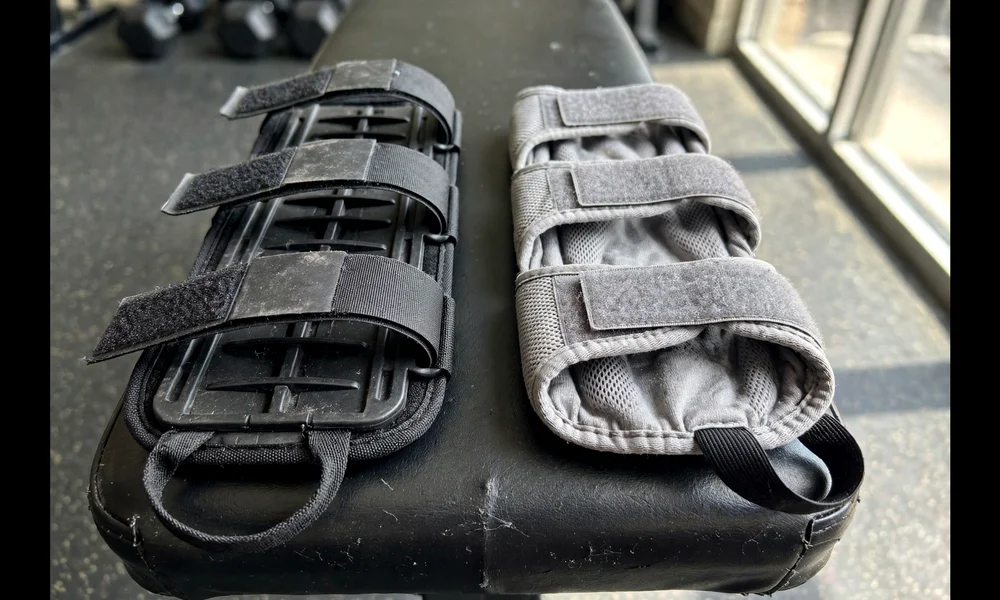
Wrist wraps come in a handful of styles, and the stiffness of the fabric is the choice that matters most. A wrap that is too stiff for your training will feel like a cast and slow you down, while a wrap that is too soft will stretch under load and give you nothing.
Stiff wraps
Stiff wraps are made from thick, barely stretchy fabric, and they are the best choice for heavy pressing, powerlifting and Olympic lifting. They hold the wrist almost completely rigid, which is exactly what you want under a maximal bench press or a heavy jerk, where any bend in the wrist costs you the lift. They feel restrictive and take longer to put on. Buy stiff wraps if your heaviest sets are the reason you are buying wraps at all.
Flexible wraps
Flexible wraps are made from stretchy elastic fabric, and they are the best choice for most lifters. They give firm support while still letting the wrist move a little, so they suit higher-rep pressing, dumbbell work, push-ups and general gym training. A flexible wrap is quicker to put on, more comfortable to wear for a whole session, and forgiving if you wrap it slightly too tight or too loose. A flexible wrap will stretch under a truly maximal load.
Cotton and hybrid wraps
Cotton wraps are the traditional choice: soft, breathable and comfortable, with a thumb loop that keeps the wrap from sliding down your hand. They suit lifters who want light support for long sessions and who find elastic wraps too hot or too tight. Hybrid wraps mix cotton with elastic to give a middle ground — more support than pure cotton, more comfort than a stiff competition wrap. Neither will hold a wrist rigid under a maximal lift, so treat them as everyday support.
Wraps with a thumb loop
Most wrist wraps have a thumb loop, a small loop of fabric that hooks over your thumb while you wind the wrap around your wrist. The loop stops the wrap sliding down your hand between sets and keeps it in place while you tighten it. A wrap without a thumb loop is quicker to take on and off, but it needs re-tightening more often.
The Best Wrist Wraps of 2026 Compared
The table below compares the main types on stiffness, best use and length.
| Wrap type | Stiffness | Best for | Typical length | Watch out for |
|---|---|---|---|---|
| Stiff competition wrap | Very stiff, almost no stretch | Maximal bench and overhead press | 60 to 90 cm | Feels like a cast, slow to put on |
| Flexible elastic wrap | Medium, some stretch | General training, higher reps | 30 to 45 cm | Stretches under maximal loads |
| Cotton wrap | Soft, gentle support | Long sessions, light support | 30 to 45 cm | Too soft for heavy lifts |
| Hybrid cotton-elastic wrap | Medium-firm | Everyday lifting, most lifters | 45 to 60 cm | Neither the stiffest nor the softest |
| Short training wrap | Medium | Beginners, smaller wrists | 30 cm | Too short for big wrists |
| Long powerlifting wrap | Very stiff | Competitive powerlifting | 90 to 100 cm | Overkill for general training |
How to Wrap Your Wrists Properly
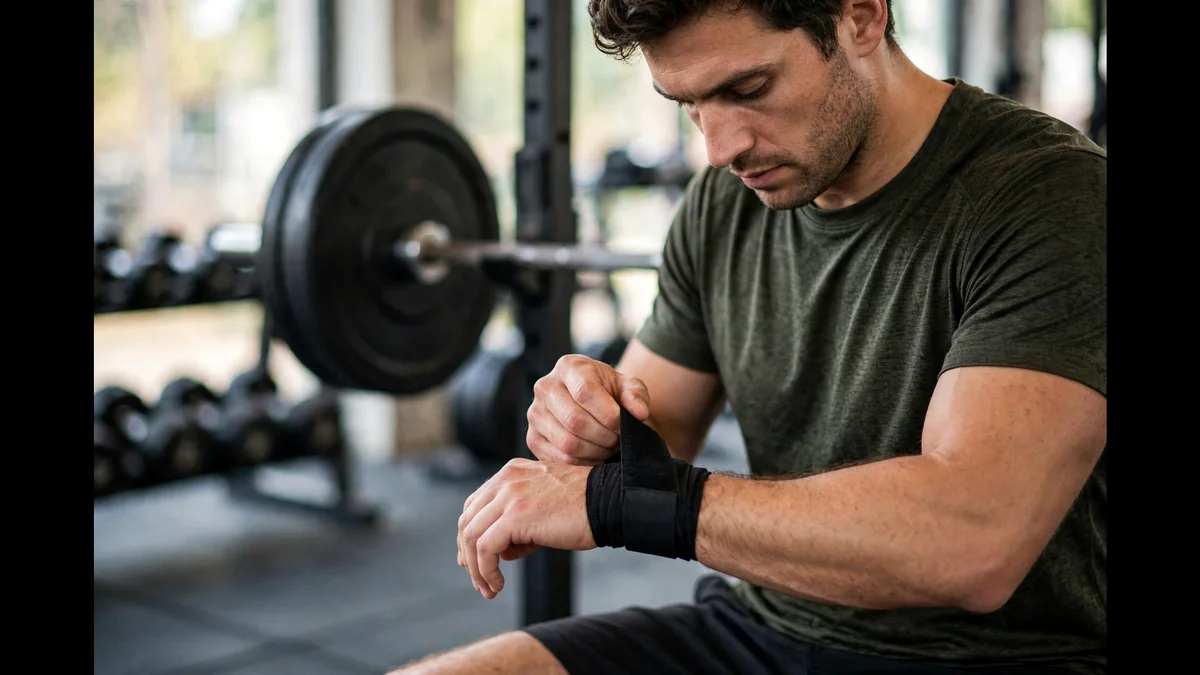
Wrapping well takes thirty seconds once you have done it a few times, and it is worth learning properly, because a badly wrapped wrap is worse than no wrap at all: it slides, it pinches, and it gives you false confidence under a heavy bar. Start with the thumb loop over your thumb and the wrap on the inside of your wrist. Wind the wrap around your wrist two or three times, keeping each turn snug against the last, and finish with the wrap sitting across the wrist joint itself — half on the forearm, half on the base of the palm — so it bridges the joint it is meant to support.
The tightness should feel firm and supportive, not painful. You should be able to make a fist and spread your fingers without the wrap cutting into your hand, and your fingers should not go numb or turn white. If they do, the wrap is too tight: loosen it one turn and try again. Fasten the velcro flat, with no loose end flapping, and check that the wrap has not twisted, because a twisted wrap digs in and slips.
Sizing: Length, Width and Fit
Wrist wraps are sold by length, and length is the sizing that matters. A wrap of 30 to 45 centimetres suits most lifters: it winds around the wrist two or three times and gives firm support without a long tail of fabric to tuck away. Longer wraps of 60 to 90 centimetres wind four or five times and give a stiffer, more rigid hold, which suits bigger wrists and heavier lifts, but they take longer to put on and feel bulkier.
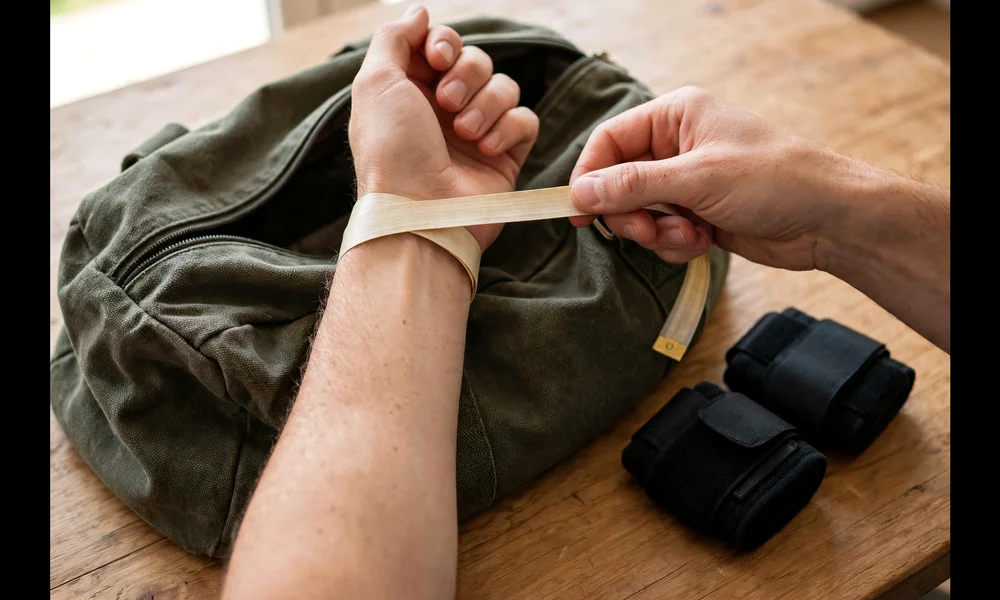
To choose, measure around your wrist with a soft tape, just above the bony bumps on either side, and check the maker’s size chart. If you are between lengths, go longer if you lift heavy and want maximum stiffness, and go shorter if you want a quick, comfortable wrap for general training. Most wraps are eight to ten centimetres wide, which suits almost everyone.
When to Wear Wraps, and When Not To
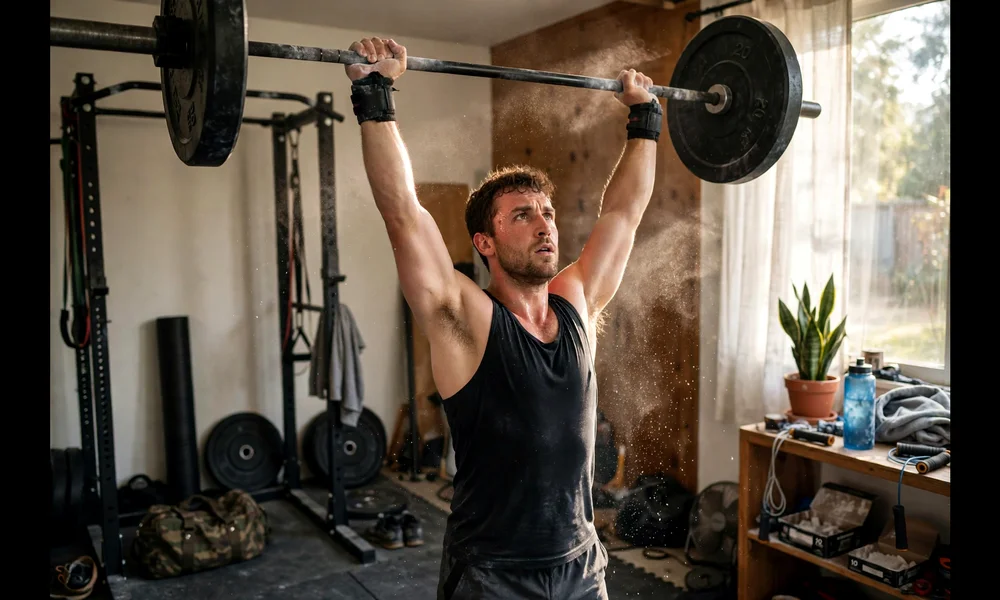
The rule is simple: wear wraps for your heaviest sets, and train without them the rest of the time. A good guide is to put them on for sets above roughly eighty percent of your one-rep maximum, for heavy overhead work, and for any lift where your wrists have hurt before. Take them off for warm-ups, for light and moderate sets, for pulling work such as rows and deadlifts, and for anything where you need your wrists to move freely.
Wraps are part of a wider kit, not a solution on their own. Our guide to the best weightlifting belts explains how a belt helps you brace for the same heavy sets. Our guide to the best workout gloves covers the gloves that pair with wraps, though a short glove strap is no substitute for a full wrap. Our guide to the best knee sleeves covers the matching support for your knees.
There are times when wraps are the wrong answer entirely. If your wrist hurts during everyday tasks, not just under a bar, see a doctor or a physiotherapist before you buy wraps, because a wrap can hide an injury that needs treatment. If your wrists hurt because your pressing technique puts the bar behind your wrist instead of over it, fix the technique first: no wrap will save a wrist that is bent backwards by a bar sitting in the wrong place.
Wrist Wrap Buying Checklist
- Stiffness matches your lifting: stiff for maximal pressing, flexible for general training and higher reps.
- Length suits your wrist: 30 to 45 centimetres for most lifters, longer only for big wrists and very heavy lifts.
- Velcro is wide, strong and sewn flat, with no loose end that peels open under load.
- Thumb loop is present and comfortable, and the wrap stays in place while you tighten it.
- Fabric is breathable and washable, with no rough seams that rub the wrist raw over a long session.
- You can make a fist and spread your fingers with the wrap on, with no numbness or loss of colour in the hand.
Frequently Asked Questions
Do wrist wraps make your wrists weaker?
Not if you use them properly. Wraps worn only for your heaviest sets protect the joint while your wrists keep getting stronger on every other set. Wraps worn for every set, including warm-ups, can leave your wrists undertrained,
How tight should wrist wraps be?
Firm and supportive, not painful. You should be able to make a fist and spread your fingers, and your fingers should not go numb or turn white. If the wrap cuts in or your hand tingles, loosen it one turn.
Can I use wrist wraps for bench press?
Yes, and the bench press is one of the best uses for them. A heavy bench press bends the wrist backwards under the bar, and wraps hold the wrist straight so the force goes through your forearm.
Are wrist wraps allowed in powerlifting competitions?
Yes, in most federations, with limits on length and rules about the thumb loop. Most federations allow wraps up to one metre long, and many require the thumb loop to be removed or tucked away once the wrap is on.
How do I wash wrist wraps?
Wash them by hand or on a gentle cycle in a laundry bag, with mild soap and cold water, and let them air dry fully before your next session. Do not tumble dry them, because the heat weakens the elastic and the velcro.
Do I need wrist wraps as well as gloves?
Most people do not need both for general training. Gloves protect your palms and improve grip, while wraps support the wrist joint under heavy loads. If you lift heavy overhead or your wrists hurt under load, add wraps even if you wear gloves.
The Bottom Line
The best wrist wraps in 2026 are worth wearing because they hold your wrist straight when the bar gets heavy, and a straight wrist is a strong wrist. Buy the stiffness that matches your lifting, size the length to your wrist, wrap them snugly across the joint, and wear them only for your heaviest sets. Do that, and your wrists will thank you.


