
Best Step Platforms for Home Workouts That Actually Get Used in 2026
The best step platforms in 2026 are the ones you actually use three times a week, not the ones with the most features on the box. A step platform is a flat, height-adjustable block you step up onto and down from, and it is the cheapest serious piece of home exercise equipment there is: no motor, no subscription, no assembly, and it slides under a bed when you are done. It raises your heart rate fast and works legs hard without the pounding that makes running miserable for sore knees. This guide compares the platforms worth buying, explains what to check before you order, and picks the best step platforms for home workouts that actually get used in 2026.
Key Takeaways
- A step platform is the cheapest serious home workout: one flat block, no motor, no subscription, and it stores under a bed.
- Height matters more than brand: start at 10 centimetres, add risers only when the step feels easy, never jump straight to the top setting.
- Grip is safety: a textured, non-slip top and rubber feet matter more than colour, weight or any extra feature.
- Size the platform to your feet and your room: at least 90 centimetres long, wide enough for both feet side by side.
- Pair the platform with light dumbbells for a full workout, and progress slowly, because knees complain about enthusiasm, not effort.
Step Platforms at a Glance
| Type | Heights | Best for | Weak point |
|---|---|---|---|
| Adjustable with risers | 10, 15, 20 cm | Growing with fitness | Risers can slip if cheap |
| Fixed-height step | 10 or 15 cm | Beginners, small flats | No progression |
| Large aerobic deck | 10 to 20 cm | Classes, wide moves | Heavy, hard to store |
| Mini step | 10 cm | Tiny spaces, travel | Too narrow for wide steps |
| Step with dumbbell set | 10, 15 cm | Full-body workouts | Costs more, more to store |
The Main Types of Step Platform
Step platforms look simple, and they are, but the differences between them decide whether you use the thing or trip over it in the hallway for a year. Five types cover the market.
Adjustable Platforms with Risers
Adjustable platforms are the standard, and the best choice for most people. The deck sits on stackable risers, usually two per side, so the height goes from about 10 centimetres with no risers to 15 with one set and 20 with two. That adjustability is the whole point: you start low, build fitness, and raise the step when the workout stops feeling hard, instead of buying a new platform every few months. Check the risers lock firmly and the deck has rubber feet.
Fixed-Height Steps
Fixed-height steps are a single moulded block, usually 10 or 15 centimetres high, with no parts to lose and nothing to assemble. They suit beginners who want the simplest possible start, and small flats where a platform lives under the sofa and comes out for twenty minutes a day. The drawback is obvious: there is no progression. Once 15 centimetres feels easy, the only way to make the workout harder is to go faster or add weights. Buy fixed only for a gentle, steady routine.
Large Aerobic Decks
Large aerobic decks are the wide platforms used in gym classes, around 110 to 120 centimetres long and up to 45 wide, with room for lateral steps, turns and wide stances. They suit step-aerobics videos and home classes, where feet must never hang off the edge. The price is size and weight: a large deck is heavy to move and awkward to store, and it needs a clear floor area of at least two metres by two metres to use safely.
Mini Steps
Mini steps are short platforms, around 60 to 70 centimetres long, made for tiny spaces, caravans and travel. They work for basic stepping and for older users who want a low, stable step for gentle exercise, but they are too narrow for proper step aerobics, and your feet will feel cramped the moment you try anything faster than a walk. Treat a mini step as a compromise for a small flat, not as a first choice.

What to Check Before You Buy
Most step platform regrets come from buying the cheapest block on the page. The differences that matter are grip, stability, height and size.
Grip and the Top Surface
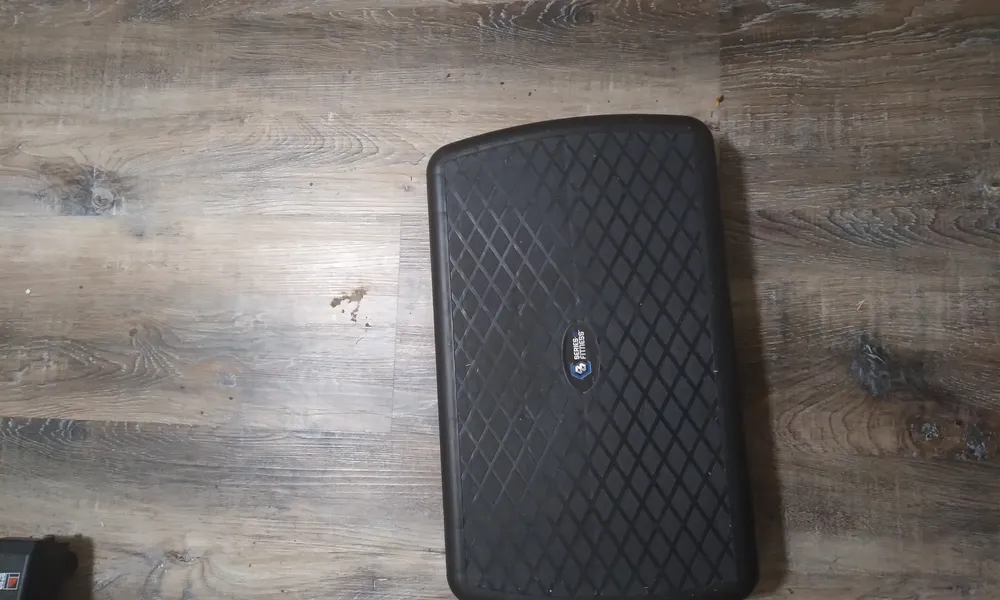
Grip is safety, and it matters more than any other feature. The top surface should be textured, rubberised or dimpled across the whole deck, not just in the middle, because sweaty feet slip, and a slip from a 20-centimetre step at speed hurts. If it feels smooth or glossy on arrival, send it back. Rubber feet on the base are non-negotiable; without them the platform slides on hard floors. Our guide to the best ellipticals of 2026 makes the same point about knee-friendly cardio: a step platform works your legs hard without pounding your joints.
Height and Risers
Height is the training variable, so buy a platform that grows with you. Start at 10 centimetres, whatever your fitness level, and add a riser only when you can step for twenty minutes without your form falling apart. Jumping straight to 20 centimetres is the most common beginner mistake, and it is how knees get hurt. Check the riser system: the risers should click or slot firmly into the deck and into each other, with no wobble when you press a corner. Risers that just sit under the deck will shift, especially on a smooth floor.
Size, Weight Rating and Stability
Size the platform to your feet and your stride. A deck shorter than 90 centimetres feels cramped for anyone over average height, and a deck narrower than 35 centimetres leaves no margin when you step up tired. Check the weight rating and add a margin: a platform rated to 150 kilograms is fine for most users, but if you plan to use it with a weighted vest or heavy dumbbells, look for 200 kilograms or more.
Storage and Noise
A step platform you cannot store is a step platform you stop using, so check the footprint before you buy. Standard adjustable platforms slide under most beds and stand upright behind a door; large decks do not, and they end up as a permanent trip hazard in the hallway. Noise matters in a flat: a hard deck thuds with every step. A rubber mat underneath cuts the noise and stops the platform sliding, and it costs less than a single takeaway.
The Best Step Platforms in 2026
There is no single best step platform, because the best one depends on your space and your knees.
Best Overall: Adjustable Platform with Locking Risers
The best step platform in 2026 is a standard adjustable deck with locking risers, a textured non-slip top and rubber feet, rated to at least 150 kilograms. It starts at 10 centimetres and rises to 20, so it grows with your fitness for years, it stores under a bed, and it costs less than a month of gym membership.
Best for Beginners: Fixed 10-Centimetre Step
For a first platform, a fixed 10-centimetre step is the best buy. There is nothing to assemble, nothing to adjust and nothing to get wrong, and the low height is kind to knees that have not stepped in years. It gets you moving three times a week, which is the habit that matters.
Best for Small Spaces: Mini Step with a Mat
For a tiny flat, a mini step paired with a rubber mat is the best compromise. It stores in a cupboard, comes out for a twenty-minute session, and the mat stops it sliding on a wooden floor. Accept the narrow deck for what it is, keep the moves simple and the height low, and it will do a real job in a small space.
Best for Full Workouts: Adjustable Platform with Dumbbells
For a full-body home workout, an adjustable platform bundled with light dumbbells is the best value. The step handles the cardio and the legs, the dumbbells add arms, shoulders and back, and together they replace a rack of equipment. Our guide to the best dumbbells of 2026 covers the weights themselves: a step plus dumbbells is a home gym that fits in a cupboard.
A Simple Step Platform Routine
A step platform works best with a simple routine you can repeat, not a complicated programme you abandon. Start with five minutes of gentle stepping at 10 centimetres to warm up, then twenty minutes of steady up-down stepping, alternating the leading foot every minute, then five minutes of slow stepping to cool down. Do that three times a week for a month before you touch the height. When twenty minutes feels easy, add one riser, not two, and drop back to fifteen minutes while your knees adjust. Stop if your knees hurt rather than ache: ache fades, pain does not. A stair climber does a similar job with more resistance and a bigger footprint, but nothing beats a platform for simplicity.

Step Platform Checklist
- Buy an adjustable deck with locking risers, starting at 10 centimetres high.
- Check the top is textured and non-slip across the whole deck, with rubber feet underneath.
- Size the deck to at least 90 centimetres long and 35 wide, rated to 150 kilograms or more.
- Put a rubber mat underneath to stop sliding and cut noise, especially in a flat.
- Start low, add height one riser at a time, and alternate the leading foot every minute.
- Store the platform under a bed or behind a door, risers stacked, so it never becomes clutter.
Frequently Asked Questions
Are step platforms good for weight loss?
Yes, if you use them regularly. Twenty minutes of steady stepping burns a meaningful number of calories, and three sessions a week adds up to real weight loss over months, especially paired with sensible eating. The platform is not magic, but it is consistent, and consistency is what loses weight.
Are step platforms bad for your knees?
They are kinder than running, but only at the right height. Start at 10 centimetres, keep your whole foot on the deck, step down softly rather than dropping, and stop if you feel sharp pain. People with existing knee problems should check with a doctor first.
How long should a step platform workout last?
Twenty to thirty minutes is enough for most people, including a five-minute warm-up and cool-down. Beginners should start with ten to fifteen minutes and build up over a month. A tidy twenty minutes beats a sloppy forty.
Do I need risers, or is one height enough?
Risers are what make a platform last. One height is fine for a gentle routine, but your fitness improves, and when it does, a fixed height stops challenging you. Adjustable risers let the same platform grow with you for years.
Can I use a step platform on carpet?
Yes, and carpet is actually safer than a hard floor, because it grips the rubber feet and muffles noise. The platform may sink slightly into thick carpet, so check it sits level before you start. On hard floors, a rubber mat is essential to stop sliding.
What is the difference between a step platform and a mini stepper?
A step platform is a flat block you step up onto with your own body weight, while a mini stepper is a machine with pedals and hydraulic resistance that you stand on and push down. The platform is simpler, cheaper, quieter and easier to store.
The Bottom Line
The best step platforms in 2026 are simple, grippy and adjustable: a textured deck, locking risers, rubber feet and a weight rating with room to spare. Start at 10 centimetres, step three times a week, add height slowly, and pair the platform with light dumbbells when you are ready. It fits under a bed, and a platform you can see and reach is one you will actually use.


