
Top Outdoor Curtains That Turn a Patio Into a Private, Shaded Retreat in 2026
The best outdoor curtains in 2026 do something no other patio accessory can: they turn an open slab of paving into a room. Hung from a pergola beam, a gazebo frame or a simple wire, a length of weatherproof fabric softens hard edges, blocks a nosy sightline, filters harsh afternoon sun and stops a breeze cutting straight across the table. Outdoor curtains are not indoor curtains moved outside: indoor fabric rots in rain, while a proper outdoor curtain is made to be rained on and hosed down again. This guide compares the types worth buying, explains what to check before you order, and picks the outdoor curtains that turn a patio into a private, shaded retreat in 2026.
Key Takeaways
- Outdoor curtains must be weatherproof: solution-dyed acrylic or coated polyester lasts seasons, while indoor cotton rots within a year outside.
- Sheer curtains soften light and breeze; solid panels give real privacy and shade, so choose by the job, not the colour.
- Measure the drop and add fullness: panels totalling at least one and a half times the span look gathered, not stretched flat.
- Stainless or powder-coated hardware matters as much as fabric: cheap rings rust and stain the curtain within weeks.
- Tie-backs and weighted hems stop curtains becoming sails: plan for wind before the first storm, not after it.
Outdoor Curtains at a Glance
| Type | Best for | Fabric | Weak point |
|---|---|---|---|
| Sheer voile | Soft light, gentle breeze | Polyester voile | No privacy at night |
| Solid privacy | Blocking sightlines | Solution-dyed acrylic | Heavier, needs a strong rod |
| Waterproof | Rainy patios, exposed sites | Coated polyester, vinyl | Can feel plasticky, traps heat |
| Mesh and net | Insects, airflow | Fine polyester mesh | Little shade or privacy |
| Blackout outdoor | Sleep, full shade | Lined polyester | Darkens the space, heavy |
The Main Types of Outdoor Curtain
Outdoor curtains split into five families. Privacy, shade, rain, insects and decoration are different jobs; no single panel does all five well.
Sheer Voile Curtains
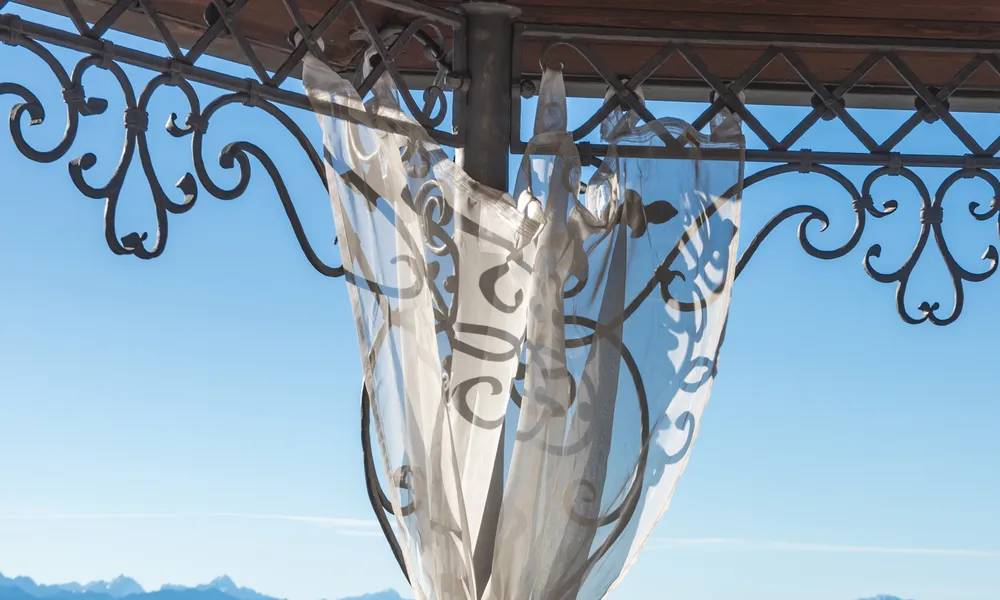
Sheer outdoor curtains are the lightest option and the most forgiving to live with. A polyester voile panel filters sunlight into a soft glow, lets the breeze through, and turns a hard-edged pergola into something finished. They give daytime privacy from a distance, but almost none at night once the patio lights are on: sheers are for light and atmosphere, not for hiding. They dry fast after rain and hang from a light rod or wire with no drilling, so they suit renters. Expect to replace them every two or three seasons, since even outdoor voile thins with sun.
Solid Privacy Curtains
Solid privacy curtains are the workhorse of the outdoor curtain world. Made from solution-dyed acrylic or heavy outdoor polyester, they block sightlines properly, cut glare, and give a patio the feeling of a walled room. Solution-dyed colour runs through the fibre, so it fades slowly and resists mildew when allowed to dry. Buy them when a neighbour’s window overlooks your table, or afternoon sun lands on the seating. They are heavier than sheers, so they need a proper rod fixed into solid timber or masonry, plus tie-backs, because a heavy panel in wind is a sail.
Waterproof Curtains
Waterproof outdoor curtains are for patios that get real rain, not just drizzle. Coated polyester and vinyl shed water instead of soaking it up, so seating stays usable in a shower and panels do not go musty. The price is feel: waterproof fabric is stiffer, rustles in wind, and traps heat on a still day. The smart use is partial: waterproof panels on the windward side, where rain actually arrives, and sheers or solid panels elsewhere. Check the seams, because water finds the stitching first, and look for a weighted hem to keep the bottom edge down in a gust.
Mesh and Net Curtains
Mesh curtains solve a different problem: insects. Fine polyester mesh keeps midges out while letting air move freely, ideal for evening meals in midge country. Mesh gives almost no shade or privacy, so layer it behind a solid or sheer panel for sun and neighbours. Check the edges for bound hems, since mesh tears more easily than woven fabric. On a gazebo, mesh panels turn the structure into a screened room, which is exactly what a gazebo is for on a still summer evening.

What to Check Before You Buy
Most outdoor curtain regrets come from buying the look before checking the fabric, the hardware and the measurements.
Fabric and Weatherproofing
Fabric is the decision that decides everything else. Solution-dyed acrylic is the best all-round outdoor fabric: it holds colour, resists mildew, dries quickly and feels like cloth rather than plastic. Outdoor polyester is cheaper and lighter, but fades faster and can feel stiff. Avoid anything labelled indoor, cotton or linen for permanent outdoor hanging; cotton absorbs water, goes grey with mildew, and rots at the fold lines within a season. Check the care label for UV and mould resistance rather than trusting the word weatherproof. Our guide to the best curtains of 2026 covers indoor fabrics, and the contrast is the lesson: what makes a curtain lovely indoors is what kills it outside.
Hanging Hardware
Curtains are only as good as what holds them up. Outdoor rods, wires and rails must be stainless steel, powder-coated metal or heavy-duty plastic, because bare steel rusts, and rust runs down a white panel in the first wet week and never washes out. Grommets should be rust-proof metal; a rusted one stains the fabric, then tears out. Rod pockets suit panels you leave in place; grommets slide easily and suit panels you open daily. Check a pergola beam first: light timber bows under wet solid panels.
Size, Drop and Fullness
Measure twice, because outdoor curtains cannot be trimmed the way indoor ones can. Measure the drop, and aim for the hem to hover a couple of centimetres above the paving, since pooling fabric rots fast. For width, panels totalling one and a half times the span look gathered; panels the exact width hang flat and thin. Buy panels in pairs per span, and order one spare, because dye lots change and a later replacement will never quite match.
Wind, Weight and Tie-Backs
Wind is the force that destroys outdoor curtains, and it is the one buyers forget on a calm shopping day. A flat panel in a gust is a sail, and the load goes straight to the rod, the brackets and the grommets. Weighted hems keep panels hanging straight, and tie-backs secure them to posts before a storm. If strong wind is forecast, tie panels back or take them down. On exposed sites choose light sheers over heavy solids, and space brackets closer than instructed, since wet fabric weighs far more than dry.
The Best Outdoor Curtains in 2026
There is no single best outdoor curtain, because the best panel depends on the job.
Best Overall: Solid Solution-Dyed Acrylic Panels
The best all-round outdoor curtain in 2026 is a solid panel in solution-dyed acrylic with metal grommets and a weighted hem. It gives real privacy, cuts glare, holds its colour through a summer of sun, and dries fast enough to avoid mildew. It costs more than polyester, but it is the panel you buy once and keep.
Best for Privacy: Heavy Outdoor Polyester Panels
For a patio overlooked by neighbours, heavy outdoor polyester panels are the best privacy buy. They are opaque even with the lights on, they block wind as well as sightlines, and they cost less than acrylic. Wet polyester is heavy, so the rod and brackets must be properly fixed.
Best Budget: Polyester Sheer Panels
The best budget outdoor curtain is a simple polyester sheer. It costs little, hangs from a wire or a light rod, transforms a patio in an afternoon, and dries in an hour after rain. It will not give privacy at night or keep rain off, but for softening light on a sheltered patio it is the best value here.
Best for Windy Spots: Mesh Panels with Weighted Hems
On a windy site, mesh panels with weighted hems are the sensible pick. Air passes through the mesh instead of loading it like a sail, so the hardware survives gusts that would tear a solid panel off its rings. Pair it with a solid panel for calm evenings.
Hanging and Caring for Outdoor Curtains
Hanging outdoor curtains well is a half-day job, not a ten-minute one, and the care you take shows for years. Fix brackets into solid material and level the rod first, because a sloping rod sends every panel sliding to one end. Space brackets no more than a metre apart, with a centre support over two metres, since wet fabric sags rods. Wash panels by hosing them down and drying them in the sun; acrylic prefers a hose and a soft brush to a machine wash. Take panels down before winter, store them dry, and check grommets each spring, since a rusting grommet stains the panel. Our guide to the best pergolas of 2026 covers the structures these curtains hang from: the frame does the hard work, so buy it first.

Outdoor Curtain Checklist
- Measure the drop and the span, and order panels totalling at least one and a half times the span.
- Choose solution-dyed acrylic for privacy, polyester voile for light, coated polyester for rain.
- Check every ring, grommet and bracket is stainless or powder-coated, never bare steel.
- Fit tie-backs and a weighted hem before the first windy day, not after it.
- Hang the hem a couple of centimetres above the paving so it never sits in puddles.
- Take panels down for winter, store them dry, and check grommets each spring.
Frequently Asked Questions
Can outdoor curtains stay outside all winter?
They can, but they last far longer if they do not. Sun, frost and months of damp fade fabric and feed mildew, so take panels down in late autumn, wash them, dry them fully and store them loosely folded indoors.
Do outdoor curtains keep the rain out?
Only waterproof panels do, and only partly. Coated polyester and vinyl shed rain from above, but wind drives rain in from the sides and underneath, so curtains reduce rain rather than stopping it. For real rain cover, pair waterproof panels with a solid roof.
How do I stop outdoor curtains blowing everywhere?
Use weighted hems, tie-backs and a rod that fits the grommets closely, so the panels cannot slide and bunch. On windy days, tie the panels back to the posts or take them down. Mesh panels blow less than solids, since air passes through them.
Are outdoor curtains private at night?
Solid panels are, sheer panels are not. Once the patio lights are on, a sheer curtain becomes a window: anyone outside can see silhouettes and movement inside. If you use the patio after dark, buy solid panels for the sides that face neighbours.
What size outdoor curtains do I need?
Measure the drop from rod to ground and the span across, then add fullness. Panels totalling one and a half times the span look gathered; twice the span looks luxurious but costs more and weighs more. For a three-metre pergola side, two 140-centimetre panels is a good start.
Can I hang outdoor curtains without drilling?
Yes, on a light setup. Tension rods, wire kits with hooks, and clip rings on an existing pergola beam all work for sheer panels. Heavy solid panels need proper brackets, though, because a tension rod will not hold wet fabric in wind.
The Bottom Line
The best outdoor curtains in 2026 are the ones matched to the job: solid acrylic for privacy, sheers for light, waterproof panels for rain, and mesh for insects and wind. Buy weatherproof fabric, rust-proof hardware and enough fullness to gather properly. Done that way, a few lengths of fabric turn a bare patio into a room you will actually use.


