Pergolas That Shade Without Blocking the Breeze in 2026
A pergola is the rare garden structure that gives you shade without shutting out the breeze, and that is exactly why it suits a warm afternoon better than a solid roof. A pergola is an open framework of posts and beams, usually with slats or rafters across the top, that filters the sun into dappled shade while letting air move freely underneath. Sit under one on a hot day and the difference is obvious: the sun is off your shoulders, but the air still moves, and the garden still feels like the garden rather than a room with a lid on it. The best pergolas of 2026 do this job with better materials, smarter roofs and cleaner lines than ever before, while the worst ones trap heat, block the wind and sag within a season. This guide explains how to choose a pergola that cools your patio without turning it into a stuffy box.
Key Takeaways
- A pergola shades by filtering sunlight through slats, not by blocking it entirely, which is what keeps the air moving.
- Slat spacing is the key decision: wider gaps mean more breeze and less shade, closer slats mean the opposite.
- Cedar and aluminium are the two materials that last outdoors with the least fuss in 2026.
- A pergola should be sized to the furniture underneath it, not to the whole garden.
- Climbing plants add real shade over time, but they need a frame strong enough to carry them.

Why a Pergola Cools Better Than a Solid Roof
A solid roof over a patio blocks the sun completely, but it also blocks the sky, and on a still day the air underneath it can feel heavy and hot, because heat rises and has nowhere to go. A pergola works the other way round: its open top breaks the sun into patches of light and shade, cutting the glare and the worst of the heat, while the gaps between the slats let hot air rise away and let any breeze pass straight through.
That open structure is also what makes a pergola feel like part of the garden rather than an extension of the house. You can still see the sky and the trees from underneath it, and climbing plants can grow up the posts and across the beams, turning the frame into a green canopy over two or three seasons. A pergola does not try to be an outdoor room; it is a filter between you and the sun, and that lighter touch is the whole point.
Slat Spacing: The Decision That Decides Everything
Everything about how a pergola feels comes down to the spacing of the slats across the top. Wide gaps, around 15 centimetres apart, let in the most light and breeze, and suit gardens that are already partly shaded. Close gaps, around 5 centimetres apart, give much deeper shade and still let air through, but they cut the light noticeably. Most good pergolas sit in the middle, with slats around 8 to 10 centimetres apart, giving comfortable dappled shade without gloom.
The direction of the slats matters as well. Slats running north to south give shade that moves across the patio through the day, while slats running east to west give a steadier band of shade at midday but let the low evening sun in underneath. Design the shade for the hours you actually use the patio, not for noon on a day you are at work.
Adjustable louvred roofs are the modern answer to this trade-off. The slats pivot, so you can open them flat on a mild day, angle them to block the midday sun, and close them flat when it rains. They cost more than a fixed pergola, but a fixed pergola with a retractable fabric canopy underneath is a cheaper middle ground: the canopy pulls out for deep shade on the hottest days and retracts when you want the open sky.
| Roof style | Shade | Breeze | Rain cover | Cost |
|---|---|---|---|---|
| Wide slats, fixed | Light, dappled | Excellent | None | Low |
| Close slats, fixed | Deep | Good | A little | Low to medium |
| Louvred, adjustable | Adjustable | Adjustable | Yes, when closed | High |
| Fixed slats + fabric canopy | Deep when out | Good | Some | Medium |
| Slats + climbing plants | Deep in summer | Good | A little | Low, over time |
Wood, Metal or Vinyl: Which Frame Lasts
Cedar is the classic pergola wood. It is naturally resistant to rot and insects, it weathers to a soft silver-grey if left alone, and it is light enough to work with and strong enough for a good-sized frame. The downside is price, and it needs an occasional oil or stain if you want to keep its warm colour. Pressure-treated pine is cheaper, but it needs regular treatment and can warp as it dries.
Aluminium is the low-maintenance choice. A powder-coated aluminium pergola will not rot, rust or need painting, it is light but strong, and modern designs look clean rather than industrial. It costs more than wood up front, but over ten years the lack of upkeep often makes it the cheaper option, and it suits louvred roofs better than wood, because the moving parts need a frame that will not twist with the seasons.
Vinyl looks like painted wood from a distance and needs almost no maintenance, but it can look plasticky up close and is less strong than wood or metal. It suits a small, simple pergola in a mild climate, but for a structure that has to carry climbing plants or a louvred roof, wood or aluminium is the safer bet. Whatever material you choose, make sure the posts are anchored properly: a pergola is a sail in a strong wind, and posts set in concrete footings are what keep it standing. When you are choosing the furniture to go underneath, our guide to the best patio furniture sets covers the sets that hold up outdoors season after season.
Sizing a Pergola to the Space, Not the Garden
The most common pergola mistake is building one too big. A pergola sized to the whole garden dominates the space, while one sized to the dining table or the lounge chairs underneath it feels generous without taking over. Measure the furniture first, then add about 60 centimetres on each side. A dining table for six usually needs a pergola around 3.5 by 4.5 metres, while a pair of lounge chairs fits happily under one around 3 by 3 metres.
Height matters as much as footprint. A pergola lower than about 2.4 metres feels cramped, while one higher than about 3 metres starts to lose its shade, because the sun comes in underneath the beams. Most good pergolas sit between 2.4 and 2.7 metres at the lowest beam. If your garden slopes, step the posts rather than tilting the whole frame, so the roof stays level.
Think about where the sun actually is when you use the patio. A pergola on the west side of the garden shades the evening sun, which is when most people sit outside. Leave a gap between the pergola and the house wall too, so air can move behind it, and check what is above: a pergola under a large tree will spend its life dropping leaves onto the furniture.
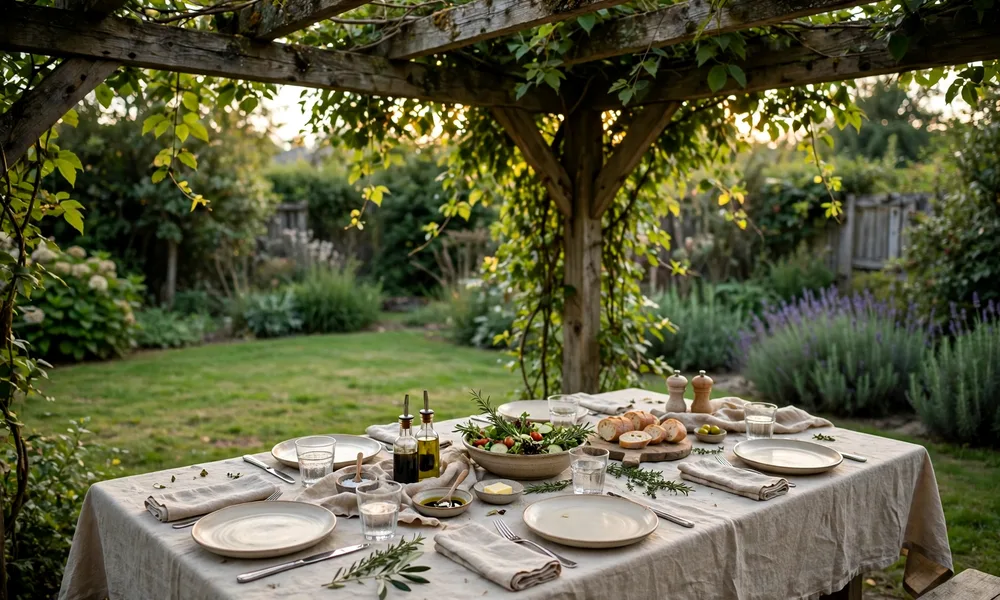
Plants That Shade Without Smothering the Breeze
Climbing plants are the slow, beautiful way to add shade to a pergola, and they do something no slat can: they cool the air itself, as the leaves release moisture into the breeze. Wisteria is the classic choice, with hanging flowers in spring and dense leaves in summer, but it is heavy and vigorous, so the frame must be strong and pruned every year. Grape vines give the same dense summer shade and drop their leaves in winter, letting the low winter sun through.
Roses and jasmine are lighter choices that will not overwhelm a wooden frame, and they bring scent as well as shade. Clematis is another good climber for a smaller pergola, flowering for months. Whatever you plant, train it across the top rather than letting it climb in a thick mat up one side, because a mat on one side blocks the breeze. Plants take two or three seasons to cover a pergola, so do not count on them for shade in the first summer.
What Goes Wrong With Pergolas
The worst pergolas fail in predictable ways. The first is a frame that is too light for its size: posts that flex in the wind and beams that sag under a wet vine. The second is a pergola built too close to the house or a fence, so the air cannot move and the space underneath feels stuffy. The third is a solid roof added later to keep the rain out, which turns the pergola into a hot, dark shelter. If you need rain cover, a louvred roof or a retractable canopy is the honest way to get it.
Cheap kits are the other trap. The cheapest ones use thin posts, flimsy brackets and fixings that rust within a year, and the instructions often assume a perfectly flat patio that few gardens have. If you buy a kit, check the thickness of the posts and whether the fixings are stainless or galvanised, and budget for proper concrete footings rather than the spikes some kits supply.
Choosing and Fitting Checklist
- Measure the furniture first, then add 60 centimetres on each side for the pergola footprint.
- Pick slat spacing for the hours you actually use the patio, not for midday.
- Choose cedar or aluminium for a frame that lasts with the least upkeep.
- Set posts in concrete footings, not spikes, so the frame stands up to wind.
- Leave a gap between the pergola and the house wall so air can move behind it.
- Plan climbing plants from the start, and train them across the top, not up one side.

Frequently Asked Questions
Does a pergola actually keep you cool?
Yes: it cuts the glare and the direct heat of the sun while letting the breeze through, so the air underneath feels cooler than in the open garden, even though the shade is dappled rather than total.
What is the best slat spacing for a pergola?
Slats around 8 to 10 centimetres apart suit most gardens, giving comfortable dappled shade without gloom. Wider gaps suit already-shaded gardens, closer slats suit the hottest, sunniest patios.
Wood or aluminium: which is better for a pergola?
Cedar is the classic choice for warmth and natural rot resistance, while powder-coated aluminium needs almost no maintenance and suits louvred roofs. Both last well; vinyl suits only small, simple pergolas.
Can a pergola keep the rain out?
A fixed open pergola cannot, by design. A louvred roof closed flat, or a retractable fabric canopy, gives real rain cover when you need it and opens up again when you do not.
How long do climbing plants take to cover a pergola?
Two or three seasons for most climbers. Plan the slat spacing for shade in the first summer, and treat the plants as a bonus that arrives later.
Do I need planning permission for a pergola?
Usually not for a modest garden pergola, but rules vary, and conservation areas have stricter limits. Check with your local planning office before you build.
The Bottom Line
A pergola earns its place by doing less than a roof and doing it better: it filters the sun, lets the breeze through, and leaves the garden feeling like a garden. Choose slat spacing for the hours you use the patio, size it to the furniture rather than the whole garden, pick cedar or aluminium for the frame, and set the posts in concrete. Do that, and you will have a cool, airy place to sit that gets better every year as the plants grow over it. For the evenings under that pergola, our guides to the best outdoor lights and the fire pits worth gathering around cover the rest of the setup.