Best Gazebos That Turn a Patio Into a Proper Outdoor Room in 2026
The best gazebos in 2026 do something no other garden structure does: they give you a real roof over your head outside. A gazebo is a freestanding shelter with a solid roof, posts at the corners and open sides you can leave open or close with netting and curtains. Sit under one in a summer shower and you stay dry, and on a hot afternoon you sit in proper shade. That solid roof is the whole point, and it is what separates a gazebo from its nearest neighbour. Our guide to the best pergolas of 2026 covers the open-slatted alternative, which shades by filtering sunlight; a gazebo does the opposite job, shutting out rain and sun so the patio works like an outdoor room.
Buying a gazebo is mostly about three decisions: the roof, the size and the anchoring. Get the roof right and the gazebo works in rain as well as sun. Get the size right and it shelters the furniture without swallowing the garden. Get the anchoring right and it stays standing when the wind picks up, which is where most cheap gazebos fail. This guide compares the types worth buying, the sizes that fit real patios, and the fixings that keep a gazebo upright.
Key Takeaways
- A gazebo earns its place with a solid roof: real rain cover and full shade, which an open pergola cannot give.
- Hardtop gazebos suit permanent patios, soft-top gazebos suit seasonal use, and pop-up gazebos suit parties.
- Size the gazebo to the furniture underneath it, adding about 60 centimetres on each side.
- Anchoring decides whether a gazebo survives a windy day: bolted feet on a patio, or weight bags and stakes on grass.
- Mosquito netting and curtains turn a gazebo into an evening room, but only if the netting fits the frame.
Hardtop, Soft-Top or Pop-Up: The Three Kinds of Gazebo
Every gazebo falls into one of three kinds, and the right one depends on how often you will use it. A hardtop gazebo has a rigid metal roof, usually steel or aluminium panels, on a sturdy frame. It is the permanent option: it stays up through rain, wind and winter, and it is the only kind that genuinely keeps a downpour out. A soft-top gazebo has a fabric canopy over a metal frame. It is lighter and cheaper, it comes down for winter, and it handles light rain well but sags in a heavy storm. A pop-up gazebo is a folding frame with a fabric top that opens in minutes. It is the portable option, bought for parties and weekends, and packed away after.
| Type | Best For | Rain Cover | Wind Handling | Typical Price |
|---|---|---|---|---|
| Hardtop gazebo | Permanent patios | Full | Best, bolted down | High |
| Soft-top gazebo | Seasonal use | Light rain | Good with weights | Medium |
| Pop-up gazebo | Parties and weekends | Showers only | Weakest, needs staking | Low to medium |
Best All-Rounder: The Hardtop Gazebo
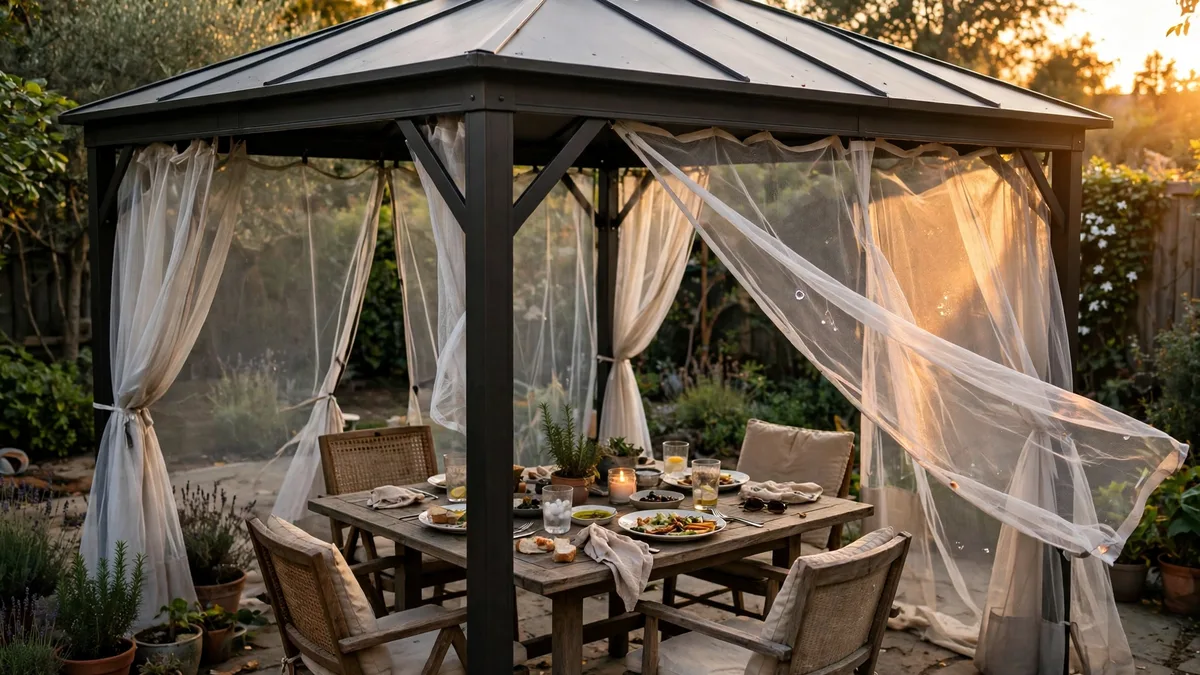
The hardtop gazebo is the best gazebo for most patios in 2026. A rigid steel or aluminium roof on square metal posts turns a patio into a room with a ceiling: rain runs off the panels instead of pooling on fabric, and the frame is strong enough to hang lights or a heater from the beams. A small raised vent at the peak lets hot air escape on a still day, so the space underneath stays cooler than a sealed canopy. Check the panels before you buy: thin steel dents under hail and rusts at the fixings, while powder-coated aluminium costs more but needs almost no upkeep. A hardtop around 3 by 3 metres suits a dining table for six, and a 3 by 4 metre model suits a lounge set.
Best for Seasonal Use: The Soft-Top Gazebo
A soft-top gazebo is the right choice if you want shade and rain cover from spring to autumn without committing to a permanent structure. The fabric canopy, usually polyester with a waterproof coating, stretches over a steel or aluminium frame and comes off for winter storage, which is also its biggest advantage: nothing is left outside to rot through the cold months. The trade is rain performance. A soft-top handles a shower well, but in a heavy downpour water pools on any flat stretch of fabric, and a pooled canopy sags, leaks at the seams and can tear the frame. Look for a canopy with a steep pitch and a vented peak, and take it down before the first frost.
Best for Parties: The Pop-Up Gazebo
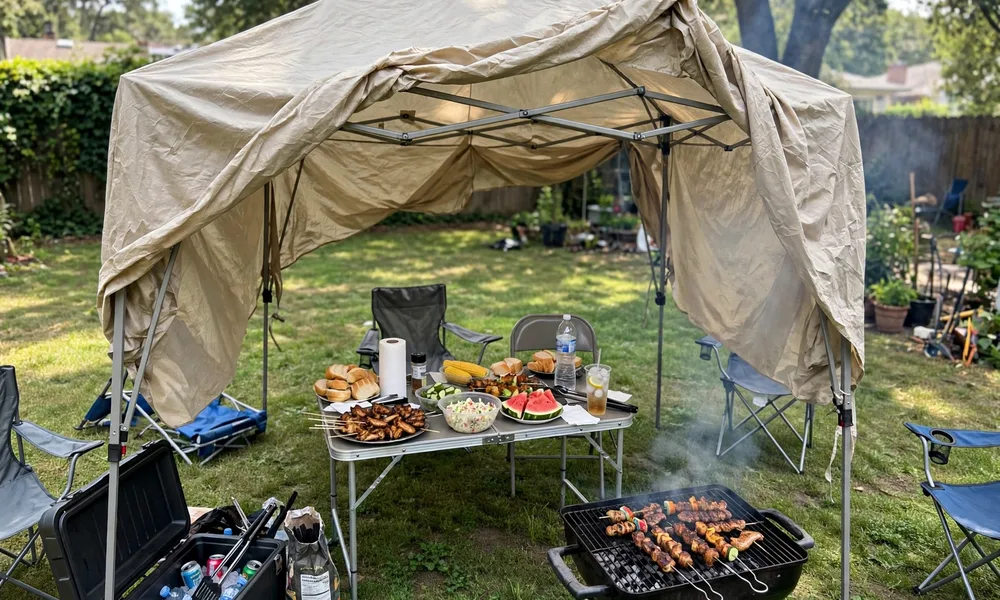
A pop-up gazebo is the gazebo you buy for a day, not a season. The scissor frame folds out in minutes with no tools, the fabric top clips on, and four people can have shade over a barbecue before the food is ready. That speed is the whole appeal, and it comes with honest limits: a pop-up is the weakest gazebo in wind, the thinnest in rain, and the shortest-lived of the three kinds. Buy one with a frame you can lift comfortably, because a heavy pop-up defeats its own purpose, and check that the canopy is genuinely waterproof rather than merely water-resistant. Never leave a pop-up standing overnight in wind: the frame is a sail, and a gust will take it over a fence.
Sizing a Gazebo to the Patio
The most common gazebo mistake is buying one too big: sized to the whole garden, it dominates the space, blocks light from the house and turns the patio into a corridor. Size it to the furniture underneath instead: measure the dining table or the lounge chairs, then add about 60 centimetres on each side so people can pull a chair out without hitting a post. A dining table for six usually needs a gazebo around 3 by 3 metres, while a table for eight or a lounge set fits better under a 3 by 4 metre model. Height matters as much as footprint: below about 2.4 metres a gazebo feels cramped, while above about 3 metres rain blows in underneath the roof edge. Leave a gap between the gazebo and the house wall so air can move behind it, and avoid siting one under a large tree, which will drop leaves onto the roof all year.
Anchoring: What Keeps a Gazebo Standing
A gazebo is a roof on four legs, and in a strong wind it behaves like a sail. Anchoring is not an optional extra; it is what keeps the structure standing, and it is where most gazebo failures start. On a paved patio, bolt the feet to the slabs with anchor bolts through the base plates: a half-hour job with a masonry drill that turns a hardtop gazebo into a permanent fixture. On grass, use ground stakes through the foot plates plus sand-filled weight bags on each leg: stakes stop the legs sliding, weights stop them lifting, and together they hold far better than either alone. Each leg should carry at least 15 to 20 kilograms of weight on a pop-up, more on a soft-top in an exposed garden. Check the fixings every spring, since bolts loosen and weight bags split, and never trust the pegs that come in the box.

Netting, Curtains and Screens
Netting and curtains turn a gazebo from a daytime shelter into an evening room. Mosquito netting, hung from the roof frame on all four sides, keeps biting insects out while letting the breeze through, so an evening runs until midnight instead of ending at dusk. Buy netting made for your exact gazebo size: too short leaves a gap at the bottom, too long drags on the ground and tears. Privacy curtains close off one or two sides against neighbours or a low sun, and cut the wind on a breezy evening. Keep both clean and dry before storing them, since damp netting goes musty in a season. For the evenings under the roof, our guide to the best outdoor lanterns of 2026 covers the lights that glow without glare, and a heater extends the season further: our guide to the best patio heaters of 2026 covers the models that warm a sheltered space without smoking it out.

What Goes Wrong With Gazebos
The worst gazebos fail in predictable ways. The first is a frame too light for its roof: thin posts that flex in the wind and a canopy that pools water until the seams give way. The second is no anchoring at all, which ends with the gazebo over a fence after the first storm. The third is a soft-top canopy left up through winter, which comes down in spring faded, stretched and smelling of damp. Cheap kits are the other trap: thin steel, flimsy brackets and fixings that rust within a year, and instructions that assume a perfectly flat patio few gardens have. If you buy a kit, check the post thickness and whether the fixings are stainless or galvanised, and budget for proper anchor bolts or weight bags rather than the pegs in the box.
Buying Checklist
- Choose the type for how you will use it: hardtop for all year, soft-top for the season, pop-up for parties.
- Measure the furniture first, then add 60 centimetres on each side.
- Check the roof: rigid panels and a vent on a hardtop, steep pitch and a vented peak on a soft-top.
- Plan the anchoring before you buy: bolts for a patio, stakes plus weight bags for grass.
- Buy netting and curtains made for your exact gazebo size, not a generic set.
- Check the height: at least 2.4 metres at the lowest beam, and clear of trees and the house wall.
Frequently Asked Questions
Can a gazebo keep the rain out?
Yes, a hardtop gazebo keeps heavy rain out, because the rigid roof sheds water instead of pooling it. A soft-top handles light rain well but can leak in a downpour, and a pop-up is only good for a shower. No gazebo keeps wind-blown rain out completely, since the sides are open.
Do I need planning permission for a gazebo?
Usually not for a modest garden gazebo, but rules vary, and conservation areas and listed buildings have stricter limits. A gazebo close to a boundary or over a certain height can need permission, so check with your local planning office before you build.
How do I stop a gazebo blowing away?
Bolt the feet to a patio with anchor bolts, or use ground stakes plus sand-filled weight bags on grass, with at least 15 to 20 kilograms per leg. Take a pop-up down before a storm, and never trust the pegs that come in the box.
What size gazebo do I need for a dining table?
A table for six usually needs a gazebo around 3 by 3 metres, and a table for eight or a lounge set fits better under a 3 by 4 metre model. Add about 60 centimetres on each side of the furniture so chairs can be pulled out without hitting a post.
Hardtop or soft-top: which lasts longer?
A hardtop lasts longer, because rigid metal panels do not stretch, fade or pool water the way fabric does. A soft-top canopy usually needs replacing every few seasons, though taking it down for winter stretches its life considerably.
Can I leave a gazebo up all winter?
A hardtop gazebo can stay up all year, and many are built for it. A soft-top should come down before the first frost, and a pop-up should be packed away after every use, since winter wind and snow will damage both.
The Bottom Line
The best gazebos in 2026 match how you will actually use the garden: a hardtop for a permanent outdoor room, a soft-top for a seasonal shelter, and a pop-up for parties and weekends. Size it to the furniture, anchor it properly, and buy netting that fits. Do that, and the patio stops being a fair-weather space and starts being a room you use from spring to autumn.


