
Don’t Buy Into the Worst Cheerleaders of 2026: Squad Types That Drag a Team Down
The worst cheerleaders of 2026 are not the beginners who are still learning the motions and the counts. They are the familiar types every squad recognises within one practice: the wobbly flyer who never locks a stunt, the lazy base who lets go early, the drama queen who turns every correction into a crisis, and the spotlight hog who treats the sideline like a stage. This guide ranks the worst types of cheerleader you will meet in 2026, by the damage they do to your stunts, your routines and your team, so you can spot each one early and protect your own squad.
Key takeaways
- The worst cheerleaders are types and patterns, not people: the same bad habits show up on every squad, in every gym, at every level.
- A wobbly flyer costs you stunts and safety, a lazy base costs you trust, and a drama queen costs you the whole practice.
- Skipping practice is the only type that cheats the team: a missing base or flyer breaks every stunt group on the mat.
- Choreography learned at the last minute is worthless, because the mat never forgives a routine nobody has drilled.
- You cannot fix another cheerleader mid-routine, so the best defence is clear roles, honest counts and a plan for the shaky stunts.
How the worst cheerleaders were judged
Every type below was scored on five measures. Damage to safety comes first: how much risk does this type add to stunts, pyramids and tumbling for everyone on the mat? Damage to the routine is second, because some types drag the whole squad’s timing and sharpness down. Predictability is third: the worst types repeat the same mistake at every practice. Frequency is fourth, because a rare annoyance is forgivable and a weekly one is not. Attitude is fifth: the types who blame their teammates score far worse than the ones who are simply struggling.
Two notes before the list. First, no real cheerleader is named here, because the point is the pattern, not the person. Second, being new to cheerleading is not the same as being one of the worst cheerleaders: an honest, quick-learning beginner who shows up and tries is welcome on any squad, and the types below fail on safety, reliability or attitude, not talent. For the same bad habits in other sports, see our guide to the worst golfers of 2026.
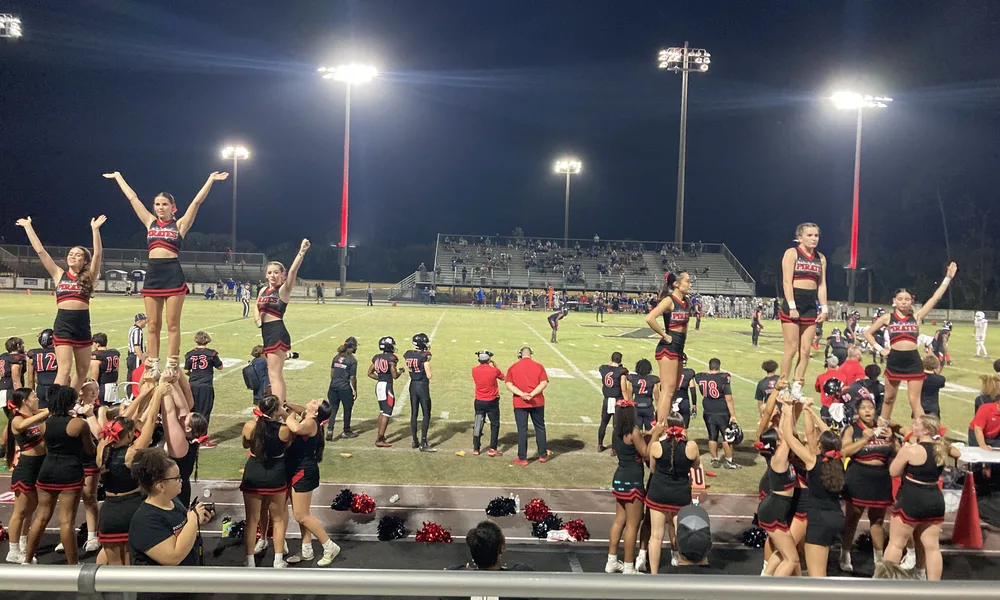
Comparison table: the worst cheerleaders of 2026
| Rank | Cheerleader type | Main fault | Cost to the squad |
|---|---|---|---|
| 1 | The Wobbly Flyer | Never locks a stunt | Falls and injuries |
| 2 | The Lazy Base | Lets go early | Lost trust |
| 3 | The Drama Queen | Every note is a crisis | Ruined practices |
| 4 | The Spotlight Hog | Steals every moment | Broken formations |
| 5 | The Always Late One | Misses warm-up | Wasted rehearsal time |
| 6 | The Sideline Coach | Coaches everyone | Destroyed confidence |
| 7 | The Choreography Forgetter | Never learns the counts | Messy routines |
The worst cheerleaders of 2026
1. The Wobbly Flyer: the worst cheerleader of all
The wobbly flyer is the worst cheerleader you will ever share a stunt group with, and it is not close. This is the flyer who never locks their legs, never hits the position, and sways on every count, so the bases underneath are fighting to hold a moving target instead of a solid one. Everyone in the gym knows which stunt will fall before it goes up, nobody can fix it from the ground, and the bases who catch her every time go home with sore shoulders and no trust left.
The signs are plain: bent knees in the air, arms flailing for balance, and a landing that is always a surprise. Insist on strength and body control drills before the next level of stunt. A wobbly flyer hates conditioning more than anything else in cheerleading.
2. The Lazy Base: the trust breaker
The lazy base does not mean to drop anyone, which is exactly why they are so hard to deal with. Their grip loosens a count early, their legs straighten before the dismount, and their eyes wander to the crowd while the flyer is still in the air. The flyer feels it instantly and starts bracing for the fall instead of hitting the stunt, and the whole group tightens up.
The fix is focus, not lectures: grip through the dismount, stay in the squat until the flyer is down, and watch the flyer, not the crowd. If you are the lazy one, that is the nicest warning you will ever get.

3. The Drama Queen: the practice wrecker
The drama queen turns one correction into a crisis for the whole squad. A coach’s note about a missed count means tears, a changed formation means a slammed water bottle, and a lost spot means a speech about fairness that eats twenty minutes of practice. The routine stops while everyone else stands on the mat waiting for the scene to end.
You cannot run a practice while managing someone else’s mood. The only defence is distance: do not engage, do not take sides, and let the coach handle the conversation after practice, not on the mat.
4. The Spotlight Hog: the formation breaker
The spotlight hog treats every routine like a solo audition. They drift to the front of the formation, hold their poses a beat too long, and wave to the crowd while the rest of the squad hits the next count. The formation looks lopsided, the timing falls apart, and the judges see a group of individuals instead of a team.
Most spotlight hogs are talented, which makes them harder to bench, but the routine still becomes a mess. The way out is honest video review: watch the routine together and let the footage show what the crowd already sees.
5. The Always Late One: the time thief
The always late one arrives after warm-up, after the stunt groups are set, and after the coach has already rearranged the practice plan. The squad waits, the warm-up is repeated, and the routine is drilled with a substitute who will not be there on game day. A ten-minute delay every practice adds up to a full practice lost by the end of the month.
You cannot build trust with a teammate who is never on time. The only defence is a clear rule: late means you do not stunt that day, and the rule applies to everyone, whatever their talent.
6. The Sideline Coach: the confidence killer
The sideline coach has never coached a squad and has never needed to, because they learned everything from watching cheerleading videos online. They will fix your jump on the first count, your arm placement on the third, and your tumbling pass on the fifth, all without being asked and all while the real coach is talking.
A correction belongs to the coach, not to a teammate shouting over them. The polite answer is a smile and a change of subject. If you want help, a coach’s drill beats a hundred free tips, and our guide to the worst fencers of 2026 shows the same habit in another sport.

7. The Choreography Forgetter: the routine wrecker
The choreography forgetter is the best cheerleader you will ever meet in a one-on-one run-through, and one of the worst on the mat with the full squad. Alone they hit every count, shape every motion, and land every tumbling pass. In the full routine, with music playing and teammates moving, the same cheerleader freezes, goes the wrong way, and collides with the formation.
The gap is practice without the group: drilling alone teaches nothing about spacing and timing. Real cheerleading is eight counts, twenty teammates and one formation. Until the practice changes, the forgetter will keep arriving confident and leaving full of excuses.
What to avoid when you meet the worst cheerleaders
The biggest mistake is trying to fix them during the routine. A wobbly flyer does not need a body-control tip in the middle of a pyramid, and a drama queen does not need a confrontation before a competition. Mid-routine coaching makes every type worse. The second mistake is copying them: arriving late because your squad is late, or skipping conditioning because your flyer skips it. Your performance is your own.
Protect your squad with simple habits: keep your own counts, lock your own stunts, and drill the shaky parts before the easy ones. Check the attendance list before a competition, and choose stunt groups with the same care you choose your positions.
Competitions deserve a stricter approach than sideline cheering. At a competition, report safety problems and repeated lateness to the coach instead of handling them yourself, because the coach has the authority and the roster. On the sideline the stakes are lower and the answer is simpler: enjoy the game, laugh at the missed counts including your own, and save the serious work for a squad that practices at your pace. The worst cheerleaders only ruin your season if you let them set the terms. The same patterns show up across athletics, and our guide to the worst boxers of 2026 ranks the same bad habits in the ring.
Checklist: surviving the worst cheerleaders
- Drill strength and body control before you raise the stunt level, and never skip conditioning to save time.
- Hold your grip through the dismount, stay in the squat, and watch the flyer until both feet are on the mat.
- Arrive before warm-up every practice, and treat a late arrival as a missed stunt group, not a minor delay.
- Do not offer corrections mid-routine, and do not accept them from a teammate either: save technique talk for the coach.
- Watch the routine on video together instead of arguing about who missed the count.
- Choose your stunt group for reliability, grip strength and temper, not just for who flies the highest.
Frequently asked questions
Who are the worst cheerleaders of 2026?
The worst cheerleaders of 2026 are types, not named people: wobbly flyers, lazy bases, drama queens, spotlight hogs, always-late teammates, sideline coaches and choreography forgetters. They are ranked by the damage they do to safety, routines and the squad.
Is a beginner one of the worst cheerleaders?
No. A beginner who shows up on time, listens to the coach and tries hard is welcome on any squad. The worst types fail on safety, reliability or attitude, not on talent.
How do I spot a lazy base?
Look for a grip that loosens before the dismount, legs that straighten early, and a flyer who braces for the fall instead of hitting the stunt. Full-count drills with a spotter are the best defence.
What is the fastest way to fix a wobbly stunt?
Body control drills, a lower stunt level until the flyer locks, and slow counts with a spotter, practised with a coach rather than a new routine. No formation change fixes a flyer who cannot hold a position.
How late is too late for practice?
Missing warm-up is too late. A cheerleader who misses warm-up should not stunt that day, whatever their talent, because cold muscles and missed counts are how injuries happen.
Should I confront a drama queen or a spotlight hog?
Not mid-routine. Stay calm, keep your own counts, and raise behaviour with the coach afterwards if it keeps happening. Confrontation on the mat makes both types worse.
Bottom line
The worst cheerleaders of 2026 are easy to recognise and hard to avoid: the wobbly flyer who risks the stunt, the lazy base who breaks trust, the drama queen who steals the practice, and the spotlight hog who breaks the formation. Hit your own counts, lock your own stunts, show up on time, and choose reliable stunt groups, and the worst cheerleaders will cost you a story instead of a season.


