Steep, Slow and Stuck: The Worst Cog Railways of 2026
The worst cog railways of 2026 are not the oldest lines or the steepest climbs. They are the mountain railways that turn a short trip up a slope into a long wait, a crush of standing passengers, or a crawl a fit walker could keep up with. A cog railway is a rack railway: a toothed rail runs between the running rails, and a pinion wheel under the locomotive grips those teeth to climb grades far too steep for ordinary wheels. When it works, it is the only practical way to the top without a road. When it does not, the train can only go as fast as the teeth allow, and a fault in the rack or the pinion stops the whole line.
Key takeaways
- A cog railway climbs on a toothed rack rail gripped by a pinion wheel, unlike a cable-hauled funicular or an ordinary adhesion train.
- The worst rides fail on speed first: a rack climb is slow by design, and the slowest lines turn a short ascent into most of the day.
- A stall on a cog railway strands you on a steep grade with nowhere to step off safely, so reliability matters more than the view.
- Packed summit cars, fogged windows and seats that face the wrong way spoil the scenery the ticket was sold on.
- Check the journey time, the seat, the summit weather and the total fare before you book.
How the worst cog railways of 2026 were chosen
Every type below was scored on five measures. Speed comes first: how long does the climb actually take, and does the train move at a pace that justifies the fare, or does it crawl up the mountain for an hour? Capacity is second, judged on whether every passenger gets a seat with a window, or whether late boarders stand in a packed car for the whole ascent. Reliability is third, because a rack or pinion fault on a steep grade stops the line and leaves passengers with no way down except the same train. Comfort is fourth: shelter at open stations, seats that face the direction of travel, and windows you can see through. Value is fifth: the real cost once fare, booking fee and waiting time are counted.
Two notes before the list. First, this guide is about cog railways only: self-powered trains that climb on a toothed rack rail. A funicular is a different machine, a pair of cars hauled up and down a steep track by a cable, counterbalancing each other, as our guide to the worst funiculars of 2026 explains, and an ordinary train runs on adhesion between smooth wheels and smooth rails, as our guide to the worst trains of 2026 shows. Second, no single line is named as the worst, because the same bad patterns appear on many mountains, and what matters is learning to recognise them before you buy a ticket.
Comparison table: the worst cog railways of 2026
| Rank | Cog railway type | Worst for | Watch out for |
|---|---|---|---|
| 1 | Packed summit shuttle at peak hour | Comfort, views | Standing only, no window seat |
| 2 | The crawl that never gets above walking pace | Journey time | Hour-long climb, short distance |
| 3 | Car that stalls on the steepest grade | Reliability, safety | Rack fault, long mid-slope stops |
| 4 | Glass car with fogged windows and no air | Comfort, views | Condensation, glare, heat |
| 5 | Summit-only line with nothing at the top | Value | Closed summit, no shelter, no walk |
| 6 | Vintage steam shuttle with smoke and soot | Comfort, speed | Slow climb, smoke in the car |
| 7 | Overpriced ticket with a queue-first booking | Value | High fare, long line, no refund |
The worst cog railways of 2026
1. The packed summit shuttle at peak hour: the ride to avoid first
The worst cog railway experience in 2026 starts before the train moves. At peak hour the car arrives already full, and the crowd at the valley station pushes on anyway, until every seat is taken and late boarders stand pressed against the doors with nowhere to put their feet and no window to look out of. A cog railway cannot add another car when the crowd grows, because the climb runs as a fixed set of departures. When the crowd outgrows the cars, the queue simply grows between departures,
2. The crawl that never gets above walking pace: the slowest climb
Some cog railways are slow by design, and the worst of them never get above walking pace for the whole climb. The rack sets a hard speed limit, so a climb of only a few miles takes an hour or more at a pace a walker could match. Passengers who expected a quick lift to the summit find themselves watching the same slope for an hour, with less time left at the top than the climb took.

3. The car that stalls on the steepest grade: a rack fault stops everything
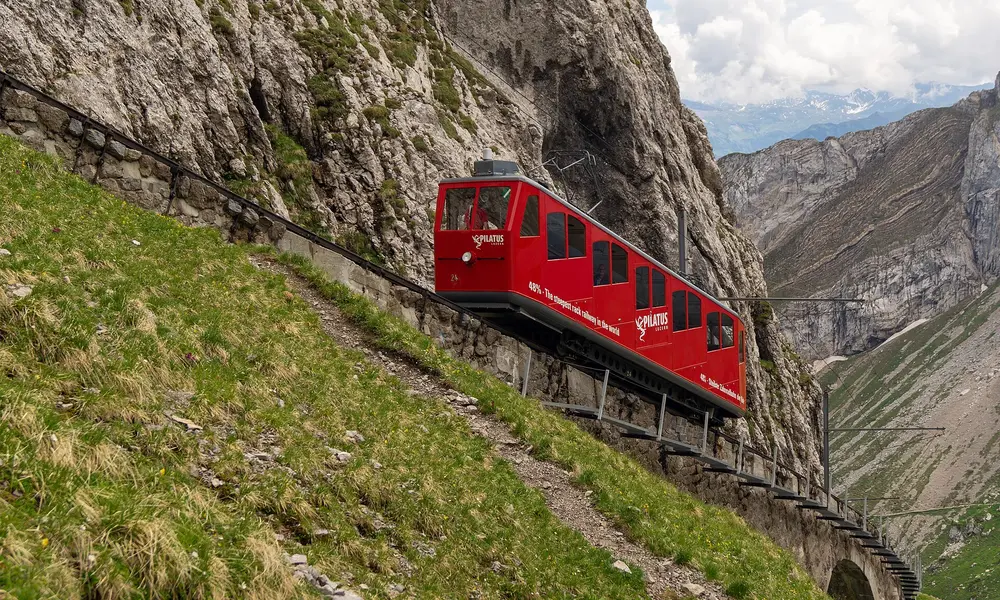
A cog railway has no cable to pull it and no second engine to push past a fault, and that fact shows most clearly on the steepest part of the climb. When a tooth on the rack breaks, or the pinion slips, or a fault in the drive cuts the power, the train stops where it is, and nothing on board can move it again until the fault is cleared. The worst stall happens halfway up, with no announcement and no estimate of when the train will move. The stall is worse than a delay on an ordinary train, because an ordinary train stops on flat ground near a platform, but a cog train on a steep rack has only the brakes holding it in place.
4. The glass car with fogged windows and no air: a greenhouse on a slope
The glass cog railway car looks like the best seat on the mountain, and on a cool cloudy morning it is. In summer sun it becomes a greenhouse. The worst version has floor-to-ceiling glass, no blinds, no shade and no air conditioning, so the car heats up with every minute on the climb and the windows fog from the breath of a full load of passengers. The view that sold the ticket disappears behind condensation and glare, and passengers press against the glass trying to see out, which only makes the crowding worse.
5. The summit-only line with nothing at the top: a climb to nowhere useful
Not every cog railway is transport. Some are short climbs built to carry visitors to a single summit, and the worst of them arrive at a top with nothing to do when they get there. The summit building is closed and the paths are shut, so the only choice is to queue for the next train down.
6. The vintage steam shuttle with smoke and soot: the slowest, smokiest climb
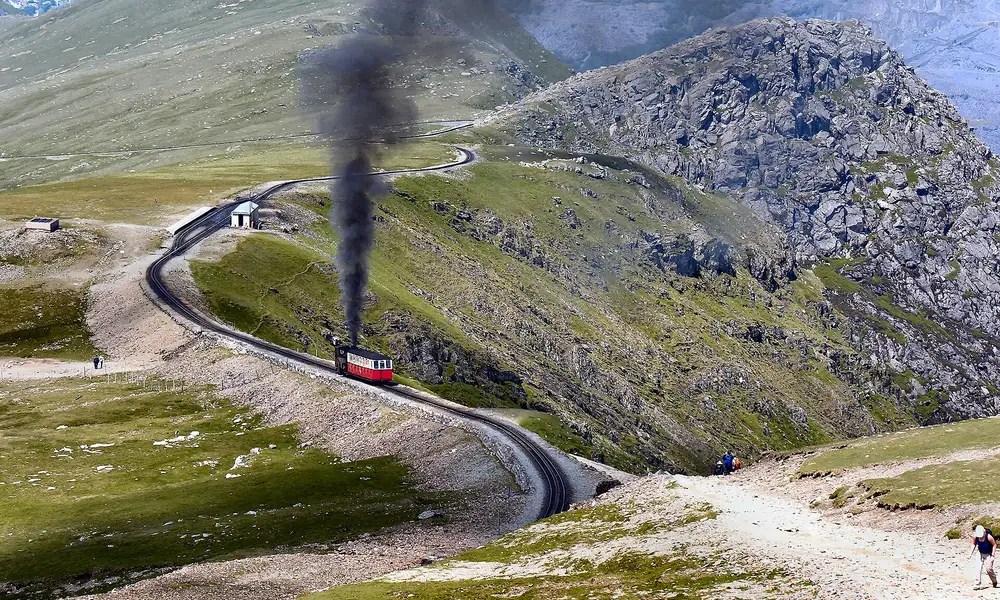
The vintage steam cog railway is the most charming ride on the mountain and, on a bad day, the most uncomfortable one. The worst version runs an old steam locomotive that climbs slowly, stops often for water, and fills the open cars behind it with smoke and soot for the whole ascent. Passengers who booked for the romance of steam find themselves coughing in coal smoke, with a view hidden behind the plume. The water stops add half an hour to a journey a modern car would finish in twenty minutes. The worst steam shuttles run only a few departures a day, so missing one means waiting hours for the next.
7. The overpriced ticket with a queue-first booking: the worst value for money
Some cog railway fares make the journey feel like a miscalculation before the train even leaves the station. The worst version charges a premium price for a short climb, adds a booking fee on top, and then makes you queue at the valley station anyway, because the timed ticket only guarantees a departure window, not a seat. The worst lines also refuse refunds when the summit is clouded over or the train is cancelled.
What to avoid when booking a cog railway
The most common cog railway regret is not a bad line but a wrong match: a slow steam shuttle on a tight schedule, a glass car on a hot afternoon, or a summit-only line on a cloudy day. Avoid the trap by checking four things before you pay: the real journey time in minutes, not the distance; whether a seat with a window is guaranteed, not just a place on the train; what is actually open at the summit on the day you travel; and the total fare with booking fees, plus the refund rules if the weather turns or the train is cancelled. The same checks work on other mountain transport too, and our guide to the worst cable cars of 2026 makes the same point about queues and fares, because the traps are the same wherever a mountain charges for the ride up.
Checklist: booking a cog railway
- Book the first or last departure of the day, when the cars are emptiest and the light is best for the view.
- Check the real climb time in minutes and compare it with the walking time on the path beside the track.
- Confirm a window seat facing uphill, not a standing place in a packed car with no view.
- Check the weather and what is open at the summit, not just the weather in the valley.
- Add the booking fee to the fare and read the refund rules for cloud, wind and cancellation.
- Ask what happens if the train stalls on the grade, and leave a generous gap before any connection at the bottom.
Frequently asked questions
What is a cog railway?
A cog railway is a mountain railway that climbs on a toothed rack rail between the running rails, with a pinion wheel under the train gripping the teeth. It is also called a rack railway.
How is a cog railway different from a funicular?
A cog railway is self-powered: the locomotive or railcar drives itself up the rack. A funicular is cable-hauled: two cars linked by a cable counterbalance each other, and neither car has its own motor.
Why are cog railways so slow?
The rack and pinion sets a hard speed limit, and the climb is steep, so most cog railways run at walking pace or a little above it. The slowest lines take an hour or more for a climb of only a few miles.
Is it safe if a cog train stalls on a steep grade?
A stalled cog train is held by its brakes on the rack, but it cannot move until the fault is cleared, and there is nowhere to step off safely on a steep grade. Stalls are rare, but they are why reliability matters more than speed here.
When is the best time to ride a cog railway?
Early morning or late afternoon, when the cars are emptiest, the sun is low and the summit is clearest. Midday on a fine day is the worst time: full cars, hot glass and the longest summit queue.
Are cog railway tickets worth the price?
They are worth it when the ride is comfortable, the summit is open and the view is clear. They are poor value when the car is packed, the climb is slow and the summit offers nothing but a platform and a queue.
Bottom line
The worst cog railways of 2026 are the ones that forget the climb is only half the trip: packed cars with no window seat, crawls that take longer than the walk, stalls on the steepest grade, glass cars that fog over, summits with nothing at the top, smoky steam shuttles and fares that outrun the view. Check the journey time, the seat, the summit and the refund rules before you book, and the rack railway will carry you to the top instead of getting in the way of the mountain.