
Shallow Work, Deep Trouble: The Worst Cultivators of 2026
The worst cultivators of 2026 are not the machines that break down in the shed. They are the ones that work just well enough to ruin a bed: tines that skip across hard ground instead of stirring it, discs that slice and throw soil onto the crop rows, sweeps that scalp the roots they were meant to spare, and depth controls that drift deeper with every pass until a shallow tool is doing a tiller’s job badly. A cultivator has one honest purpose, to stir soil that is already loose, kill weeds between the rows, and leave the crop standing.
Key takeaways
- A cultivator is a shallow, secondary tool: it stirs loose topsoil and kills weeds, it does not break new ground.
- The worst cultivators fail on depth first: a tool that digs too deep destroys soil structure and cuts crop roots.
- Tines that skip, bend, or foul with weeds leave strips of untouched ground where weeds recover in days.
- Discs and sweeps must run level and shallow; a tilted gang throws soil onto the crop and buries it.
- Test any cultivator on a short row before committing to the whole bed, and walk away from one with no working depth control.
How the worst cultivators of 2026 were chosen
Every type below was scored on five measures. Depth control comes first: does the tool hold a shallow, even depth, or does it drift deeper, ride up, or dig in one corner? Weed kill is second, judged on whether the tines, discs, or sweeps actually cut and bury small weeds, or leave them standing in untouched strips. Crop safety is third, because a cultivator that damages roots or buries seedlings is worse than no cultivator at all. Soil care is fourth: does the tool leave a fine, level tilth, or does it smear, compact, or throw soil where it does not belong?
Two notes before the list. First, this guide is strictly about cultivators as shallow, secondary-tillage tools: walk-behind machines, tractor-mounted implements, and hand tools that work ground already loosened. Breaking new ground, turning over turf, and opening virgin soil belong to the tiller, a different tool with a different job, and the tractor that pulls the implement is a different machine again, covered in our guide to the worst tractors of 2026, where the faults are about power units, not the tools behind them.
Comparison table: the worst cultivators of 2026
| Rank | Cultivator type | Main fault | First warning sign |
|---|---|---|---|
| 1 | The rotary cultivator that digs too deep | Destroys soil structure | Soil comes up in wet clods |
| 2 | The rigid-tine field cultivator that skips | Leaves untouched strips | Tines bounce on hard patches |
| 3 | The spring-tine cultivator that bends and fouls | Tines bend, weeds wrap round them | Weeds trail behind the tool |
| 4 | The disc cultivator that slices and throws | Buries the crop row | Soil piles against the stems |
| 5 | The sweep cultivator that scalps roots | Cuts crop roots | Plants wilt the next day |
| 6 | The hand cultivator with a short handle | Weak prongs, aching back | Prongs bend on the first stones |
| 7 | The tow-behind cultivator with no depth control | Depth drifts with the ground | One side digs, one side floats |
The worst cultivators of 2026
1. The rotary cultivator that digs too deep: a tiller in disguise
The rotary cultivator that digs too deep is the worst cultivator type of 2026, because it fails at the one thing a cultivator is for. A cultivator should skim the top few inches, breaking the crust, cutting small weeds, and leaving the soil life below untouched. The deep-digging version does the opposite. Its spinning tines bite down past the topsoil, churn wet subsoil into clods, and smear the layer below into a hard pan that roots cannot cross.
2. The rigid-tine field cultivator that skips: strips of weeds left standing
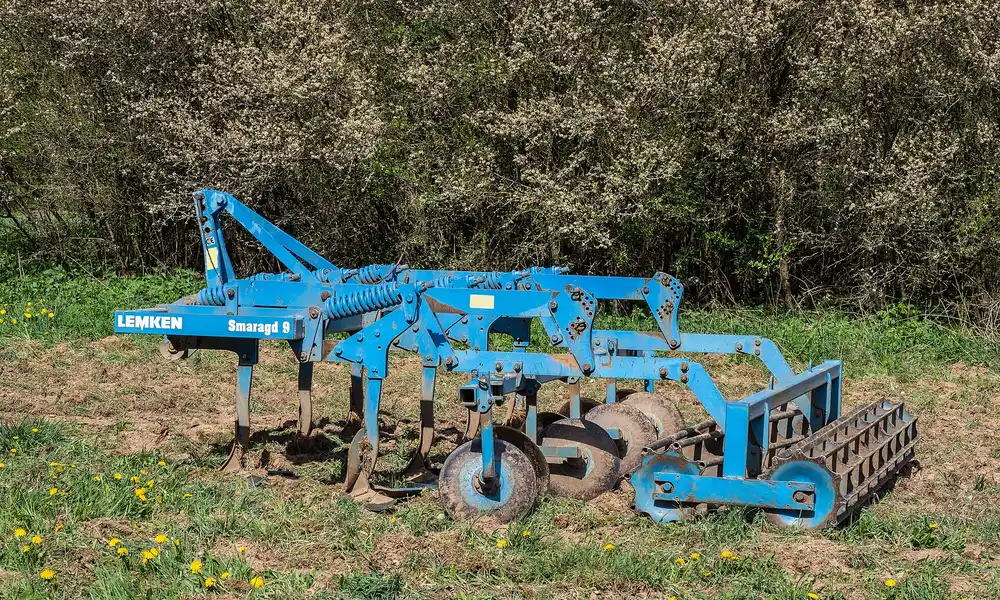
A rigid-tine field cultivator should drag its tines through the soil at a steady depth, cutting weed roots and levelling the surface as it goes. The worst version skips. Its tines are too stiff to follow the ground, so they ride up over every hard patch, bounce across the lumps, and drop back down in the soft spots, leaving a patchwork of worked and untouched strips. A cultivator that cannot hold its tines in the ground is a rake with ambition, not a weeding tool.
3. The spring-tine cultivator that bends and fouls: weeds trailing behind
Spring tines are meant to flex, to ride over a stone and spring back, and to shake the soil off the weed roots as they pass. The worst spring-tine cultivator bends and stays bent. Its tines are too soft for the work, so they fold back under load, lose their angle, and stop cutting altogether. Worse, they foul: long weeds wrap around the bent tines, grass tangles between them, and within a few metres the tool is dragging a mat of green behind it, lifting out of the soil entirely.
4. The disc cultivator that slices and throws: soil on the crop
A disc cultivator should roll its discs through the top layer, slicing weeds and mixing the surface without moving much soil sideways. The worst version throws. Its discs are set too aggressively, or the gang is tilted, so each disc lifts soil and flings it sideways, piling it against the crop stems and burying the lower leaves. Small seedlings disappear under a ridge of thrown earth, and the row that was meant to be weeded is now smothered.
5. The sweep cultivator that scalps roots: the plants wilt first
Sweep cultivators work with wide, flat blades that slide just under the surface, cutting weed roots while passing safely below the crop. The worst sweep cultivator scalps. Its blades run too deep, or the sweeps are too wide for the row spacing, so they slide straight through the crop’s own root zone, severing the fine roots that feed the plant. The damage does not show at once. The bed looks beautifully clean, the weeds are gone, and the crop stands upright in neat, bare soil.
6. The hand cultivator with a short handle: weak prongs, aching back
The hand cultivator is the smallest tool in this list, and the worst version fails in the smallest, most personal way. Its handle is too short, so the gardener works bent double, and its prongs are too thin, so they bend on the first stone and splay on the first root. A hand cultivator should loosen the top inch of a bed, pull small weeds out by the root, and do it for an hour without punishment. The bad version does none of it.
7. The tow-behind cultivator with no depth control: one side digs, one side floats
A tow-behind cultivator should follow the tractor at a set depth, its wheels or skids holding the working parts level across the whole width. The worst version has no real depth control at all: no working depth wheel, no adjustable skid, nothing but a hitch and a hope. On uneven ground it digs in on one side and floats on the other, so half the bed is churned too deep and half is untouched, and the operator cannot correct it from the tractor seat.
What to avoid when buying or hiring a cultivator
The most common mistake is buying a cultivator for a tiller’s job, or a tiller for a cultivator’s job, and then blaming the tool for the mismatch. Check the depth first: a real cultivator works the top few inches and has a depth control you can set, lock, and trust. If the tool has no depth control, or the control slips under load, walk away, because everything else about it is guesswork. Check the tines, discs, or sweeps for the ground you actually have: stiff tines skip on crust, soft tines bend on stones, and wide sweeps scalp roots in narrow rows. The same mismatch traps buyers of other garden machines, and our guide to the worst lawn mowers of 2026 makes the same point about matching the machine to the ground, because the lesson is the same in the garden as in the field. And never judge a cultivator by the bed it leaves on soft, perfect soil. Test it on your hardest, crustiest ground, on a short row, before you commit to the whole bed, because that is where the skipping, bending, and throwing will show. Big machines carry the same traps at a bigger scale, and our guide to the worst combine harvesters of 2026 shows how a mismatch between machine and field costs a whole harvest, not just a row.
Checklist: choosing a cultivator in 2026
- Check the depth control first: it must set, lock, and hold a shallow depth across the whole width.
- Match the working parts to your ground: stiff tines for soft soil, spring tines for stones, narrow sweeps for close rows.
- Test it on your hardest, crustiest patch, not on soft prepared soil where every tool looks good.
- Look behind the tool on the first pass: untouched strips, thrown soil, or trailing weeds mean it is failing.
- Check that the tines, discs, or sweeps are replaceable and affordable before you buy the machine.
- Confirm the working width fits your row spacing, with room to spare on each side of the crop.
Frequently asked questions
What is the difference between a cultivator and a tiller?
A tiller breaks new ground: it turns over turf, opens virgin soil, and digs deep. A cultivator works ground that is already loose, stirring the top few inches, killing weeds between rows, and leaving the crop standing. Using a cultivator to break new ground will skip, bounce, and bend it; using a tiller between crop rows will destroy the roots.
How deep should a cultivator work?
Shallow, usually the top two to four inches, just deep enough to cut weed roots and break the surface crust. Any deeper and the tool starts cutting crop roots, churning subsoil, and damaging the soil structure it was meant to protect.
Why do my cultivator tines keep bending?
Either the tines are too soft for your ground, or the tool is being asked to do a tiller’s job on hard, unbroken soil. Spring tines should flex and return; if they stay bent, they are too weak, and if they bend on stones, the ground needs breaking first with a heavier tool.
Can a cultivator damage my crops?
Yes, easily. Discs that throw soil bury seedlings, sweeps set too deep scalp roots, and a tool with no depth control digs on one side and floats on the other. Always test on a short row first and check the plants the next day for wilting.
Is a hand cultivator worth buying?
A good one is, for small beds and close work around plants. Look for a long handle, thick forged prongs, and enough weight to bite into the soil. A short-handled tool with thin prongs will bend on the first stone and leave your back aching.
What should I check before hiring a tow-behind cultivator?
Check that it has a working, lockable depth wheel, that its width fits your row spacing, and that the tines or sweeps are straight and unworn. Ask the hire firm when it was last serviced, and test it on a short run before taking it to the whole field.
Bottom line
The worst cultivators of 2026 fail on depth, not on power: they dig too deep, skip across the crust, bend and foul, throw soil onto the crop, or scalp the roots they were meant to spare. A good cultivator is a shallow, steady tool with a depth control you can trust, working parts matched to your ground, and a clean, level finish behind it.


