
Sidestep the Worst Lawn Aerators of 2026: Plugs That Never Pull and Spikes That Seal the Soil
The worst lawn aerators of 2026 are not the oldest tools in the shed or the cheapest ones on the shelf. They are the aerators that look useful in the garden centre and then wear their owners down: spikes that seal the soil instead of opening it, hollow tines that bend before they pull a plug, a battery that fades halfway across the lawn, or a machine so heavy that aerating feels like pushing a wheelbarrow through mud. A bad lawn aerator rarely announces itself on the shop floor. This guide ranks the seven worst lawn aerator types of 2026, by what actually goes wrong, so you can spot the pattern before you buy and leave the worst ones on the shelf.
Key takeaways
- A spike aerator on compacted clay is the type to avoid first: the spikes press the soil tighter instead of opening it, and the lawn ends up worse than before.
- Hollow tines and tine steel matter more than engine size: an aerator that cannot pull a clean plug is just a noisy lawn ornament.
- A tow-behind aerator is only as good as its weight: a drum too light to bite will bounce across hard ground and never break the surface.
- Batteries and cords are the new weak points: a cord limits the lawn, and a single battery fades before the far corner.
- Check the tine steel, the tine spacing, the weight and the spare-parts supply before you buy, and test it on your own soil, not just on soft spring turf.
How the worst lawn aerators of 2026 were chosen
Every aerator type below was scored on five measures. Aeration ability comes first: can the aerator open the soil its size and price promise, from soft loam to hard clay, pulling real plugs or punching real holes that let air and water reach the roots? Tine quality is second, because tines that bend, clog or snap ruin the pass and leave the lawn half done. Weight and balance are third: a machine that is too light to hold its tines down will skip across the surface, while one that is too heavy will tear the turf and wear you out. Durability is fourth, judged on the tines, the drum and the handles, because an aerator that bends its first tine is disposable. Ease of use is fifth: controls you can reach without letting go, a tine depth you can set, and a machine you can turn at the end of the row without a fight.
Two notes before the list. First, this guide covers lawn aerators only: machines that punch holes or pull plugs from an established lawn so air, water and feed can reach the roots. A tiller is a different machine altogether: it breaks soil in a garden bed with spinning tines, as our guide to the worst tillers of 2026 shows, while a cultivator is a lighter tool for shallow secondary tillage, not lawn work. The mower cuts the grass on top, as our guide to the worst lawn mowers of 2026 explains, and the aerator works underneath it. A dethatcher is different again: it rakes thatch off the surface, while an aerator opens the soil itself. Second, no single model is named as the worst, because the same bad patterns appear across many brands, and what matters is learning to recognise them for your own soil.

Comparison table: the worst lawn aerators of 2026
| Rank | Aerator type | Main fault | First warning sign |
|---|---|---|---|
| 1 | Spike aerators on compacted clay | Seal the soil instead of opening it | The lawn looks worse after aerating |
| 2 | Aerator shoes | Holes too shallow, spikes clog | You walk the lawn twice and nothing changes |
| 3 | One-battery cordless walk-behind aerators | Battery fades before the lawn is done | The tines slow halfway across the grass |
| 4 | Lightweight tow-behind spike drums | Bounce across hard ground, never bite | The drum skips and the soil stays sealed |
| 5 | Cheap hollow-tine forks with weak tines | Tines bend, plugs stay in the ground | The fork comes up empty every time |
| 6 | Heavy petrol core aerators for small lawns | Too much machine, torn turf | The lawn looks ploughed, not aerated |
| 7 | Corded electric aerators on big lawns | The cord becomes the job | You spend longer moving cable than aerating |
The worst lawn aerators of 2026
1. Spike aerators on compacted clay: the worst first buy
The spike aerator tops this list because it fails at the job a gardener actually has. On compacted clay the spikes do not open the soil, they press it tighter, because a solid spike pushes the soil sideways and seals the hole behind it instead of removing a plug. If your soil is clay or compacted, buy a hollow-tine aerator that pulls real plugs out, because a spike machine will never open what it cannot remove.
2. Aerator shoes: holes too shallow to matter
Aerator shoes are spiked soles that strap onto your boots, and they promise to aerate the lawn while you walk across it. In practice the spikes are too short to reach the roots, they clog with soil after a few steps, and the holes they make are so shallow that they close up again within days. The owner walks the lawn twice, takes the shoes off covered in mud, and the grass shows no change at all.

3. One-battery cordless walk-behind aerators: the charge runs out first
The one-battery cordless walk-behind aerator is the newest temptation in the garden centre: quiet, clean, starts with a button, and no fuel to mix. Owners report the tines slowing after twenty minutes, the aerator stalling in clay, and the battery dying halfway across the lawn, because one spare battery costs nearly as much as the aerator.
4. Lightweight tow-behind spike drums: the bounce you cannot stop
The lightweight tow-behind spike drum tops the list of machines that look strong and behave weak. It is a drum of spikes you tow behind a ride-on mower, and on soft spring turf it rolls along happily and punches neat holes. On hard clay or dry ground the spikes cannot bite, so the drum skips and bounces across the surface, and the lawn looks aerated on top and untouched underneath.
5. Cheap hollow-tine forks with weak tines: the fork comes up empty
The cheapest hollow-tine forks look like a bargain and behave like one. The tines are thin, the steel is soft and the fork is built to a price, not a standard. The first stone bends a tine, the second clogs it with soil, and by the third the fork is smearing the surface instead of pulling plugs. A good hollow-tine tool has thick, replaceable tines in a standard size, and spare tines your local shop stocks.
6. Heavy petrol core aerators for small lawns: too much machine
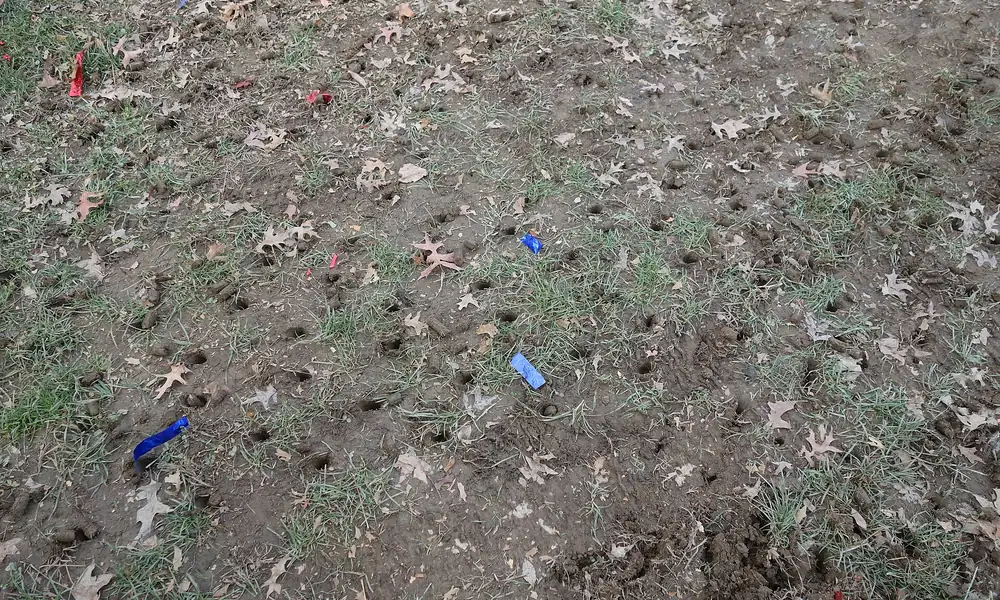
A heavy petrol core aerator is a superb machine in the wrong place. On a large lawn and a sports field it pulls deep clean plugs all day, but in a small garden it is the wrong tool, because it cannot turn between beds, it tears the turf at the edges, and it leaves plugs scattered across a lawn that only needed a light pass. It also needs fuel, oil and a pull cord that floods on a cold morning, so the owner spends more time starting it than aerating with it. Buy a core aerator sized to your lawn: measure your narrowest strip and your gate before you pay, because a machine that cannot reach the grass is just an expensive ornament in the shed.
7. Corded electric aerators on big lawns: the cord is the machine
A corded electric aerator never runs out of power, which sounds like the answer to the battery problem, until you try one on a big lawn. The cord becomes the job: you drag it across the grass, step over it and pull it free from flower beds while steering a machine that wants to wander. Measure your lawn before you buy, and if the farthest corner is more than one extension lead from a socket, buy a battery aerator with two packs instead.
What to avoid when buying a lawn aerator
The most common aerator regret is not a bad machine but a wrong match: a spike aerator bought for clay, a light drum bought for hard ground, or a corded aerator bought for a long lawn. Avoid the trap by checking four things before you pay: the tine type, hollow over spike, on any soil that is compacted; the weight on your own soil, not the weight on the box; the tine steel and the spare-tine price; and the real working width against your narrowest strip and gate. The same checks work on other garden machines too, and our guide to the worst cultivators of 2026 makes the same point about matching the machine to the ground, because the traps are the same everywhere.
Checklist: buying a lawn aerator in 2026
- Dig a test hole in your own soil and buy an aerator that pulls plugs from it, not one that only works on soft loam.
- Choose hollow tines over spikes on clay or compacted soil, and check the tines are thick and replaceable.
- Measure your narrowest lawn strip and your gate, and buy an aerator that fits both with room to turn.
- For cordless aerators, price two large batteries and a fast charger before you compare aerator prices.
- Confirm the tine spacing is tight enough to open the lawn, and check the spare-tine price.
- Check the weight and the tine depth settings, and ask the dealer how long a spare tine takes to arrive.
Frequently asked questions
Spike or hollow-tine: which aerator is right for me?
Hollow-tine aerators suit compacted or clay soil, because they pull plugs out and leave real holes. Spike aerators suit soft, sandy soil only, because on clay they press the soil tighter instead of opening it.
Can an aerator fix a compacted lawn?
Yes, if it pulls real plugs and the lawn is watered first so the tines can bite. A light spike machine will bounce across dry compacted clay, so water the lawn the day before or hire a heavier core machine.
Are cordless aerators powerful enough for a large lawn?
Yes, if you buy the runtime first. A cordless aerator with two large batteries will work a large lawn all morning, but a single small battery fades halfway across the grass.
How deep should an aerator go?
Most lawns need holes five to eight centimetres deep, no more. Going deeper brings up weed seeds and stones, so make two passes in different directions instead of one deep one.
When should I hire someone instead of buying an aerator?
When the lawn has never been aerated, when it is full of roots or rubble, or when you only need it done once a year. A hired machine with an operator will open compacted ground faster and cheaper than buying a machine you use once.
How do I keep an aerator working between seasons?
Clean the tines after every use, empty the fuel or remove the battery, check the tine depth settings and the belts, and store the machine dry and covered. Leave the plugs on the lawn to break down, because they feed the soil as they rot.
Bottom line
The worst lawn aerators of 2026 promise to open the soil and deliver sealed holes instead: spikes that press clay tighter, shoes that barely dent the surface, batteries too small to finish the lawn, drums too light to bite, weak tines that bend, heavy machines that tear small lawns, and cords too short for the plot. Buy an aerator matched to your soil and your lawn, with hollow tines, enough weight, thick standard tines and enough battery, and the air and water will finally reach the roots.


