Turn Away From the Worst Tillers of 2026: Machines That Bounce, Bog Down and Break
The worst tillers of 2026 look like the smartest buy: a light front-tine machine that promises to break any soil, a big rear-tine tiller that claims to chew through clay, or a cheap electric model that costs less than a bag of compost. Then the first real bed arrives, the tines bounce across hard ground instead of digging in, the machine bogs down in wet soil, and the tiller that felt strong on a soft patch cannot break the clay at all. A bad tiller rarely announces itself on the shop floor. This guide ranks the seven worst tiller types of 2026, by what actually goes wrong, so you can spot the pattern before you buy and leave the worst ones on the shelf.
Key takeaways
- A lightweight front-tine tiller is the type to avoid first on hard ground: it bounces across the surface instead of digging.
- Tine depth and weight matter more than engine size: a tiller that cannot hold its tines in the soil is just a noisy lawn ornament.
- A tiller with no depth control and no reverse will trap you at the end of every row, in exactly the soil you are trying to break.
- Batteries and cords are the new weak points: a cord limits the plot, and a single battery fades before the bed is done.
- Check the tine steel, the depth settings, the weight and the spare-parts supply before you buy, and test it on your own soil.
How the worst tillers of 2026 were chosen
Every tiller type below was scored on five measures. Digging ability comes first: can the tiller break the soil its size and price promise, from soft loam to hard clay? Depth control is second, because a tiller that digs too shallow wastes the pass and one that digs too deep stalls. Weight and balance are third: a machine that is too light to hold its tines down will skip across the surface, while one that is too heavy will wear you out. Durability is fourth, judged on the tines, the gearbox and the handles, because a tiller that bends its first tine is disposable. Ease of use is fifth: a reverse gear, a working depth bar and controls you can reach without letting go.
Two notes before the list. First, this guide covers walk-behind garden tillers only: front-tine, rear-tine, electric and petrol machines you walk behind in a garden bed. A tractor is a different machine altogether: it hauls, lifts and pulls implements across a field, as our guide to the worst tractors of 2026 shows, while a cultivator is a lighter tool for shallow secondary tillage, not primary soil-breaking. Second, no single model is named as the worst, because the same bad patterns appear across many brands, and what matters is learning to recognise them for your own soil.
Comparison table: the worst tillers of 2026
| Rank | Tiller type | Main fault | Watch out for |
|---|---|---|---|
| 1 | Lightweight front-tine tillers on clay | Bounces, will not dig in | Skips across hard ground |
| 2 | Oversized rear-tine tillers for small beds | Too big, too heavy, too wide | Crushes beds, cannot turn |
| 3 | One-speed tillers with no reverse | Trapped at the end of the row | No depth bar, no reverse gear |
| 4 | Corded electric tillers on a big plot | Cord limits the plot | Cable drag, cut cords, short reach |
| 5 | One-battery cordless tillers | Battery fades before the bed is done | Short runtime, slow charging |
| 6 | Cheap tillers with weak tines | Tines bend and snap | Thin steel, no spares, weak gearbox |
| 7 | Old petrol tillers with hard starts | Flooding, hard pulls, no parts | Ten pulls and a flooded engine |
The worst tillers of 2026
1. Lightweight front-tine tillers on hard clay: the bounce you cannot stop
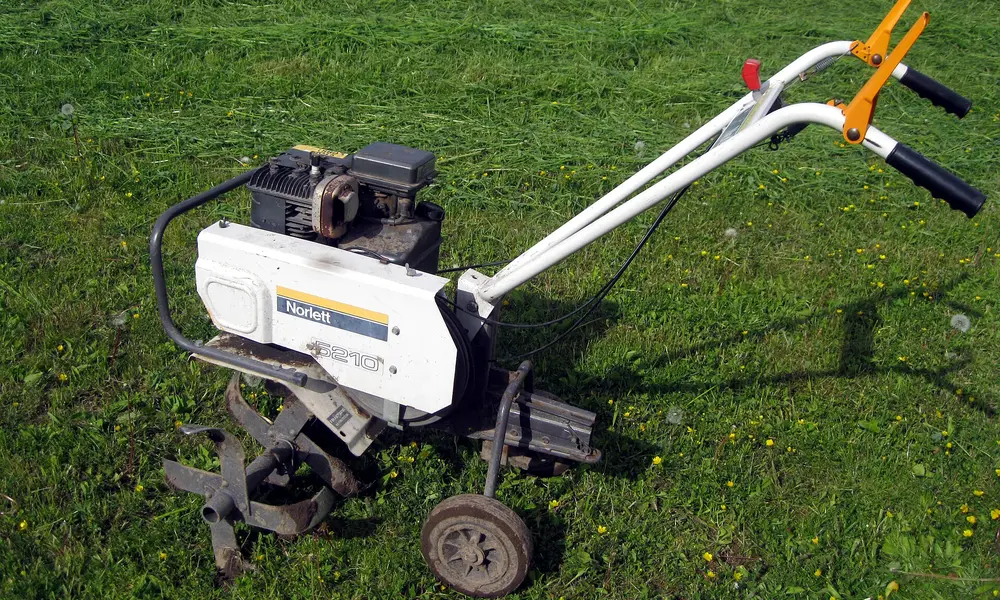
The lightweight front-tine tiller tops this list because it fails at the job a gardener actually has. On hard clay or dry ground the tines cannot bite, so the machine skips and bounces across the surface, while owners report aching arms and beds that look tilled on top and untouched underneath. If your soil is clay or compacted, buy a heavier rear-tine machine or break the ground first with a fork, because a light tiller will never dig what it cannot hold down.
2. Oversized rear-tine tillers for small beds: too much machine for the garden
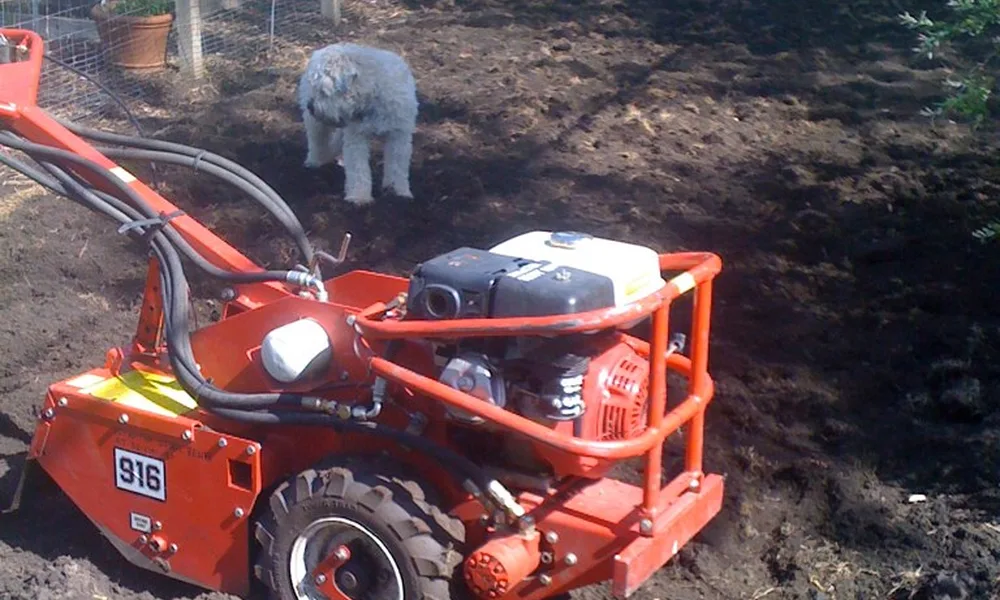
The oversized rear-tine tiller is the machine most buyers are shown first when they ask for something strong: wide, heavy and powerful, it looks like it could break anything. In a small garden it is the wrong tool, because it cannot turn between beds, it crushes the path edges, and it digs deeper than a vegetable bed needs. Buy a tiller sized to your beds: measure your narrowest bed and your gate before you pay, because a tiller that cannot reach the soil is just an expensive ornament in the shed.

3. One-speed tillers with no reverse and no depth control: trapped at the end of the row
A tiller with one speed, no reverse and no depth bar looks simple, until you reach the end of the first row. With no reverse you must drag the machine backwards by hand, and with no depth bar you cannot hold a steady depth, so the tiller digs too deep in soft patches and skips across hard ones. A depth bar and a reverse gear are not luxuries: they are what let you work a row, turn around and work the next one without a fight. Check for both before you buy, and walk away from any tiller that offers neither.
4. Corded electric tillers on a big plot: the cord is the machine
A corded electric tiller never runs out of power, which sounds like the answer to the battery problem, until you try one on a big plot. The cord becomes the job: you drag it across the beds, step over it and pull it free from plants while steering a machine that wants to wander. Corded tillers suit a small plot with a socket near the beds, and the same cord problem dogs the worst leaf blowers, where a corded machine is only as good as its cable. Measure your plot before you buy, and if the farthest bed is more than one extension lead from a socket, buy a battery tiller with two packs instead.
5. One-battery cordless tillers: the charge runs out before the bed does
The one-battery cordless tiller is the newest temptation in the garden centre: quiet, clean, starts with a button, and no fuel to mix. Owners report the tines slowing after twenty minutes, the tiller stalling in clay, and the battery dying halfway down the bed, because one spare battery costs nearly as much as the tiller. If you buy cordless, buy the runtime first: check the amp-hours, the charge time and the price of a spare battery, and never start a big bed with a half-charged pack.
6. Cheap tillers with weak tines: the tines bend first
The cheapest tillers look like a bargain and behave like one. The tines are thin, the steel is soft and the gearbox is built to a price, not a standard. The first stone bends a tine, the second jams the gearbox, and by the third the tiller is smearing soil instead of breaking it. A good tiller has thick, replaceable tines in a standard size, a gearbox with a shear pin that protects it, and spare tines your local shop stocks. Check the tine thickness and the spare-tine price before you buy, and walk away from any machine whose tines are a one-off shape no shop carries.
7. Old petrol tillers with hard starts and no parts: the engine gives up first
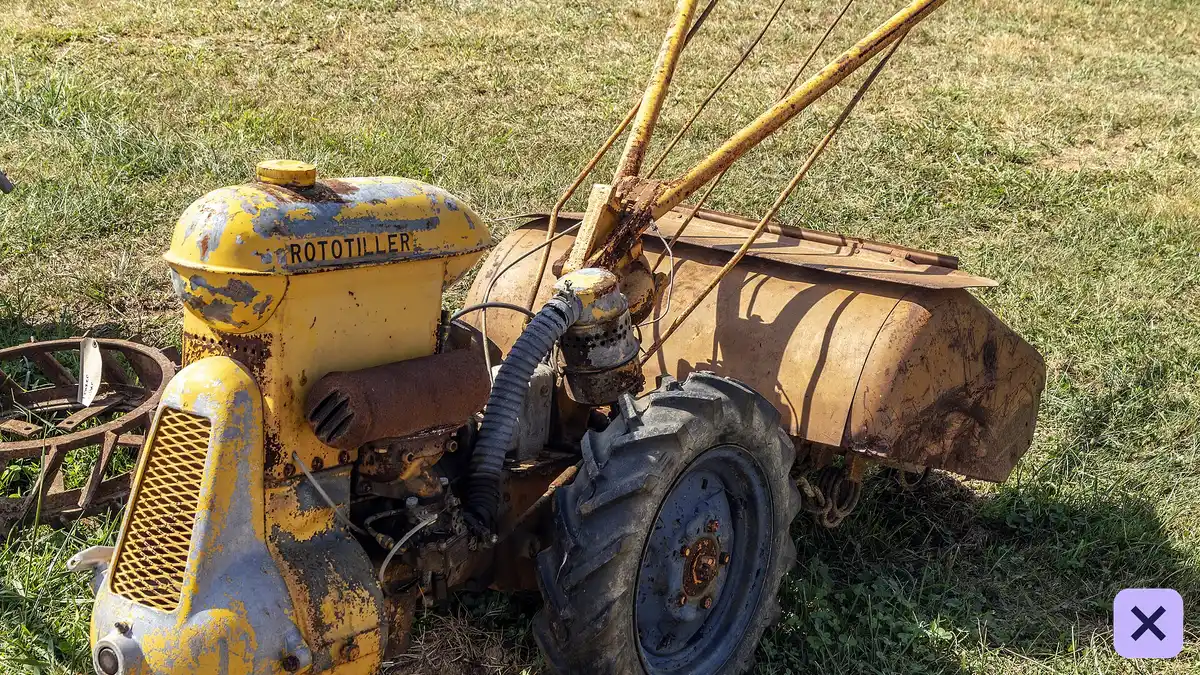
Heavy old petrol tillers are the strongest tillers you can buy second-hand and the hardest to live with. The engine floods, the pull cord needs ten pulls on a cold morning, and the parts have not been made for years, so a broken carburettor or a worn belt turns a working machine into scrap. A petrol tiller suits a large plot if it is a current model with a dealer nearby; for an ordinary garden, an old petrol machine costs more in frustration than the power is worth.
What to avoid when buying a tiller
The most common tiller regret is not a bad machine but a wrong match: a light tiller bought for clay, a wide tiller bought for narrow beds, or a corded tiller bought for a long plot. Avoid the trap by checking four things before you pay: the weight on your own soil, not the weight on the box; the depth settings and the reverse gear; the tine steel and the spare-tine price; and the real working width against your narrowest bed and gate. The same checks work on other garden machines too, and our guide to the worst lawn mowers of 2026 makes the same point about matching the machine to the ground, because the traps are the same everywhere.
Checklist: buying a tiller in 2026
- Dig a test hole in your own soil and buy a tiller heavy enough to hold its tines down in it, not one that only works on soft loam.
- Measure your narrowest bed and your gate, and buy a tiller that fits both with room to turn.
- Check for a depth bar and a reverse gear, and reject any tiller that offers neither.
- For cordless tillers, price two large batteries and a fast charger before you compare tiller prices.
- Confirm the tines are thick, replaceable and a standard size your local shop stocks, and check their price.
- Check the gearbox for a shear pin, and ask the dealer how long a spare tine or belt takes to arrive.
Frequently asked questions
Front-tine or rear-tine: which tiller is right for me?
Front-tine tillers suit soft, already-worked soil and small beds, because they are light and easy to turn. Rear-tine tillers suit hard, unbroken ground and big beds, because their weight holds the tines down.
Can a tiller break hard clay?
Only if it is heavy enough and the soil is damp, not dry or soaking wet. A light tiller will bounce across dry clay, so water the bed the day before or break the ground first with a fork.
Are cordless tillers powerful enough for a vegetable garden?
Yes, if you buy the runtime first. A cordless tiller with two large batteries will work a vegetable garden all morning, but a single small battery fades halfway down the first bed.
How deep should a tiller dig?
Most vegetable beds need fifteen to twenty centimetres, no more. Digging deeper brings up weed seeds and stones, so make two shallow passes instead of one deep one.
When should I hire someone instead of buying a tiller?
When the ground has never been broken, when it is full of roots or rubble, or when you only need one bed dug once. A hired machine with an operator will break new ground faster and cheaper.
How do I keep a tiller working between seasons?
Clean the tines after every use, empty the fuel or remove the battery, check the shear pin and the belt, and store the machine dry and covered.
Bottom line
The worst tillers of 2026 promise to break soil and deliver bounce: machines too light to dig, too wide for the beds, with no reverse and no depth control, cords too short for the plot and batteries too small to finish the bed. Buy a tiller matched to your soil and your beds, with a depth bar, a reverse gear, thick standard tines and enough battery. Garden machines fail in their own ways, and our guide to the worst leaf blowers of 2026 shows how the same battery and weight traps catch a different kind of garden machine.