Shun the Worst Loppers of 2026: Long Handles, Weak Cuts and Joints That Give Out
The worst loppers of 2026 look like the strongest buy in the garden centre: long-handled bypass loppers that promise to slice branches as thick as your thumb, a heavy anvil pair that claims to crush through anything, or a telescopic pair that reaches high limbs without a ladder. Then the first real cutting day arrives, the handles flex instead of driving the blade through, the joint loosens after a dozen cuts, and a branch that should fall in one squeeze takes three. A bad pair of loppers rarely announces itself on the shop floor. This guide ranks the seven worst lopper types of 2026, by what actually goes wrong, so you can spot the pattern before you buy.
Key takeaways
- A lopper that flexes at the handles has already failed: the force never reaches the blade, and the cut stalls halfway through.
- Bypass loppers suit live branches and anvil loppers suit dead wood; using the wrong one crushes the branch it should cut.
- The joint is the weak point: a rivet that loosens or a bolt that slips turns a strong tool into a wobbling one.
- Weight matters more than it looks: heavy steel loppers tire your arms long before the branch pile is done.
- Check the handle stiffness, the blade alignment, the joint and the spare-parts supply before you buy, and test on a thick branch, not a twig.
How the worst loppers of 2026 were chosen
Every type below was scored on five measures. Cutting ability comes first: does the blade cut cleanly through the branches its size and price promise, from live growth to dead wood up to about fifty millimetres thick? Handle strength is second, because loppers that flex waste every squeeze. Joint quality is third, judged on the pivot bolt, the washers and the way the handles meet the head. Weight and balance are fourth: a pair that is heavy at the head end will drag your arms down. Safety is the fifth measure: handles that stay locked when telescopic, and blades that hold still when the loppers are carried.
Two notes before the list. First, this guide covers two-handed long-handled loppers only, for branches too thick for one-handed shears. Hand pruning shears cut stems up to about twenty millimetres with one hand, and powered hedge trimmers cut hedges with a reciprocating blade, not single branches with a hand blade. Second, no single model is named as the worst, because the same bad patterns appear across many brands, and what matters is learning to recognise them for your own garden. Garden cutting tools fail in their own ways, and our guide to the worst pruning shears of 2026 shows how the same soft-blade and weak-spring traps catch the smaller tool in the shed.
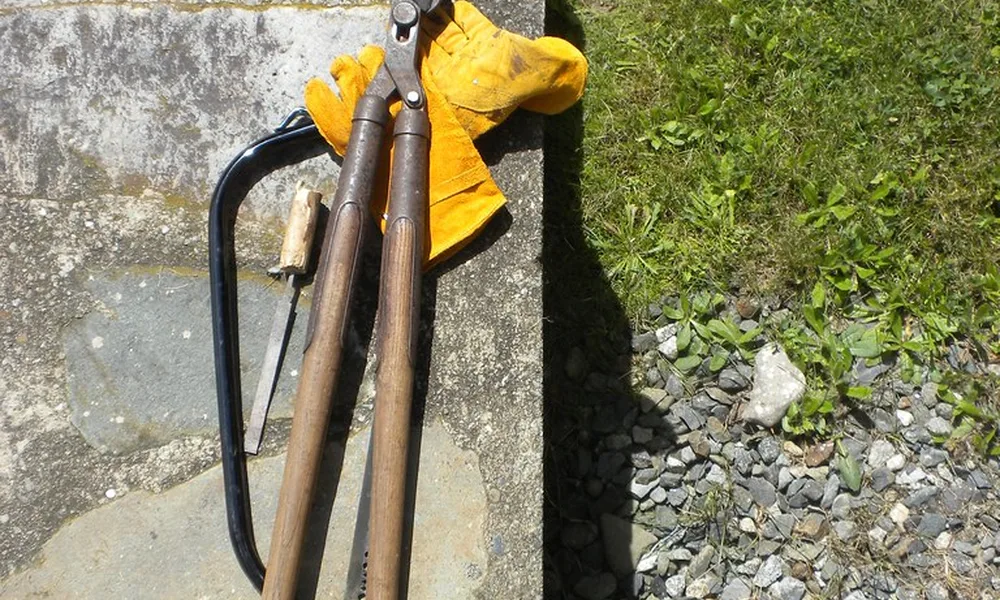
Comparison table: the worst loppers of 2026
| Rank | Lopper type | Main fault | Watch out for |
|---|---|---|---|
| 1 | Loppers with flexing tubular handles | Force never reaches the blade | Stalled cuts, bent handles |
| 2 | Anvil loppers with soft blades | Crush branches instead of cutting | Torn bark, ragged wounds |
| 3 | Bypass loppers with misaligned blades | Blade passes the jaw badly | Pinched stems, torn cuts |
| 4 | Ratchet loppers that jam mid-cut | Mechanism locks up | Plastic teeth, no release |
| 5 | Telescopic loppers with slipping locks | Handles collapse mid-cut | Plastic collars, worn clamps |
| 6 | Heavy solid-steel loppers | Weight wears you down | Arm fatigue, head-heavy balance |
| 7 | Loppers with riveted joints and no spares | Joint loosens, no fix | Wobble, no blade or bolt |
The worst loppers of 2026
1. Loppers with flexing tubular handles: the squeeze goes nowhere
The lopper with flexing tubular handles is the worst lopper type of 2026, and it wins the title on the fault that defeats the whole tool. Loppers exist to turn two hands into cutting force, but thin-walled steel or aluminium tubes bend under load, so the handles bow outward and the blade stalls halfway through the branch. You squeeze harder, the handles flex more, and the branch ends up pinched and torn rather than cut. Test it in the shop: grip the handles near the ends and push them toward each other, and feel whether the tubes stay straight or start to bow. A good pair uses thick-walled tubes that do not give.
2. Anvil loppers with soft blades: the cut that crushes
An anvil lopper closes a straight blade onto a flat plate, which works on dead wood when the blade is hard and sharp, but the cheapest pairs use soft steel that blunts within a morning. The blade then presses the branch flat before it bites, tearing the bark and leaving a ragged wound that heals slowly and lets disease into the tree. On live branches the damage is worse, because a crushed branch cannot seal itself the way a clean cut can. If you buy anvil loppers, buy the blade first, and never use an anvil pair on live green wood.

3. Bypass loppers with misaligned blades: the blade misses the jaw
A bypass lopper should work like giant scissors, with the blade passing close beside the hooked jaw, and when the alignment is right it slices cleanly. The worst pairs arrive with the blade set wrong, or the joint loosens after a few dozen cuts and the blade drifts away from the jaw. The gap pinches the branch instead of cutting it, the stem tears, and the blade edge chips where it strikes the jaw instead of passing it. Check the alignment in the shop by closing the loppers slowly, and walk away from any pair with a visible gap or a blade that scrapes the jaw.
4. Ratchet loppers that jam mid-cut: the mechanism locks up
Ratchet loppers promise to cut thick branches in easy stages, holding the blade partway through so you can squeeze again. On the worst pairs the promise collapses at the first branch that actually needs it. The plastic ratchet teeth slip or snap, the mechanism jams with the blade buried in the wood, and there is no release lever to free it, so you are left prising the loppers out of a branch with both hands and a foot. Test the mechanism in the shop on a thick branch, and walk away from any pair whose ratchet feels gritty or whose teeth flex.
5. Telescopic loppers with slipping locks: the handles collapse
Telescopic loppers promise extra reach without a ladder, with handles that slide out and lock. The worst pairs use plastic collars or worn clamps that slip under load, so the handles collapse mid-cut and the blade stops dead in the branch. The sudden give throws your balance, and on a high branch it can throw the cut off target too. A good telescopic pair uses metal locking collars you can tighten by hand. Test them in the shop: extend the handles fully, lock them, and pull hard to see whether they hold or slide.

6. Heavy solid-steel loppers: strong, and wearing you down
Heavy solid-steel loppers are the strongest loppers you can buy and the hardest to live with. The steel head and handles have power to spare and thick branches fall without a struggle, but a pair with a full steel build weighs far more than an aluminium one, most of it at the head end, so arms tire and the last branches get cut when you are weakest. Steel suits a short session on thick dead wood; for an ordinary garden, the weight costs more than the power is worth.
7. Loppers with riveted joints and no spares: one loose joint ends them
The last worst type is the pair that is built to be thrown away. The joint is a rivet you cannot tighten, the blade is fixed in place with no replacement available, and the handles are a one-off shape no shop stocks. When the joint loosens, which it will within a season or two of hard use, the blades wobble and the loppers are finished, with no fix except a new pair. Before you buy, check whether the joint has a bolt you can tighten. If the answer is no on both counts, you are buying a disposable tool at a reusable price.
What to avoid when buying loppers
The most common lopper regret is not a bad pair but a wrong match: bypass loppers used on dead wood, anvil loppers used on live branches, or a short pair bought for branches that need the leverage of long handles. Avoid the trap by checking four things before you pay: the blade type against the branches you actually cut, the maximum branch size the maker claims, the handle stiffness under load, and the spare-parts supply for blades and bolts. The same checks work on other garden cutting tools too, and our guide to the worst hedge trimmers of 2026 makes the same point about blade quality and weight. For high branches beyond lopper reach, the job belongs on a pole, and our guide to the worst pole saws of 2026 shows the same slipping-lock trap at a greater height.
Checklist: buying loppers that will last
- Match the blade to the job: bypass for live branches, anvil for dead wood, never the other way round.
- Push the handles toward each other in the shop and feel whether the tubes stay straight or start to bow.
- Close the loppers slowly and watch the blade pass the jaw with no gap and no scraping.
- Test any telescopic lock at full extension by pulling hard along the handles to see whether it holds.
- Lift the loppers by the handles and check the balance: a head-heavy pair will tire your arms fast.
- Ask whether the shop stocks blades and bolts for the pair, and walk away from a pair with no spares.
Frequently asked questions
What is the difference between loppers and pruning shears?
Pruning shears are one-handed tools for stems up to about twenty millimetres thick. Loppers have long handles you work with two hands, giving far more leverage for branches up to about fifty millimetres thick. Shears suit fine work; loppers suit thicker branches.
How thick a branch can loppers cut?
Most long-handled loppers are made for branches up to about fifty millimetres thick, depending on the wood and the blade. Anything thicker needs a saw, and anything high up needs a pole saw rather than a ladder.
Should I buy bypass or anvil loppers?
Buy bypass loppers for live branches, because the slicing cut heals cleanly. Buy anvil loppers for dead wood. If you cut both, a bypass pair is the better single choice.
Why do my loppers crush branches instead of cutting them?
A crushed cut usually means a dull or soft blade, or the wrong blade type for the branch. Anvil loppers on live wood crush by design, and a bypass blade that has lost its edge tears instead of slicing. Sharpen the blade or replace it.
Are telescopic loppers worth it?
They can help if you need extra reach without a ladder, but only when the locks are metal and hold firmly at full extension. Plastic collars slip under load, so test the lock by pulling hard on the extended handles before you buy.
How do I keep loppers working for years?
Clean the blades after each session, oil the joint, sharpen the edge when it starts to tear, and tighten the pivot bolt when the action feels loose. A pair with a bolted joint and stocked spares should last a decade.
Bottom line
The worst loppers of 2026 fail on the basics: handles that flex, blades that crush or miss the jaw, ratchets that jam, locks that slip and joints that cannot be fixed. Buy the handles first, test the stiffness and the lock in the shop, match bypass to live branches and anvil to dead wood, and choose a pair with a bolted joint and stocked spares. The right loppers disappear into the job.