Walk Away From the Worst Pole Saws of 2026: Reach You Cannot Trust Overhead
The worst pole saws of 2026 look like the cleverest buy in the garden centre: a long telescopic pole that promises to reach any branch, a light cordless saw that starts with a button, or a cheap manual saw that costs less than a tank of fuel. Then the first real job arrives, the pole flexes and whips overhead, the battery fades halfway through a limb, and the saw that felt sharp on a thin twig cannot cut a thick branch at all. A bad pole saw rarely announces itself on the shop floor. This guide ranks the seven worst pole saw types of 2026, by what actually goes wrong, so you can spot the pattern before you buy and leave the worst ones on the shelf.
Key takeaways
- An over-long telescopic pole is the type to avoid first: it flexes, whips and puts the cut off target.
- Reach is the whole point of a pole saw, so a saw that cannot hold its head steady at full extension has already failed.
- A one-battery cordless pole saw strands the job overhead: the charge runs out with the bar stuck in the branch.
- Blade and chain quality matter more than pole length: a dull blade binds, tears bark and leaves a ragged wound on the tree.
- Check the locking collars, the weight at full extension, the runtime and the spare-parts supply before you buy, and test it on a thick limb, not a thin twig.
How the worst pole saws of 2026 were chosen
Every pole saw type below was scored on five measures. Reach and control come first: can the saw hold its head steady on the branch at full extension, or does the pole flex and whip? Cutting ability is second, judged on the blade or chain, because a saw that cannot cut the limbs its size promises is useless. Runtime is third for powered saws, because a battery that dies overhead strands a job that is half done. Weight and balance are fourth: a machine heavy at the head end will drag your arms down long before the branch is cut. Safety is fifth: a chain brake, a bar guard and a head that locks in place, because a falling limb and a live blade overhead are a bad combination.
Two notes before the list. First, this guide covers pole saws only: saws mounted on a long pole for cutting high branches from the ground. A hand-held chainsaw is a different machine altogether: it cuts at ground level with a bar and a loop of chain, as our guide to the worst chainsaws of 2026 shows, while a pole hedge trimmer cuts hedges with a reciprocating blade, not branches with a saw. Second, no single model is named as the worst, because the same bad patterns appear across many brands, and what matters is learning to recognise them for your own trees.

Comparison table: the worst pole saws of 2026
| Rank | Pole saw type | Main fault | Watch out for |
|---|---|---|---|
| 1 | Over-long telescopic poles | Flex, whip, no control | Cut lands off target, head wanders |
| 2 | One-battery cordless saws | Battery dies mid-limb | Short runtime, slow charging |
| 3 | Corded electric saws on a big garden | Cord limits reach | Cable drag, cut cords, short reach |
| 4 | Manual saws with dull blades | Blade binds and tears bark | No sharpening path, cheap steel |
| 5 | Cheap saws with slipping collars | Pole collapses mid-cut | Plastic locks, worn clamps |
| 6 | Heavy petrol pole saws | Weight, noise and fumes | Arm fatigue, hard starting |
| 7 | Saws with no chain brake | Blade will not stop on kickback | Exposed bar tip, no guard |
The worst pole saws of 2026
1. Over-long telescopic poles: the reach you cannot control
The over-long telescopic pole saw tops this list because it fails at the one job a pole saw exists to do. At full extension the pole flexes like a fishing rod, the head whips with every push, and the cut lands inches from where you aimed it, while owners report aching arms and branches that tear instead of cutting cleanly. Buy the shortest pole that reaches your highest regular branch, and test it at full extension before you pay, because a steady six-metre pole beats a wobbling eight-metre one every time.
2. One-battery cordless pole saws: the charge runs out overhead
The one-battery cordless pole saw is the newest temptation on the shop floor: quiet, clean and starts with a button. Owners report the chain speed dropping after twenty minutes, the saw stalling in a thick limb, and the battery dying with the bar stuck in the branch overhead, because one spare battery costs nearly as much as the saw. If you buy cordless, buy the runtime first: check the amp-hours, the charge time and the price of a spare battery, and never start a big limb with a half-charged pack.

3. Corded electric pole saws on a big garden: the cord is the saw
A corded electric pole saw never runs out of power, which sounds like the answer to the battery problem, until you try it on a big garden. The cord becomes the job: you drag it around the tree, step over it and pull it free from shrubs while holding a long pole overhead. Corded saws suit a small garden with a socket near the tree, and the same cord problem dogs the worst chainsaws, where a corded saw is only as good as its cable. Measure your garden before you buy, and if the farthest tree is more than one extension lead from a socket, buy a battery saw with two packs instead.
4. Manual pole saws with dull, unsharpenable blades: the blade gives up first
A manual pole saw has no motor to hide behind, so the blade is everything, and the cheapest fail on the steel. The blade is thin, the teeth are soft and the edge cannot be sharpened with an ordinary file, so the first thick limb dulls it and the second makes it bind and tear bark. A good manual pole saw has a replaceable blade in a standard size, hardened teeth and a blade that can be resharpened or swapped in minutes. Check the spare-blade price before you buy, and walk away from any saw whose blade is a one-off shape no shop stocks.
5. Cheap pole saws with slipping locking collars: the pole collapses mid-cut
The locking collar is the cheapest part of a pole saw and the one that fails most dangerously. On budget saws the collars are plastic, the clamps wear smooth after a season, and the pole slides shorter mid-cut, dropping the head onto the branch. Look for metal cam locks, test every collar under a firm pull before you buy, and reject any pole whose sections twist or slide when you lean on them.
6. Heavy petrol pole saws: strong, loud and wearing you down
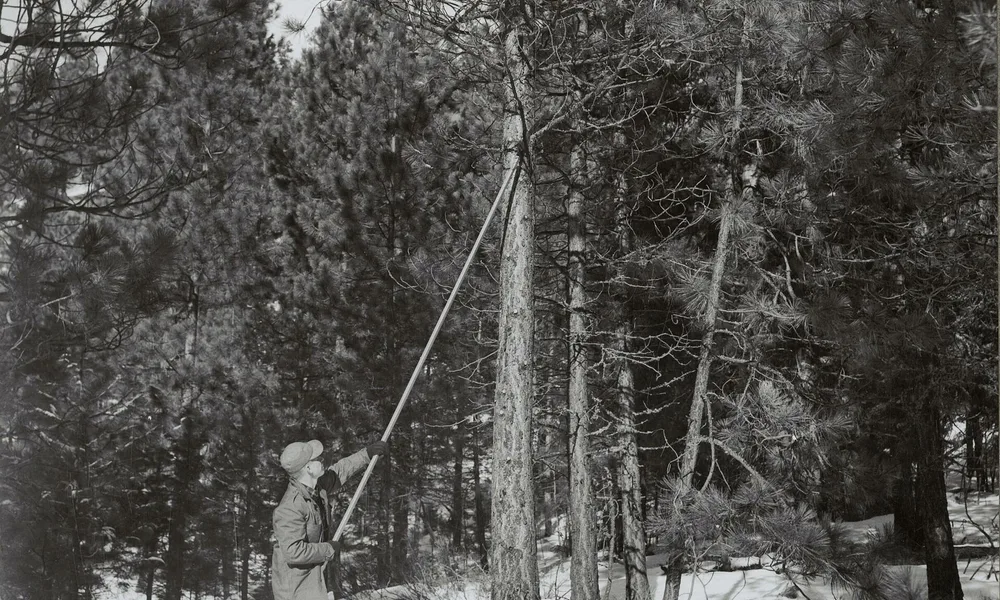
Heavy petrol pole saws are the strongest you can buy and the hardest to live with. The engine has power to spare and thick limbs fall without a stall, but a petrol saw with a full tank weighs far more than a cordless machine, most of it at the head end, so arms tire and the top of the tree gets cut last, when you are weakest. Petrol suits a large property with many thick limbs; for an ordinary garden, the weight costs more than the power is worth.
7. Pole saws with no chain brake and an exposed bar tip: the safety gap
The last type on this list is here for safety, not performance. A powered pole saw with no chain brake cannot stop its chain when the bar kicks back, and an exposed bar tip invites the kickback that a brake is meant to stop. Overhead, a kickback is worse than on the ground, because the saw is above your head and the falling limb is coming down at the same time. Check for a working chain brake, a bar cover and a tip guard before you buy, and never use a powered pole saw without a helmet, eye protection and gloves.
What to avoid when buying a pole saw
The most common pole saw regret is not a bad saw but a wrong match: a long pole bought for one tall tree and then used for everything, a battery saw bought for a big garden with a single pack, or a manual saw bought for limbs thicker than its blade can cut. Avoid the trap by checking four things before you pay: the weight at full extension, not the weight on the box; the runtime on full power, not the headline figure; the locking collars under a firm pull; and the price and availability of spare blades, chains and batteries. The same checks work on other garden machines too, and our guide to the worst hedge trimmers of 2026 makes the same point about weight and runtime, because the traps are the same everywhere.
Checklist: buying a pole saw in 2026
- Measure your highest regular branch and buy the shortest pole that reaches it, not the longest pole on the shelf.
- Hold the saw at full extension for a minute: if your arms shake, it is too heavy for you.
- Check the locking collars under a firm pull, and reject any pole whose sections twist or slide.
- For cordless saws, price two large batteries and a fast charger before you compare saw prices.
- Confirm the spare blade or chain is a standard size your local shop stocks, and check its price.
- Check for a working chain brake, a bar cover and a tip guard, and budget for a helmet, eye protection and gloves.
Frequently asked questions
How long a pole saw do I need?
Measure your highest branch, add your height and reach, and buy the shortest pole that covers it. Most gardens need four to six metres; a longer pole only adds flex, weight and wobble.
Are cordless pole saws powerful enough for thick limbs?
Yes, if you buy the runtime first. A cordless saw with two large batteries will cut thick limbs all morning, but a single small battery fades halfway through the first big branch.
Can a pole saw cut a thick branch cleanly?
Only if the blade or chain is sharp and the head stays still. A flexing pole or a dull blade tears bark, so keep the cutting edge sharp and the pole locked tight.
Is a manual pole saw better than a powered one?
For a few thin limbs a year, yes: a manual saw is light, quiet and cheap to keep. For thick limbs or many trees, a powered saw earns its keep, as long as you buy enough battery.
When should I hire a tree surgeon instead of using a pole saw?
When the limb is over a roof, a road or a power line, when it is thicker than your saw can cut cleanly, or when you would need a ladder as well as a pole.
How do I keep a pole saw safe between jobs?
Fit the bar cover, empty the fuel or remove the battery, wipe the blade clean, and store the pole collapsed and locked in a dry place. Check the collars and the brake before every use.
Bottom line
The worst pole saws of 2026 promise reach and deliver wobble: poles too long to control, batteries too small to finish the job, cords too short for the garden, blades too soft to stay sharp and collars too weak to hold. Buy the shortest steady pole that reaches your trees, with enough battery, a sharp standard blade and locks you can trust. Yard machines fail in their own ways, and our guide to the worst lawn mowers of 2026 shows how the same battery and weight traps catch a different kind of garden machine.