Dials That Lie: The Worst Lawn Spreaders of 2026
The worst lawn spreaders of 2026 are not the oldest tools in the shed or the cheapest ones on the shelf. They are the spreaders that look useful in the garden centre and then wear their owners down: dials that slip and change the rate halfway across the lawn, hoppers that clog on the first damp morning, wheels that wobble and throw the seed in stripes, or a broadcast spreader that flings fertiliser onto the path instead of the grass. This guide ranks the seven worst types of 2026, by what actually goes wrong.
Key takeaways
- A slipping dial is the type to avoid first: the rate changes mid-pass, and the lawn ends up striped.
- Clogging matters more than hopper size: a spreader that cannot feed damp granules evenly is just a wheelbarrow with a hole in it.
- Wheels and agitators are the weak points: a wobbling wheel throws unevenly, and a missing agitator lets the granules bridge and stop.
- Width is the great trap: a drop spreader too narrow means too many passes, and a tow-behind too wide means wasted seed.
- Check the dial, the agitator, the wheels and the rust resistance before you buy, and test it on your own seed, not the dry granules in the shop.
How the worst lawn spreaders of 2026 were chosen
Every spreader below was scored on five measures. Spreading evenness comes first: can the spreader lay down seed or fertiliser at the rate its size and price promise, from edge to edge, without stripes, burnt patches or bare ones? Dial accuracy is second, because a dial that slips, sticks or lies about the rate ruins the pass and leaves the lawn striped. Feed reliability is third: an agitator that keeps the granules moving, a hopper that does not bridge, and a shut-off that actually shuts off when you stop. Durability is fourth, judged on the hopper, the wheels and the frame, because a spreader that rusts through in its first season is disposable. Ease of use is fifth: a dial you can read without bending down, a hopper you can fill without spilling, and a machine you can turn without dumping a pile of seed.
Two notes before the list. First, this guide covers lawn spreaders only: machines that distribute seed, fertiliser or other granules evenly across an established lawn. A lawn aerator is a different machine: it punches holes or pulls plugs so air and water can reach the roots, as our guide to the worst lawn aerators of 2026 shows, while a dethatcher rakes thatch off the surface. The mower cuts the grass on top, as our guide to the worst lawn mowers of 2026 explains, and the spreader feeds what grows underneath it. Second, no single model is named as the worst, because the same bad patterns appear across many brands, and what matters is learning to recognise them for your own lawn.
Comparison table: the worst lawn spreaders of 2026
| Rank | Spreader type | Main fault | First warning sign |
|---|---|---|---|
| 1 | Handheld crank spreaders on large lawns | Uneven throw, tired arms, striped lawn | Your arm gives out before the far corner |
| 2 | Cheap broadcast spreaders with flimsy dials | Dial slips and changes the rate mid-pass | One half of the lawn is greener than the other |
| 3 | Narrow drop spreaders on big lawns | Too many passes, missed strips between them | Thin pale lines appear across the lawn |
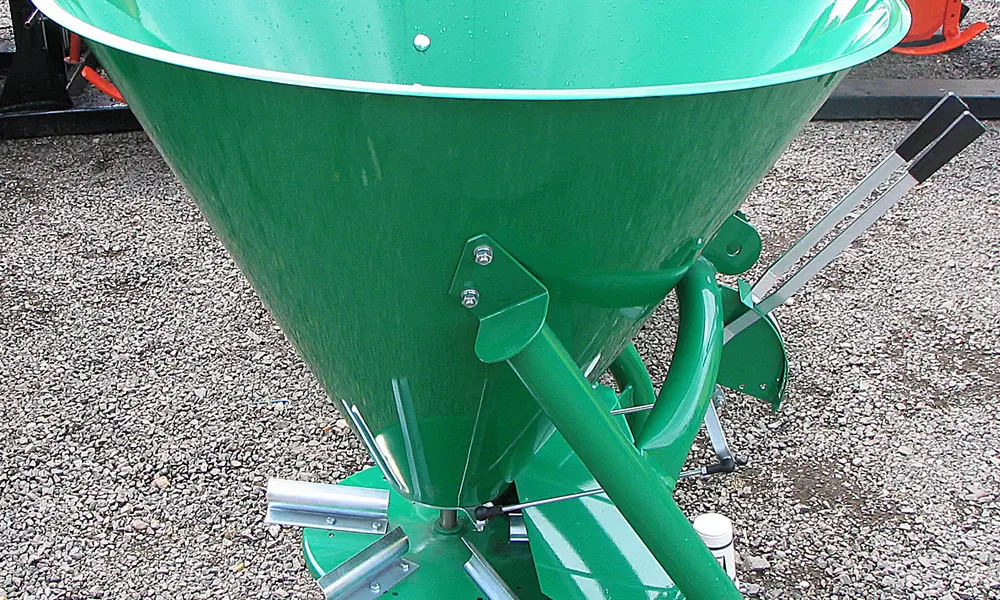
| 4 | Broadcast spreaders with wobbly wheels and no agitator | Clogging and uneven flow | The granules stop, then dump in a pile |
| 5 | Tow-behind spreaders for small lawns | Too wide to turn, seed wasted on paths and beds | The flower beds are greener than the lawn |
| 6 | Spreaders with rust-prone steel hoppers | Rust flakes into the feed and holes appear | Orange stains under the hopper after one winter |
| 7 | Battery spreaders with one small battery | Battery fades and the throw weakens mid-lawn | The far corner gets half the seed of the near one |
The worst lawn spreaders of 2026
1. Handheld crank spreaders on large lawns: the arm gives out first
The handheld crank spreader tops this list because it fails at the job a gardener actually has. On a small lawn it works well enough: a scoop of seed, a turn of the crank and a short walk. On a large lawn the arm tires before the far corner, the crank slows, the throw weakens and the seed lands in stripes, because a spreader that depends on your arm cannot keep a steady rate for an hour. The owner finishes with one half thick and the other thin, and only the grass shows it. Buy a wheeled spreader.
2. Cheap broadcast spreaders with flimsy dials: the dial lies to you
The cheapest broadcast spreaders look like a bargain and behave like one. The dial is thin plastic, the numbers rub off, and the setting slips a notch every time the hopper bumps over a root, so the rate changes halfway across the lawn without the owner noticing. One half gets double the fertiliser and burns, the other half gets half and stays pale, because a dial that cannot hold its setting cannot spread evenly. A good broadcast spreader has a dial that clicks into place, numbers you can read standing up, and a shut-off that stops the flow when you stop walking. Test the dial in the shop first.
3. Narrow drop spreaders on big lawns: too many passes, missed strips
The narrow drop spreader is the most precise machine in the garden centre: it drops the granules straight down in a neat band, with no waste on the path and no seed in the beds. On a big lawn that precision becomes the fault, because the band is so narrow that the owner walks the lawn four times to do what a broadcast spreader does in one, and every pass leaves a thin missed strip between the bands. The lawn grows in pale lines. A drop spreader suits a small lawn; for anything bigger, buy a broadcast spreader.
4. Broadcast spreaders with wobbly wheels and no agitator: the flow stops, then dumps
A broadcast spreader with wobbly wheels and no agitator looks complete and behaves half-finished. The wheels wobble, so the spinner turns unevenly and throws the granules lopsided, while the granules bridge across the outlet and stop flowing. Then the bridge collapses and the whole lot dumps in a pile, burning a brown circle into the lawn. The owner learns to shake the hopper every few steps, which is babysitting, not spreading. Buy solid wheels, an agitator and a shut-off you can trust.
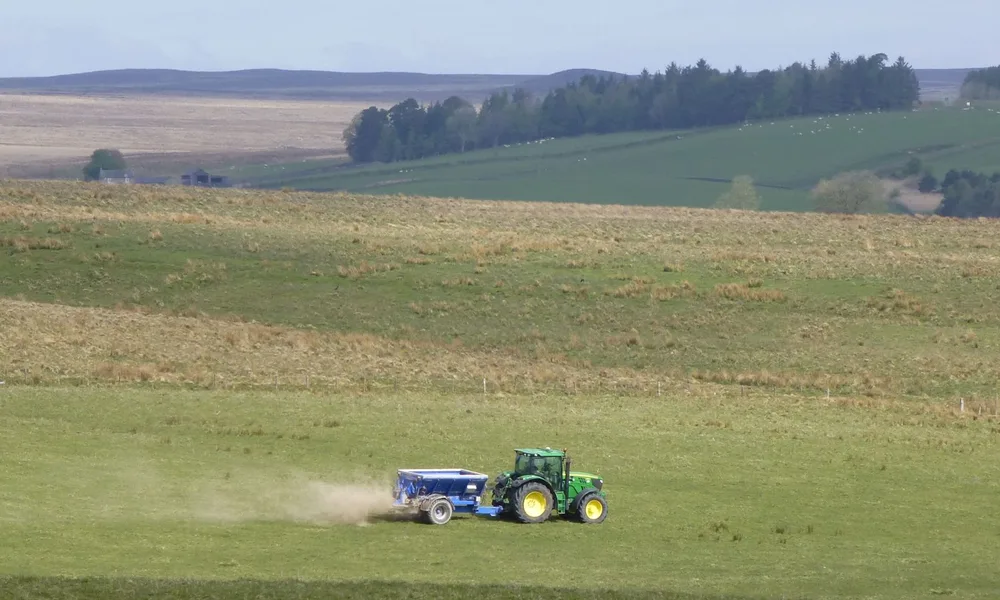
5. Tow-behind spreaders for small lawns: too wide to turn, seed everywhere but the lawn
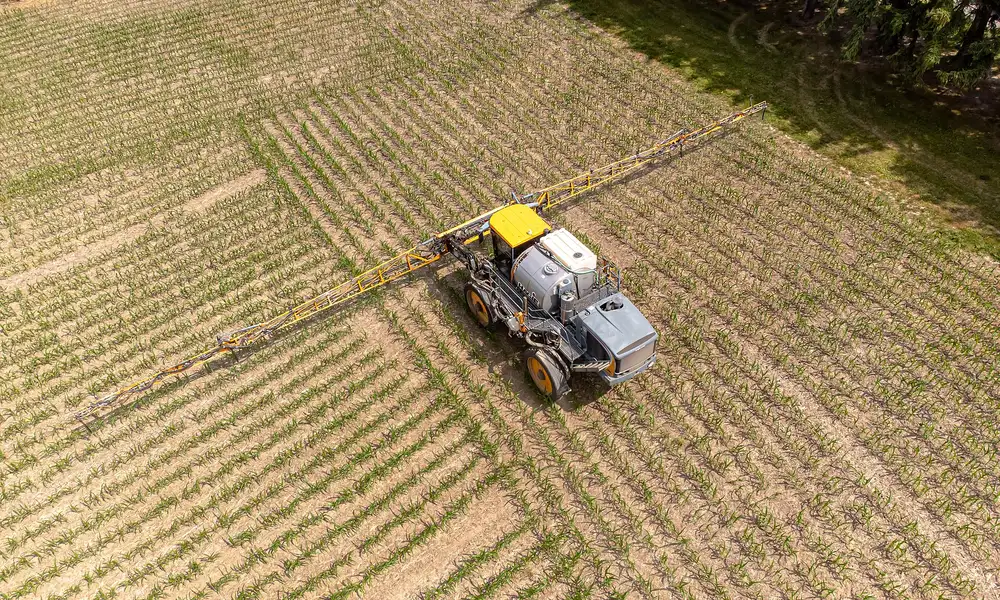
A tow-behind spreader is a superb machine in the wrong place. On a large lawn or a field it covers ground all day, but in a small garden it is the wrong tool, because it cannot turn between the beds, it throws seed onto the paths and into the beds, and it needs a ride-on mower strong enough to pull it. The owner spends more time sweeping seed off the patio than spreading it on the grass. Buy a tow-behind only for a lawn too big to walk behind.
6. Spreaders with rust-prone steel hoppers: the hopper eats itself
The spreader with a rust-prone steel hopper looks solid in the shop and behaves like a sieve after one winter. Fertiliser is corrosive, and a thin steel hopper left with granules in it over winter rusts from the inside out, so rust flakes fall into the feed, block the outlet, and holes appear in the hopper. The owner finds orange stains under the machine in spring, and a hopper that leaks seed onto the lawn. Buy a plastic or stainless hopper, and empty it after every use.
7. Battery spreaders with one small battery: the throw fades halfway
A battery spreader with one small battery never needs fuel, which sounds like the answer to every other problem on this list, until you try one on a big lawn. The battery fades as it drains, the spinner slows, the throw weakens, and the far corner gets half the seed of the near one, because a spreader that cannot hold its speed cannot spread evenly. A second battery costs nearly as much as the spreader. If the farthest corner is more than one charge away, buy two large packs or a push spreader.
What to avoid when buying a lawn spreader
The most common spreader regret is a wrong match: a handheld spreader bought for a big lawn, a narrow drop spreader bought for a wide one, or a tow-behind bought for a garden it cannot turn on. Check four things before you pay: the dial, and whether it holds its setting when the hopper bumps; the agitator, and whether the granules flow without bridging; the wheel quality and the hopper material; and the real width against your lawn and your gate. The same checks work on other garden machines too, and our guide to the worst lawn dethatchers of 2026 makes the same point about matching the machine to the ground, because the traps are the same everywhere.
Checklist: buying a lawn spreader in 2026
- Measure your lawn and buy a spreader wide enough to cover it in a sensible number of passes, not a handheld one.
- Choose a dial that clicks into place and holds its setting, and test it by bumping the hopper.
- Check the spreader has an agitator that keeps the granules moving, and a shut-off that stops the flow.
- For damp granules, buy a spreader with a wide outlet and a rust-proof hopper, and store it empty.
- Confirm the wheels run true and the tyres are solid, and check the spare-parts price for the spinner.
- For battery spreaders, price two large batteries and a fast charger before you compare prices.
Frequently asked questions
Broadcast or drop spreader: which is right for me?
Broadcast spreaders suit large lawns, because they cover ground quickly and the overlap hides the passes. Drop spreaders suit small, neat lawns with straight edges, because they place the granules exactly and waste nothing.
Can I use the same spreader for seed and fertiliser?
Yes, if you clean it and reset the dial, because seed and fertiliser need different rates. Always empty the hopper first.
How much should I overlap each pass?
About a third of the spread width on a broadcast spreader, so the edges meet and no strip is missed. A drop spreader needs no overlap, but the passes must touch, or pale lines appear.
Why is my lawn striped after spreading?
Because the rate changed mid-pass, the passes did not overlap, or the wheels wobbled. Calibrate the spreader on a tarp first, overlap each pass by a third, and check the dial has not slipped.
When is the best time to spread fertiliser?
On a calm, dry day when rain is expected within a day or two, so the granules wash in without burning the grass. Never spread in strong wind, because the granules blow off the lawn and onto the beds.
How do I clean a spreader after use?
Empty the hopper completely, brush out the outlet and the spinner, wash the hopper and dry it before storing. Fertiliser left inside corrodes the steel and clogs the outlet by spring.
Bottom line
The worst lawn spreaders of 2026 promise an even lawn and deliver stripes instead: crank spreaders that tire your arm, dials that slip mid-pass, narrow drop spreaders that miss strips, wobbly wheels that dump in piles, tow-behinds too wide for the garden, hoppers that rust through, and batteries too small to finish the lawn. Buy a spreader matched to your lawn, with a dial that holds, an agitator that feeds, solid wheels and a rust-proof hopper.