The worst dessert trends that look better than they taste all start the same way: a photograph stops your thumb, a colour you have never seen in food glows on the screen, and a promise forms before you have read a single ingredient. Then the first bite lands, and the gap between the image and the flavour becomes impossible to ignore.
Social media has changed what dessert is for. A cake used to be judged by how it tasted at the table. Now many desserts are designed to be judged first by a camera, before anyone has tasted them. Colour, height, smoke and sparkle do the selling, while flavour and balance take second place.
This guide looks at the worst dessert trends honestly: the ones that cost too much, taste too little, or leave you wondering why you queued for something a plain slice of cake would have beaten. It explains what goes wrong with each and how to spot the next one.
Key takeaways
- The worst dessert trends are designed for photographs first and flavour second, so spectacle usually means compromise.
- Extreme colour, gold leaf, charcoal and glitter add drama but rarely add taste, and they can make texture gritty or strange.
- Oversized desserts are built to be shared on camera, not finished at the table, so they often arrive stale or unevenly made.
- Deconstructed desserts sound clever but often separate the flavours that made the original dish work.
- A good dessert still wins on balance, freshness and texture, so judge the menu by the kitchen, not the lighting.
Why Dessert Started Looking Better Than It Tastes
Dessert has always been visual. A glossy chocolate glaze, a neat slice of lemon tart, a bowl of berries in season — these look good because they are good. The trouble begins when the order reverses, and the look becomes the whole point. When a dessert is built to be photographed, the maker chooses ingredients for colour, height and drama instead of flavour.
Height is a good example. A milkshake topped with a doughnut, a brownie and a candy bar photographs like a monument, but the toppings go soft while you pose, the shake warms and thins, and the flavours blur into one long sweetness. Colour is the other trade-off: the dye needed for neon icing or black ice cream can leave a chalky aftertaste.
Then there is the restaurant problem. A dessert that photographs well brings customers through the door, and a dessert that tastes well brings them back. Too many places invest in the garnish and the smoke, and save money on the base: a bought-in sponge and a filling made hours earlier. It is the same trap as menus that promise too much — when everything on the page shouts, nothing on the plate delivers.
The Worst Dessert Trends, Ranked by Disappointment
Not every viral dessert is bad. The trends below earned their place because they fail in predictable ways: too much sugar with too little contrast, a texture that fights the flavour, or a price that only makes sense if you count the photograph.
Unicorn and Freakshakes
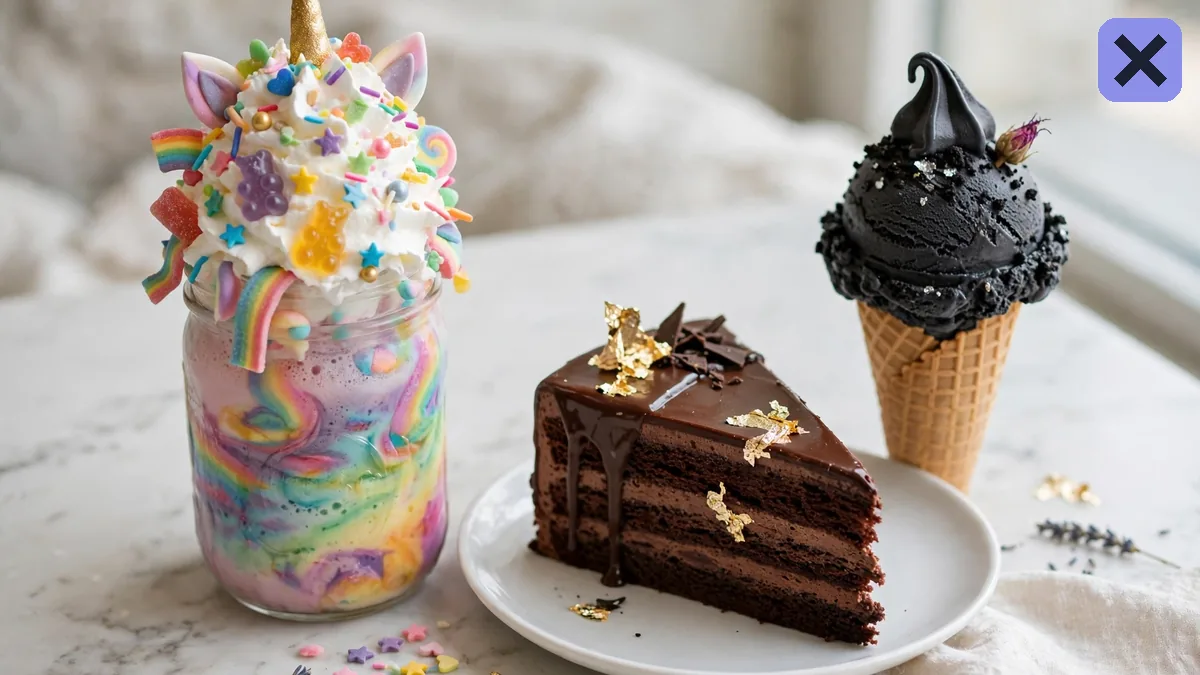
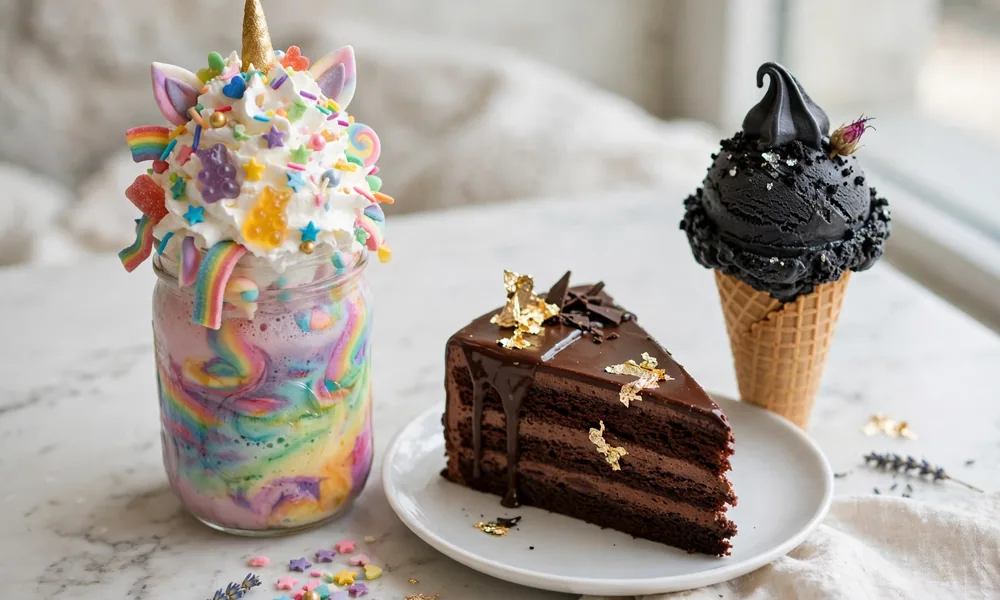
The unicorn milkshake is the defining dessert of the camera age: a tall glass of pastel shake buried under whipped cream, sprinkles and gummy sweets. It looks like a birthday party in a glass and tastes like sugar stacked on sugar, with every topping softening into the cream. By the time you clear the top, the shake has warmed, and you have paid café prices mostly for decorations.
Gold Leaf on Everything
Edible gold leaf turns an ordinary chocolate cake into a luxury object, at least in a photograph. In the mouth it tastes of nothing, which is precisely the problem: it adds cost and shine, and zero flavour. If you want a dessert genuinely worth a high price, look for fine dining that is actually worth the price instead of a dessert merely dressed like it.
Charcoal Ice Cream and Black Desserts
Jet-black ice cream looks striking against a white plate, but the flavour rarely keeps up. Activated charcoal is tasteless in small amounts and faintly gritty in larger ones, and it can mute the flavours it is mixed with, so a black vanilla soft serve usually tastes less like vanilla than a plain one. It also stains teeth and clothes. A well-made vanilla or chocolate ice cream, in its natural colour, beats a black one almost every time.
Cotton Candy Clouds and Smoke
Some desserts arrive under a cloud of cotton candy, or with dry ice smoke curling around the plate, and for ten seconds the table feels like a magic show. Then the cloud collapses and you are left with an ordinary cake or a mediocre mousse. Cotton candy is almost pure sugar and melts into a sticky film, while smoke adds nothing to flavour.
Deconstructed Classics
Deconstructed desserts take a dish that works — a tiramisu, a lemon tart, a chocolate brownie — and pull it apart into its components, arranged artfully across a plate. The elements of a great dessert work because they are together: the cream softens the coffee, the pastry holds the filling, the sauce cuts the richness. Separated, they are often disappointing on their own, and you end up doing the assembly work yourself, on a plate designed for a photograph rather than a person.
Edible Glitter and Shimmer Dust
Glitter makes a dessert sparkle under café lighting, but in the mouth it is a texture problem: gritty, stuck to the teeth, with a faintly metallic note that fights the flavour. A cake that would have been smooth becomes sandy at the edges. Good patisserie uses shine sparingly and lets the flavour do the rest.
Giant and Oversized Desserts
The giant dessert is built for sharing and for photographs of groups gathered around a single enormous plate. Eating one is a different experience: the outside dries while the inside stays cold, and the flavours repeat without variation. Size also hides quality, so makers use cheaper sponge and sweeter fillings. A normal-sized dessert, eaten fresh, is a better use of the same money.
What These Trends Cost You
The price of a viral dessert is rarely just the number on the menu. There is the queue, the wait for a table with good light, the time spent photographing the food, and the disappointment of a dessert past its best because it was built for display. Add the actual price — often double or triple a simpler dessert in the same café — and the value looks poor. There is also an appetite cost: the worst trends are almost all sweetness without contrast, leaving a sugar crash instead of a satisfied finish.
| Trend | What looks good | What goes wrong | Price signal |
|---|---|---|---|
| Unicorn and freakshakes | Towering colour and toppings | Too sweet, toppings go soft | High, mostly decoration |
| Gold leaf desserts | Luxury shine | No flavour, hides dry cake | Very high, no taste gain |
| Charcoal ice cream | Striking black colour | Gritty, mutes flavour, stains | High for a basic scoop |
| Cotton candy clouds | Theatre and smoke | Melts, adds nothing | High, mostly the act |
| Deconstructed classics | Artful plating | Flavours fall apart | High, smaller portions |
| Giant desserts | Shareable spectacle | Dry, uneven, repetitive | High, poor value per bite |
Use the table as a quick check before you order. If a dessert scores on looks but fails on flavour, texture and price, it is a photograph with a menu price attached.
How to Spot the Next Bad Dessert Trend
Bad dessert trends follow a pattern. The first sign is a single dominant feature: one colour, one ingredient, one effect that the whole dessert depends on. Good desserts have several things going on — a crisp base, a soft filling, a sharp fruit — and do not collapse if you remove the garnish.
The second sign is a dessert that cannot be eaten easily. If it needs instructions, a photograph first, or a warning about stains, it was designed for a camera. The third sign is a price that makes sense only as a ticket to a photograph: if you would not pay the same price for the same dessert served plain, you are paying for the picture. Before buying a new tool for a viral dessert at home, check whether it is one of the kitchen gadgets that waste counter space rather than something you will use every week.
What to Order Instead
The alternative to a bad dessert trend is not a boring dessert. It is a dessert made by someone who cares about flavour more than photographs: a warm chocolate fondant, a lemon tart with a crisp shell and a sharp curd, good vanilla ice cream with warm berries, or a slice of carrot cake with proper spice. They have survived because they taste good, not because they photograph well.
When choosing, ask three questions. Is the dessert fresh, made today, in this kitchen? Does it have contrast — something rich against something fresh, something sweet against something sharp? And would it still be worth ordering if you could not photograph it? If the answer to all three is yes, order it.
Dessert Trend Checklist
Run through this list before you order a viral dessert.
- The dessert can be eaten easily with a normal fork or spoon, without instructions.
- It has contrast: something rich balanced by something fresh, sharp or salty.
- It would still be worth the price served plain, without the garnish or glitter.
- It is made fresh in the kitchen, not assembled hours earlier.
- The main flavours are named on the menu, not just the colour or the effect.
- You would still want a second bite after the first photograph.
Frequently Asked Questions
What is the worst dessert trend right now?
Unicorn and freakshakes are the worst overall: extreme sweetness, toppings that go soft, a drink that is hard to finish, and a price that mostly pays for decoration. Gold leaf and charcoal desserts follow closely, since both add cost and drama without adding flavour.
Are viral desserts always bad?
No. A viral dessert can be good when the maker starts with a solid recipe and adds the visual idea on top. The warning sign is a dessert that depends on its look: remove the colour or the height and nothing interesting is left, and it was built for a camera, not a table.
Why do bad dessert trends keep selling?
They sell because the photograph is the product for many buyers. A striking dessert earns attention online and brings first-time customers through the door. By the time the customer realises the taste did not match the picture, the sale is already made.
Is gold leaf dessert safe to eat?
Edible gold leaf is generally considered safe in the tiny amounts used on food, and it has no flavour. The problem is value, not safety: you are paying a luxury price for a garnish that adds nothing to taste.
Should I avoid charcoal desserts completely?
You do not need to avoid them completely, but know the trade-offs: charcoal can taste gritty, mute other flavours, stain teeth and clothes, and interfere with some medicines. If you take regular medication, check with a pharmacist or doctor first.
What dessert should I order instead of a viral trend?
Order something the kitchen makes fresh, with clear contrast and honest ingredients: a warm chocolate fondant, a sharp lemon tart, or good vanilla ice cream with berries. If it would still be worth ordering without a photograph, it is worth your appetite.
The Bottom Line
The worst dessert trends that look better than they taste all make the same bargain: they trade flavour, texture and value for a photograph. Skip the towering shake, the gold leaf, the black ice cream and the cloud of smoke, and spend your appetite on a dessert that was made to be eaten. The best desserts do not need a costume.