
The worst documentaries about travel in 2026 are the ones that leave you less informed than when you pressed play: vanity trips dressed up as exploration, sponsored holidays pretending to be journalism, and beautiful drone footage with nothing to say. Travel is the easiest subject in the world to film beautifully and the hardest to film honestly, because a stunning sunset can hide a weak argument for a very long time. A bad travel documentary does not say here is one perspective; it says this place is exactly like this, then backs it up with a montage, a sad piano, and a local who is never allowed to disagree.
The best travel films earn your trust with access, evidence, and doubt. They show you the place as it is, awkward and disappointing parts included, and they let the people who live there speak for themselves. The worst ones ask for your trust and spend it on a sales pitch. This guide sorts the failures into six recognisable types, so you can spot them in the first ten minutes.
Every failure below is judged on what shapes a real viewing experience: whether the film tells you anything true about the place, whether the people on screen are treated as people or props, and whether the host is doing real work or taking a paid holiday. The patterns repeat so often that once you see them, you cannot unsee them.
Key takeaways
- The worst travel documentaries fail on honesty first: one host, one hotel, one conclusion stretched across two hours.
- Sponsored trips that hide their funding are the most misleading kind: the praise is bought, not earned.
- Vanity films confuse beautiful drone footage with a reason to keep watching.
- Films that treat local people as exotic props deserve to be skipped.
- Before you press play, check the runtime, the credits, and the reviews.
1. The sponsored holiday in disguise
The sponsored holiday is the most common failure in travel documentaries, and the hardest to spot in the first five minutes. A cheerful host stays in a beautiful hotel, eats beautiful food, and tells you this is the best place on earth. What the film does not tell you is that the hotel paid for the trip and the tourism board approved the script. The praise is bought, and a bought opinion is not a documentary.
You can spot this type by what is missing. Nobody in the film ever complains, nothing is ever expensive or disappointing, and the camera never wanders into the parts of town where real people live. The credits usually give the game away: a long list of hotels, airlines and tourism boards thanked for their support. If a film feels like an advertisement that forgot to label itself, trust that feeling and switch it off.
2. The vanity trip with a drone
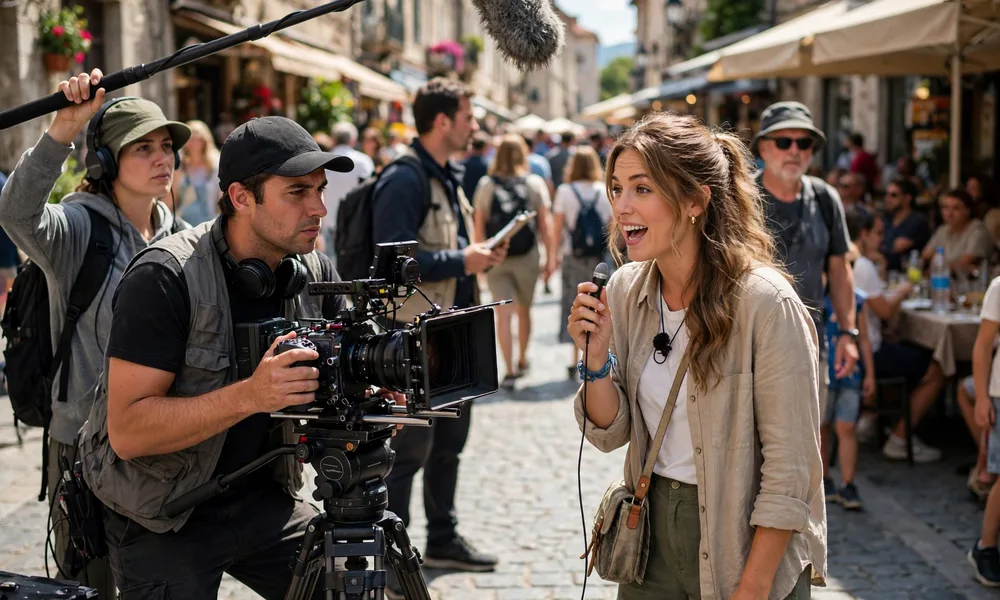
Every year, new travel documentaries arrive that are really just one person’s holiday with better equipment. The host is usually a minor celebrity or an influencer, the drone shots are gorgeous, and the film has almost nothing else. There is no story, no question the film is trying to answer, and no reason for the journey beyond the fact that someone paid for it.
The tell is the ratio of scenery to substance. A good travel film uses beautiful images to illustrate a point; a vanity film uses them instead of a point. If you have learned nothing about the place except that it is pretty in the first fifteen minutes, the next eighty will not improve. Drone footage is cheap now, and prettiness is not a story.
3. The poverty tour
The poverty tour is the ugliest failure in travel documentaries. A host from a wealthy country visits a poor community and presents their hardship as entertainment. The people on screen are rarely named and never given the chance to explain their own lives. The host gets a moving monologue to camera about how the experience changed them.
What makes this type so bad is not that poverty should never be filmed. It should, and the best documentaries about difficult places are made with the people who live there, with their consent and their voices at the centre. The poverty tour does the opposite: it drops in for a day, takes the most dramatic images, and leaves. If a film spends more time on the host’s feelings than on the people it claims to show you, it is not a documentary.
4. The danger film that invents its danger
Some travel documentaries need danger to sell, and when the place is not dangerous, they invent it. The host walks through a safe neighbourhood at night while the music suggests menace, and ordinary precautions are presented as survival skills. The audience is left with a distorted picture of an entire country.
The damage is real, because viewers plan trips, or avoid them, based on what they see. A film that makes a safe city look dangerous costs that city visitors and income, and it does so for the sake of a cheap thrill. The invented-danger film takes a safe place, adds ominous music, and calls the result brave. If locals are calling a film misleading, believe them over the trailer.
5. The food tour that never leaves the restaurant
Food is the easiest way to film a place, and the laziest documentaries never get past it. The host eats in five restaurants, declares each meal the best ever, and the film ends. There is no market, no home cooking, and no sense of how ordinary people in that place actually eat. It tells you nothing about the country beyond its tourist menu.
Good food films use food as a way into a culture: the market at dawn, the family kitchen, the street vendor who has sold the same dish for thirty years. The restaurant-only tour shows you the version of a place designed for visitors, and pretends that is the whole place. The same warning signs apply in other genres too, as our guide to the worst documentaries about food explains.

6. The nostalgia film that freezes a place in time
The nostalgia film is the subtlest failure on this list. It presents a place as it was fifty years ago: the fishing village before the tourists, the mountain town before the road. The problem is that the world is not gone for the people who live there. They have phones, jobs and opinions, and the film erases all of it in favour of a prettier past.
This type fails because it treats a living place as a museum. The people on screen become exhibits, and the film’s affection is really a refusal to see them as they are now. The best travel films show a place in motion, changes and contradictions intact. If a documentary about a real place has no one under forty in it, and no one talking about the future, ask yourself whether you are watching a film about a place, or about the filmmaker’s memories.
How the worst travel documentaries compare
These six failures are not equal. A vanity film wastes your evening; a sponsored holiday misleads your spending; a poverty tour does real harm to real people. The table below ranks them by what they cost you.
| Failure type | Main problem | What it costs you | How fast to spot it |
|---|---|---|---|
| Sponsored holiday | Hidden funding, bought praise | Bad spending decisions | 10 minutes |
| Vanity trip | No story, only drone shots | Two wasted hours | 15 minutes |
| Poverty tour | People used as props | Real harm to communities | 20 minutes |
| Invented danger | Safe place made to look risky | Distorted view of a country | 15 minutes |
| Restaurant-only food tour | Never leaves the tourist menu | No real sense of the place | 20 minutes |
| Nostalgia film | Place frozen in the past | A false picture of real people | 30 minutes |
A typical bad travel documentary runs 90 to 110 minutes, spends more than half its runtime on scenery and eating, and gives local people less than ten minutes of unscripted speech. A good one spends its time on conversations, and the scenery is the setting, not the subject. If you want to see what the good version looks like, start with the films in our guide to the best documentaries about nature, where the same craft is applied with far more honesty.

How to spot a bad travel documentary before you watch it
The credits are the fastest check you have. Be suspicious when the funders are also the subjects: a film about a resort chain funded by that chain is an advertisement, whatever the poster says. Then check the runtime and the reviews. A 100-minute travel film with no dissenting voice is a warning sign.
The trailer is the second check. If the trailer is all drone shots and music, with no conversation and no question, the film will be the same. A good travel documentary trailer shows you people talking, a place with problems, and a host who is listening rather than performing. Filmmakers who return to the same place over years are almost always worth your time. The one-off celebrity trip, filmed in a week, almost never is.
Viewer checklist
- Read the credits before you watch: if hotels, airlines or tourism boards funded it, treat every compliment as paid.
- Watch the first fifteen minutes: if you learn nothing beyond the scenery, switch it off.
- Check whether local people are named and allowed to disagree with the host.
- Look for a real question behind the journey: a film with no question has no story, only footage.
- Read two or three reviews, especially from people who know the place, before committing.
- Keep a short list of trusted filmmakers, and choose their new work over a random celebrity travel special.
Frequently asked questions
Are all celebrity travel documentaries bad?
No, but the odds are against them. A celebrity host can make a good travel film with a strong director, real time in a place, and local people leading. The failures happen when the celebrity is the whole point of the film.
How can I tell if a travel documentary is sponsored?
Read the credits and look for hotels, airlines and tourism boards thanked for their support. Watch for a host who never criticises anything and never mentions a price. Honest films disclose their funding on screen.
Why do bad travel documentaries still get made?
Because they are cheap to make, easy to sell, and beautiful to look at. Drone footage and a charming host cost far less than months of reporting, and streaming platforms need a constant supply of travel content.
What makes a travel documentary good instead?
Access, evidence, and doubt. A good travel film spends time in a place, talks to people who live there, shows the awkward parts as well as the beautiful ones, and says when something does not work.
Should I trust travel documentaries when planning a trip?
Use them as inspiration, never as your only source. Cross-check anything a film tells you against a guidebook, recent reviews, and advice from people who live in the place.
What should I watch instead of a bad travel documentary?
Look for films by directors who specialise in a place or a subject, and for series that return to the same locations over years. Our guide to the best documentaries about history is a good place to start for films that respect both their subject and their audience.
The bottom line
The worst documentaries about travel in 2026 are the sponsored holidays, the vanity trips, and the poverty tours that treat a place as a backdrop. The warning signs are there in the first fifteen minutes: no real question, no dissenting voice, and scenery doing the work a story should do. Switch those films off, and spend your evening on a documentary that earns your attention instead.


