The worst gaming headsets of 2026 are not hard to find. They sit at the top of sponsored listings, promise professional sound for little money, and look convincing in a product photo. Then you put them on, load into a match, and the problems start. Footsteps disappear, your teammates hear an echo of your own game, and after an hour your ears feel as if they have been pressed in a vice. A bad headset does not just sound poor. It makes you play worse, communicate worse, and enjoy the game less.
This guide looks at the worst gaming headsets in 2026 from the other side of the usual roundup. Instead of celebrating the best options, it explains what goes wrong and which warning signs to spot before you spend money. The patterns repeat every year: muddy sound, microphones that turn your voice into a distant buzz, batteries that die halfway through an evening, and build quality that falls apart within weeks. Once you know those patterns, you can recognise a poor headset in a listing or a review before it costs you a match.
None of this means every cheap headset is bad, and it does not mean an expensive headset is automatically good. Price helps, but it is not a guarantee. Some of the worst gaming headsets in 2026 carry a premium price, while some modest models get the basics right. The difference is in the details: sound tuning, microphone build, weight, and how honestly the maker describes battery life and platform support. Keep those details in mind, and use the checklist near the end before you buy anything.
Key Takeaways
- The worst gaming headsets hide footsteps and voice cues under heavy, boomy bass, so you hear explosions clearly and miss the sounds that win matches.
- A poor microphone is as damaging as poor sound, because your squad cannot understand callouts, and a noisy mic can get you muted.
- Comfort is a performance issue, not a luxury, and a heavy headset with stiff ear cushions will cost you focus in long sessions.
- Short battery life, weak wireless range, and flimsy hinges are the most common reasons a headset ends up in a drawer within months.
- Check the return policy before you buy, because a headset that sounds fine for five minutes in a shop can still hurt after two hours at home.
What Makes a Gaming Headset One of the Worst
A headset earns a place among the worst gaming headsets when it fails at the job it was bought for. That sounds obvious, but many buyers judge a headset by the wrong things. They look at driver size, bright lights, or the number of features on the box, and assume more means better. In practice, large drivers can still sound terrible if the tuning is wrong, and glowing lights cannot fix a microphone nobody can understand. The worst models often spend their budget on appearance and marketing instead of sound, comfort, and build.
Sound is the first test, and it is where the worst headsets fail most clearly. Competitive games rely on small, quiet sounds: a footstep on wood, a reload behind a wall, a teammate whispering a warning. A good headset keeps those sounds clear and places them in space. A bad headset buries them, usually because its tuning pushes bass far too high. Explosions feel dramatic, but everything else becomes a dull rumble. You hear the game, but not the information inside it. That may be tolerable in story games. In anything competitive, it is a serious handicap.
The Sound Problems That Ruin a Match

Muddy sound is the most common complaint, and it has several causes. Cheap drivers can distort at normal volume, so loud moments crackle and quiet moments vanish. Poorly sealed ear cups leak sound in and out, so you hear your room as well as your game. A headset that is too quiet is just as bad: you turn the volume up to hear footsteps, the loud sounds become painful, and your ears tire quickly. None of this shows up in a specification sheet, which is why a fair return policy matters so much.
Microphones That Let Your Squad Down
A gaming headset is a communication tool as well as a listening tool, and the worst models forget that. A poor microphone picks up everything except your voice clearly: your computer fan, your keyboard, game sound leaking from your ear cups, and the echo of your room. Your teammates hear a wash of noise with a voice somewhere inside it. They ask you to repeat yourself, they turn you down, or they mute you. In a team game, that is not a small annoyance. It breaks coordination, and it can cost a match.
The worst microphones are often fixed too far from the mouth, or too close, so every breath becomes noise. Some have no windscreen, so plosive sounds pop loudly. Others use aggressive noise processing that chops your words, so you sound robotic or distant. A good microphone should make your voice sound natural and steady. If friends regularly say you sound quiet or muffled, the problem is probably the microphone. The best gaming headsets get these details right, as our guide to the best gaming headsets of 2026 shows.
Comfort Failures: Heavy, Hot, and Painful
Comfort is where many of the worst gaming headsets quietly fail. A headset can sound acceptable for ten minutes and still be unusable after two hours. The usual culprits are weight, clamping force, and ear cushion material. A heavy headset presses down on your head, and after an hour you feel it with every movement. One that clamps too tightly squeezes your ears and jaw, which is painful if you wear glasses. Stiff, shallow ear cushions press your ears against the driver housing, and cheap synthetic leather traps heat, so your ears sweat and the cushions peel.
Build Quality That Falls Apart
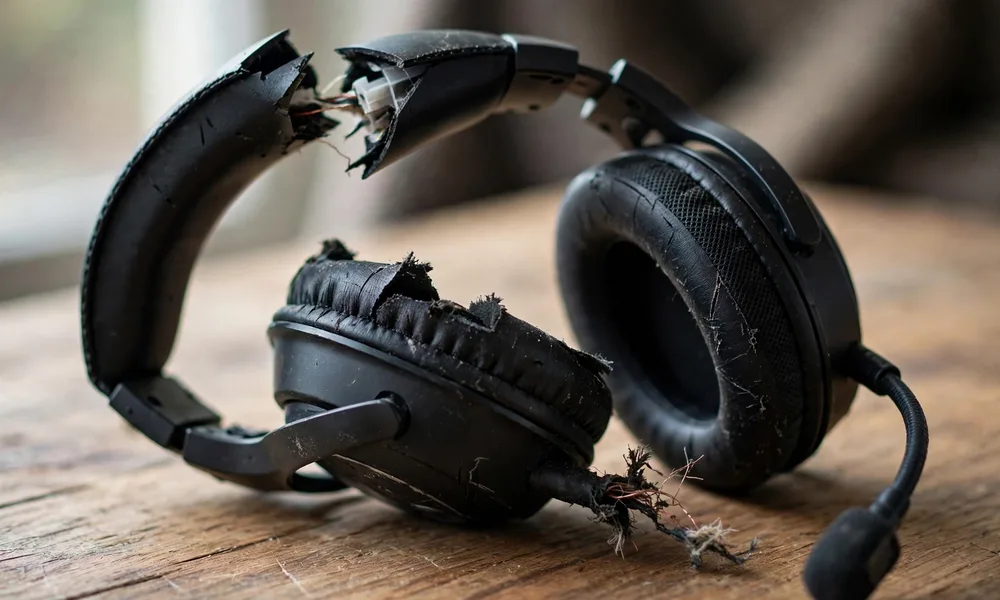
Build quality is the most visible difference between a headset that lasts and one that does not. The worst gaming headsets use thin plastic at the joints, where the headband meets the ear cups, and that is exactly where they break. A hinge that creaks when you put the headset on is a warning. A headband that flexes too easily, a loose yoke, or a wobbling ear cup are all signs it was not built to survive daily use. Gaming headsets are picked up, put down, stretched, and tossed aside, so they need to be tougher than they look.
Platform Problems and Misleading Claims
Platform support is a common trap. A headset may work perfectly on a PC and poorly on a console, or it may work on one console and not another. Some headsets rely on software that exists only on PC, so on a console you lose the equaliser and microphone controls that made it sound good. Others use a connection one platform does not support properly, so you get sound but no microphone, or a microphone but no game audio. Always check that the headset supports your platform fully, not just partly.
Comparison Table: Worst Traits Against What Good Looks Like
| Feature | Worst Gaming Headsets | What Good Looks Like |
|---|---|---|
| Sound | Muddy, bass-heavy, footsteps hidden | Clear mids, controlled bass, precise imaging |
| Microphone | Muffled, noisy, picks up room echo | Natural voice, low background noise |
| Comfort | Heavy, tight clamp, hot ear cushions | Light, balanced, breathable cushions |
| Build | Thin plastic, creaky hinges, fraying cable | Solid joints, detachable cable, replaceable cushions |
| Battery | Short life, no wired fallback | Long life, wired mode while charging |
| Platform | Works partly on your console | Full sound and mic on your platform |
How to Spot a Bad Headset Before You Buy
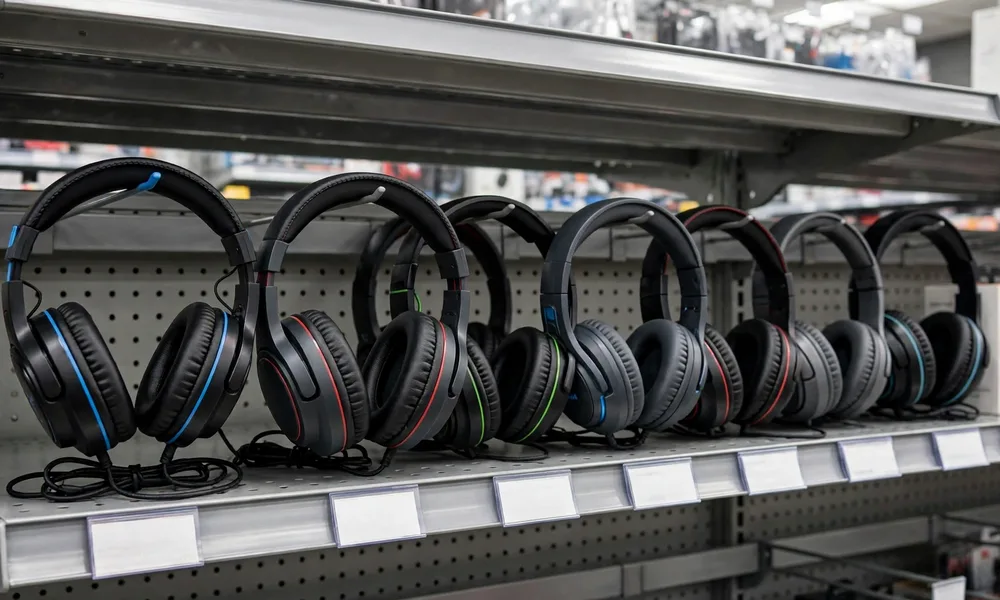
Check the return policy before you order. A fair return window lets you test the headset at home, with your games, for a few hours. Play the games you actually play, talk to your usual squad, and notice how your ears feel after a long session. If it hurts, sounds muddy, or makes your voice hard to understand, return it. Also think about your whole setup: a headset that works well on PC may not work as well on a console, and our guide to the best gaming consoles of 2026 is a reminder that it needs to match the platform you actually use.
Checklist: Avoid the Worst Gaming Headsets
- Listen for clear footsteps and voices, not just loud explosions, before you commit to a headset.
- Test the microphone with your usual squad and ask honestly how your voice sounds to them.
- Wear the headset for at least an hour to check for pressure, heat, and slipping.
- Check that the cable is detachable or sturdy, and that the hinges feel solid, not loose or creaky.
- Confirm full sound and microphone support on your platform, not just partial compatibility.
- Buy from a shop with a fair return policy, and return a headset that hurts or sounds muddy after real use.
Frequently Asked Questions
What is the worst thing about a bad gaming headset?
The worst thing is that it hides information. A bad headset buries footsteps, reloads, and voice cues under bass or distortion, so you react late and miss warnings. Comfort and microphone problems add to the damage, but sound is the core failure, because it affects every moment of every game.
Are cheap gaming headsets always among the worst?
No. Some cheap headsets get the basics right: clear sound, a usable microphone, and a comfortable fit. Others cut corners on drivers, microphones, and build, and those are the ones to avoid. Price is a clue, not a verdict. Judge a headset on sound, comfort, microphone, and build.
Can a headset be good for music but bad for gaming?
Yes. A headset tuned for music may have strong bass and a warm sound that feels enjoyable for songs, but that same tuning can hide footsteps and voices in a game. Gaming needs clarity in the midrange and treble, where the useful sounds live.
How long should a gaming headset last?
A well-built headset should last several years with daily use. The ear cushions may wear first, but they should be replaceable. If a headset breaks at a hinge, frays at the cable, or loses battery capacity within months, it was not built well enough. Hinges, cables, and batteries fail first, so check them before you buy.
Is wireless worse than wired for gaming?
Not necessarily. A good wireless headset in 2026 can match a wired one for sound quality, with a stable connection and no noticeable delay. A bad one can drop out, crackle, and run out of battery mid-game. If you choose wireless, look for a stable dongle connection, honest battery figures, and a wired mode.
Should I return a headset that hurts after an hour?
Yes, if the shop offers a fair return policy. A headset that hurts after an hour will not get more comfortable with time, and it will cost you focus. Try adjusting the fit, but if the pressure or weight does not improve, return it and choose a lighter model with softer, replaceable ear cushions. Our look at the worst noise-cancelling headphones of 2026 covers similar traps in comfort, sound, and battery life.
The Bottom Line
The worst gaming headsets of 2026 fail at the basics: they hide the sounds that matter, they make your voice hard to understand, they hurt after an hour, and they fall apart too soon. They are not always the cheapest models, and they are not always obvious from a photo or a specification sheet. Watch for muddy, bass-heavy sound, a noisy microphone, heavy and hot ear cushions, creaky hinges, a flimsy cable, and a short-lived battery. Avoid those traits, test a headset properly before you commit, and buy from a shop that lets you return it. A good headset should help you hear more, communicate clearly, and play comfortably for hours, and anything that does the opposite is not worth your money.