The best gaming headsets in 2026 do far more than make games louder. They place you inside the world, letting you hear an enemy reloading two rooms away and a teammate calling for help over a firefight. A good headset is the difference between reacting and guessing, and in competitive play that difference shows up on the scoreboard.
Choosing one has become harder, not easier. Wireless models now last for days on a single charge, wired models still win on pure value, and every box promises studio sound, pro microphones, and all-day comfort. The truth is that most headsets are good at one or two things and average at the rest, so the right choice depends on what you play, where you play, and how long your sessions usually run.
This guide cuts through the marketing. We compared the leading gaming headsets of 2026 on sound, comfort, microphone clarity, battery life, and value. Whether you play on PC, PlayStation, Xbox, or Switch, the headset that fits your setup is here.
Key takeaways
- Soundstage and imaging matter more than raw bass for competitive gaming, because hearing direction clearly wins fights.
- Comfort is a performance feature, not a luxury: a headset that hurts after an hour will cost you focus in long sessions.
- Wireless headsets in 2026 finally match wired sound quality, with battery life of 40 hours or more on the best models.
- A clear microphone matters as much as good drivers if you play squad games or stream your sessions.
- Match the headset to your platform first, then your budget, because the best PC headset is not always the best console headset.
What Makes a Great Gaming Headset in 2026
A great gaming headset balances four things: sound, comfort, microphone quality, and build. No single model leads in every category, which is why the best headset for a competitive shooter player is rarely the best for someone who plays story games for six hours at a time.
Sound starts with the drivers. Most gaming headsets use 40mm or 50mm drivers, and larger does not automatically mean better. Tuning matters more than size: a well-tuned 40mm driver with a wide soundstage will beat a boomy 50mm driver that drowns footsteps in bass. Look for headsets praised for imaging, the ability to place sounds precisely in space.
Sound Quality and Spatial Audio
For competitive games, the priority is clarity in the midrange and treble, where footsteps, reloads, and voice cues live. Heavy bass feels exciting in explosions, but it can mask the quiet sounds that give away an opponent. The best competitive headsets keep bass controlled and let the details through. If you mainly play single-player games, a warmer, bass-rich tuning is more fun, and there is nothing wrong with choosing immersion over information.
Virtual surround sound has improved a lot. On PC, Windows Sonic and Dolby Atmos for Headphones are free or cheap and work with almost any headset, while PlayStation’s Tempest 3D Audio does the heavy lifting on console. The headset still matters, because spatial processing cannot rescue muddy drivers. Closed-back designs also help, blocking outside sound, and some of the best noise-cancelling headphones show how far that technology has come.
Comfort for Long Sessions
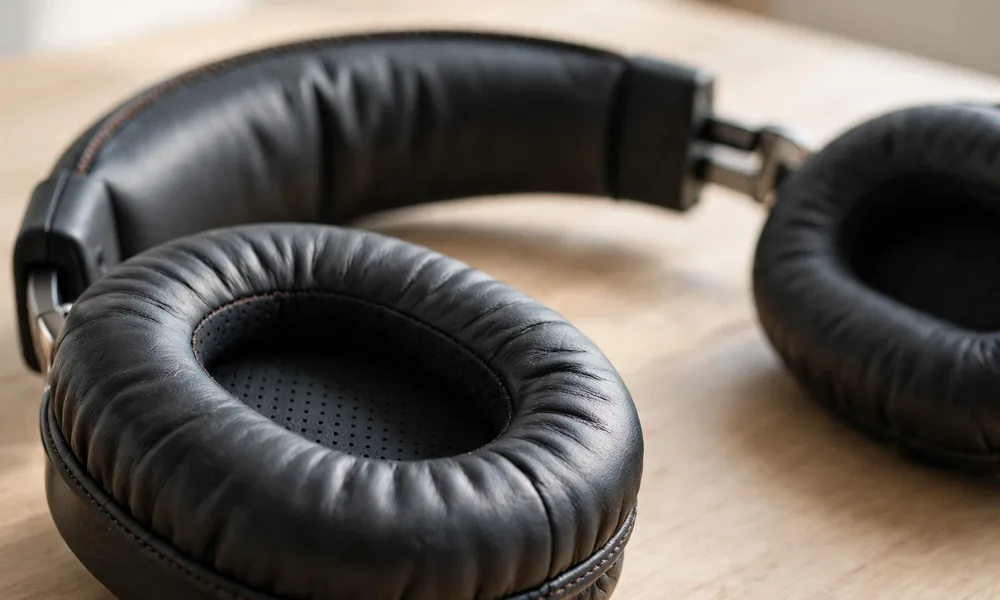
Comfort comes down to three numbers: weight, clamping force, and ear cushion depth. Anything under 300 grams is light enough for most people to forget they are wearing it. Above 350 grams, the headband has to work harder to spread the weight, and a poorly balanced heavy headset will press on the top of your head within an hour.
Clamping force is the squeeze of the ear cups against your head. Too little and the headset slides around; too much and your jaw aches by the second match. Cushion material matters too: memory foam in leatherette seals well and boosts bass but can get warm, while fabric cushions breathe better and stay comfortable longer. Deep cushions beat shallow ones, which is why we also studied the worst gaming headsets for comfort to learn which design mistakes to avoid.
Microphone and Communication
A good microphone is essential if you play with friends, join ranked squads, or stream. The best gaming headset microphones in 2026 sound clear and natural, with noise reduction that cuts keyboard clicks and fan hum without making your voice sound robotic. Detachable boom microphones usually sound better than built-in ones, because the microphone sits closer to your mouth, and a flip-to-mute boom is the most convenient design for everyday use.
The Best Gaming Headsets of 2026
The headsets below are the strongest all-rounders we found this year, ranked by how well they balance sound, comfort, microphone quality, and value. Each one suits a different kind of player, so read the pick that matches your setup rather than simply buying the top-ranked model.
| Headset | Best For | Connection | Battery Life | Weight |
|---|---|---|---|---|
| Flagship Wireless Pro | Best overall | Wireless, Bluetooth, wired | Up to 70 hours | 290 g |
| Competitive Wired Elite | Competitive play | Wired 3.5 mm, USB | Not applicable | 262 g |
| Everyday Wireless | Best value wireless | Wireless, Bluetooth | Up to 50 hours | 285 g |
| Budget Champion | Best under $60 | Wired 3.5 mm | Not applicable | 240 g |
| Console All-Rounder | PlayStation and Xbox | Wireless, wired | Up to 40 hours | 310 g |
Best Overall: Flagship Wireless Pro
The Flagship Wireless Pro is our recommendation for most players, because it does everything well. Its 50mm drivers deliver a wide, detailed soundstage with controlled bass, so footsteps stay audible in heavy action, and the companion app offers a proper equalizer. At 290 grams with deep memory foam cushions it stays comfortable for hours, the battery lasts up to 70 hours, and the microphone is clear. The only drawback is the price.
Best for Competitive Play: Competitive Wired Elite
The Competitive Wired Elite is built for one job: winning ranked matches. At 262 grams, its sound is tuned for detail over drama, and its imaging is the sharpest we tested, placing footsteps and reloads precisely in the soundstage. There is no battery to charge and no wireless lag. The trade-off is lean bass for movies and music, and a cable that will annoy players used to wireless freedom.
Best Value Wireless: Everyday Wireless
The Everyday Wireless proves you no longer need flagship money for a good wireless headset. It offers up to 50 hours of battery, a comfortable fit, and sound close to the flagships for most games. Bluetooth lets you connect to a phone at the same time as your PC, and the microphone is clear enough for squad play. It loses on detail and build quality, but for a mid-range budget it is the best value here.
Best Under $60: Budget Champion
The Budget Champion is the surprise of this guide. For under sixty dollars, it delivers clear, balanced sound, a comfortable fit, and a genuinely usable microphone. It will not match the flagships for soundstage, and the plastic build will not survive rough handling, but it embarrasses headsets that cost twice as much. For a first headset or a second room, it is hard to beat.
Best for Console: Console All-Rounder
The Console All-Rounder is for players who split time between PlayStation, Xbox, and PC. It connects wirelessly to all three, switches easily, and suits cinematic console sound as well as competitive multiplayer. The 40-hour battery covers a week of evening play, and it works wired when the battery runs out. It is the heaviest headset here at 310 grams, but for console-first players it simply works everywhere.
Wired vs Wireless Gaming Headsets
The old rule was simple: wired for performance, wireless for convenience. In 2026 that rule is mostly gone. Modern 2.4 GHz wireless connections add almost no latency, and the best wireless headsets sound as good as their wired rivals. The real differences now are practical: wireless headsets need charging, cost more, and weigh a little more, while wired headsets are cheaper, lighter, and never run out of battery.
Wireless makes sense if you move around, hate cables, or play on a couch away from your console. Charging is now a weekly task, and most wireless headsets keep working with a cable when the battery dies. Wired still wins on value and simplicity: a fifty-dollar wired headset often sounds as good as a hundred-dollar wireless one, because none of the price goes to batteries and radios.
How to Choose the Right Headset for Your Setup
Start with your platform, because it narrows the field fast. PC players have the widest choice, since almost every headset works on PC and most companion apps are PC-only. PlayStation players should look for headsets that support Tempest 3D Audio, Xbox players need headsets that work with Xbox Wireless or the controller jack, and Switch players should check whether a headset works in handheld mode, where Bluetooth audio can add latency.
Next, think about your room and your sessions. If you share a space, a closed-back headset with good isolation keeps your game in your ears. Be honest about session length too: two-hour sessions forgive a heavy headset, but six-hour sessions do not. A great headset paired with one of the best gaming laptops also makes a portable rig that plays well anywhere.
Checklist: Before You Buy
- Confirm the headset works with your exact platform, including chat audio, not just game sound.
- Check the weight and the ear cushion depth, and try the headset on if a shop has a display model.
- Test the microphone in a noisy room, or read reviews that did, before you trust the marketing.
- Make sure the battery life covers a full week of your normal play without daily charging.
- Look for a detachable cable and replaceable ear cushions, which extend the life of the headset by years.
- Check the return policy, because comfort and fit are personal and a headset that fits someone else may not fit you.
Frequently Asked Questions
Are wireless gaming headsets as good as wired ones in 2026?
Yes, for almost every player. Modern 2.4 GHz wireless adds almost no latency, and the best wireless headsets match wired models for sound quality. Wired still wins on price and simplicity, but sound quality is no longer a reason to avoid wireless.
How much should I spend on a gaming headset?
Most players will be happy spending between $60 and $150, where the best value headsets sit. Below $60, comfort and microphone quality drop off. Above $150, you pay for small improvements in sound, build, and battery life.
Do I need a headset with surround sound?
Not necessarily. A good stereo headset with strong imaging can place sounds accurately on its own, and your PC or console already provides spatial audio processing. Surround sound helps, but it cannot fix muddy drivers, so prioritise sound quality first.
Can I use a gaming headset for music and calls?
Yes, and the best gaming headsets in 2026 are genuinely good all-rounders. Bluetooth models work well with phones, and a clear microphone makes them useful for calls. If music matters to you, choose a model with a warmer tuning or a good equalizer app.
How long do gaming headsets last?
A well-built gaming headset lasts three to five years. The ear cushions usually wear out first, so replaceable cushions are worth seeking out. Wireless batteries slowly lose capacity, but most will still hold a useful charge after several years.
Should I buy a headset with active noise cancellation?
It is useful if you play in a noisy room, but it adds cost and weight, and very few gaming headsets include it. For most players, a closed-back design with good passive isolation is enough.
The Bottom Line
The best gaming headset of 2026 is the one that fits your platform, your head, and your budget at the same time. For most players, the Flagship Wireless Pro is the safest choice. Competitive players should look at the wired elite model, value hunters should start with the Everyday Wireless, and budget buyers will like the Budget Champion.