You walk into your hotel room after a long day of travelling, drop your bags, and look around. The bed sags in the middle, the television is a decade old, the coffee maker looks like it has never been cleaned, and the Wi-Fi barely loads a page. The worst hotel room amenities are not just small disappointments. They turn a restful night into a frustrating one.
A good amenity makes your stay easier, more comfortable, or more enjoyable. A bad one does the opposite. It wastes your time, disturbs your sleep, or quietly charges you for something you never wanted. Some offenders are obvious the moment you open the door. Others only reveal themselves at midnight, when the air conditioner rattles or the shower runs cold.
This guide ranks the worst hotel room amenities travellers complain about most, explains why each one fails, and shows how to spot the warning signs before you book, so you can avoid rooms that look fine in photos.
Key takeaways
- Bad mattresses and flat pillows are the most common complaint, because they ruin sleep and cannot be fixed during your stay.
- Dirty bathroom fixtures, thin towels, and empty toiletries signal that a hotel has stopped investing in basic upkeep.
- Slow Wi-Fi, missing outlets, and noisy air conditioning frustrate guests more than missing luxury extras.
- Minibars, pay-per-view movies, and overpriced snacks are the worst value amenities in almost every hotel room.
- Check recent reviews and photos before booking, and ask for a room change at once if an amenity is broken.

What Makes a Hotel Room Amenity Truly Bad
Not every missing amenity is a problem. A room without a bathtub is fine if it has a good shower, and a room without a minibar is fine if there is a shop nearby. The worst hotel room amenities share three traits: they promise comfort and deliver frustration, they cannot be fixed quickly, or they cost far more than they are worth. First impressions start before you reach your room. A tired lobby with broken lifts and unhelpful staff often predicts a tired room, which is why travellers treat the worst hotel lobbies as an early warning sign. And timing matters: a failure at 2 a.m. is a ruined night, because beds, climate control, and blackout curtains decide whether you sleep.
The Worst Hotel Room Amenities, Ranked
We ranked these amenities by how often travellers complain about them, how badly they affect a stay, and how hard they are to work around once you have checked in.
1. The Mattress and Pillows
The mattress is the most important amenity in any hotel room, and the one hotels neglect most often. A sagging mattress, springs poking through thin padding, or a bed that slopes to one side will ruin your night no matter how nice the room looks. Pillows are almost as bad: flat, lumpy, or stained, and often only one thin pillow per guest. You can ask housekeeping for extra pillows, but you cannot ask for a new mattress at midnight. Read our guide to the worst hotel beds and check reviews for sagging, lumpy, and springs before you book.
2. The Bathroom
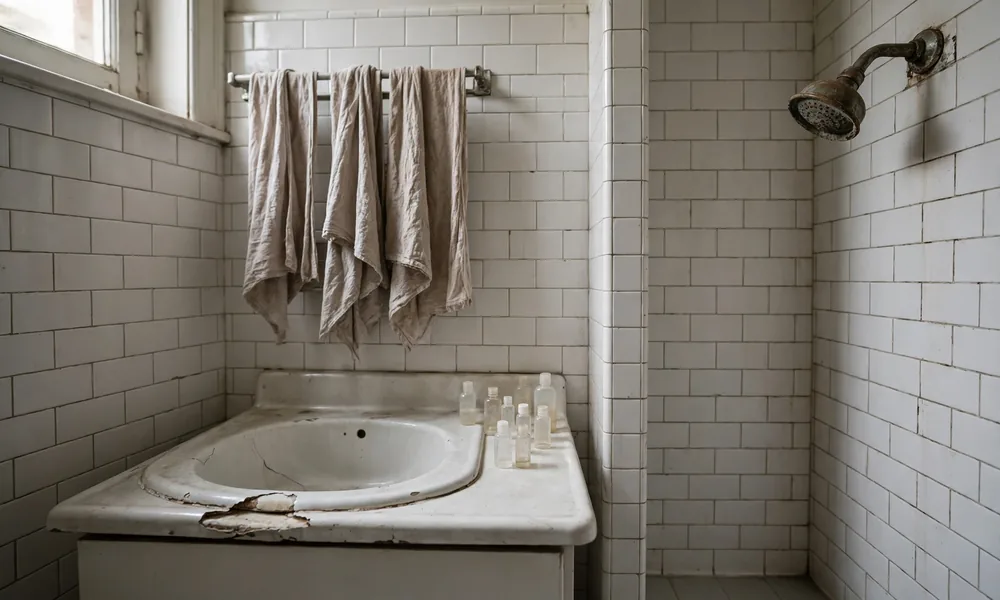
A bad hotel bathroom announces itself immediately. Thin towels that feel like sandpaper, a shower with weak pressure, a toilet that runs all night, and a sink that drains slowly are all signs of a room that has not been maintained. Half-empty toiletry bottles and sticky wall-mounted dispensers complete the picture. Water temperature is the most common bathroom complaint. A shower that swings between freezing and scalding, or takes five minutes to warm up, wastes water and patience. A good bathroom needs only strong pressure, stable temperature, and clean fixtures.
3. The Coffee Maker and Kettle
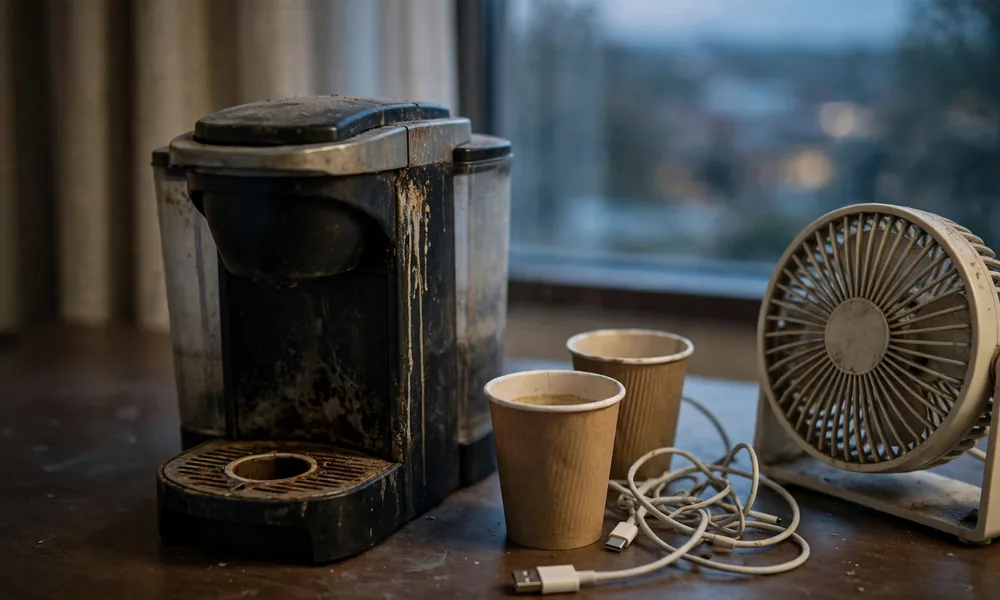
The in-room coffee maker should be the simplest amenity in the building, yet it is one of the most frequently broken. Stained carafes, missing filters, coffee pods that ran out weeks ago, and machines that leak brown water across the desk are all common sights. The frustration is worse because the fix is so easy. A clean machine, fresh pods, and two clean cups cost almost nothing. A bad start in the room often leads to a bad impression of the worst hotel breakfasts downstairs. If coffee matters, pack a small travel kettle or find a café that opens early nearby.
4. The Minibar
The minibar is the worst value amenity in the hotel industry. A small bottle of water can cost five times the price of the same bottle in a shop across the street, and a chocolate bar can cost more than a full meal. The real problem is not just the price. It is the pressure. Some minibars use sensors that charge you the moment you pick an item up, even if you put it straight back. Smart travellers ignore the minibar, buy their own drinks, and use the fridge for snacks they actually want.
5. The Television
Hotel televisions are often years behind the ones guests have at home. Small screens, low resolution, and a handful of channels with nothing worth watching are still common in older hotels. The worst part is the missed opportunity. Most travellers would be happy with a screen they can cast their own shows onto, or a simple smart television with a few streaming apps. Instead, many hotels still charge for pay-per-view movies that cost more than a monthly streaming subscription. Bring a streaming stick: two minutes to set up, and it saves an evening of channel surfing.
6. The Wi-Fi
Slow Wi-Fi is the amenity guests complain about most after sleep, and it affects almost everyone. A connection that drops, a login page that never loads, or speeds too slow for a video call can ruin a working trip. Some hotels still charge for premium Wi-Fi that is barely faster than the free tier, and others limit how many devices you can connect. Wi-Fi is no longer a luxury: travellers need it for flights, messages, navigation, and remote work. Before booking, search reviews for the words Wi-Fi, internet, and connection.
7. The Air Conditioning and Heating
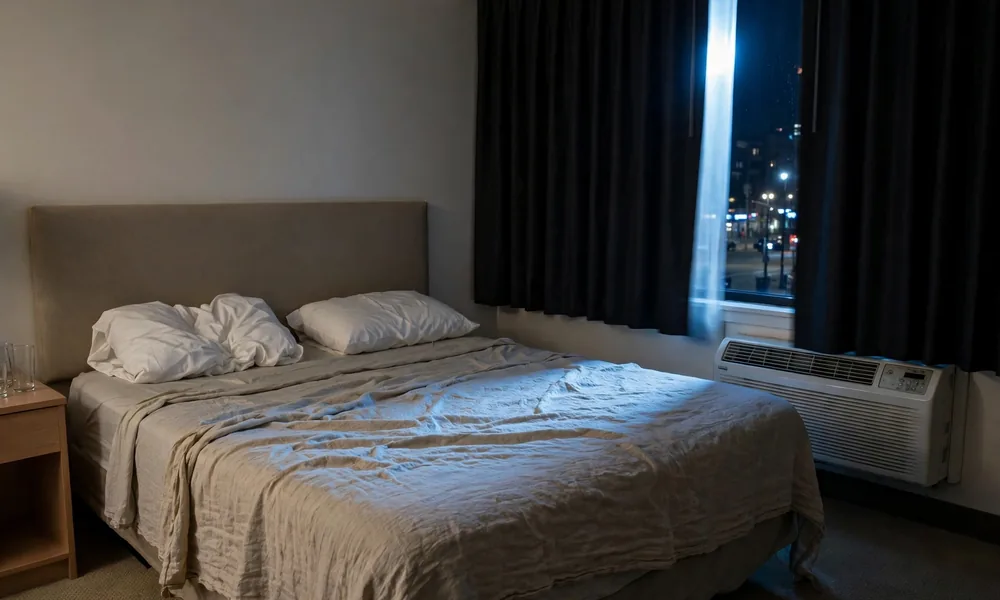
Climate control decides whether you sleep, and hotel systems fail in every possible way. Some rooms are freezing whatever you set; others are stifling, blowing warm air in summer and cold air in winter. Many units rattle, hum, or click all night. The worst systems offer no real control at all. A thermostat locked to a narrow range or a unit that resets itself hourly leaves you at the mercy of the building. When you arrive, test the air conditioning immediately. If it rattles, smells musty, or fails to change the temperature within fifteen minutes, ask for another room before you unpack.
8. The Lighting and Power Outlets
Bad lighting makes a hotel room feel smaller, older, and harder to use. A single dim ceiling light, bedside lamps with the wrong bulbs, and a bathroom mirror lit from above create shadows that make reading, working, and getting ready unnecessarily difficult. Power outlets are just as important and just as often neglected. A room with one outlet behind the bed and another hidden behind the television is not enough for a traveller with a phone, a laptop, and a watch to charge. Loose outlets and plugs far from any usable surface are a daily frustration. Good rooms put outlets beside the bed and the desk.
9. The Noise Problem
Noise is not a single amenity, but the result of several amenities failing at once. Thin walls, hollow doors, rattling pipes, and noisy corridors let every sound into your room. You hear the television next door, the conversation in the hallway, the lift arriving, and the plumbing from the room above. Hotels often place the noisiest rooms beside the lift or the ice machine, and guests discover the mistake at midnight. Curtains that do not close add light to the noise: a small gap can flood the room with street light. Earplugs and a sleep mask help, but they only cover up a room that should have been quiet and dark. When booking, ask for a room away from the lift and the ice machine, on a higher floor.
Comparison Table: The Worst Hotel Room Amenities at a Glance
| Amenity | What Goes Wrong | How It Ruins Your Stay | What to Do Instead |
|---|---|---|---|
| Mattress and pillows | Sagging, lumps, springs, flat pillows | Ruins sleep | Extra pillows; room change |
| Bathroom | Weak pressure, cold water, thin towels | Stressful mornings | Off-peak showers; own toiletries |
| Coffee maker | Dirty, broken, no pods | Bad start to the day | Nearby café; travel kettle |
| Minibar | Extreme prices, sensor charges | Wastes money | Ignore it; local shop |
| Television | Small screen, few channels | Boring evenings | Streaming stick |
| Wi-Fi | Slow, unstable, paid tiers | Blocks work and plans | Mobile data; fast free Wi-Fi |
| Air conditioning | Noisy, weak, no control | Ruins sleep | Test on arrival; new room |
| Lighting and outlets | Dim lights, few outlets | Hard to work | Travel power strip |
| Noise and curtains | Thin walls, gaps | Broken sleep | Earplugs; quiet room |
What Good Hotels Get Right
Good hotels are not always the most expensive ones. They are the ones that treat the basics as non-negotiable. The bed is firm enough to support you and soft enough to sleep on. The shower is strong and hot within a minute. The Wi-Fi is fast and free. The room is quiet, dark, and cool at night. The difference is maintenance: good hotels replace mattresses before they sag and fix rattling air conditioners instead of ignoring them. None of this is luxurious. It is simply competent, and it is why guests return year after year.
Checklist: Spot the Worst Hotel Room Amenities Before You Book
- Read the latest twenty reviews and search for mattress, Wi-Fi, noise, shower, and air conditioning.
- Check guest photos, not hotel photos, for wear on the bed, bathroom, and television.
- Confirm Wi-Fi is free and fast in the room, not just in the lobby.
- Ask about blackout curtains, a working safe, and outlets beside the bed.
- On arrival, test the bed, shower, air conditioning, and Wi-Fi within fifteen minutes.
- If an amenity is broken, report it at once and ask for a room change.
Frequently Asked Questions
What is the worst hotel room amenity?
A bad mattress, because it ruins sleep and cannot be fixed during your stay. Slow Wi-Fi and noisy air conditioning come next.
Why are hotel minibars so expensive?
Minibars are priced as a convenience service, with high markups covering stocking and spoilage. Hotels know tired guests will pay for a drink in the room rather than walk to a shop.
Can I ask for a different room if an amenity is broken?
Yes. Report it straight away and ask for a room change; hotels help far more readily if you raise the problem on arrival.
Should I trust hotel photos of the room?
Hotel photos show the room at its best. Guest photos in recent reviews are more honest, so check those for worn furniture and tired bathrooms.
Is hotel Wi-Fi safe to use?
Hotel Wi-Fi is generally safe for browsing and streaming, but avoid banking or sensitive work on an open network without a VPN. Use mobile data for anything important.
What should I pack to deal with bad hotel room amenities?
Pack earplugs, a sleep mask, a small power strip, a travel kettle or streaming stick, and your own toiletries. These solve most common amenity problems and fit in a carry-on.
The Bottom Line
The worst hotel room amenities promise comfort and deliver frustration: a sagging mattress, a cold shower, a dirty coffee maker, an overpriced minibar, and Wi-Fi that barely works. A hotel that gets the basics right, a good bed, a hot shower, fast Wi-Fi, and a quiet dark room, will always beat a hotel with a long list of extras that do not work. Check the reviews, test the room on arrival, and speak up early: the best amenity any hotel can offer is a room that simply works.